Reviewed · PRIVATE
12 Days Private Tour in Romania from Bucharest
Romania hits you in layers, fast and fun. This 12-day private tour strings together Bucharest history, medieval Transylvania, and Bukovina monastery art with car comfort and a real guide.
Two things I especially like: the private licensed English-speaking guide/driver who travels with you, and the way the route balances major sights with small, specific stops you can actually remember.
One possible drawback to plan for: the schedule is packed, so some days feel like you are moving from one highlight to the next, not lingering for hours in a single place.
In This Review
- Key highlights at a glance
- The comfort setup: private car, English guide/driver, and real flexibility
- Price and value: what $4,072.47 per person buys (and what to budget too)
- Day 1 in Bucharest: massive scale, village life, and Revolution Square context
- Day 2: monasteries, Poienari Fortress ruins, and a road-trip day on Transfăgărășan
- Day 3: Corvin Castle, Densuș Church murals, and Dacian Sarmizegetusa Regia
- Day 4: UNESCO at Biertan, canyon walking near Cluj, and Alba Iulia’s star fortress
- Day 5: Salt Mine air, botanical gardens near Cluj, and the Surdești wooden church
- Day 6: Maramureș humor at Merry Cemetery and a memorial that explains the communist years
- Day 7: Barsana Monastery height, the Tihuța Pass Dracula link, and painted Ciocănești houses
- Day 8: Bukovina painted monasteries, Voroneț blue, Humor, Sucevita, and Moldovita
- Day 9: Lucia Condrea museum, Popa naive sculpture, and Bicaz Gorges by the river
- Day 10: Sighișoara citadel life, Viscri fortified church, and Rupea’s basalt cliff fortress
- Day 11: Brasov old town, Black Church, Bran Castle snacks, and Peles Castle beauty
- Day 12: Prejmer fortified church, mud volcanoes, and Snagov’s Dracula tomb legend
- Who this tour suits best, and how to make it go smoothly
- Should you book this 12-day Romania private tour?
- FAQ
- How long is the 12 Days Private Tour in Romania?
- Is this tour private or shared?
- What is included in the tour price?
- Are my meals and accommodation included?
- Are entrance fees included?
- Is pickup offered?
- Can the itinerary change after the tour begins?
- Is there free cancellation?
Key highlights at a glance
- Nicolas Experience Tours private guide/driver: you are not shuffled with strangers, and your guide can adapt day-to-day
- UNESCO fortified churches: Biertan, Sucevita, and Prejmer show how communities built defense into worship
- Bukovina painted monasteries: Voroneț blue and the full fresco experience in a short window
- High-impact road moments: Transfăgărășan Highway plus gorge walking and the Bicaz Gorges scenery
- Nature oddities: muddy volcanoes at Vulcanii Noroioși is a very different kind of Romania
- Dracula stops without going full theme park: Bran Castle, plus the Snagov Dracula legend and Dracula-titled scenery
Other Bucharest days worth the drive
- Bucharest: Dracula’s Castle, Peles Castle, & Brasov Old Town★ 4.5 · 17,858 reviews
- Bucharest: Dracula Castle, Peles Castle & Brasov Old Town★ 4.6 · 10,891 reviews
- Bucharest: Dracula’s Castle, Peleș Castle & Brașov Day Trip★ 4.4 · 6,100 reviews
- Bucharest: Palace of Parliament Tickets and Guide★ 4.3 · 3,182 reviews
The comfort setup: private car, English guide/driver, and real flexibility
This is built as a true private tour. You get a private car only for your group, plus a licensed English speaking guide/driver available throughout the trip. That matters in Romania, where days can involve steep stairs, timed museum entries, and stretches where public transport is just not practical.
I also like the flexibility piece: the provider lists great flexibility to adjust the daily itinerary even after the tour starts. In plain terms, that means if weather turns, if someone needs a slower pace, or if you want to trade a stop for extra time elsewhere, you can usually do it.
In the car you also get complimentary wireless internet, and the tour covers car costs like gasoline, parking, and road tolls. That sounds minor until you remember how often “budget” tours nickel and dime you at every border of convenience.
Price and value: what $4,072.47 per person buys (and what to budget too)
The price listed is $4,072.47 per person for approximately 12 days. That is not cheap, but it is the type of price that makes sense when your biggest costs are locked in.
Here is what is clearly part of the package:
- Private car for only your group
- A private, licensed English speaking guide/driver during the tour
- Wifi in the vehicle
- All car expenses (gasoline, parking, road tolls)
- Accommodation, meals, and entrance fee for the guide
Here is what is not included (so you budget separately):
- Your accommodation
- Your meals and beverages
- Entrance fees are noted as as per the itinerary
Now, the itinerary text itself marks admission tickets as included at many stops. So in real life, you should treat this as: many sights are planned with entry covered, but you should still confirm line by line what is included versus what you pay on arrival. That is the only way to avoid surprises.
Is it good value? If you want a Romania “best of” route without local hassles, yes. You are paying to remove friction: language barriers, transport logistics, and the stress of coordinating timings across a long route.
Day 1 in Bucharest: massive scale, village life, and Revolution Square context
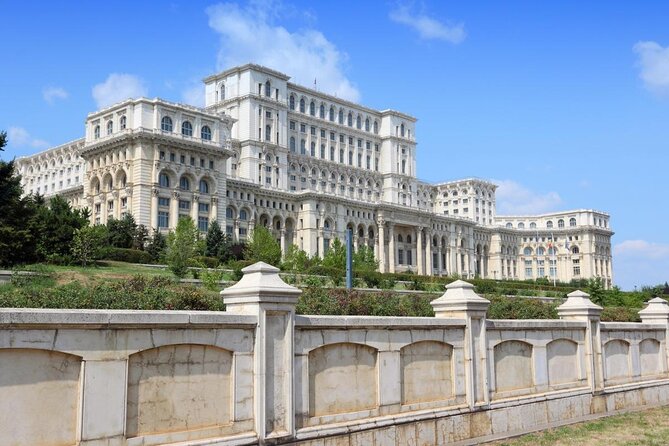
Bucharest is a great start because it sets the emotional tone of the whole trip. You begin with the Palace of Parliament (also called People’s House), a building that makes you feel small in the most literal way. It is 2 hours with an admission ticket included. The value here is not Instagram scale, it is understanding how extreme political power shapes architecture, and how that legacy still hangs over the city.
Next is the Muzeul National al Satului Dimitrie Gusti, the National Village Museum. This is a strong palate cleanser after big government buildings. You get a focused 1 hour view of traditional Romanian village life, and the idea that villagers created a home environment that worked with the land, not against it.
Then you visit the Romanian Athenaeum, 45 minutes, admission ticket included. Even if you are not a classical-music person, it is one of the most recognizable symbols of Romanian culture, and it helps you see Bucharest beyond the monumental.
Finally, you walk around Revolution Square and the Old Town area. Revolution Square is tied to the fall of Ceausescu, with 45 minutes planned and admission free. Old Town rounds out the day with the historical city centre and Hanul lui Manuc, a fortified inn area built around 1806. You get 2 hours there, and it is free.
Practical note: this is a walking and standing kind of day. Wear shoes you trust.
Different day out, same corner of Romania:
Day 2: monasteries, Poienari Fortress ruins, and a road-trip day on Transfăgărășan
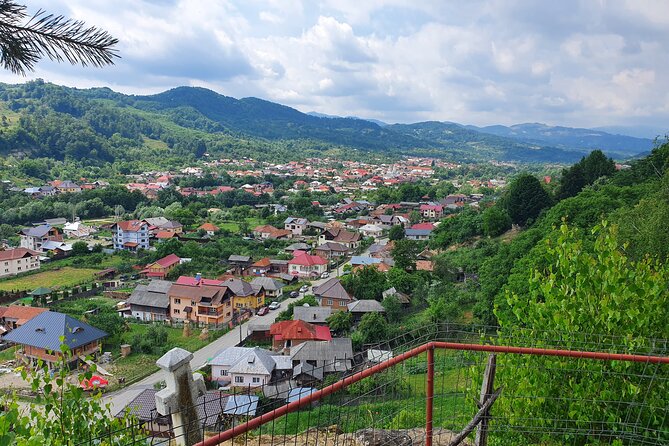
Day 2 starts with Curtea de Arges Monastery. It is 45 minutes with admission ticket included. You get royal tombs, the 13th-century Royal Church, and the ruins connected to the Wallachian princely court. The emotional payoff here is seeing how religion and power overlap in the region’s medieval story.
After that, you head to Poienari Castle ruins, planned for 2 hours with admission ticket included. The Arges River cliff setting is the point. You also get the Vlad the Impaler story thread from the site itself, including the mention of a secret passage when Turks attacked in 1462. Whether you take the legend literally or as story history, the location gives the narrative weight.
Then comes one of Romania’s top road days: the Transfăgărășan Highway. The itinerary notes it runs over 150 kilometres, is fully open only from June to October, and reaches a highest point of 2,042 metres. It is also linked to a tunnel connecting sides at Lake Balea.
For many people, this is the day they realize Romania is not just castles. The mountains and weather shifts make it feel like a different country.
The day ends in the Big Square, Piața Mare, 1 hour, free, tied into Sibiu. The value of Sibiu here is that you get a walkable old city core with major landmarks like the Evangelical Cathedral and the Old Town centre, plus a lively central square feel.
Day 3: Corvin Castle, Densuș Church murals, and Dacian Sarmizegetusa Regia
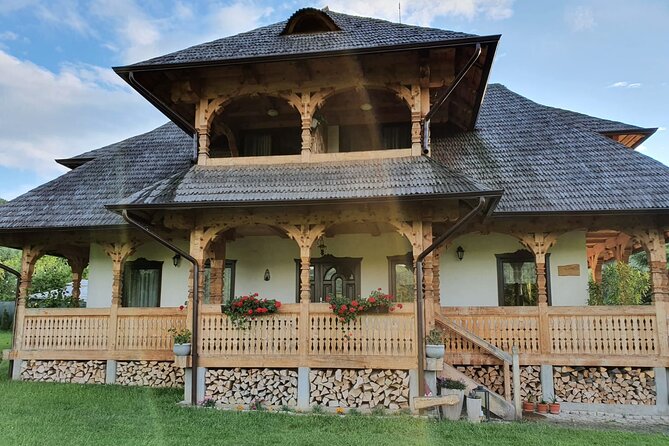
Hunedoara is where you get big medieval drama. Corvin Castle, also known as Hunyadi or Huniazilor, is 2 hours with admission ticket included. It is described as a Gothic-Renaissance castle and one of the largest in Europe. Even if you have seen castles before, the scale here is the kind that makes your brain go quiet for a minute.
Next stop is Densuș Church (St Nicholas’ Church). You get 1 hour and admission ticket included. This place is special because it is layered in time: the present form dates to the 13th century, on a site tied to a 2nd-century Roman temple, with materials from Dacian fortress sources. Inside, the itinerary notes 15th-century mural paintings showing Jesus wearing Romanian traditional clothes, painted by artist Ștefan, with additional murals added in the 18th century by Simion de Pitești.
That detail alone makes it worth more than a quick photo stop. You are seeing how local culture gets written into religious art.
Your last big anchor is Sarmizegetusa Regia, a Dacian capital on a mountain at about 1,200 metres. It is 2 hours with admission ticket included. It is not just “old rocks.” The itinerary frames it as a key military, religious, and political centre before wars with Rome, organized around multiple citadels within a defensive system.
If you like history but hate lectures, this is the sweet spot. The site layout does a lot of explaining for you.
Day 4: UNESCO at Biertan, canyon walking near Cluj, and Alba Iulia’s star fortress
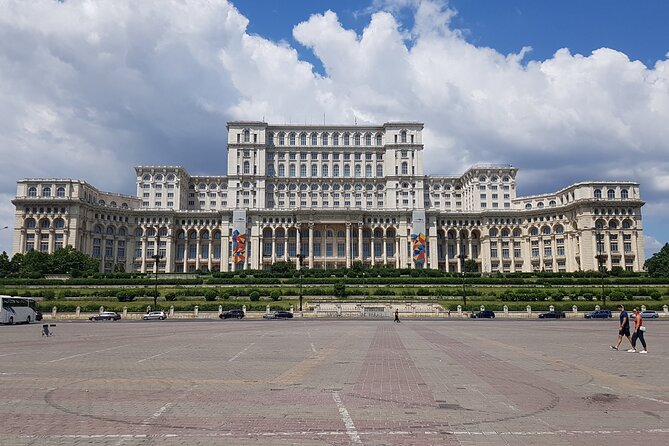
Day 4 blends heritage architecture with outdoor time. Biertan Fortified Church is a UNESCO World Heritage site and is planned for 2 hours, admission ticket included. The itinerary notes the Saxon settlement history, the church on a hillock, three defensive walls, and 7 bastions. When you see a church designed as a defense structure, you understand why these communities thought in terms of centuries, not election cycles.
Then you head to Cheile Turzii, around 40 kilometres south of Cluj-Napoca, planned for 2 hours with admission ticket included. The terrain is described as more rolling around Cluj than the dramatic mountain zones elsewhere. The itinerary also calls the gorge hike relatively easy, especially if you simply walk through the bottom of the gorge along the cool path and stream.
This is a good day for people who want nature but do not want a brutal multi-day hike.
The day closes at Cetatea Alba Iulia, Alba Carolina Citadel. It is 2 hours, admission ticket included. This is a star-shaped fortress started during Habsburg rule on November 4, 1715 and completed in 1738, with 20,000 serfs involved in construction per the itinerary text. If you like “why things are shaped that way,” you can also connect it to Vauban architecture referenced in the description, and even the city logo.
Day 5: Salt Mine air, botanical gardens near Cluj, and the Surdești wooden church
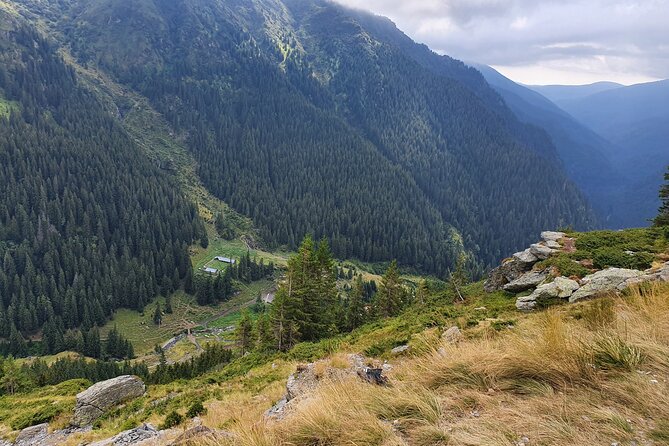
Salina Turda, the Turda Salt Mine, is next at 2 hours with admission ticket included. The tour frames it as a place where the saline air can be beneficial, especially for respiratory problems such as allergies or asthma. Even if you do not have those concerns, it is a fun contrast day after castles and forts: cool air, underground space, and a different kind of Romanian “wow.”
After that, you visit Gradina Botanica Alexandru Borza, 1 hour, admission ticket included. The itinerary description also references a Cluj city-tour angle, including old city architecture from baroque, renaissance, and gothic styles, with some buildings dating back to the 17th century. The practical value is that you get a short nature and history mix without exhausting driving.
Your final stop is Surdesti Wooden Church, 45 minutes, admission ticket included. The key selling point is craftsmanship and height, with the itinerary listing a 54-metre tower. It is said to date to 1721, and it is called an architectural masterpiece. For me, wooden churches are one of Romania’s most distinctive textures. Stone can look heavy. Wood looks alive.
Day 6: Maramureș humor at Merry Cemetery and a memorial that explains the communist years
Day 6 goes to Maramureș, starting with the Merry Cemetery in Sapanta. It is 1 hour, admission ticket included. The concept is simple and memorable: colorful crosses and tombstones with humorous poems about the deceased. It is one of those stops that makes you stop thinking of cemeteries as gloomy and start seeing them as culture and storytelling.
Then you visit the Memorial of the Victims of Communism and of the Resistance, planned for 2 hours with admission ticket included. This is not “feel good” history. It is designed to help you understand the damage of the totalitarian regime and the pain it caused in a short time window. It also gives context to why Romania’s modern identity is tied so tightly to memory.
This pairing works. You get humor one moment, then seriousness the next. That mix is very human.
Day 7: Barsana Monastery height, the Tihuța Pass Dracula link, and painted Ciocănești houses
Your first stop is Barsana Monastery, 45 minutes, admission ticket included. The itinerary calls it one of the tallest wooden churches in Romania at 57 metres. That detail matters because you can feel how the architecture pushes toward the sky, especially when you are in the courtyard area.
Next is Tihuța Pass, 2 hours, admission free. It connects Bistrița to Vatra Dornei and is in the Romanian Bârgău Mountains. The Dracula connection comes from the itinerary description: Bram Stoker’s novel Dracula uses the name Borgo Pass, and the area is tied to that Dracula gateway idea. The text also notes that Stoker likely found the name on a contemporary map, and never visited.
Today, the pass is home to Hotel Castel Dracula at 1,116 metres elevation, built in 1976. Even if you do not go inside, the presence of that name shows how Romanian landscapes and literature keep remixing each other.
Then you visit Ciocănești, 1 hour, admission ticket included. The highlight here is the merry painted houses with traditional motifs, spread across both sides of the Golden Bistrița River. It is also described as surrounded by pine spruce forests and fertile meadows, close to Vatra Dornei at 22 kilometres, and 100 kilometres from Suceava city.
This is a strong day for photos, but also for slowing down and looking at patterns on the facades.
Day 8: Bukovina painted monasteries, Voroneț blue, Humor, Sucevita, and Moldovita
Bukovina is where the tour really leans into art and faith. You start at Voroneț Monastery, 45 minutes, admission ticket included. The itinerary describes it as built by Stephen the Great in 1488 over 3 months and 3 weeks to commemorate the victory at the Battle of Vaslui. It is often called the Sistine Chapel of the East, and the frescoes feature the intense shade of blue known in Romania as Voroneț blue.
Then comes Humor Monastery, 45 minutes, admission ticket included. The itinerary calls it fortified and mentions it survived over centuries, and that some churches in the region were built hidden in woods or in rock caves. That theme of protection shows up again and again in this region.
Next is Sucevita Monastery, also 45 minutes with admission ticket included. The description emphasizes the biblical scenes and icons painted on walls, and notes UNESCO recognition for cultural landmarks. It is described as a fortified church, and as an open-book experience for understanding Christian history.
Finally, Moldovita Monastery, 45 minutes with admission ticket included. It is said to have been built in 1532 and to combine Byzantine, Gothic, and Moldavian elements, with mural artwork both inside and outside.
What you get by the end of this day is more than four individual monasteries. You see a style family, the same purpose across different buildings, and how painters used color and composition to teach people visually.
Day 9: Lucia Condrea museum, Popa naive sculpture, and Bicaz Gorges by the river
Day 9 is a nice shift from fresco walls to objects and hands-on creativity. You visit the Muzeul International al Oualor Lucia Condrea in Moldovita, 1 hour, admission ticket included. It opened in the summer of 1993, and the itinerary notes over 5,500 exhibits in 56 display cases across two levels.
That is a very specific kind of art museum. Even if eggs are not your thing, the scale and the precision implied by that many curated pieces makes it memorable.
Then you go to the Popa Museum, 1 hour, admission ticket included, about 12 kilometres from Târgu Neamț in Târpești. It is based in sculptor Nicolae Popa’s house. The itinerary gives a strong life story: wounded in World War II, imprisoned by communists for fighting against the regime, left without personal possessions except his house. He then worked hard to become one of the valued naive sculptors in Romania and a creator of folklore.
After those indoor stops, you finish with Bicaz Gorges, 2 hours, admission free. The itinerary frames it as a rivers carved path through mountains and virgin forests. This is the kind of walk that re-sets your sense of scale after art museums.
Day 10: Sighișoara citadel life, Viscri fortified church, and Rupea’s basalt cliff fortress
Your day starts in Sighișoara Old Town with the Clock Tower and the Arms Museum. This stop is 2 hours, admission ticket included. The tour description notes the Sighișoara Citadel was built in 1280 and has remained inhabited for over 700 years, which is a rare kind of continuity for medieval spaces.
Next is Viscri Fortified Church, 2 hours, admission ticket included. The itinerary notes it is best known for a white fortified church first mentioned in 1400 as Alba Ecclesia. It also provides a clear ownership timeline: local Szekler community built an early small church on the site, then German colonists took over and built phases including a main tower on the west side in the 13th century, plus fortification starting in the 15th century.
Finally, you visit Cetatea Rupea, 1 hour, admission ticket included. It is described as a medieval fortress built by Transylvanian Saxons, first mentioned in a 1324 document, on a 120-metre high basalt cliff west of Rupea. It was restored in 2010 to 2013, and as of 2014, it is visited each month by more than 10,000 tourists.
This day is a good example of the tour’s rhythm: city life, then village church defense, then cliff fortress views.
Day 11: Brasov old town, Black Church, Bran Castle snacks, and Peles Castle beauty
Brasov brings you into the foothills of the Carpathians and a well-preserved medieval city feeling. You start with a walking tour of Brasov Old Town, 2 hours with admission ticket included, focusing on the Black Church, Old Town square, and city walls built in the Middle Ages. The itinerary also notes free time to absorb the atmosphere in Brasov cafés.
Then comes Bran Castle, planned for 2 hours with admission ticket included. The description frames it as between myth and history, widely believed Bram Stoker used it as inspiration for Dracula’s castle in the novel. The practical perk here is that the tour mentions traditional food tasting outside the castle, including handmade cheeses, pálinka (plum and pear brandy), and traditionally produced ham and sausages.
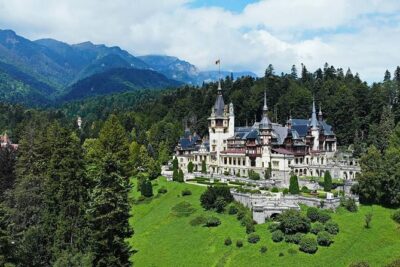
Finally, you visit Peles Castle, 2 hours with admission ticket included. It is described as the Romanian royal family’s summer residence and one of the most important tourist attractions in Romania and Europe. If you like interior details and not just exterior views, this is the stop people remember later.
Day 12: Prejmer fortified church, mud volcanoes, and Snagov’s Dracula tomb legend
Your final day starts at the Prejmer fortified church, 45 minutes with admission ticket included. The itinerary notes it is a Lutheran fortified church in Prejmer, with roots tied to the Teutonic Knights and later the Transylvanian Saxon community. It also says it began Roman Catholic and became Lutheran following the Reformation. It is part of the UNESCO World Heritage site for fortified churches and surrounding villages.
Next is Vulcanii Noroioși, the Mud Volcanoes, 3 hours with admission ticket included. This is a standout because it is not castle or church themed. The itinerary describes it as a geological and botanical reservation near Berca in Buzău County. It explains that mud volcanoes are small volcano-shaped structures caused by eruption of mud and natural gases from deep underground, specifically noting 3,000 metres depth. The gases push up salty water and mud, and bubbles emerge as the gas rises, leaving solid conical structures once mud dries.
You end with Snagov Monastery, 1 hour with admission ticket included. The tour description connects it to the Dracula legend and Vlad the Impaler. The promise here is the legend plus the setting. Even if you approach the story as mythology, it is a memorable finale because you get one last Romania narrative thread.
Who this tour suits best, and how to make it go smoothly
This is ideal for you if you want a private tour and you care about understanding what you are seeing, not just checking boxes. It also fits if you like a mix of medieval culture, UNESCO churches, and Romanian nature.
It is also a good option for groups of friends or family who want flexibility. Since it is private, it is easier to slow down when someone is tired, and it is easier to build in pauses when a guide notices you need them.
Because the itinerary includes many sites that involve walking and standing, you will want comfortable shoes and simple layers for changing weather. For the gorge days and any outdoor stops, plan for uneven ground and keep water in mind, even if the tour covers much of the logistics.
If you hate long driving days, just recognize the trip covers a lot of territory. The private car helps, but you are still going to be on the move.
Should you book this 12-day Romania private tour?
If your ideal Romania trip is organized, narrative-led, and not dependent on public transport, this is a strong choice. The biggest reasons are practical: a private English speaking guide/driver in the same vehicle every day, plus a route that hits major UNESCO sites and pairs them with nature days like Transfăgărășan, Cheile Turzii, Bicaz Gorges, and mud volcanoes.
I also like the human touch. The review you provided highlights the guide and driver named Razvan, whose real name is given as Nicolas, as unusually friendly, kind, and warm, making the experience feel like more than a service.
The main reason to pause is the pace. This itinerary is full, with multiple major stops per day. If you want quiet time to linger or you plan to spend lots of hours at one museum, you might find this tight.
If that pace works for you, book it.
FAQ
How long is the 12 Days Private Tour in Romania?
It is listed as approximately 12 days.
Is this tour private or shared?
This is a private tour/activity, and only your group participates.
What is included in the tour price?
The tour includes a private car for your group, a private licensed English speaking guide/driver during the tour, complimentary wireless internet in the car, and all car expenses like gasoline, parking, and road tolls. It also includes accommodation, meals, and entrance fee for the guide.
Are my meals and accommodation included?
Your accommodation and meals and beverages are not included.
Are entrance fees included?
The tour notes that entrance fees are not included as per the itinerary. At the same time, many itinerary stops list admission tickets included. You should confirm what is covered for each stop before you go.
Is pickup offered?
Pickup is listed as offered.
Can the itinerary change after the tour begins?
Yes. The tour includes great flexibility regarding changes to the daily itinerary even after the start of the tour.
Is there free cancellation?
Yes, free cancellation is listed. You can cancel up to 24 hours in advance of the experience for a full refund.
Newest Bucharest write-ups
- Real Roma Community Crafting Workshop
★ 5.0 · 1 review - Discover Bucharest’s most Photogenic Spots with a Local
★ 5.0 · 1 review - Chauffeur Service in Bucharest
★ 5.0 · 1 review - Peles, Bran, Brasov
★ 5.0 · 1 review - From Bucharest: Carpathian Villages and Sinaia Day Trip
★ 5.0 · 1 review - Panoramic Bucharest City Tour
★ 5.0 · 1 review - 3 Days Private Tour in Transylvania from Bucharest
★ 5.0 · 1 review
Private, compared.

Castles of Transylvania: Private Day Trip from Bucharest
Read our review →
Dracula’s Castle, Peles Castle and Brasov – Private Day Trip from Bucharest
Read our review →
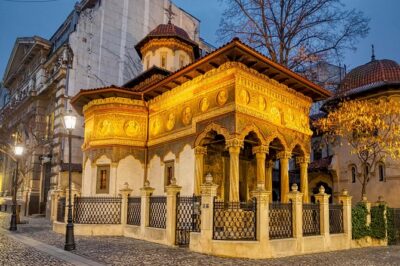
Bucharest Panoramic Sightseeing – Private City Tour
Read our review →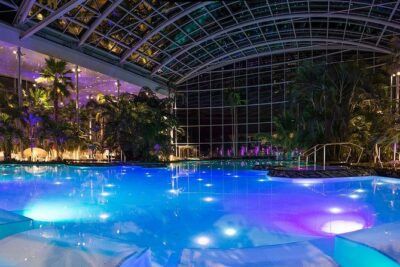
THERME “Take It Easy” Pack: Full Spa Access + Private Transfers
Read our review →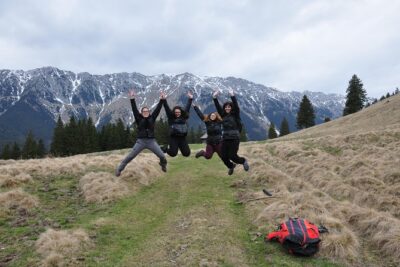
Piatra Craiului National Park Private Hiking Tour from Brasov
Read our review →