Reviewed · PRIVATE
13 Days Private Tour in Romania from Bucharest
One country, two worlds, and a lot of wow in between. This 13-day private Romania tour mixes Bucharest landmarks, UNESCO sights, and mountain scenery, all with an English-speaking guide from Nicolas Experience Tours. I especially like the private car just for your group, so you can move on your schedule, and I like how the route pairs medieval fortresses with living culture, not just checklists. The main drawback to plan for is the cost, plus the fact that entrance fees are not clearly guaranteed as fully included, so you’ll want to confirm what’s covered for each stop.
You’ll get pickup offered, mobile ticket access, and a licensed guide/driver who stays with you throughout, which makes a huge difference when you’re traveling across Romania for 13 days. It’s also the kind of trip where flexibility matters, since the tour highlights depend a lot on seasonal timing and road conditions.
In This Review
- Key things I’d focus on
- Bucharest’s People’s House and Revolution Square
- Romanian tradition at the Village Museum, Athenaeum, and Old Town
- From Curtea de Arges to Poienari: royal ruins and a cliff fortress
- Transfagarasan Highway: when the road becomes the attraction
- Corvin Castle, Densus Church, and Sarmizegetusa Regia
- UNESCO fortified church at Biertan, then a gorge walk near Cluj
- Turda Salt Mine, Alexandru Borza Botanical Garden, and Surdesti wooden church
- Maramures: the Merry Cemetery, a communism memorial, and nature time
- Barsana Monastery, Tihuța Pass, and painted houses in Ciocănești
- Bukovina’s painted monasteries: Voroneț blue and the fortified church style
- Museums, sculpture, and a nature walk at Bicaz Gorges
- Sighisoara, Viscri, and Rupea Fortress: Saxon towns with real staying power
- Brasov old town, Black Church, Bran, and Peles: myths and royalty side by side
- Prejmer fortified church, Berca mud volcanoes, and Snagov Monastery
- Price and logistics: does this private tour make sense for you?
- Should you book this 13-day Romania private tour?
- FAQ
- How long is the Romania private tour?
- Is this tour private?
- Do you get pickup in Bucharest?
- What language is the guide?
- What transportation is included?
- Are accommodation and meals included?
- Are entrance fees included?
- Can I change the itinerary after the tour starts?
- Is free cancellation available?
Key things I’d focus on
- Private, flexible logistics: your car and guide move with your pace, not the other way around
- A tight history-and-nature blend: from Palace of Parliament to monasteries in the Carpathians
- UNESCO and fortress culture: Biertan, Prejmer, and the Dacian site at Sarmizegetusa Regia
- Big scenic road moments: especially the Transfagarasan Highway when it is open
- Bukovina’s painted monasteries: Voroneț, Humor, Sucevita, and Moldovița in one run
Other Bucharest days worth the drive
- Bucharest: Dracula’s Castle, Peles Castle, & Brasov Old Town★ 4.5 · 17,858 reviews
- Bucharest: Dracula Castle, Peles Castle & Brasov Old Town★ 4.6 · 10,891 reviews
- Bucharest: Dracula’s Castle, Peleș Castle & Brașov Day Trip★ 4.4 · 6,100 reviews
- Bucharest: Palace of Parliament Tickets and Guide★ 4.3 · 3,182 reviews
Bucharest’s People’s House and Revolution Square
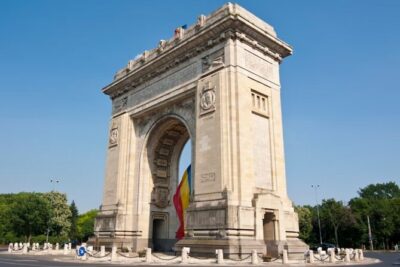
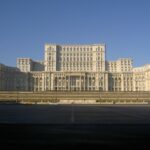
Bucharest can feel like a capital with a split personality. One minute you’re staring at elegant civic buildings, the next you’re facing one of the most controversial megastructures in Europe: the Palace of Parliament, also called the People’s House.
The guide-led approach here helps. This isn’t just a photo stop. You’ll get the context for why the building is seen as a symbol of totalitarian excess, and why the sheer scale can feel almost unreal when you stand in front of it. If you’ve got a selfie plan, be prepared for the practical challenge, because the size of the place makes close framing tricky. Still, that moment is the kind you remember.
Then comes Revolution Square and the surrounding story of December 1989. This is where the city’s modern identity starts to make sense. You’ll learn how the coup began, and you’ll see the Senate Palace area tied to the Communist Party’s central power. It’s history you can walk through, not history locked behind a screen.
Practical note: wear shoes you can walk in for a couple of hours, because Bucharest’s highlights add up fast even on a well-paced private day.
Romanian tradition at the Village Museum, Athenaeum, and Old Town
After the political gravity of Parliament, the Bucharest Village Museum (Muzeul National al Satului Dimitrie Gusti) offers a different kind of Romania: everyday life, building practices, and a worldview tied to the land.
This museum is special because it compresses Romanian traditions into one place. You’ll see how village life worked in harmony with surroundings, and why it’s described as a sustainable, ecological approach long before the modern word sustainability became popular. Even if you’re not a museum person, the setting makes it easier to picture how people lived.
Next is the Romanian Athenaeum, a major cultural symbol. The best part of a stop like this on a private tour is timing. You can spend enough time to appreciate what it represents without feeling rushed, and you can ask your guide what to notice in the building’s role in Romanian identity.
Then you shift into Bucharest Old Town, where the mood changes again. The fortified inn of Hanul lui Manuc is a great example of how the city’s trading past shaped what you see now. It’s built around commerce and gathering, and the courtyard feel helps you understand why Bucharest drew merchants from far beyond the region.
If you’re hungry, this area is also where your guide can steer you toward classic Romanian choices in the right spirit of the neighborhood.
From Curtea de Arges to Poienari: royal ruins and a cliff fortress
The drive out of Bucharest is where the tour starts feeling more like an expedition. Curtea de Arges gives you royal and religious roots: old princely court remnants, an important medieval church, and a story that mixes beauty with tragedy.
This is a stop where your guide can do a lot of work. You’ll connect the tombs and sacred buildings to the Wallachian royal world, and you’ll see how the architecture and ruins fit together. Even in less than an hour, the place has enough layers to feel worth the detour.
Then Poienari Castle climbs into pure drama. The ruins sit high above the Arges River, at the edge of the Carpathian foothills. It’s one of those locations where the views help you understand why a fortress mattered. If you’re a Vlad the Impaler fan, this area naturally pulls in that mythology too, including the story of flight through a secret passage and the fortress’s role in the medieval power struggle.
One consideration: cliffside ruins can be uneven and windy. Go with comfortable shoes and expect you’ll want to pause often for the view.
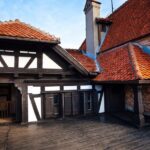
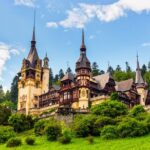
Different day out, same corner of Romania:
Transfagarasan Highway: when the road becomes the attraction
This tour includes Romania’s most famous scenic drive: the Transfagarasan Highway. It’s built for road-trip lovers, but it also works for people who don’t usually care about highways.
Here’s the key practical detail: the road is fully open only from June to October. So your travel dates matter. When it’s open, you’ll hit big elevation points, including the highest stretch around 2,042 meters, and you’ll connect through the area near Lake Balea. The highlight is that the scenery feels like it keeps changing every few minutes.
On a private tour, this matters because you can time viewpoints better instead of being stuck with a rigid group schedule.
Corvin Castle, Densus Church, and Sarmizegetusa Regia
From Wallachian legends, the tour leans into Transylvania’s mix of Gothic-Renaissance architecture and deep prehistoric layers.
Corvin Castle (Castelul Corvinilor), also known through other names like Hunyadi Castle, is a standout for size and atmosphere. It’s one of the largest castles in Europe, and it’s the kind of place where a guided visit helps you place dates and styles in your head instead of just staring at stone.
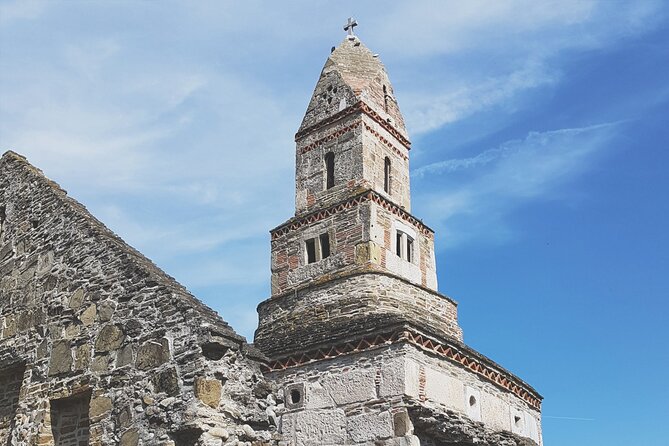
Then Densus Church takes the story further back. It’s described as the oldest stone church in Romania, and it sits on a site with a Roman temple beneath it. That layering is the whole point: you’re literally standing on multiple eras of faith and stonework. The murals inside are another reason it works well on a short visit, including depictions where Jesus is shown wearing Romanian traditional clothes.
Finally, Sarmizegetusa Regia brings you to the Dacian heartland. The site is on a high mountain and functioned as a major military, religious, and political center before the wars with Rome. You’ll see citadels arranged as part of a defensive system in the Orastie Mountains, which makes it feel less like an archaeological field and more like a strategic blueprint.
Tip: bring a light layer even in warmer months. Mountain sites can shift quickly with wind and shade.
UNESCO fortified church at Biertan, then a gorge walk near Cluj
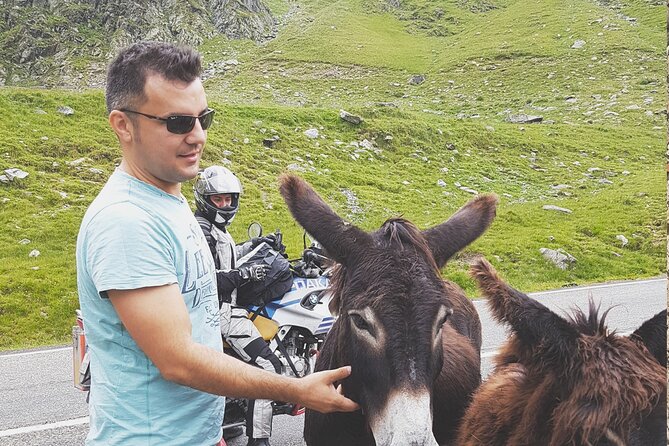
The Biertan Fortified Church is UNESCO-listed and surrounded by defensive walls and bastions, which gives it a different feel than most churches. Instead of thinking purely about religion, you’re also seeing how community survival worked in this region. The hillock setting and the layered fortifications make the place feel constructed for both worship and protection.
Next is Cheile Turzii, Turda Gorge, a natural reserve about 40 kilometers south of Cluj-Napoca. This stop is smart because it doesn’t require extreme hiking. You can take the easiest route, including walking through the bottom of the gorge alongside a calm stream and surrounded by steep stone walls.
That easy option is a huge value on a long 13-day program. You get real scenery without burning energy you’ll want later for monasteries and city walking.
Turda Salt Mine, Alexandru Borza Botanical Garden, and Surdesti wooden church
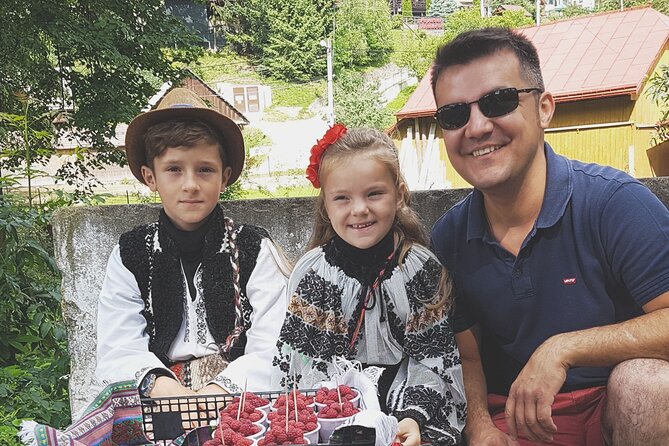
Transylvania has impressive architecture, but it also has moments that feel like a reset.
Salina Turda, the Turda Salt Mine, is built for that. You’ll go underground into a salt environment where people often describe the air as helpful for breathing and allergies. Even if you don’t chase health claims, it’s a visually strange setting that feels like you’ve stepped into a different planet.
Then the Alexandru Borza Botanical Garden gives you a calmer, slower pace. It’s a quick, camera-friendly cultural break in Cluj-Napoca, and it pairs well after time underground.
Surdesti Wooden Church is a perfect final course for the day: warmth of wood, impressive height, and a construction story that dates back to 1721. The towers are described as reaching about 54 meters, and the wooden build is considered an architectural masterpiece. On a private tour, you can linger long enough to appreciate craftsmanship details without a rush.
If you’re a photographer: watch the angle of light, because wooden surfaces pick up warmth and texture.
Maramures: the Merry Cemetery, a communism memorial, and nature time
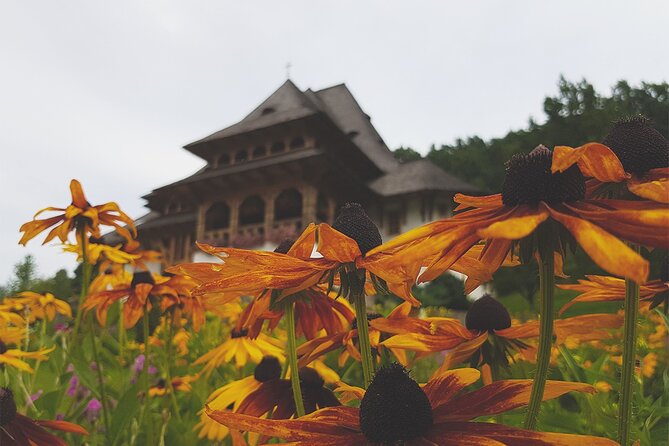
Maramures is where Romania starts feeling more grounded in tradition and landscape.
Sapanta’s Merry Cemetery is one of the most unusual cultural stops in this entire region. The colorful crosses and tombstones are decorated as art and include humorous poems about the deceased. It’s not a cold memorial. The tone is almost playful, even when the subject is serious. It helps you understand how culture can process grief differently.
Then comes the Memorial of the Victims of Communism and of the Resistance. This is heavier. The museum visit is designed to show how totalitarian oppression affected lives and why Romanian people fought to escape it. Even if you’ve visited other memorial museums in Europe, this one has a distinct local intensity because it’s focused on Romania’s specific experience.
You also get a long nature block with Maramures County scheduled as an 8-hour window. That’s valuable because it gives the tour breathing room. After busy medieval days, this is your chance to slow down and actually look.
Barsana Monastery, Tihuța Pass, and painted houses in Ciocănești
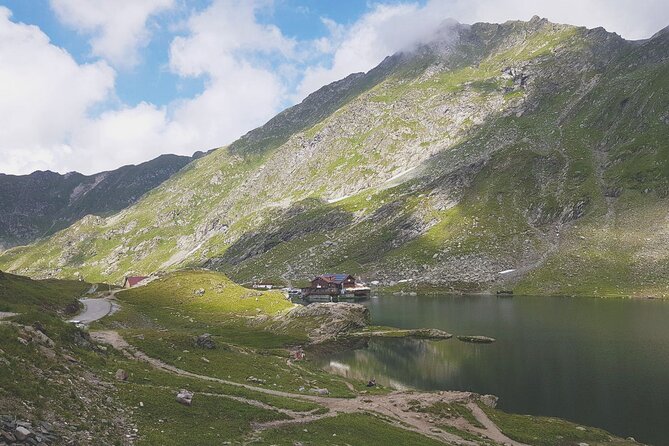
Barsana Monastery is one of those places that makes you stop talking for a minute. It’s known for being one of the tallest wooden churches in Romania, described around 57 meters. The courtyard setting is part of the experience, including a spiritual, earth-and-sky connection that people associate with being close to nature.
Then you head toward Tihuța Pass, a high mountain pass connecting Bistrița and Vatra Dornei. It’s made famous through Bram Stoker’s Dracula, where it appears under the name Borgo Pass. Even if Stoker never visited, the association shaped how the place is imagined. You’ll also pass by Hotel Castel Dracula, located at about 1,116 meters, a themed name that leans into the Dracula mythology.
Finally, Ciocănești brings a village-life look: painted houses with traditional motifs on both sides of the Golden Bistrița River, with pine and spruce forests around the area. This is a great stop for cultural detail, because you can see how design and craftsmanship show up in everyday structures.
Bukovina’s painted monasteries: Voroneț blue and the fortified church style
Bukovina is a big reason many people plan a Romania trip at all. Here, the tour focuses on medieval monasteries with famous frescoes.
Voroneț Monastery is often called the Sistine Chapel of the East, and the story behind it matters. It was constructed by Stephen the Great in 1488 over a short, intense period, tied to a victory at the Battle of Vaslui. The frescoes are known for a distinctive shade of blue, called Voroneț blue, and seeing that color in person is where the nickname makes sense.
Humor Monastery continues the fortified theme. You’ll learn how churches were protected away from enemies, including in remote woods and even in rock caves at high altitude. Humor is described as fortified and enduring through centuries, with a story of a first church destroyed and later replacement.
Sucevita and Moldovița keep the emphasis on mural work and the “church as a readable story” feeling. Moldovița is described as one of the oldest monastic settlements, with a fortified church blending Byzantine, Gothic, and Moldavian style. The key attraction is mural artwork both inside and outside.
On a private tour, the best part is that you’re not stuck with only short, rushed entry. You can pace your attention, so the frescoes feel meaningful rather than a blur.
Museums, sculpture, and a nature walk at Bicaz Gorges
Not every day is about stonework and painted walls.
Lucia Condrea’s museum in Moldovița is a good example. It’s described as unique in Romania and possibly in the world, with over 5,500 exhibits across two levels and 56 display cases. Even if you don’t have time for long museum trips at home, this one can work because it’s set in a regional context.
Then you can stop at The Popa Museum near Târgu Neamț. The story behind sculptor Nicolae Popa is compelling on a personal level. He was wounded in World War II, imprisoned by communists for fighting the regime, and left with almost nothing except his house. His work as a naive sculptor becomes a way to preserve and express Romanian values.
Bicaz Gorges rounds out the region with a straightforward pleasure: a walk along the riverbanks where water carved through the mountains and forests. It’s a chance to stretch and slow down without needing serious climbing.
Sighisoara, Viscri, and Rupea Fortress: Saxon towns with real staying power
Sighisoara Old Town feels like medieval Europe that refused to disappear. The Clock Tower visit, plus the Arms Museum, gives you both a key landmark and the practical context for how towns defended themselves. The citadel has stayed inhabited for over 700 years, which is rare in Europe.
From there, Viscri takes the theme of fortified churches into a calmer village setting. Viscri Fortified Church is described for its white church and its layered history, starting with a small church early on, then changes when German colonists took control, including building phases and fortification elements. It even preserves parts of fortifications that were later repurposed after Ottoman threats faded.
Rupea Fortress adds another viewpoint. It’s on a basalt cliff about 120 meters high, restored in 2010 to 2013, and it draws substantial visitor numbers each month. The restored state helps if you want something visually clear rather than only ruins.
Brasov old town, Black Church, Bran, and Peles: myths and royalty side by side
Brasov is a great place to compare different kinds of “Romania stories.”
The tour includes a walking look at the Old Town: the Black Church (Biserica Neagra), the Old Town square, and city walls built in the Middle Ages. This is the kind of guided walk that gives you your bearings fast, then leaves space for your own pace.
You’ll also have free time for cafés, which matters because Brasov’s atmosphere is part of the experience. It’s an easy place to enjoy a slow meal after several days of long site visits.
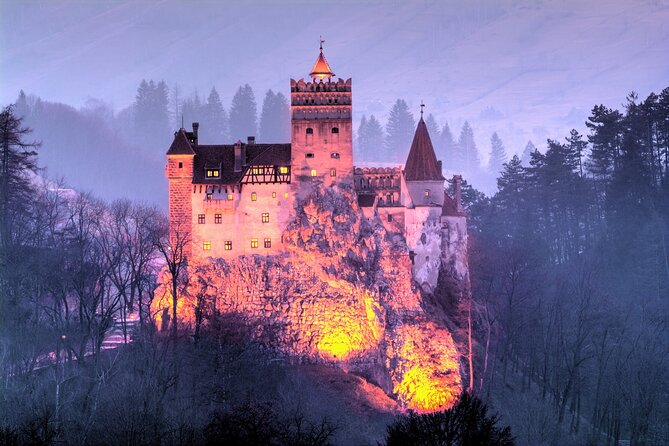
Then comes Bran Castle, known for Dracula associations. Your guide can help you hold both ideas in your head at once: it’s widely linked to the Dracula myth, but you’re also looking at a real castle with its own story. Outside the castle, the tour includes the chance to try traditional foods like handmade cheeses, palinka (plum or pear brandy), and local ham and sausages.
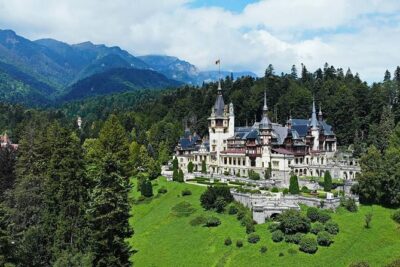
Finally, Peles Castle gives you the royal contrast. It’s described as the Romanian royal family’s summer residence and one of the major attractions in Romania and Europe. The wordless experience here is simple: you’ll feel why so many visitors spend hours inside just to see it once.
Prejmer fortified church, Berca mud volcanoes, and Snagov Monastery
The ending stretch blends geology, religious architecture, and Dracula lore in a way that still feels connected.
Prejmer fortified church is Lutheran and part of the villages with fortified churches UNESCO area. The church’s origin includes the Teutonic Knights, later shifts to Transylvanian Saxons, and a change from Roman Catholic to Lutheran following the Reformation. The fortifications and village setting make it feel like a whole defense system, not just a church building.
Berca Mud Volcanoes, also called muddy volcanoes, are a totally different kind of wonder. The area is a geological and botanical reservation, with small volcano-shaped structures caused by mud and natural gases. The tour describes the deeper underground source around 3,000 meters and explains how gas and salty water push mud upward and then dry to a solid cone. This is a great stop for people who like odd science moments in addition to historic ones.
Then you get Snagov Monastery, tied to the Dracula tomb legend. This part of Romania is playful and a little myth-driven, which is exactly why it works as a finale. Even if you don’t care about vampires, it’s a fun way to see how fiction and local legend can shape what people want to photograph and remember.
Price and logistics: does this private tour make sense for you?
At $4,654.26 per person, this is not a budget trip. The value is in the structure: private transport, a guide who stays with you throughout, and the ability to adjust day plans after the tour starts. In a country as spread out as Romania, that kind of private routing can save you real time and stress.
Here’s what I’d weigh carefully before you say yes:
- Your biggest inclusions are human and transport value: private licensed English-speaking guide/driver, private car, wireless internet in the car, and all car expenses.
- Accommodation and meals are not included in the package price, so factor that into your total travel budget.
- Entrance fees can be confusing from a buyer’s point of view. The tour information says entrance fees are not included, yet many individual stops list admission tickets included or free. I’d treat that as a reason to confirm what’s covered for each stop before you book.
Timing also affects quality. Transfagarasan Highway is fully open only June to October, and several mountain-area stops feel best when roads and weather cooperate. A private guide helps here because you can shift priorities if conditions change.
Who this tour fits best:
- History lovers who want facts explained in plain language, not just time-stamped sightseeing
- Nature fans who also want cultural anchors like monasteries and fortified towns
- People who want Romania without the friction of organizing transport between distant regions
Should you book this 13-day Romania private tour?
If you want a Romania trip that mixes major icons with real regional character, I think this is a strong choice. The private setup is the backbone, and the route covers the country’s best “wow sources,” from political history in Bucharest to the painted monasteries of Bukovina, plus mountain scenery and fortress culture.
I’d book if you’re willing to pay for convenience and a guided flow, and if you’ll confirm entrance-fee coverage for each stop so there are no surprises. I’d skip or adjust if you’re trying to keep costs down, or if your dates fall outside Transfagarasan’s open season and you don’t want to risk fewer road highlights.
FAQ
How long is the Romania private tour?
It runs for about 13 days.
Is this tour private?
Yes, it’s a private tour/activity, and only your group participates.
Do you get pickup in Bucharest?
Pickup is offered.
What language is the guide?
You’ll have a private, licensed English-speaking guide/driver available throughout the tour.
What transportation is included?
A private car (tourism vehicle or minibus) is included, used only for you and your friends or family.
Are accommodation and meals included?
No. Accommodation, meals, and beverages are not included.
Are entrance fees included?
The package notes that entrance fees as per the itinerary are not included, though some stops list admission tickets included or free. It’s worth confirming what applies to your booking.
Can I change the itinerary after the tour starts?
Yes. The tour includes great flexibility regarding changes to the daily itinerary even after the start.
Is free cancellation available?
Yes, free cancellation is available. You can cancel up to 24 hours in advance for a full refund.
Newest Bucharest write-ups
- Discover Bucharest’s most Photogenic Spots with a Local
★ 5.0 · 1 review - Real Roma Community Crafting Workshop
★ 5.0 · 1 review - Peles, Bran, Brasov
★ 5.0 · 1 review - Chauffeur Service in Bucharest
★ 5.0 · 1 review - From Bucharest: Carpathian Villages and Sinaia Day Trip
★ 5.0 · 1 review - Panoramic Bucharest City Tour
★ 5.0 · 1 review - 3 Days Private Tour in Transylvania from Bucharest
★ 5.0 · 1 review
Private, compared.

Castles of Transylvania: Private Day Trip from Bucharest
Read our review →
Dracula’s Castle, Peles Castle and Brasov – Private Day Trip from Bucharest
Read our review →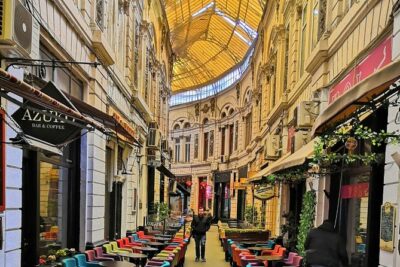
Bucharest Panoramic Sightseeing – Private City Tour
Read our review →
THERME “Take It Easy” Pack: Full Spa Access + Private Transfers
Read our review →
Piatra Craiului National Park Private Hiking Tour from Brasov
Read our review →