
Reviewed · DRACULA'S CASTLE TOURS
Private Day Trip True Castles of Vlad Dracula and Transfagarasan Road
One day, three Dracula-linked stops, and a monster road.
This private tour connects you to Vlad the Impaler’s landmarks, then adds the dramatic Transfagarasan Road when it’s open. It’s a full-day plan with hotel pickup, a private guide, and enough flexibility built in to swap stops depending on the season.
I especially like the way the day mixes dark legend with real places you can stand in. You spend time at the Royal Court in Targoviste, climb to the ruined Poenari Fortress, and then end with views from the road most people dream about in Romania.
One consideration: Poenari involves a tough climb, around 1,400 steps, so it’s not a casual walk. If you’re unsure about stamina, plan to pace yourself, and bring grippy shoes.
In This Review
- Key highlights worth your time
- Bucharest pickup and the long scenic drive mindset
- Targoviste Royal Court: where Vlad’s power and cruelty took shape
- Curtea de Arges Monastery: frescoed interiors and a second capital feel
- Poenari Castle climb: 1,400 steps, ruins, and Vlad legends
- Vidraru Dam: power, water, and a road engineered for drama
- Transfagarasan Highway: timing rules and the highest-point magic
- Private day-trip logistics that keep the day enjoyable
- Price, value, and what you are really paying for
- Who should book this tour, and who should reconsider
- Should you book this Vlad Dracula and Transfagarasan day trip?
- FAQ
- What time does the tour start?
- Is pickup and drop-off included?
- How long is the day trip?
- Is this a private tour?
- Are the sites guided in English?
- Are entrance fees included?
- Do I get to visit Transfagarasan Highway all year?
- What is the hardest part of the tour?
- Is the tour dependent on weather?
- Is the tour refundable if I cancel?
Key highlights worth your time
- Private guide, English, and a calmer pace so you can ask questions and move without crowd chaos
- Targoviste Royal Court and Chindia Tower links Vlad the Impaler to this exact city
- Poenari Castle climb is steep and physical, with big cliff views at the top
- Curtea de Arges Princely Church shows medieval fresco work and a standout church interior
- Transfagarasan Highway timing rules change what you see between summer and winter
More Bran Castle runs from Bucharest:
- Bucharest: Dracula’s Castle, Peles Castle, & Brasov Old Town★ 4.5 · 17,858 reviews
- Bucharest: Dracula Castle, Peles Castle & Brasov Old Town★ 4.6 · 10,891 reviews
- Bucharest: Dracula’s Castle, Peleș Castle & Brașov Day Trip★ 4.4 · 6,100 reviews
- Bucharest: Day Trip to Dracula Castle, Peles Castle & Brașov★ 4.4 · 3,049 reviews
Bucharest pickup and the long scenic drive mindset
You start early, with pickup from your Bucharest hotel or accommodation around 8:00 am, then you head west on a private, air-conditioned vehicle. This kind of setup matters on a day like this because you are covering a lot of ground, and you want the drive to feel like part of the experience, not a headache.
The best way to enjoy this day is to think of it as two acts. Act one is Vlad the Impaler’s trail through Targoviste and the older capital sites. Act two is the road experience, built around Vidraru Dam and the famous Transfagarasan stretch when it’s open.
This is also one of those trips where your guide really shapes the day. In recent experiences, guides such as Andrei, Alex, and Rasvan were called out for friendliness, helpful explanations, and keeping the drive interesting. One guide, Rasvan, was even praised for stepping in helpfully with Covid test coordination when it was required for flights, which tells you the team tends to respond quickly when needs pop up.
Targoviste Royal Court: where Vlad’s power and cruelty took shape
Your first major stop is the Royal Court area at Targoviste, tied directly to Vlad the Impaler’s family and rise to fame. In 1436, Vlad Dracul, Vlad Dracula Tepes’s father, became ruler of Wallachia and moved to the court here. Later, it’s also described as the place where Vlad Dracula became infamous for cruelty.
You get the idea through several linked details. For example, in 1459 around Easter Sunday, Vlad Dracula is associated with impaling older noble men and enslaving younger ones to build Poenari Fortress, with the accusation tied to the murder of his father.
Then there’s the Ottoman standoff, including a story where Vlad is said to have refused tribute and won a victory by disguising himself as a Janissary and attacking an Ottoman camp near Targoviste. Whether you treat every legend as literal or symbolic, these stories give you a frame for what you’re looking at, not just a random list of names.
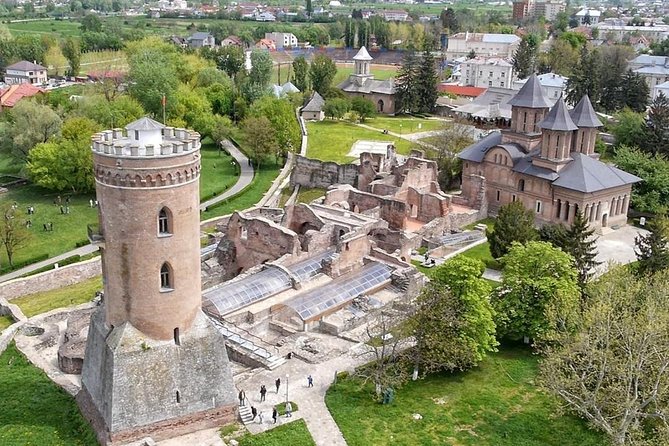
What I like is the mix of visuals and local landmarks. Chindia Tower is the city’s notable landmark, described as being 27 meters high, about 9 meters in diameter, and built for surveillance and defense. There’s also a legend about 122 stairs, which is the kind of detail that makes a building feel personal, like there’s a point to going up.
A final note that adds perspective: written references for the Royal Court are said to date back to 1396, and in the 17th century the court was set on fire after Ottoman orders, after which the Wallachian capital moved back to Bucharest. So you’re not only seeing Vlad era ruins and stories, you’re also seeing how power shifted.
Practical tip: because this is a more “city landmarks and interpretation” kind of stop, it’s a good place to ask your guide what’s legend versus what’s documented. You’ll get more out of the day if your mental map is clear early.
Curtea de Arges Monastery: frescoed interiors and a second capital feel
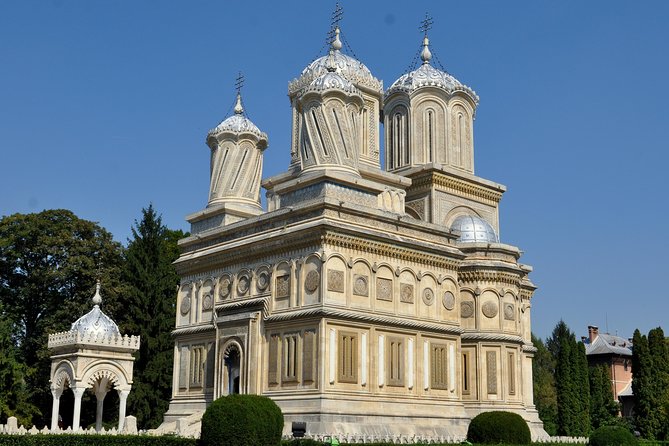
Next you head to Curtea de Arges, which was once the second capital of Wallachia. This stop slows the day down in a good way because it’s about a place, not just a climb. You visit the Princely Church and the monastery area, including a frescoed interior described as one of the first examples of Romanian painting.
The guide value here is in the context. The Episcopal Church is described as a recreation of an earlier church. The original was built between 1512 and 1517 by Prince Neagoe Basarab, and it was later rebuilt between 1875 and 1885. The Olari Church is also mentioned, tying this complex to the broader religious footprint in the area.
Why I think this stop works, even for people who aren’t “church people”: you’re not just looking at stone from far away. You get to see the interior and understand what makes it visually distinctive. It’s also a natural contrast to the darker Dracula-focused stops, so the day doesn’t feel like one long grim story.
Practical consideration: this stop includes time on site, and you’ll want your comfortable walking shoes. The pace is gentler than Poenari, but it’s still a full day.
More drives over the Transfagarasan:
Poenari Castle climb: 1,400 steps, ruins, and Vlad legends
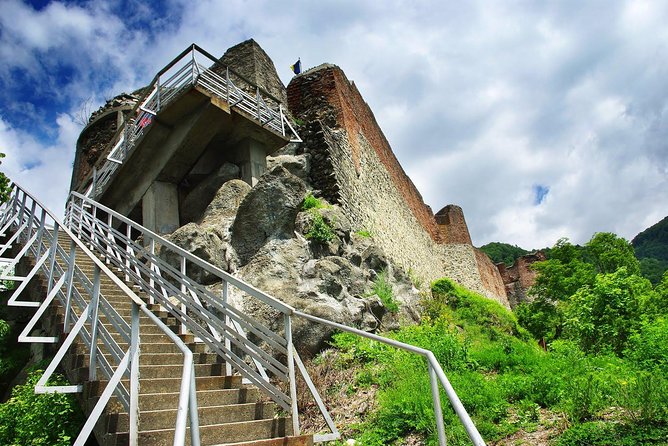
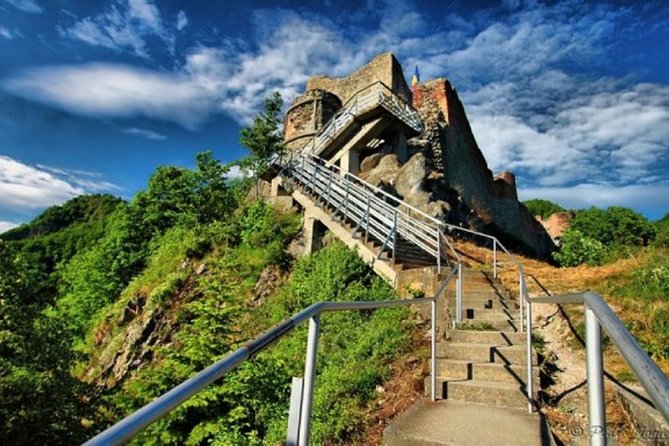
If Targoviste is about Vlad’s court, Poenari Castle is about the climb to the edge of his world. It’s described as the real castle tied to Dracula, now mostly in ruins, perched on a cliff.
Here’s what to expect physically: to reach the top, you climb about 1,400 steps, which takes roughly one hour. On paper it sounds straightforward. In real life, it’s steep and relentless. Plan to go slower than you think you should, especially on hot or humid days.
Once you get up there, the payoff is visual and emotional. The citadel is described as surprisingly small, and part of it collapsed down the mountainside in 1888. You enter through a narrow wooden bridge, then you see the crumbling remains of two towers. One is described as prism-shaped, and said to be Vlad’s residential quarters.
The legends attached to the place are dramatic. The story says Vlad’s wife threw herself from a window rather than be captured by the Turks who were besieging the castle. Another legend says Vlad himself escaped over the mountains on horseback.
Whether you take these as literal or literary, it helps your brain connect the terrain to the story. The cliff setting is not decorative. It changes the feeling instantly, because you get that sense of a place built for endurance, not comfort.
Who should be cautious: if you have knee issues or limited mobility, this is the toughest point on the schedule. The tour notes that most travelers can participate, but Poenari is the part that tests that. If you do go, wear grippy shoes and bring water, even if you travel light.
Vidraru Dam: power, water, and a road engineered for drama
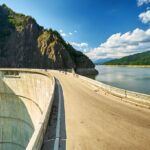
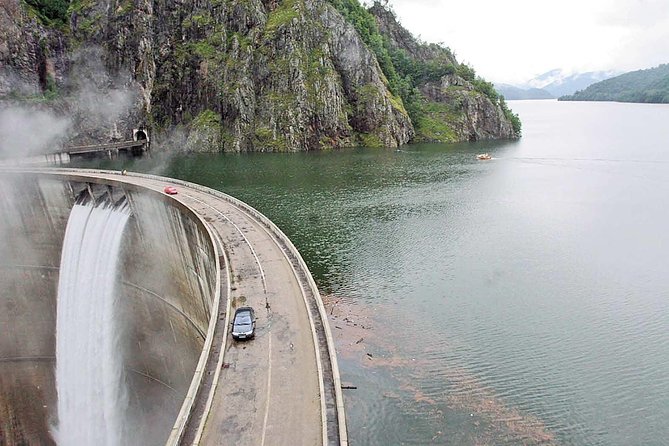
After the older sites, you pivot to modern engineering at Vidraru Dam. This stop is short, described as about 15 minutes, and admission is free.
What matters here is how the dam shapes the next leg of the day. The dam was completed in 1966 to serve a hydroelectrical power plant. It’s described as 166 meters tall and able to produce up to 400 GWh of power per year. The Transfagarasan Highway passes over it, and the dam section associated with the crossing is described as 305 meters long.
It took more than five years to build, and it created Vidraru Lake on the Arges river in 1965. That timeline matters because this is not just a scenic view. It’s a modern structure that literally re-shaped the landscape you’re looking at.
My advice: treat this as a quick reset. You’ll have fresh eyes for the road ahead because the dam gives you a different kind of wow, one based on scale and construction rather than legend.
Transfagarasan Highway: timing rules and the highest-point magic
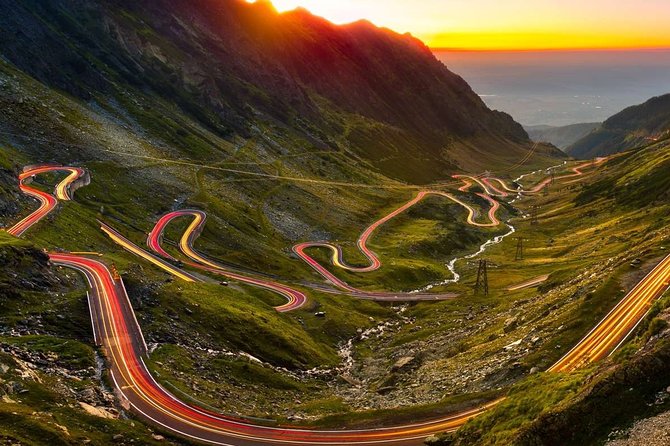
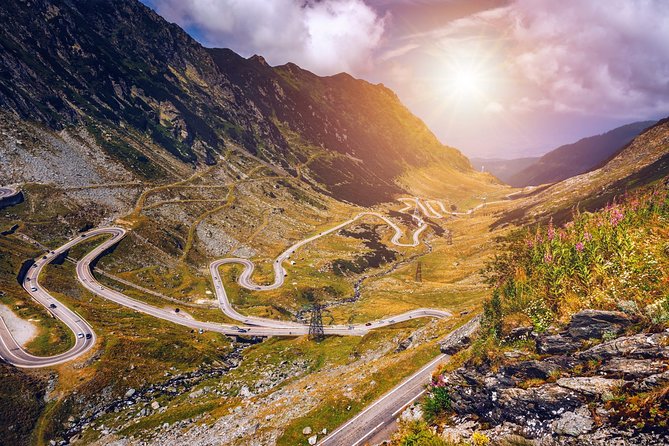
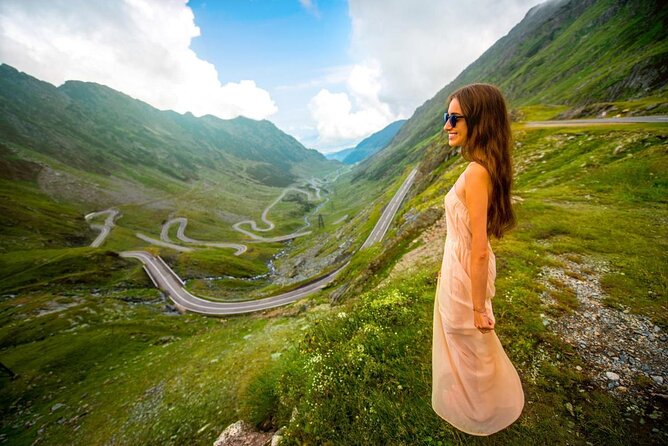
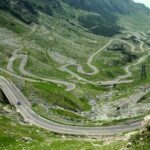
Now for the main road, Transfagarasan Highway, known for its reputation and its views. It’s described as more than 150 kilometers long, and it’s described as Romania’s most spectacular and best known road. It also became widely known after a BBC Top Gear appearance in 2009.
Important seasonal rule: the highway is fully open only from June to October. During this open season, the tour is described as skipping Targoviste and seeing the Transfagarasan road instead, from 1 July to 30 October.
Outside that season, from 30 October to 30 June, the Transfagarasan road is closed. In that timeframe, the tour swaps to visiting the Targoviste Princely Court, described as open Tuesday to Sunday.
If you’re the type who cares about high points, you’ll like this detail: the road’s highest point is described as 2,042 meters. The tunnel linking the northern and southern sides is described at Lake Balea (Balea Lac).
What to expect on the ground: even when you’re not climbing like Poenari, this is still a “stop and stare” experience. You’ll want your camera ready, but also want a moment with no lens in front of your face. The best views come when you let the scale hit you.
One practical tip: dress for changing conditions. Even in summer, mountain weather can surprise you. The road is a long exposure to elevation.
Private day-trip logistics that keep the day enjoyable
This is a private experience, so you are not sharing the car with strangers. Only your group participates, and you get the benefit of a professional guide plus hotel pickup and drop-off.
That matters because the day is built around a tight sequence of places. When it’s private, the guide can adjust pacing to your group, and you spend less energy waiting around or deciphering where to stand next.
The vehicle is air-conditioned, which is a big plus on a long drive day from Bucharest. If you get carsick easily, it’s still a long route, but private driving is usually smoother than big group bus logistics.
Also, it’s worth mentioning how people described the car and driving in recent experiences. One review highlighted a very clean car and an excellent driver, and another emphasized a beautiful drive and guide facts along the way. That supports a simple expectation: you should feel looked after from start to finish.
A small but useful mindset: keep this day as a “slow down at key moments” plan. Don’t rush your photos at Poenari or your questions at Targoviste. The best parts are the ones where you take a breath and really look.
Price, value, and what you are really paying for
At $260.36 per person for about 12 hours, this is not a budget bargain. But it can still be good value, especially if you’re traveling as a small group or you hate wasting time.
Here’s what makes it feel worth the price: you’re buying hotel pickup and drop-off, a private vehicle, an English-speaking professional guide, and a schedule designed to hit multiple sites in one day. Those elements add up quickly when you try to build it yourself.
What’s not included: tips for the guide and driver are not included. The provider also states entrance fees are not included, but the stop details indicate admission tickets are included for Princely Church, Curtea de Arges, and Poenari. Because that’s a mismatch, I suggest you confirm when you book what you pay on the day versus what’s already covered.
For me, the core value is the guide. A private guide can turn ruins and legend into a coherent story tied to the terrain you see. If you like Dracula lore but also want the real-world geography behind it, this kind of guide-led format makes a difference.
Who should book this tour, and who should reconsider
I’d put this tour high on your list if you want a single, well-structured day that mixes Dracula-linked sites with one of Romania’s most famous drives. The combination is also smart: you get both history flavor (Targoviste and Curtea de Arges) and a major scenery hit (Poenari views and the Transfagarasan option depending on season).
It’s also a solid choice if you value comfort and clarity. Private pickup, air-conditioned transport, and an English guide help a lot when your time is limited and you want the day to flow.
Reconsider if: you really dislike stairs and steep climbs. Poenari is the toughest segment, and the day won’t be able to “skip” that physical piece without changing the experience substantially.
Family note: children must be accompanied by an adult, and the tour says most travelers can participate. Still, take Poenari seriously as the potential limiting factor.
Weather note: this experience requires good weather. If conditions are poor and it has to be canceled, you should expect an alternate date or a full refund, depending on the provider’s decision.
Should you book this Vlad Dracula and Transfagarasan day trip?
Yes, if you want maximum Dracula-and-road time in one day and you like your sightseeing guided. The private format, the focus on real linked sites, and the option to trade Targoviste for the Transfagarasan road depending on the season make it flexible in a way many “Dracula tours” are not.
I’d book soon if your dates fall in the June to October window and you want the highway experience. If you’re traveling outside that window, you’ll get more of the Targoviste court stop instead, which still fits the Dracula theme well.
If you’re unsure about your fitness level, decide based on Poenari first. This is the moment that can make or break your day. Everything else is manageable, but that climb is the true test.
If you tell me your travel month and your group’s fitness level, I can help you pick the best seasonal approach and plan what to wear and expect day-of.
FAQ
What time does the tour start?
The start time is listed as 8:00 am.
Is pickup and drop-off included?
Yes. The tour includes hotel or accommodation pickup and drop-off in Bucharest.
How long is the day trip?
It runs for about 12 hours.
Is this a private tour?
Yes. It is described as a private tour/activity, with only your group participating.
Are the sites guided in English?
Yes. The tour is offered in English, with a professional guide included.
Are entrance fees included?
The tour summary indicates admission tickets are included for Princely Church, Curtea de Arges Monastery, and Poienari Castle, but the inclusions list also says entrance fees are not included. I recommend confirming what is covered when you book.
Do I get to visit Transfagarasan Highway all year?
No. From 1 July to 30 October, the tour will skip Targoviste and visit Transfagarasan Road. From 30 October to 30 June, the Transfagarasan road is closed and you visit Targoviste Princely Court instead.
What is the hardest part of the tour?
Poienari Castle involves climbing approximately 1,400 steps, taking about 1 hour.
Is the tour dependent on weather?
Yes. The experience requires good weather. If it’s canceled due to poor weather, you will be offered a different date or a full refund.
Is the tour refundable if I cancel?
No. This experience is listed as non-refundable and cannot be changed for any reason. If you cancel, the amount paid is not refunded.
Newest Bucharest write-ups
- Half Day Tour in Bucharest
★ 5.0 · 1 review - Private transfer to BRASOV
★ 5.0 · 1 review - Bucharest Private Custom Walking Tour with Guide (Private Tour)
★ 5.0 · 1 review - Bucharest: Capture the most Photogenic Spots with a Local
★ 5.0 · 1 review - Transfer Bucharest to Constanta / Mamaia
★ 5.0 · 1 review - Uncover Transylvania: Private 2-Day Tour Bears & Medieval Wonders
★ 5.0 · 1 review - 7-Days Grand Romania tour from Bucharest
★ 5.0 · 1 review
Dracula's Castle Tours, compared.
Dracula’s Castle, Peles Castle, & Brasov Old Town
Read our review →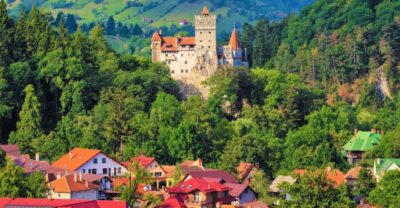
Dracula Castle, Peles Castle & Brasov Old Town
Read our review →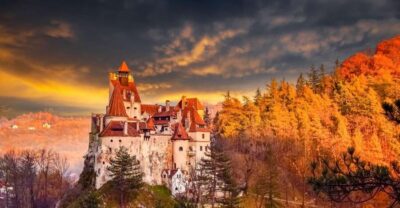
Dracula’s Castle, Peleș Castle & Brașov Day Trip
Read our review →
Day Trip to Dracula Castle, Peles Castle & Brașov
Read our review →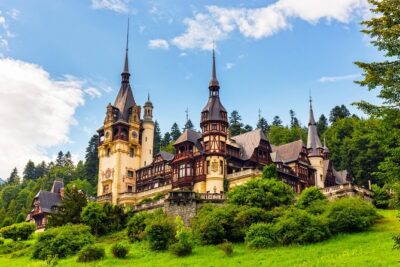
Bucharest to Dracula Castle, Peles Castle and Brasov Guided Tour
Read our review →
Dracula’s Castle, Peles Castle and Brasov Day Trip from Bucharest
Read our review →
Transylvania and Dracula Castle Full Day Tour from Bucharest
Read our review →
Browse the lists this tour appears in