Reviewed · PRIVATE
Private: RedPatrol Bucharest Contrasts Tour in a Vintage Car
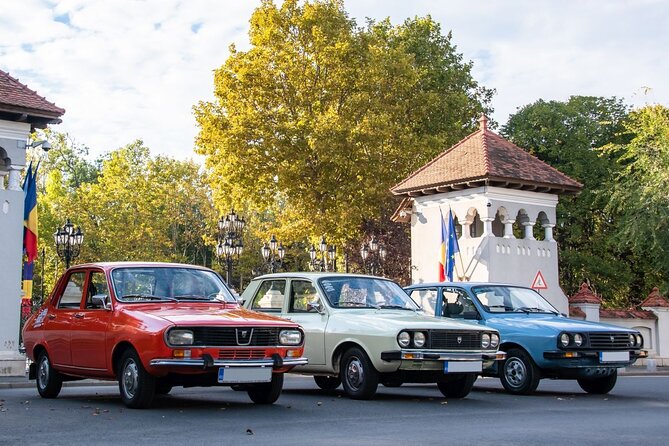
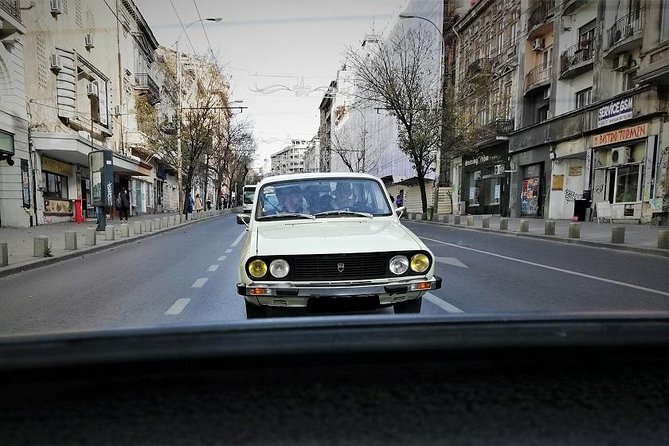
Bucharest’s contrasts ride shotgun in a Dacia. This private Red Patrol tour threads you from royal-era Bucharest into socialist neighborhoods like Ferentari, with stops made for photos and street-level context. You ride in a vintage Dacia with hotel pickup, so the experience starts smoothly.
I love how the route connects buildings to real lives, from the story around Academia Română to the daily feel of the Piața Rahova market. I also like the guide-led pacing, short stops where you get the meaning first, then you can look around and take photos without rushing.
One consideration: admissions are not included at several stops, and the car is a classic that lacks modern comfort features like AC, so weather matters and you should wear easy-walking shoes.
In This Review
- Key things to know before you go
- Why a Dacia ride is the perfect way to understand Bucharest
- Pickup, timing, and the no-drive rule
- Stop 1: Academia Română and the pause in Ceaușescu-era demolition
- Stop 2: Fântână, bourgeois Bucharest, and the first Royal Palace link
- Stop 3: Cotroceni Palace gardens and Belle Époque Bucharest
- Stop 4: Drumul Taberei blocks, working-class planning, and mall-on-ruins photos
- The Ferentari fallen industrial area: where the city’s contradictions feel close
- Stop 5: Piața Rahova and the Ferentari blocks, workers to post-socialist change
- Stop 6: Fosta Uzină Rocar and the included ticket ruin story
- Stop 7: Broscuțe Park and Stalinist-era Colonel’s Quarter life
- Stop 8: Palace of Parliament and the rebuilt neighborhood reality
- The guide and driver make it work, especially in tough districts
- Price and value: what $126.43 buys you
- Weather, comfort, and what to pack for a classic-car day
- Who this tour suits best, and who might skip it
- Should you book this Bucharest of Contrasts tour?
- FAQ
- How long is the Bucharest contrasts tour in the vintage Dacia?
- What is the price per person?
- Is this a private tour?
- Do you offer hotel pickup and drop-off?
- Will I drive the Dacia car?
- Are water and other drinks included?
- Are admission tickets included?
- Is the tour offered in English?
- Are the cars heated in winter?
- What is the cancellation policy?
Key things to know before you go
- Private, all to your group: you will not share the car with strangers.
- Hotel pickup from anywhere in Bucharest: they pick up from all addresses.
- Dacia ride, you do not drive: it is a restored 70s-style classic, with safety rules followed.
- Winter comfort: cars are heated in wintertime.
- Tickets vary by stop: some stops are free or include admission, others are not.
Other Bucharest days worth the drive
- Bucharest: Dracula’s Castle, Peles Castle, & Brasov Old Town★ 4.5 · 17,858 reviews
- Bucharest: Dracula Castle, Peles Castle & Brasov Old Town★ 4.6 · 10,891 reviews
- Bucharest: Dracula’s Castle, Peleș Castle & Brașov Day Trip★ 4.4 · 6,100 reviews
- Bucharest: Palace of Parliament Tickets and Guide★ 4.3 · 3,182 reviews
Why a Dacia ride is the perfect way to understand Bucharest
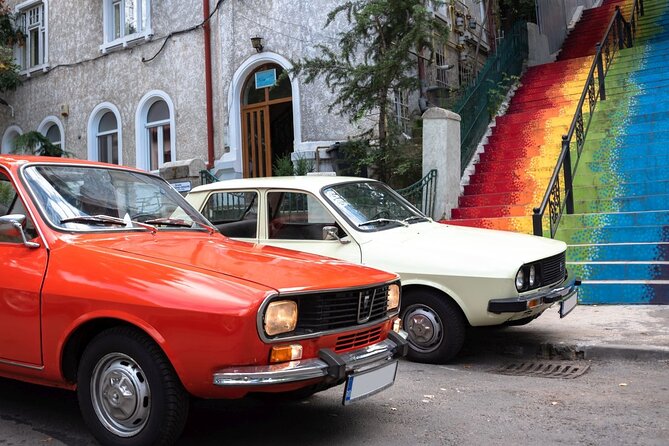
Bucharest can feel like it was built in layers, because it was. One street looks polished and official, the next turns into stubborn concrete, then you hit places where the city’s political shocks are still visible in everyday life. That is exactly what this tour is built to explain, using a short, guided circuit instead of a long lecture.
The value here is the combination of transport and interpretation. You are not just seeing neighborhoods. You are getting a thread that ties the places together: royal Bucharest, bourgeois areas, communist-era planning, and post-socialist change. Add the vintage Dacia factor, and the whole thing turns into a memory you can recall later, not a list of monuments.
The best part is that the tour keeps you moving at the pace of real city exploring. Stops are timed for looking, photos, and guide-led context. That matters in Bucharest, where the differences between districts can look dramatic even within a few kilometers.
Pickup, timing, and the no-drive rule
Plan on about 3 to 4 hours. The schedule is built around short walking and viewing stops, plus drive time between districts. Pickup is included from all addresses in Bucharest, which is handy if you are staying outside the old center or you just do not want to wrestle with getting to a meeting point.
Here is a clear rule that shapes the experience: you will not drive the Dacia. You sit back as the driver takes care of the route, which makes the tour more accessible and safer, especially in areas you might not feel like navigating on your own.
You also get water in the car, and the cars are heated in winter. That is not a small thing. In a classic car without modern comforts like AC, those little touches help your whole mood stay good.
Stop 1: Academia Română and the pause in Ceaușescu-era demolition
Your tour starts at Academia Română, in an area tied to the big demolition projects that began in the 1980s under Ceaușescu. The story detail that makes this stop meaningful is that the demolition effort stopped due to the Romanian Revolution.
This is the kind of place where history can feel abstract until someone points out why the streets and structures look the way they do. You get about 20 minutes here, enough time to take in the setting and connect it to the broader pattern of Bucharest being reshaped by force, then interrupted by political change.
Admission is not included at this stop, so if there is anything inside you were hoping to see, you should be ready to handle your own tickets. For most people, though, this opening stop works best as an orientation to how Bucharest’s built environment reflects the last century’s power struggles.
Different day out, same corner of Romania:


Stop 2: Fântână, bourgeois Bucharest, and the first Royal Palace link
Next up is Fântână, described as a bourgeois neighborhood that began in the 19th century, linked to the first Royal Palace of Romania. You get a shorter visit here, around 15 minutes, with a brief presentation.
I like this stop because it gives you contrast early. Before the tour turns hard into communist blocks and industrial ruins, you get a sense of how wealth and status shaped the city’s earlier city planning. Fântână also has an advantage for value: admission here is free.
This is the moment where you start noticing the theme. Bucharest is not just a set of eras, it is a set of neighborhoods with identities. The tour is teaching you how to read those identities with your eyes.
Stop 3: Cotroceni Palace gardens and Belle Époque Bucharest
Cotroceni Palace’s gardens are a mellow, elegant break in the circuit. The stop is set in the Modern Monarchy era, and it is framed as a snapshot of Belle Époque Bucharest.
You have about 30 minutes at this stage. That extra time compared to other stops helps because gardens are meant to be experienced slowly. You are not rushing through a checklist. You are taking in the feel of a royal-era setting, then preparing for the next layer of the story.
Admission is not included for this stop. Still, even without tickets, the purpose is clear: to show you how monarchy-era Bucharest looked and how that world compares with what came later.
Stop 4: Drumul Taberei blocks, working-class planning, and mall-on-ruins photos
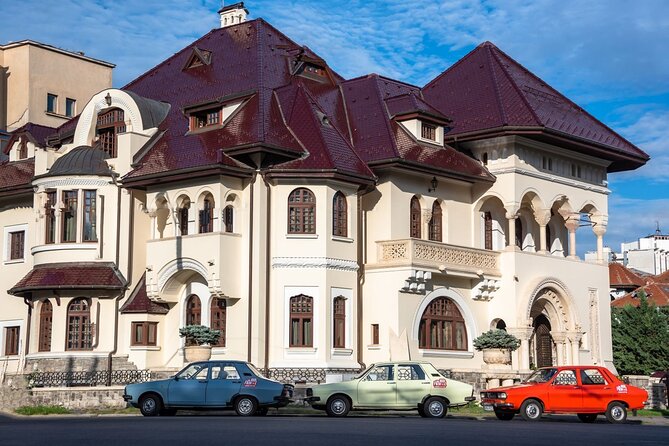
Drumul Taberei, also presented as Park Drumul Taberei (Park Camp Road), is where Bucharest’s communist mass housing becomes impossible to ignore. The focus here is on working-class apartment blocks, plus the detail about a shopping mall built on the ruins of a communist canteen.
This stop is about 20 minutes, with photos and stories. It sounds simple, but it is powerful because it connects daily life objects, like a canteen, to later urban redevelopment. You start seeing how new buildings often reuse the footprint of older systems.
Admission is not included here, which makes sense because the tour framing is more about the street scene and the meaning behind it than about a formal interior visit. Expect it to be more observational than museum-like.
The Ferentari fallen industrial area: where the city’s contradictions feel close
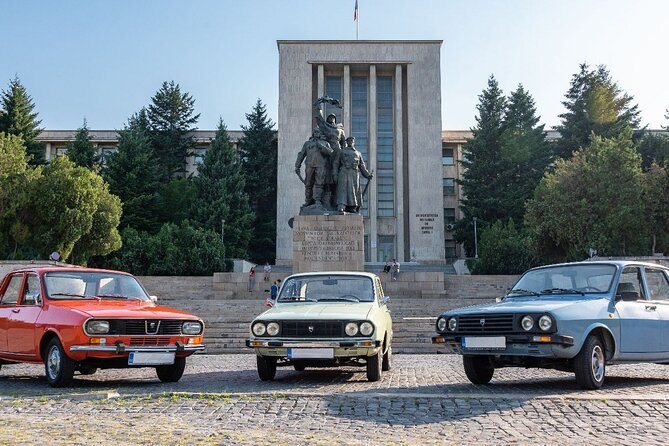
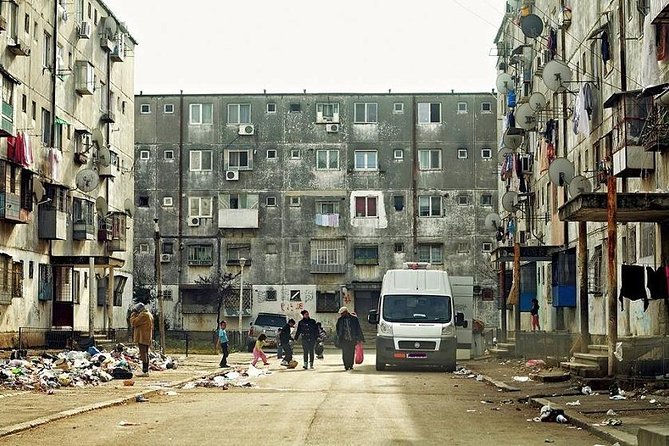
After Drumul Taberei, the tour shifts toward the Ferentari fallen industrial area, built by communists in the 1970s. This is described as an exploration with stories, designed to help you understand the neighborhood’s rise and fall.
Ferentari is one of those Bucharest names people hear with opinions attached. The tour approach is different: it aims to explain the economic and political causes that create that kind of neighborhood. You are not asked to judge. You are asked to understand.
The practical benefit of this segment is that it sets you up for the last section before the big landmark: Rahova, the peasant market, and the layered story of workers area to post-socialist problems. Even if you only spend a short time looking, your brain keeps the context going.
Stop 5: Piața Rahova and the Ferentari blocks, workers to post-socialist change
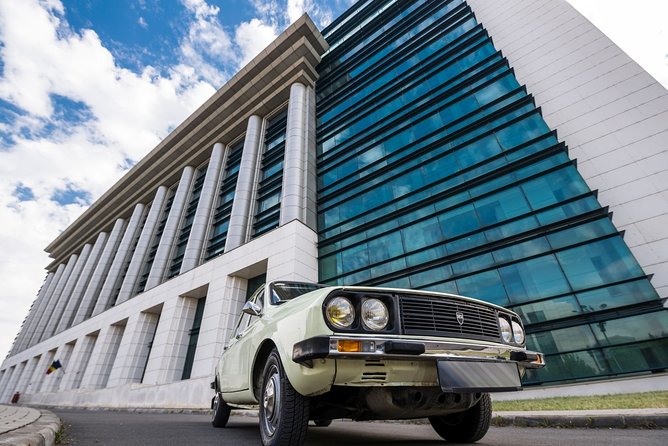
Piața Rahova is where the contrasts get human fast. This stop is focused on exploring the Ferentari flats area and the industrial zone that turned into a city ghetto in the post-socialist 1990s, according to the tour framing. You also get time for a peasant market visit here.
You have about 30 minutes at this stop, which is longer for a reason. Markets require different attention. You have to look around, watch movement, and let the guide explain what you are seeing as part of daily survival, not a staged scene.
This stop also helps you understand why the tour calls the whole route Contrasts. It is not only about different buildings. It is about who those buildings supported, what happened when the system changed, and how people adapt.
Admission is not included at this stop. Still, markets are usually more about experience than ticket entry. If you want to buy something, that would be personal spending, which is not included.
Stop 6: Fosta Uzină Rocar and the included ticket ruin story
Fosta Uzină Rocar is one of the best stops for seeing the aftermath of industrial collapse. The focus here is the ruined socialist-era area left abandoned after factories fell.
You get about 20 minutes and, importantly, admission is included at this stop. That matters for value because it reduces decision fatigue. You can focus on the guide’s stories and the visual clues without wondering if you must pay extra.
This is where the tour feels most direct. Industrial sites can look like they are just decaying. But with context, they become proof of how economic planning created places, then abandoned them when the system shifted.
Stop 7: Broscuțe Park and Stalinist-era Colonel’s Quarter life
Broscuțe Park, tied to the Colonel’s Quarter, is framed as the first Soviet occupation era neighborhood. The guide presentation focuses on how life worked during the Stalinist days in Bucharest.
This stop is about 20 minutes, with admission included. That combination makes it a strong midpoint payoff: you get a story-based explanation plus a practical ticket included.
This is also where I like the tour’s tone. It aims to translate political history into daily life, the kind of life that shows up in housing design, neighborhood planning, and the way streets function. You end up with a clearer mental map of Bucharest’s 20th-century machinery.
Stop 8: Palace of Parliament and the rebuilt neighborhood reality
The Palace of Parliament is the big closer in both scale and symbolism. The description is blunt and accurate in spirit: it is presented as the biggest civil building in the world, placed in a neighborhood of 20 square kilometers that was rebuilt after complete demolition.
You get about 20 minutes here, not a long interior visit. The tour emphasis is on the story of the neighborhood and the building, not on a full architectural tour.
Admission is not included at this stop. So if you were hoping for an interior ticket, you should plan ahead. Even without that, the exterior viewpoint and the explanation make the building harder to ignore. It becomes less of an abstract monument and more of a shorthand for how power reshaped space in Bucharest.
The guide and driver make it work, especially in tough districts
The reviews highlight a theme that really matters in this kind of tour: the guide is not only telling facts, they are helping you read the street. One driver named Mihai is mentioned as professional, friendly, and strong on details. Another guide, Ivan Crinu, is specifically praised for deep understanding of the socioeconomic contrasts across districts.
That matters most around places like Ferentari. Without context, you might see only hardship or only buildings. With the right guide-led framing, you see the machinery behind the outcomes: planning decisions, economic shifts, and how neighborhoods get labeled and reshaped.
In other words, this is not just a photo tour. You are learning how Bucharest got its layers, and then you are using your eyes to follow the story.
Price and value: what $126.43 buys you
At $126.43 per person, you are paying for a compact, organized slice of Bucharest contrasts. The value is strongest when you factor in what is included:
- Hotel pickup and drop-off from all Bucharest addresses
- Professional local guide and driver in your car
- Transport in a guided circuit
- Water in the car
- Tour personalized gift
- Heated cars in winter
- Mobile ticket
That is a lot of logistics handled for you in under half a day. Classic car tours can be expensive when they focus only on the ride. Here, you also get structured stops where the guide gives meaning, which makes the vintage car feel like part of the storytelling, not a gimmick.
If you are traveling with a group, note the tour lists group discounts as a feature. If your dates are flexible, booking earlier can also help because the tour is widely booked in advance on average.
Weather, comfort, and what to pack for a classic-car day
This is where you should be realistic. The Dacia 1300/1310 is described as a 70s to 80s classic, with no AC, ABS, GPS navigation, servo-direction, or automatic gear drive. It is fully restored and meets safety traffic regulations, and you do not drive it, which helps.
Still, plan for the elements. In cold months, the cars are heated. In warm months, expect that you will feel the temperature more than you would in a modern car. I’d bring layers if you start in morning chill and plan for modest sun exposure.
Also, wear shoes that handle uneven sidewalks and short viewing walks. Even though stops are time-limited, you will be stepping out to look and photograph.
Who this tour suits best, and who might skip it
This tour is a good match if you want Bucharest explained through districts, not through one big monument day. You’ll likely enjoy it if you like history that connects to the street, and if you want an easy half-day format with pickup and a pro guide.
It may be less comfortable for you if you dislike tours that focus on social contrasts and the visible signs of past economic systems. Some neighborhoods are challenging to look at, and you may need a bit of emotional stamina.
Practical limits are clear: no pets, and no children under 10 years old. Most people can participate, but this one is designed for an adult mindset and a street-exploring pace.
Should you book this Bucharest of Contrasts tour?
I’d book it if you want a fast, structured introduction to Bucharest that goes past the standard highlights. The combination of vintage Dacia transport, curated stops, and guide-led context is a strong way to understand how the city changed and why it still shows the marks of each era.
Skip it if you only want postcard views or if you need a plan that is mostly indoor, mostly ticketed, or mostly comfort-based. Admission is not included at multiple stops, and the classic-car feel means you should dress with weather in mind.
If your goal is understanding Bucharest’s contrasts in one satisfying half day, this tour is a smart call.
FAQ
How long is the Bucharest contrasts tour in the vintage Dacia?
It lasts about 3 to 4 hours.
What is the price per person?
The price is $126.43 per person.
Is this a private tour?
Yes, it is private. Only your group participates.
Do you offer hotel pickup and drop-off?
Yes. Pickup is included from all addresses in Bucharest, with drop-off after the tour.
Will I drive the Dacia car?
No. You will not drive the car. The tour uses a guide and driver.
Are water and other drinks included?
Water is offered in the car. Food and drinks other than those offered are not included.
Are admission tickets included?
Admission tickets are not included for some stops. Admission is included for Fosta Uzină Rocar and Broscuțe Park. Fântână is free.
Is the tour offered in English?
Yes, it is offered in English.
Are the cars heated in winter?
Yes. During wintertime the cars are heated.
What is the cancellation policy?
Free cancellation is available up to 24 hours in advance for a full refund. If you cancel less than 24 hours before start time, the amount paid is not refunded.
Newest Bucharest write-ups
- Half Day Tour in Bucharest
★ 5.0 · 1 review - Private transfer to BRASOV
★ 5.0 · 1 review - Bucharest: Capture the most Photogenic Spots with a Local
★ 5.0 · 1 review - Bucharest Private Custom Walking Tour with Guide (Private Tour)
★ 5.0 · 1 review - Transfer Bucharest to Constanta / Mamaia
★ 5.0 · 1 review - Uncover Transylvania: Private 2-Day Tour Bears & Medieval Wonders
★ 5.0 · 1 review - Private Day Trip to Peles Palace, Dracula’s Castle and Brasov
★ 5.0 · 1 review
Private, compared.

Castles of Transylvania: Private Day Trip from Bucharest
Read our review →
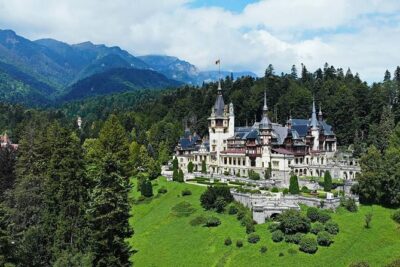
Dracula’s Castle, Peles Castle and Brasov – Private Day Trip from Bucharest
Read our review →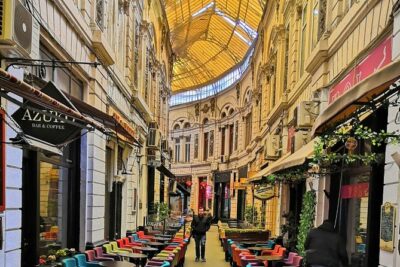
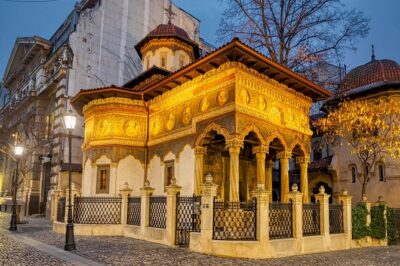
Bucharest Panoramic Sightseeing – Private City Tour
Read our review →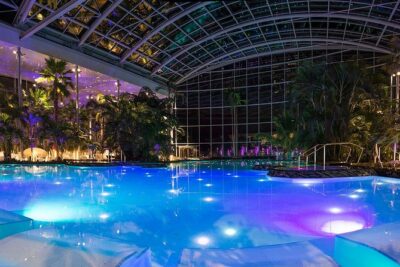
THERME “Take It Easy” Pack: Full Spa Access + Private Transfers
Read our review →
Piatra Craiului National Park Private Hiking Tour from Brasov
Read our review →