Reviewed · BUCHAREST EXPERIENCES
Slavery in Romania Myths and Truths About Gypsies
Bucharest has a way of teaching you fast. This guided walk connects Roma myths and truths to real buildings, real names, and the painful parts of 20th-century history. I liked how the route keeps switching between art, politics, and public memory.
Two things I really enjoyed: you start with the Romanian Athenaeum and the big cultural setting of the city, then you move into the story through specific monuments and schools. And the finale in the Mesteshukar ButiQ (MBQ) shop is a practical way to meet contemporary Roma craftsmanship without turning it into a street-corner performance.
One consideration: it covers heavy themes, including the Roma story during World War II and a Holocaust memorial stop, so go in ready for serious content. Also, it’s about 3 hours with walking between sites and a moderate fitness level, so comfortable shoes matter.
In This Review
- Key highlights you will feel on this walk
- Where myths meet Bucharest’s real streets
- Starting at Teatrul Ion Creangă, then walking like a local
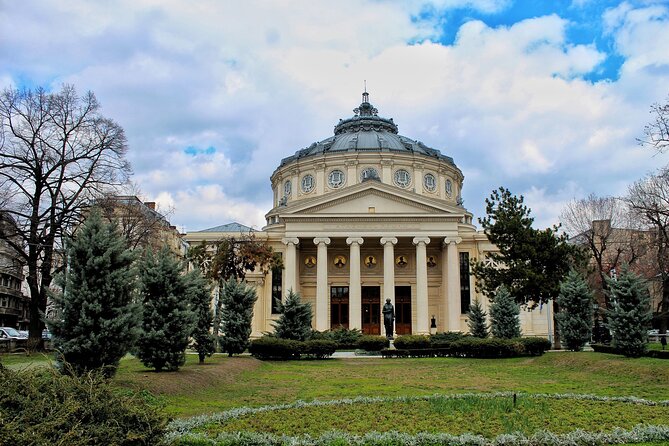
- Stop 1: Romanian Athenaeum, where art and public life start
- Stop 2: Iuliu Maniu statue, the politics thread in the Roma story
- Stop 3: Palatul Stirbei and Barbu Stirbey, power on the 19th-century timeline
- Stops 4 and 5: Cismigiu Park walk, schools, and the viewpoint payoff
- Stop 6: The Holocaust Memorial, including the Roma story during WWII
- Stop 7: Piața Mihail Kogălniceanu and the first words on Romanian Gypsies
- Stop 8: MBQ’s Mesteshukar ButiQ shop, craft you can meet in person
- Price and value: what $127.37 gets you in real terms
- Who should book, and who might want a different format
- Quick planning tips for a smooth 10:00 am start
- Should you book this Bucharest walk about slavery myths and Roma truths?
- FAQ
- How long is the Bucharest walking tour?
- What language is the guide offered in?
- Where does the tour start and end?
- What time does it start?
- How much does the tour cost?
- What is included in the price?
- Are admission tickets included?
- Is coffee or tea included?
- What fitness level do I need?
- How big are the groups?
Key highlights you will feel on this walk
A clear myth-vs-fact approach to the story behind Slavery in Romania and the Roma label
A monument-to-monument route starting at the Romanian Athenaeum and ending at MBQ
Cismigiu Park on foot, with schools, monastery ruins, and viewpoints built into the route
A Holocaust Memorial stop focused on Roma during World War II
A craft shop ending where you can see handmade work and take it home
Other Bucharest days worth the drive
- Bucharest: Dracula’s Castle, Peles Castle, & Brasov Old Town★ 4.5 · 17,858 reviews
- Bucharest: Dracula Castle, Peles Castle & Brasov Old Town★ 4.6 · 10,891 reviews
- Bucharest: Dracula’s Castle, Peleș Castle & Brașov Day Trip★ 4.4 · 6,100 reviews
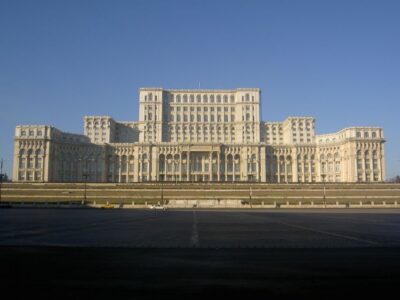
- Bucharest: Palace of Parliament Tickets and Guide★ 4.3 · 3,182 reviews
Where myths meet Bucharest’s real streets
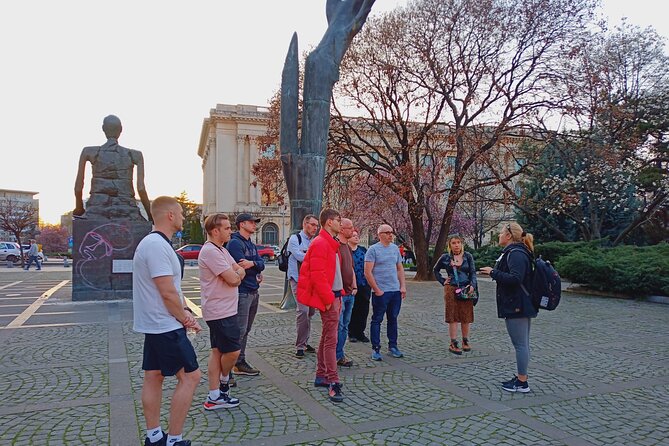
This is a walking tour with a strong theme: myths and truths about Roma in Romania, including how the idea of slavery gets discussed and why stereotypes can twist the story. Instead of relying on a single lecture, the guide points you at places where history, politics, education, and public memory show up in stone and institutions.
You’ll spend about 3 hours moving through central Bucharest. The tour uses a group format capped at 15 travelers, which keeps the pace friendly and helps you hear explanations without shouting over the crowd.
You’ll also notice something smart built into the design: most stops have free admission tickets tied to the visit. That means your money goes to the guide and the story, not to entrance fees that quietly add up.
Starting at Teatrul Ion Creangă, then walking like a local
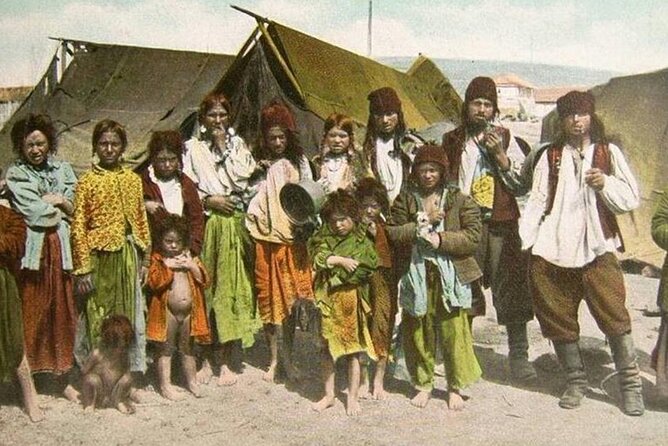
The tour starts at Teatrul „Ion Creangă” – Sala Mare, on Strada Piața Amzei 13. The start time is 10:00 am, and it runs until you reach the shop end point at Mesteshukar ButiQ (MBQ), Bulevardul Mihail Kogălniceanu 12.
You will cover the sights in sequence, with walking between stops filling the remaining time. The information you are given also says you should have moderate physical fitness, so plan for a steady city-walk pace.
Good practical tip: this route ends at a shop. Bring a small plan for shopping. You might want to browse calmly first, not after you’re already tired and hungry.
Stop 1: Romanian Athenaeum, where art and public life start
Your first stop is the Romanian Athenaeum, described as Romania’s House of Art and home to the National Romanian Philarmonic. If you only ever see Bucharest as grand facades, this is a quick way to feel the city’s cultural backbone.
This stop also works as a tone-setter. It puts you in the mood of “how ideas get spread,” which matters when your tour theme is myths versus truths. When you’re dealing with stories about identity, power, and exclusion, starting at a landmark tied to public culture helps the talk feel grounded.
Admission here is free for the visit, so you don’t waste time deciding whether the stop is worth it. You can just take it in and listen.
Different day out, same corner of Romania:
Stop 2: Iuliu Maniu statue, the politics thread in the Roma story
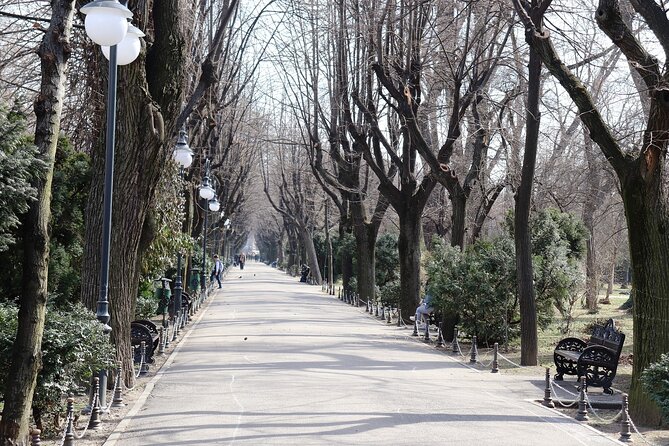
Next you meet Iuliu Maniu, framed in the tour context as an important political figure in Romania. The key detail is how the guide links him not only to the broader national story, but also to the story connected to Roma and the growth of modern Romania.
Why this stop matters: it reinforces that the Roma story in Romania is not just “social history.” It is also political. Rules, reforms, and public decisions all shape how minority groups live, get counted, or get ignored.
Plan for about 20 minutes here. It’s long enough for explanation, short enough that the pacing stays brisk.
Stop 3: Palatul Stirbei and Barbu Stirbey, power on the 19th-century timeline
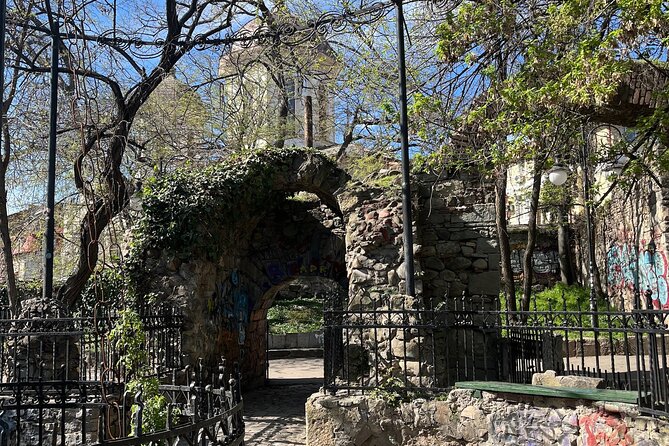
The tour then shifts into the 19th century at Palatul Stirbei, the house of ruler Barbu Stirbey. The connection to your tour theme is direct: it is presented as an important person in the story you are learning.
This stop is a reminder that buildings in Bucharest are not neutral. Big houses and palaces were part of a system, and systems create winners and losers. Even if you do not memorize dates, you can feel the “who held power” angle as you stand in front of a place associated with rule.
Expect about 20 minutes. Since admission is listed as free, you can use that time for context rather than ticket logistics.
Stops 4 and 5: Cismigiu Park walk, schools, and the viewpoint payoff
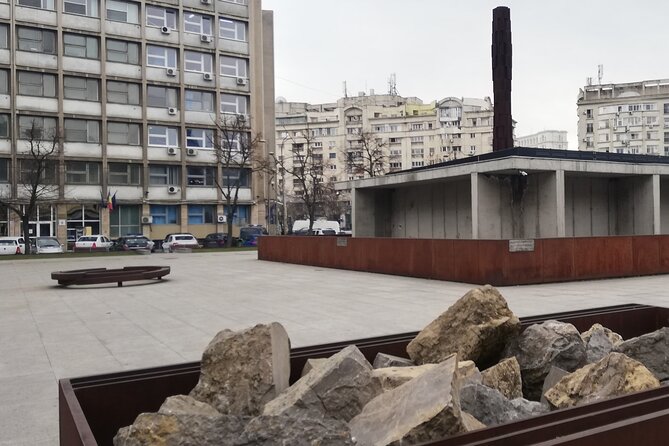
A big chunk of the tour becomes a relaxed walk in Cismigiu Parc, described as the largest and most beautiful garden in Bucharest. This is where the tour slows just enough to let the history sink in, while still giving you variety.
Along the way, you can expect several built-in surprises tied to the story:
- a very famous high school
- ruins of an old monastery
- a great viewpoint over the park
- other stops along the route
Then you reach Gheorghe Lazăr National College at the entrance area of Cismigiu Park. Education is the theme here, and the tour notes Lazăr as the best quoted high school in the city in this context. Even if the details of that claim are debated over time, the point the guide is making is clear: education shapes who gets opportunities and who is excluded from them.
Timing wise, Cismigiu Parc gets about 30 minutes, with Gheorghe Lazăr National College at around 15 minutes. The pacing feels human because you get movement, shade, and breaks from standing still.
Practical note: parks are great, but you still need shoes. This is not a slow stroll through one wide path. You’ll be walking between multiple points.
Stop 6: The Holocaust Memorial, including the Roma story during WWII
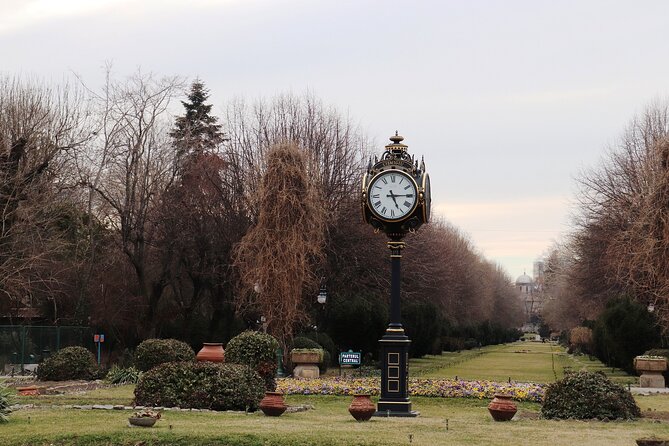
This is the emotional weight of the tour: the Holocaust Memorial. The stop is described as covering the rough story of Roma during World War II, and it’s also referred to as known as the Forgotten Holocaust.
Even if you think you know general Holocaust history, this specific framing matters. The guide is taking you to a monument designed to remember Roma victims in Romania, which is a piece of memory many people never learned in school.
It’s listed at about 15 minutes. That may sound short, but it’s usually the right length for a memorial stop on a moving tour. You get time to read what’s there, hear the guide’s explanation, and then continue without dragging it out.
If you prefer light sightseeing only, this is your “pause and decide” moment. If you are okay with serious content, it is also one of the most meaningful stops.
Stop 7: Piața Mihail Kogălniceanu and the first words on Romanian Gypsies
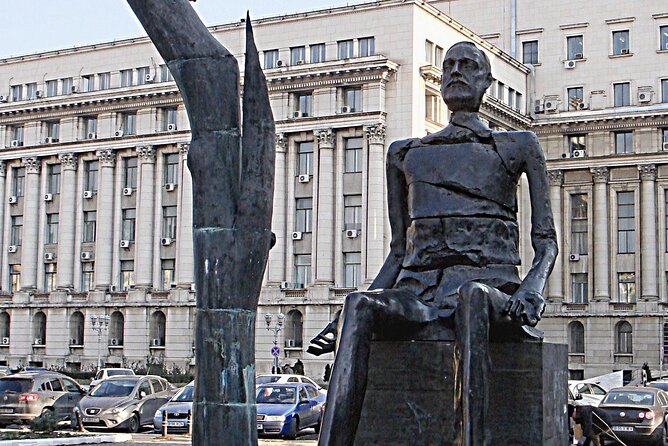
After the memorial, you head to Piața Mihail Kogălniceanu. Here you meet Mihail Kogălniceanu, described as a famous politician and writer in Romanian history. The tour also highlights him as the first one to write about Romanian Gypsies.
This stop is about authorship and labeling. When someone writes about a group, that writing can either clarify or distort. When you learn who wrote early accounts, you start to see how public ideas formed and spread.
You’ll have about 10 minutes here. That makes it quick, so listen closely in that window. This is the kind of stop where the guide’s context can matter as much as the statue or square itself.
Stop 8: MBQ’s Mesteshukar ButiQ shop, craft you can meet in person
The tour ends at Mesteshukar ButiQ (MBQ), a small shop featuring authentic pieces hand-crafted by Roma artisans. The descriptions you are given emphasize the chance to meet the reality of Roma culture and tradition through craftsmanship.
This ending is more practical than you might expect. It gives you a gentle next step from learning about history to seeing living culture. And you are not forced into a long shopping session, because the shop is the planned stop rather than an accidental detour.
From the tour style, this is also where you can ask questions about materials and making. Even if you do not buy anything, you will leave with a clearer sense of what “tradition” looks like today.
There is cake snack included, so you might want to plan a quick snack break attitude before or during this final segment.
Price and value: what $127.37 gets you in real terms
The price is $127.37 per person for about 3 hours, and you get a professional English-speaking guide plus a mobile ticket and group discounts. You also get a cake snack.
Admissions are listed as free for the stops, which is a major value point. When you combine “mostly free entry” with “you’re paying for interpretation,” you are paying for context, not just access.
Coffee and/or tea are not included. You may have a short stop on the way, and you’ll need to cover that yourself. That’s normal for city walking tours, but it’s good to know so you do not get surprised halfway through.
For value, I’d think of this as a guided route that replaces a few separate museum or attraction choices. You’re also getting a topic that many standard Bucharest walks never touch, especially the Roma Holocaust memorial angle.
Who should book, and who might want a different format
This tour is a strong fit if you want history that is connected to geography. You enjoy learning by walking past landmarks, not only sitting in a lecture.
It also suits you if you like public education in small doses, because the route includes places tied to education and the formation of public ideas. Cismigiu Park and the high school stop help break up the heavier parts.
You might choose something else if you want a light and purely scenic walk. This route includes a Holocaust memorial stop focused on Roma during World War II, so the mood shifts.
And because it is walking-based with moderate physical fitness recommended, you’ll enjoy it more if you’re comfortable covering several blocks at a steady pace.
Quick planning tips for a smooth 10:00 am start
Bring shoes you can walk in for a few hours. Even with breaks built into the itinerary, you are moving between multiple stops in central Bucharest.
If you get cold easily, remember that parks can feel cooler than the streets. If you get hot easily, you’ll be outdoors enough that summer sun prep might matter.
The guide schedule includes free-entry stops, but you still get the most out of the tour when you pay attention, not when you speed past sites to save energy.
And since you end at MBQ, consider whether you want to shop at the start or keep your head clear until the end. The tour is designed so the shop feels like a natural finish.
Should you book this Bucharest walk about slavery myths and Roma truths?
I think you should book it if you want a structured, guided answer to a complicated subject. The route ties your learning to well-known Bucharest landmarks, schools, and a major memorial, and that makes the theme easier to hold in your head.
It’s also good value for the time, because the guide leads a theme-based route through places with free admission and you get an included cake snack and an English-speaking explanation.
Skip it only if you are hoping for a carefree sightseeing day. This one includes serious history and remembrance, and you should want that before you commit.
If you do book, arrive ready to walk, listen, and ask yourself a simple question: not just what happened, but how the story got told, labeled, and sometimes distorted.
FAQ
How long is the Bucharest walking tour?
It lasts about 3 hours.
What language is the guide offered in?
The tour is offered in English, with a professional English-speaking guide.
Where does the tour start and end?
It starts at Teatrul „Ion Creangă” – Sala Mare, Strada Piața Amzei 13, București, and ends at Mesteshukar ButiQ [MBQ], Bulevardul Mihail Kogălniceanu 12, București.
What time does it start?
The start time is 10:00 am.
How much does the tour cost?
The price is $127.37 per person.
What is included in the price?
A professional English-speaking guide and a cake snack are included. The tour also uses a mobile ticket.
Are admission tickets included?
Admission is listed as free for the stops on the itinerary.
Is coffee or tea included?
No. Coffee and/or tea are not included, and there may be a short stop where you pay for that yourself.
What fitness level do I need?
The tour recommends a moderate physical fitness level and includes walking between stops.
How big are the groups?
The tour has a maximum of 15 travelers.
Newest Bucharest write-ups
- Half Day Tour in Bucharest
★ 5.0 · 1 review - Private transfer to BRASOV
★ 5.0 · 1 review - Bucharest: Capture the most Photogenic Spots with a Local
★ 5.0 · 1 review - Bucharest Private Custom Walking Tour with Guide (Private Tour)
★ 5.0 · 1 review - Transfer Bucharest to Constanta / Mamaia
★ 5.0 · 1 review - Uncover Transylvania: Private 2-Day Tour Bears & Medieval Wonders
★ 5.0 · 1 review - 7-Days Grand Romania tour from Bucharest
★ 5.0 · 1 review
Bucharest Experiences, compared.
Dracula’s Castle, Peles Castle, & Brasov Old Town
Read our review →
Dracula Castle, Peles Castle & Brasov Old Town
Read our review →
Dracula’s Castle, Peleș Castle & Brașov Day Trip
Read our review →
Day Trip to Dracula Castle, Peles Castle & Brașov
Read our review →
Bucharest to Dracula Castle, Peles Castle and Brasov Guided Tour
Read our review →