Reviewed · BUCHAREST EXPERIENCES
The Real Story of Gypsies – Slavery in Romania
Romania’s Roma story has hard edges. This 3-hour walking tour connects major Bucharest landmarks to the history of slavery in Romania, then ends with living Roma craft. You’ll follow a route that includes the old slaves market site at Platoul Piata Amzei and stops tied to persecution, including the Holocaust Memorial. I like that it stays place-based, using real addresses you can point at. I also like the contrast of heavy history with a final stop where you can see Roma artisanship up close.
One consideration: expect a respectful, serious tone. This is not a “light facts” tour, so bring the mental bandwidth for uncomfortable topics, and plan on steady walking for about 1h 20m inside a total 3-hour outing.
In This Review
- Key things to know before you go
- Where the Tour Really Starts: Piata Amzei and the Weight of a Place
- Platoul Piata Amzei: The Old Slaves Market Site
- Palatul Stirbei: A 1835 Palace With Political Gravity
- Ateneul Roman: Arts, Pride, and How Perception Gets Shaped
- Cismigiu Parc: Slower Footsteps, Myths and Truths
- Holocaust Memorial: Remembering Roma Victims in Romania
- Iuliu Maniu Statue: When They Were Still Called Gypsies
- Mesteshukar ButiQ: Copper Craft You Can Actually See
- Price, Group Size, and Why This Feels Like Real Value
- Timing and Logistics: Making It Easy on Your Day
- Who This Tour Is Best For (and Who Should Skip)
- Should You Book The Real Story of Gypsies in Bucharest?
- FAQ
- How much does the tour cost?
- What is the tour length?
- What time does the tour start?
- What language is offered?
- Where do I meet the guide, and where does it end?
- How many people are in a group?
- Do I need to pay admission at the stops?
- Do I get a mobile ticket?
- Can I cancel for a full refund?
Key things to know before you go
- Small group of up to 15 means more chances for questions
- English-guided route with a guide who answers in plain language (one guide named Mihai is specifically praised)
- Free admission at the stops listed on the route
- Mobile ticket for a smoother start
- Ends at a working craft shop run by Roma craftsmen, Mesteshukar ButiQ
- Mostly central route near public transportation, good for fitting into a day
Other Bucharest days worth the drive
- Bucharest: Dracula’s Castle, Peles Castle, & Brasov Old Town★ 4.5 · 17,858 reviews
- Bucharest: Dracula Castle, Peles Castle & Brasov Old Town★ 4.6 · 10,891 reviews
- Bucharest: Dracula’s Castle, Peleș Castle & Brașov Day Trip★ 4.4 · 6,100 reviews
- Bucharest: Palace of Parliament Tickets and Guide★ 4.3 · 3,182 reviews
Where the Tour Really Starts: Piata Amzei and the Weight of a Place
The meeting point is at Teatrul „Ion Creangă” (Sala Mare), in the Piața Amzei area, and that choice matters. You’re not starting in a museum room. You’re starting in the city, in the kind of public space where history used to be negotiated, bought, and controlled.
From the start, the tour frames Roma history through a blunt lens, including slavery in Romania and how those events still shape identity today. That approach helps you avoid the trap of treating history like an abstract school lesson.
I also appreciate the pacing logic. The outing is roughly 3 hours, but the walking time you’re told to expect is about 1h 20m. That split helps you plan shoes, water, and energy without guessing.
Platoul Piata Amzei: The Old Slaves Market Site
Stop one is the Platoul Piata Amzei area, tied to an old slaves market site. That’s the kind of location that changes how you look at a neighborhood. A plaza is just a plaza until someone explains what it once served as.
What you’ll take away here is not just that slavery happened, but that it happened in recognizable civic spaces, near daily life. The tour talks through the historical context around the trade in human lives and then connects it to Roma identity. That identity link is key. If you only hear the cruelty and not the aftereffects, the story stays incomplete.
Practical note: this is a short stop (about 15 minutes). If you want to ask questions, arrive ready with them. This is where good guides can steer you toward the right details.
Palatul Stirbei: A 1835 Palace With Political Gravity
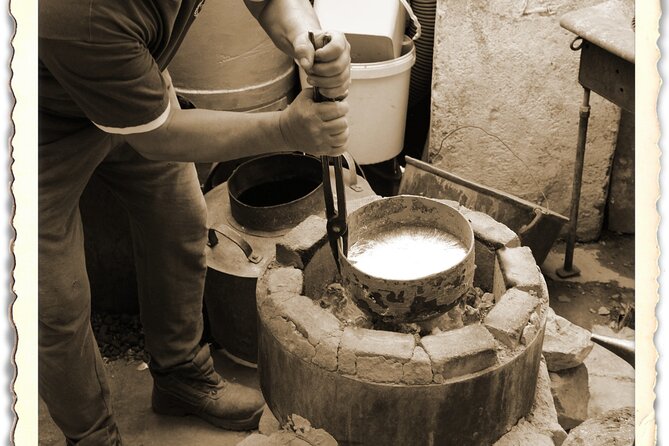
Next up is Palatul Stirbei, a palace in Bucharest built in 1835. Even if you only see an exterior, the building gives you scale. It’s easier to understand how power worked when you’re looking at architecture that survived while lives were changed.
The tour’s framing here is about how the palace and its owner intersected with important moments in Roma history in Romania. The details are kept tied to the location, so you’re not just learning names in a vacuum. You’re learning why a specific address matters.
What I like about this stop is that it doesn’t pretend the story is simple. A palace can feel romantic to the eye, but it can also be connected to systems of control. That tension is exactly what makes the stop memorable.
Different day out, same corner of Romania:


Ateneul Roman: Arts, Pride, and How Perception Gets Shaped
You’ll pass by the Romanian Athenaeum, and the tour uses its iconic architecture as a discussion point about culture and perception. The idea is simple: art and public institutions influence what people think, including how Roma communities were seen throughout history.
This stop works best if you let it be a conversation, not a photo break. You’ll likely spend around 15 minutes, and the guiding talk is aimed at helping you connect national cultural pride with the way minority communities are treated in the same social landscape.
If you’re the type who usually skips “passing by” landmarks, don’t. In this context, even a quick look helps you understand how one kind of public identity can sit alongside another kind of marginalization.
Cismigiu Parc: Slower Footsteps, Myths and Truths
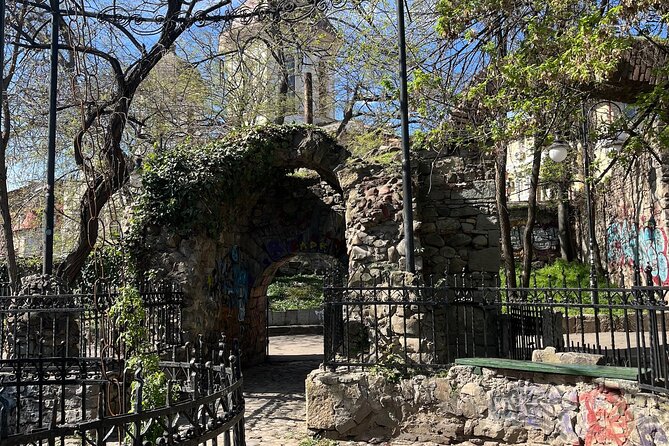
Then you get a gentler beat at Cismigiu Park, described as the oldest and largest garden in Bucharest. It’s a big change from the darker stops, and that change isn’t accidental. Parks are where you can breathe between heavy topics, and the tour uses that time to talk about more truths and myths.
You’ll have about 15 minutes here. That might sound short, but it’s enough for a guided explanation and a moment to look around. If you like your history with atmosphere, this is where the city starts to feel like a real place again, not just a list of points on a map.
One small caution: because it’s a park stop, people sometimes get tempted to wander. Stay with the group at the start so you don’t lose the thread of the narration.
Holocaust Memorial: Remembering Roma Victims in Romania
The tour takes a somber turn at the Holocaust Memorial. This is where the story explicitly includes persecution and genocide, including the thousands of Roma lives lost to that dark chapter in history.
This isn’t the time for casual side conversations. The value of this stop is that it anchors Roma persecution inside the larger, widely documented tragedy of the Holocaust. It also keeps the Roma story from being treated as an afterthought.
You’ll spend around 15 minutes here, and that timing is important. It’s short enough to keep the tour moving, but long enough to pause and take in what the memorial is asking you to remember.
Iuliu Maniu Statue: When They Were Still Called Gypsies
Next you’ll visit the Iuliu Maniu statue. The tour uses this stop to point at another crucial idea: how language and labels change what people accept as normal.
The framing here is about a moment when Roma communities were still very much called gypsies. It’s a reminder that the terms used in politics and public space can either reflect prejudice or help enforce it.
This is a brief stop (around 15 minutes), but it’s a strong reminder for travelers. When you see a statue, you’re not just seeing stone. You’re seeing what a society chose to honor, and how that recognition sits alongside how minorities were described.
Mesteshukar ButiQ: Copper Craft You Can Actually See
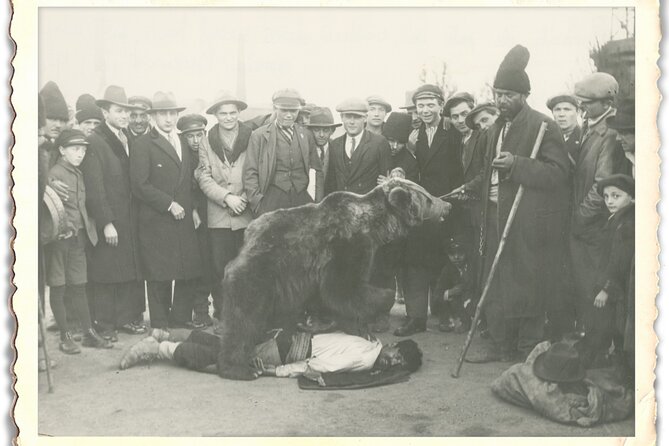
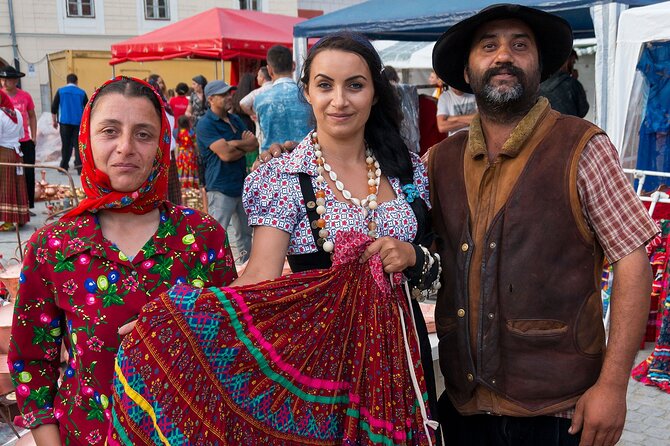
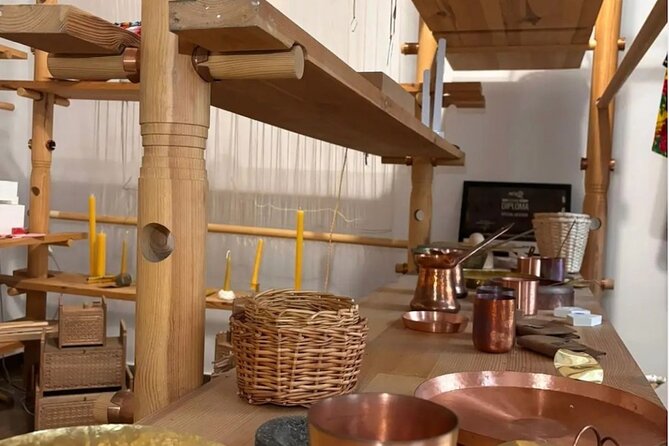
The tour ends at Mesteshukar ButiQ, a small shop with products manufactured only by Roma craftsmen. You’ll spend about 15 minutes here, and this is a smart way to close.
Instead of ending with facts that vanish the moment you leave, you end with a living craft tradition. The tour focuses on craftsmanship using copper, and you get a chance to watch what’s being made or displayed, depending on what’s happening in the shop.
If you want a practical travel tip, this is it: buy thoughtfully. If you see something you truly like, that purchase supports the artisans you met. If you don’t, it’s still a useful stop because it shows you what “tradition” looks like today, not just what history looked like yesterday.
Price, Group Size, and Why This Feels Like Real Value
The price is $30.04 per person for roughly 3 hours. At first glance, that’s just a number. What makes it value is the balance of guided time, multiple structured stops, and the fact that admissions for the stops listed are free.
You’re also in a small group, with a maximum of 15 travelers. Smaller groups tend to work better for history tours because questions can get answered without the guide rushing. That matters a lot when you’re dealing with topics that people often want clarified carefully.
Language is also part of the value equation. The tour is offered in English. And from the kind of feedback this tour receives, the guide is able to explain clearly and answer questions, with one guide named Mihai called out for taking plenty of time. Even if you’re not the most talkative person, you’ll benefit from that calm Q&A style.
Timing and Logistics: Making It Easy on Your Day
This tour starts at 10:00 am. The walking time is about 1h 20m inside the total 3-hour experience, so you can plan to do other Bucharest sights before or after without exhausting yourself.
You’ll start at Teatrul „Ion Creangă” (Sala Mare) and end at Mesteshukar ButiQ on Bulevardul Mihail Kogălniceanu. The route is described as near public transportation, which is helpful in Bucharest where hopping between sights can eat time if you rely only on taxis.
You’ll also receive a mobile ticket. For you, that means you can focus on arriving to the meeting point rather than hunting for paperwork.
Who This Tour Is Best For (and Who Should Skip)
This tour is ideal if you:
- Want a guided walk that treats Roma history as central, not side content
- Appreciate learning through real Bucharest sites, not just indoor exhibits
- Prefer an English guide who can handle questions without hand-waving
- Like a meaningful ending, not just a “thanks, bye” at the final stop
You might think twice if:
- You strongly prefer purely light sightseeing. This route includes slavery history and a Holocaust Memorial stop.
- You’re looking for a long, museum-style experience. This is a walking tour with short, focused stops.
Should You Book The Real Story of Gypsies in Bucharest?
I’d book it if you want one of the most direct ways to understand Roma history in Romania while still seeing key Bucharest landmarks in context. The itinerary is structured, the group size is small, and the guide format sounds designed for real questions, not rushed answers.
Book it especially if you value ending with something tangible at Mesteshukar ButiQ. That craft stop turns what you learned into something you can observe and support.
If you’re the type who needs emotional pacing, plan a quiet buffer afterward. Bucharest is a great city for decompressing, and you’ll appreciate the ability to let the memorial and slavery story land properly.
FAQ
How much does the tour cost?
The tour costs $30.04 per person.
What is the tour length?
The tour lasts about 3 hours. Walking time is allocated as about 1 hour 20 minutes.
What time does the tour start?
The start time is 10:00 am.
What language is offered?
The tour is offered in English.
Where do I meet the guide, and where does it end?
The tour starts at Teatrul „Ion Creangă” (Sala Mare), Strada Piața Amzei 13, 030167 București, Romania. It ends at Mesteshukar ButiQ [MBQ], Bulevardul Mihail Kogălniceanu 12, București 030167, Romania.
How many people are in a group?
The maximum group size is 15 travelers.
Do I need to pay admission at the stops?
Admission tickets for the listed stops are free.
Do I get a mobile ticket?
Yes, the tour includes a mobile ticket.
Can I cancel for a full refund?
Yes. You can cancel for a full refund up to 24 hours in advance of the experience start time.
Newest Bucharest write-ups
- Half Day Tour in Bucharest
★ 5.0 · 1 review - Private transfer to BRASOV
★ 5.0 · 1 review - Bucharest Private Custom Walking Tour with Guide (Private Tour)
★ 5.0 · 1 review - Bucharest: Capture the most Photogenic Spots with a Local
★ 5.0 · 1 review - Transfer Bucharest to Constanta / Mamaia
★ 5.0 · 1 review - Uncover Transylvania: Private 2-Day Tour Bears & Medieval Wonders
★ 5.0 · 1 review - 7-Days Grand Romania tour from Bucharest
★ 5.0 · 1 review
Bucharest Experiences, compared.
Dracula’s Castle, Peles Castle, & Brasov Old Town
Read our review →
Dracula Castle, Peles Castle & Brasov Old Town
Read our review →
Dracula’s Castle, Peleș Castle & Brașov Day Trip
Read our review →
Day Trip to Dracula Castle, Peles Castle & Brașov
Read our review →
Bucharest to Dracula Castle, Peles Castle and Brasov Guided Tour
Read our review →