
Reviewed · 3-DAY EXPERIENCES
3-Day Small Group Tour to Iasi and Republic of Moldova
Two countries, three days, one smooth plan. This small-group trip links Iași and the Republic of Moldova with end-to-end transport, so you spend more time seeing and less time figuring out routes. I love that the schedule is built around a comfortable day-by-day flow, with hotel stays in both countries.
I also like the mix of structured sightseeing and freedom. You get time to explore each place on your own, which matters in cities like Iași and Chisinau where a simple walk can turn into a great find.
One thing to consider up front: Moldova entry rules and extra sight costs are on you. You must confirm any visa needs for your passport ahead of time, and entrance fees are not included.
In This Review
- Key things to know before you go
- Why Iași and Chisinau make sense in one 3-day trip
- Day 1: Bucharest to Iași, the Moldavia capital feeling
- The standouts in Iași, from monasteries to theatres
- Iași’s churches and the three cathedrals you will want to slow down for
- Day 2: Chisinau, a Moldova capital shaped by a spring and a street grid
- Wine cellars under Chisinau: Cricova or Milestii Mici
- Transport, timing, hotel base, and small-group comfort
- Price and value: is $410.74 a good deal for this itinerary?
- Who this tour fits best, and who should skip it
- Should you book the Iași and Moldova 3-day small-group tour?
- FAQ
- What time does the tour start?
- How long is the tour?
- Is pickup offered in Bucharest?
- What kind of accommodation is included?
- Are entrance fees included?
- Do I need a visa for Moldova?
Key things to know before you go
- Small-group cap of 15 means you are not lost in a crowd.
- 8:00 am start helps you make the most of the first day from Bucharest.
- Two 3-star hotel nights with breakfast keeps this trip efficient, not exhausting.
- Cricova or Milestii Mici wine cellars underneath Chisinau are a major highlight.
- One bottle of water per person per day is included for basic comfort.
- Luggage is limited to one suitcase plus one carry-on, so pack carefully.
Other Bucharest days worth the drive
- Bucharest: Dracula’s Castle, Peles Castle, & Brasov Old Town★ 4.5 · 17,858 reviews
- Bucharest: Dracula Castle, Peles Castle & Brasov Old Town★ 4.6 · 10,891 reviews
- Bucharest: Dracula’s Castle, Peleș Castle & Brașov Day Trip★ 4.4 · 6,100 reviews
- Bucharest: Palace of Parliament Tickets and Guide★ 4.3 · 3,182 reviews
Why Iași and Chisinau make sense in one 3-day trip
If you want Romania’s east and Moldova’s capital without burning a week on logistics, this kind of short, guided format can be smart. You are starting in Bucharest, then moving to Iași for a full day of major sights, followed by Chisinau for a day and a wine cellar experience.
The real value here is the pacing. You are not hopping on and off public transit while also trying to read guide signs, translate street names, and find ticket desks. Instead, you get hotel pickup and drop-off and transport by air-conditioned car or minivan, with a driver and tour escort to keep the day moving.
I also like that the trip gives you breathing room. Even with a plan, you get free time to explore at your own pace, which is how you catch small streets, side squares, and local rhythm that a strict checklist often misses.
Just keep your expectations realistic. This is a fast hit of two cities, not a slow travel month. You will want comfortable shoes and a flexible mindset for a “see a lot” trip.
Day 1: Bucharest to Iași, the Moldavia capital feeling
You start the adventure at 8:00 am, then head to Iași, often described as the biggest city in eastern Romania. Iași sits in the Moldavia region, and the city’s identity shows up in its churches, monasteries, cultural institutions, and grand buildings.
This day is packed with architectural landmarks. You will see places tied to religious heritage, theatre history, and the old power center of the region. The good part is that the stops are not random. They connect into a story about how Iași became a major hub for social life, learning, and the arts.
As you move through the city, look for the mix of styles. There are Ottoman-era echoes in the broader region, and then you also see more modern or later European influence in building designs. It makes Iași feel layered, not stuck in one era.
A small practical note: the itinerary mentions a moderate physical fitness level. That usually means walking around historic areas, standing in lines for entry where applicable, and moving between sights without a lot of long sit-down breaks. Plan for that with water, a hat, and shoes with real grip.
The standouts in Iași, from monasteries to theatres
Iași can overwhelm you if you try to absorb everything in one shot. This is why the tour’s selected sights are useful. They are concentrated points that help you understand the city quickly.
One major stop is Trei Ierarhi Monastery, which is associated with a possible UNESCO World Heritage listing. Even if you are not focused on UNESCO labels, monasteries like this give you the feel of spiritual Iași, where the past is still present in stone and layout.
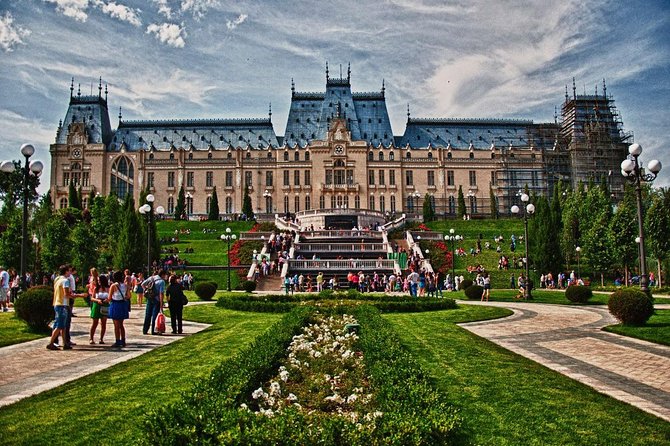
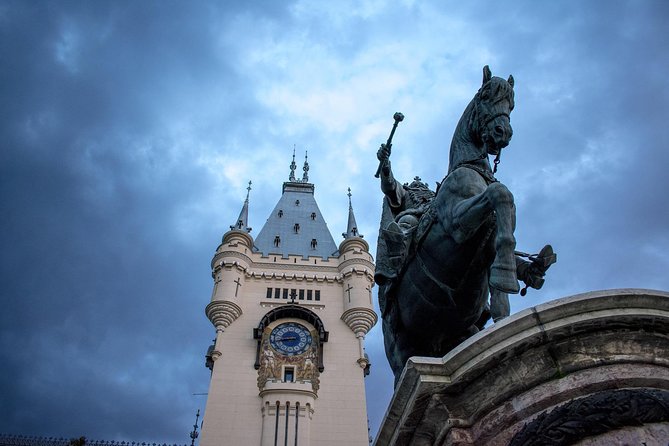
You also get the Palace of Culture, a Neo-Gothic building built on the old ruins of the medieval Princely Court of Moldavia. That detail matters. It explains why the city’s grand buildings feel like they are built on top of older stories, not next to them.
The theatre connections add a fun, more human side. You will encounter the Alecu Balș House, tied to the first theatre performance in Romania, and the Vasile Alecsandri Theatre, noted as the first national theatre in Romania. If you enjoy history through culture, these stops give you a way to picture what life in Iași could have been like beyond wars and dates.
Don’t miss the smaller-but-memorable markers too. The itinerary includes an obelisk connected to the first Jewish theatre in the world, and the Traian Hotel linked to famous architect Gustave Eiffel for Iași. Those details are the kind that stick in your memory later, especially when you are walking the streets on your own time.
Different day out, same corner of Romania:
Iași’s churches and the three cathedrals you will want to slow down for
If you only remember one thing from Iași after this trip, make it the churches. The tour highlights multiple church landmarks, including The three cathedrals, and they are the kind of sights where a guided stop helps you notice what you might otherwise gloss over.
The list includes the St. Parascheva Metropolitan Cathedral, plus the Old Catholic Cathedral and the New Catholic Cathedral (St. Mary, The Queen). Having all three in your itinerary is useful, because it shows how different religious traditions share space in the same city landscape.
You also visit the Princely Saint Nicholas Church, described as the oldest church in Iași and the city’s symbol. When a guide points out a symbol like that, it helps you orient yourself. You start noticing how the city identity is carried through buildings people still use and respect.
Then there’s the Palace of Culture again, as a major architectural anchor. It ties the church stops to the civic side of Iași, so the city feels like one coherent place instead of a set of unrelated monuments.
One small drawback of church-heavy days: you may spend more time standing and watching than you expected. Entrance fees are not included, so if any cathedral or church admission applies, plan for those extra costs. Also, in religious spaces, dress codes can be stricter than casual sightseeing mode.
That said, if you like understanding a city by its most important buildings, this is a strong, efficient day.
Day 2: Chisinau, a Moldova capital shaped by a spring and a street grid
After breakfast, you transfer to the Republic of Moldova and arrive in Chisinau, the country’s capital. The tour sets up an easy context: Romania and Moldova share history and culture roots, because the region’s story has been intertwined for a long time.
Chisinau is described as pretty and friendly, with older buildings mixed with newer ones. That combination is worth paying attention to when you get your first look around town. In places like Chisinau, modern development does not erase older street patterns, so you can still trace how the city grew.
The tour also shares an origin story for the city name. Chisinau comes from the Romanian phrase chisla noua, tied to a spring that was near Pushkin and Albisoara streets, where the original city formed. It sounds like trivia until you walk around. Then it makes you look at street corners and old neighborhoods differently, as if you are spotting the city’s “starting point” in everyday places.
This day is about one big experience plus guided time to orient you. The rest is built so you can explore independently after the main stop.
Wine cellars under Chisinau: Cricova or Milestii Mici
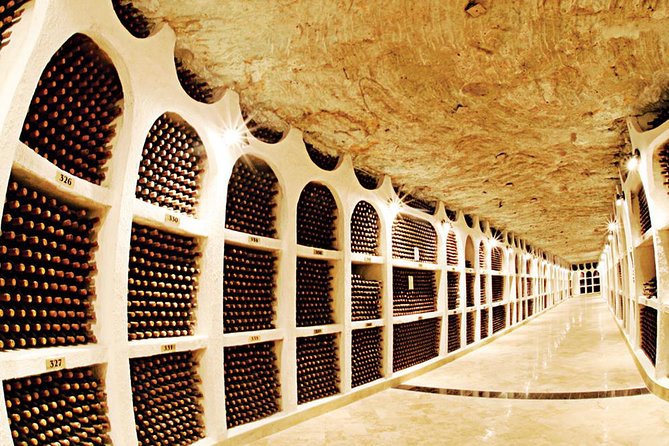
Chisinau’s biggest wow factor in this itinerary is the wine cellar visit underneath the city. You will visit either Cricova or Milestii Mici, both widely known in Moldova.
This is also where you get one of the most eye-catching stats in the tour details. Milestii Mici is described as the “wine kingdom,” included in Guinness records for the biggest surface of underground galleries (about 200 km) and the biggest wine collection in bottles (about 2 million). The tour info also notes that well-known figures such as Vladimir Putin, Angela Merkel, and Yuri Gagarin have been there before you.
Even if you do not drink wine, the cellar itself can be fascinating. Underground spaces change how you experience architecture and time. The cool, controlled environment plus the sheer scale makes it feel more like a landmark than a casual tasting room.
Keep in mind one practical detail: entrance fees are not included. The tour does say you will visit the wine cellars, but it does not clearly state what is included inside. When you book, it is smart to ask whether the cellar visit and tasting are included or if you should budget extra.
If you do end up paying extra for the wine part, still treat it as optional value. The main benefit of this day is the cellar setting and the chance to see how Moldova turns a historical industry into something visitors can walk through.
Transport, timing, hotel base, and small-group comfort
For a 3-day trip that crosses borders, logistics are everything. This tour keeps that part simple.
You get transport by air-conditioned car or minivan, plus a driver and tour escort. You also get hotel pickup and drop-off, so you are not wrestling with taxis or hunting down bus stops at the crack of morning.
Group size is capped at 15 travelers, which matters for how comfortable the day feels. In small groups, your guide can react faster if a stop runs long, and you can ask questions without shouting over 40 other people.
Accommodation is included for two nights in 3-star hotels, one night in Iași and one night in the Republic of Moldova. That is key value for you because it removes the biggest planning headache in short trips. You do not have to find last-minute rooms in a second country mid-itinerary.
What you should plan for:
- Breakfast is included both mornings.
- One bottle of water per person per day is included.
- You need a current valid passport on the day of travel.
- Luggage is limited to one suitcase and one carry-on. If you are overpacking, you will feel it fast with a border-crossing trip.
Also, the tour runs in all weather conditions. That means you should dress for rain or cooler temps, especially if you are moving between churches, squares, and outdoor points.
Price and value: is $410.74 a good deal for this itinerary?
At $410.74 per person, the value depends on what you normally pay for a 3-day package in this region. Here, your money goes toward two hotel nights with breakfast, guided sightseeing structure, and cross-border transport.
You also get some “small costs” handled in the package: hotel pickup and drop-off, a driver and tour escort, fuel surcharge, and a daily water bottle. Those might seem minor, but on short trips, they add up.
The main value question is what is not included. Entrance fees are not included, and Moldova visa processing fees are not included if you need a visa. So you should budget separately for any ticketed sights that apply, including likely payments inside churches or during your wine cellar stop.
The trip is also described as non-refundable and not changeable. That is not “free money” logic. It means you should only book if your dates are firm enough for you to live with that kind of commitment.
Overall, it can be good value if you want a guided introduction to Iași plus a structured day in Chisinau, with the heavy lift of transport handled for you.
Who this tour fits best, and who should skip it
This is a strong match if you want:
- a small-group introduction to Iași and Chisinau
- easy, pre-planned transport from Bucharest
- history you can connect through buildings, theatres, and churches
- a clear “main event” in Chisinau, the wine cellar experience
You might want a different style of trip if you are the type who needs lots of free roaming time with minimal movement. This schedule includes major sights and border travel, so it is not for someone who wants slow mornings and no movement until noon.
If your travel style is “see the essentials and learn fast,” this works well. And if you enjoy guided context, you should appreciate the guide approach. One highlighted guide name in the information provided is Rasem, praised for being knowledgeable and patient, with great history stories. If Rasem is on your departure, you can likely expect careful explanations and calm pacing.
Should you book the Iași and Moldova 3-day small-group tour?
I would book this if you want a practical, time-efficient way to experience both Iași and Chisinau without stressing over transport. It hits the big architectural and cultural landmarks in Iași, then gives you a memorable Moldova day centered on Chisinau and wine cellars under the city.
Book only if you are ready for extra budgeting. Entrance fees are not included, and Moldova entry rules depend on your passport. You also need a current passport at the border, and the luggage limit is real, so pack within one suitcase and one carry-on.
If your dates are fixed, you like guided structure plus some independent exploring, and you want this border-crossing trip done smoothly, this is a solid option to consider.
FAQ
What time does the tour start?
The tour start time is 8:00 am.
How long is the tour?
It is listed as 3 days (approx.).
Is pickup offered in Bucharest?
Yes. The tour includes hotel pickup and drop-off.
What kind of accommodation is included?
You get 2 nights in 3-star hotels, with breakfast included.
Are entrance fees included?
No. Entrance fees are not included.
Do I need a visa for Moldova?
You must confirm the visa requirements for the Republic of Moldova based on your country of origin before border crossing. Visa processing fees, if applicable, are not included. A current valid passport is required on the day of travel.
Newest Bucharest write-ups
- Discover Bucharest’s most Photogenic Spots with a Local
★ 5.0 · 1 review - Real Roma Community Crafting Workshop
★ 5.0 · 1 review - Chauffeur Service in Bucharest
★ 5.0 · 1 review - Peles, Bran, Brasov
★ 5.0 · 1 review - Panoramic Bucharest City Tour
★ 5.0 · 1 review - From Bucharest: Carpathian Villages and Sinaia Day Trip
★ 5.0 · 1 review - 3 Days Private Tour in Transylvania from Bucharest
★ 5.0 · 1 review
3-Day Experiences, compared.
3-Day Tour of Transylvania’s Landmarks from Bucharest
Read our review →
3-Day Private Tour of Medieval Transylvania from Bucharest
Read our review →
3 Days Private Tour in Romania from Bucharest with Tour Guide
Read our review →
Medieval Transylvania: Shared 3-Day Tour from Bucharest
Read our review →
3-Day Tour from Bucharest: Transylvania Villages and Medieval Towns
Read our review →
3 Days UNESCO Tour of Transylvania. Private tour from Bucharest
Read our review →Browse the lists this tour appears in