Reviewed · GUIDED
8 Day Guided Tour in Romania from Bucharest
Romania hits you in eight different moods. This guided road trip stitches together monasteries, medieval towns, and mountain scenery, with a private English-speaking guide keeping the story straight. Along the way, you get both big sights and quieter stops that explain daily life, faith, and power in modern Romania.
I love the private car just for your group, so you spend less time waiting and more time actually looking out the window. I also love the licensed English-speaking guide/driver who stays with you throughout the trip, turning long drives into useful time.
One possible drawback is that you should budget for entrance fees, since many stops are listed as not included. Also, this is a drive-heavy itinerary, so plan for plenty of time in the car.
In This Review
- Key things I’d plan for
- How this 8-day Romania route connects very different worlds
- Curtea de Argeș Monastery, Poienari fortress, and Piata Mare center your Wallachia day
- Salina Turda and wooden church stops give you two very different kinds of wow
- Maramureș day: Merry Cemetery brings humor, then communism history lands hard
- Barsana Monastery, Tihuța Pass, and Ciocănești turn the road into part of the show
- Bucovina painted monasteries: Voroneț, Humor, Sucevita, Moldovița, plus Lucia Condrea’s egg museum
- Bicaz Gorges and Red Lake: mountain drama plus Nicolae Popa’s personal museum
- Sighișoara clock tower, Viscri village, and Brașov’s Piața Sfatului close the week with old-town magic
- Bran, Peles, and Sinaia Monastery: finishing with castles and a calmer church stop
- Price and logistics: what $2,658.63 per person really buys you
- Who this Romania tour fits best
- Should you book this Romania tour?
- FAQ
- How long is the Romania tour?
- Where does the tour start?
- Is pickup included?
- Is this a private tour?
- What’s included versus not included?
- Can I cancel for free?
Key things I’d plan for
- Private transportation for your group: a tourism or minibus car, only for you and your friends or family.
- Flexibility once you start: the itinerary can be adjusted during the trip, not just on paper.
- Major Romanian regions, in one route: Wallachia, Transylvania, Maramureș, Bukovina, plus stops that connect to Moldova and beyond.
- Art and architecture everywhere: wooden churches, painted monastery frescoes, and fortifications.
- Big emotional range: from playful cemetery poems to a memorial on victims of communism and resistance.
- Mountain scenery breaks up the driving: passes and gorges that make the road time feel worth it.
Other Bucharest days worth the drive
- Bucharest: Dracula’s Castle, Peles Castle, & Brasov Old Town★ 4.5 · 17,858 reviews
- Bucharest: Dracula Castle, Peles Castle & Brasov Old Town★ 4.6 · 10,891 reviews
- Bucharest: Dracula’s Castle, Peleș Castle & Brașov Day Trip★ 4.4 · 6,100 reviews
- Bucharest: Palace of Parliament Tickets and Guide★ 4.3 · 3,182 reviews
How this 8-day Romania route connects very different worlds
This tour is built like a long, guided slideshow across Romanian regions. You start in Wallachia with royal tombs and fortress ruins, then swing into Transylvania for castles, saxon-era towns, and salt mining history. Later you move into Maramureș and Bukovina, where wooden churches, painted monasteries, and colorful village traditions take center stage.
For value, the key point is that transportation is not an afterthought. The tour includes a private car plus a guide/driver for the whole stretch, so you are not constantly reorganizing plans. If you hate logistics, this kind of setup can feel like a relief.
The other big advantage is rhythm. Even when the days are packed, the stops are spaced in a way that mixes wow-factor sights with context, not just photo ops.
Curtea de Argeș Monastery, Poienari fortress, and Piata Mare center your Wallachia day
Day 1 starts with Curtea de Argeș Monastery, tied to the royal world of Wallachia. You’re looking at the 13th-century Royal Church and the ruins linked to the princely court, with the monastery history adding a sad note to what could otherwise feel like a simple stop.
Then the tour heads up to Poienari Castle (fortress ruins). The site is dramatic: ruins high on a cliff above the Argeș River, with the Carpathians in the background. The story focus here is the legend of Vlad, including the account that he escaped via a secret passage when the Turks captured the castle in 1462.
Finally, you get a city-center break at Big Square (Piata Mare). The tour description also ties this stop to Sibiu-related highlights like the Evangelical Cathedral and the old-town atmosphere. This part is a good time to reset, stretch your legs, and get oriented for the rest of the week.
Practical note: the itinerary lists admission as not included for the monastery and Poienari, while the square itself is listed as free. So for Day 1, your spending will mostly be entries.
Salina Turda and wooden church stops give you two very different kinds of wow
Day 2 is a split personality day in the best way.
First, Salina Turda is one of those places where you feel the setting instantly. You move through Roman heritage tied to salt mining, then see medieval mining machinery and features like the Stairway of the Rich, plus carved and decorated salt walls. It also comes with a practical angle: the purifying saline air is highlighted as beneficial, especially for respiratory issues like allergies or asthma.
Next is the Gradina Botanica Alexandru Borza area stop. Even though the description text mentions a Transylvania city tour feel, the botanical garden timing gives you a calmer break from fortress and monument viewing. If you want a moment of color, shade, and slower walking, this is it.
Then you finish Day 2 at Surdesti Wooden Church. This one is about craftsmanship and scale. The church’s towers measure an impressive 54 meters, and the itinerary leans on the fact it was built in 1721, which makes the engineering feel even more striking when you see it in person.
Spending reality: Salina Turda and Surdesti are both listed as not included. So if you want to travel light with expenses, keep this in mind early in the trip.
Different day out, same corner of Romania:
Maramureș day: Merry Cemetery brings humor, then communism history lands hard
Day 3 starts in Maramureș at Merry Cemetery (Sapanta). The emotional tone shifts fast here. Instead of solemn, you get colorful crosses and tombstones with humorous poems about the deceased. It’s not just a quirky photo stop, it’s a view of how communities can handle grief with wit.
After the cemetery, you visit Sapanta-Peri Monastery, a wooden church site built in 1391. This stop is short, but it’s a clean look at Maramureș religious architecture, and the itinerary notes a stone church used as a diocesan headquarters for 312 years.
Finally, you go to the Memorial of the Victims of Communism and of the Resistance. This is where the tour becomes serious. The memorial museum is framed around explaining what totalitarian oppression did to people, and why resistance mattered.
This is one of the days where I’d mentally plan for a mood change. If you tend to get overwhelmed, pace yourself after the memorial, and leave time for a quieter dinner.
Practical spending note: the cemetery and memorial are listed as not included; Sapanta-Peri Monastery is listed as free.
Barsana Monastery, Tihuța Pass, and Ciocănești turn the road into part of the show
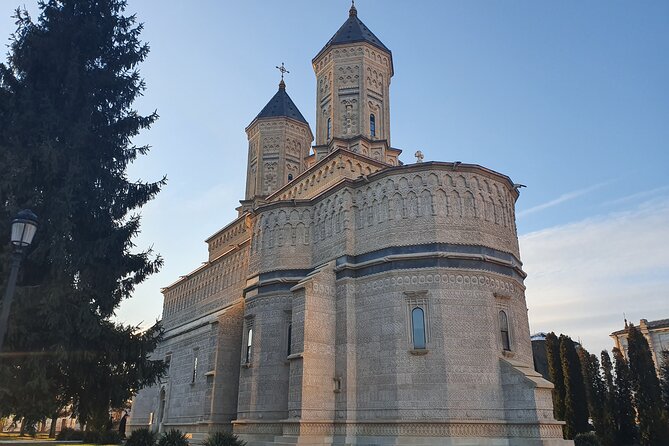
Day 4 is a high-impact mix of architecture and driving scenery.
First is Barsana Monastery, highlighted as one of Romania’s tallest wooden churches, at 57 meters. The itinerary sells this as fairytale beauty and ties it to the spiritual feel of walking into the courtyard. If you like places where the architecture and the setting work together, this is a strong choice.
Then you ride over Tihuța Pass (Borgo Pass). The itinerary calls out the pass at about 1201 meters, and it explains the road history linked to Austro-Hungarian military planning, plus later paving and asphalt. It also warns about traffic behind trucks, so you should expect slower stretches and use that time to enjoy the mountains rather than stress.
You finish the day at Ciocănești, known for being colored like Easter eggs. The description points to Lonely Planet wording about the village being among Europe’s most colorful destinations. Even if you’ve seen plenty of bright villages, the point here is that the whole place is treated as art.
Spending note: Barsana and the pass are not listed as free, while the Ciocănești stop is marked free in the itinerary.
Bucovina painted monasteries: Voroneț, Humor, Sucevita, Moldovița, plus Lucia Condrea’s egg museum
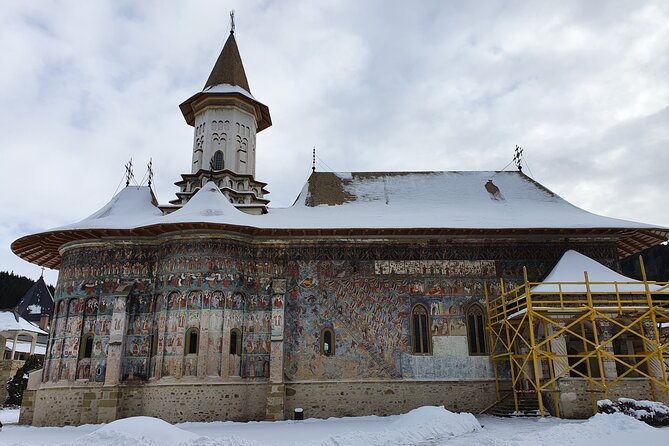
Day 5 is the monastery art day, and it’s a big one.
Start with Voroneț Monastery, often called the Sistine Chapel of the East. The itinerary emphasizes the intense shade of blue known in Romania as Voroneț blue, and ties the founding to Stephen the Great and the victory at the Battle of Vaslui. Even if you’re not a religious art expert, the scale and color are the main draw.
Then you visit Humor Monastery, presented as a fortified monastery that survived centuries, with the backstory that some churches were built away from enemies. This is less about one famous color and more about endurance.
After that, the tour continues to Sucevița Monastery, also framed as part of the UNESCO World Heritage spiritual and cultural patrimony. The description calls the painted biblical scenes vivid and positions the monastery as an open-book kind of experience. It’s one of those days where you start noticing patterns across sites, not just admiring each one alone.
Next is Moldovița Monastery, with a fortified church and mural artwork both inside and outside. The itinerary points out stylistic mix like Byzantine, Gothic, and Moldavian influences, which helps you understand why Bukovina monasteries feel different from one another while still belonging to the same tradition.
Finally, you add the very specific Muzeul International al Oualor Lucia Condrea in Moldovița, with over 5,500 egg exhibits. This museum is a contrast to the monastery frescoes, and that contrast can be refreshing. If you like crafts and folk traditions, it gives you something lighter to hold onto after hours of religious painting.
Spending note: most of these monastery stops are listed as not included, while the egg museum is also not included. So this is a day to budget entries carefully.
Bicaz Gorges and Red Lake: mountain drama plus Nicolae Popa’s personal museum
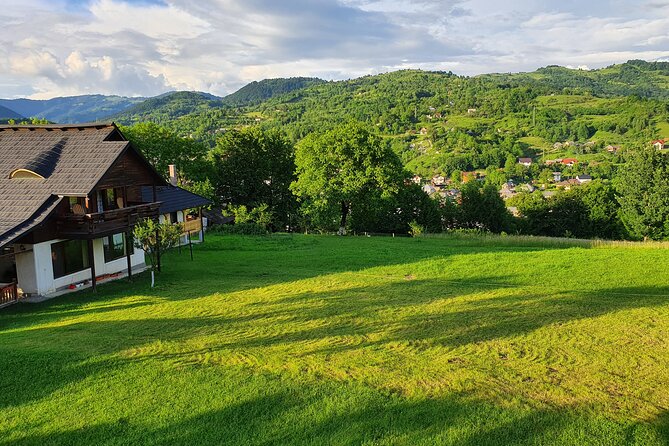
Day 6 shifts from painted walls to rock, water, and fresh air.
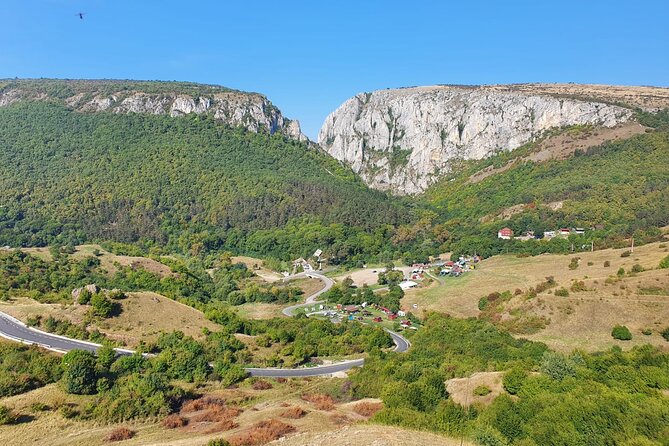
You start with Bicaz Gorges (Cheile Bicazului), where the road threads through ravines with rock on one side and serious drops on the other. The itinerary also mentions wallcreeper sightings, a cliff-dwelling bird that’s uncommon, which makes the gorge feel alive, not just scenic. The stop includes mention of Lacul Roșu (Red Lake) formed by a landslide in the 19th century, and the area is described as having traditional cabins and hotels.
Then you go directly to Lacu Rosu for the lake itself. The information includes a historical discussion of dates and the earthquake of January 23, 1838, with an account of storms and heavy rains as well. You do not have to be a geologist to enjoy this stop. What matters is that you can connect the geology to what you see, and it turns the scenery into a story.
Finally, the day ends with The Popa Museum in Târpești, Neamț County, founded by sculptor Nicolae Popa. The itinerary gives a human backstory: Popa was wounded in World War II, imprisoned by communists for fighting against the regime, and then rebuilt his life around art in his own home. The result is a naive sculptor reputation tied to folklore and Romanian values.
If you’re tired of museums that feel like they’re on rails, this one can feel more personal, because it’s rooted in one maker’s struggle and work.
Spending note: Bicaz Gorges and Red Lake are listed as free; Popa Museum is listed as not included.
Sighișoara clock tower, Viscri village, and Brașov’s Piața Sfatului close the week with old-town magic
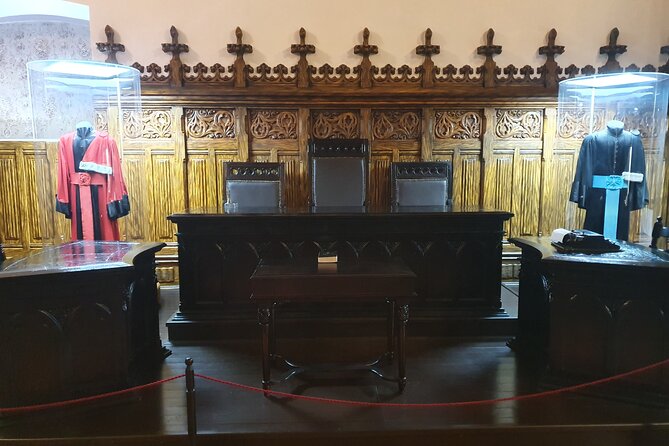
Day 7 keeps the history theme but in a more walkable, town-focused way.
You start at Sighișoara Clock Tower, plus the itinerary mentions the Arms Museum. The highlight is the old town’s medieval feel and the fact the citadel is described as still inhabited for over 700 years. The tour also ties Sighișoara to Vlad the Impaler, specifically his birth.
Next is Village de Viscri, described as having history back to the 12th century. This stop is special because the itinerary notes Prince Charles visits and highlights the Mihai Eminescu Trust involvement, framing how the village reinvented itself. That matters if you want to see heritage that didn’t just freeze in time.
You finish with Piața Sfatului in Brașov. The itinerary explains that the square has been a market space since 1364, surrounded by 18th and 19th-century houses and historical monuments. If you want a satisfying final evening vibe after long days, this square is a good place to do it.
Spending note: Viscri and Piața Sfatului are listed as free, while the Sighișoara stops are not included.
Bran, Peles, and Sinaia Monastery: finishing with castles and a calmer church stop
Day 8 is the endgame for classic Romania imagery.
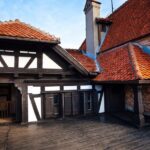
First is Bran Castle, described as Dracula’s Castle. The itinerary plays with the myth and the history angle, noting that the fictional portrayal matches Bran so closely that many believe Bram Stoker used descriptions. Even if you approach this story skeptically, Bran works because the setting and views are real, and the day includes local food tasting options like handmade cheeses, pálinka (plum and pear brandy), and traditionally produced ham and sausages.
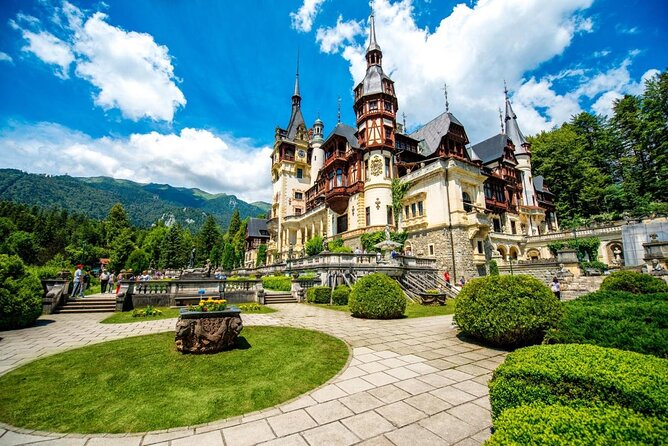
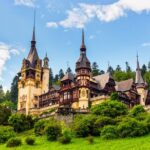
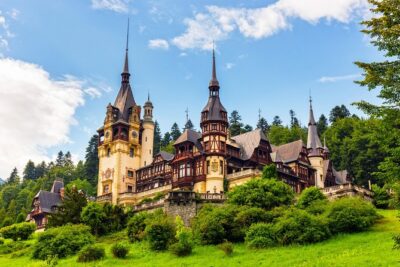
Then you go to Peles Castle, framed as the Romanian royal family’s summer residence. The itinerary calls it one of Europe’s most beautiful castles, and positions it as the kind of stop people book tours for specifically. If you care about craftsmanship, this is likely the most “museum of luxury” moment on the route.
Finally, you stop at Sinaia Monastery. This one is shorter and more reflective, with the itinerary noting it was founded by Prince Mihail Cantacuzino in 1695 and named after Saint Catherine’s Monastery on Mount Sinai in Egypt. It’s also described as inhabited by monks, which keeps the final day from feeling like pure sightseeing.
Spending note: Bran and Peles are listed not included; Sinaia Monastery is also listed not included.
Price and logistics: what $2,658.63 per person really buys you
At $2,658.63 per person for about 8 days, you’re paying for two things: time saved and driver-guided access.
The inclusion list is where you feel it. You get a private car, all car expenses like gasoline, parking, and road tolls, and an English-speaking guide/driver available throughout the trip. There’s also complimentary wireless internet access in the car, plus hotel recommendations based on your budget. That combination matters because Romania is spread out, and this itinerary covers multiple regions that are not close together.
The big cost you still need to plan for is entrances. The itinerary repeatedly lists admission tickets as not included, while some stops are free, like Big Square (Piata Mare), Sapanta-Peri Monastery, Tihuța Pass, Ciocănești, Bicaz Gorges, Lacu Rosu, Village de Viscri, and Piața Sfatului. So you should expect a mix, and entries will be a noticeable extra line item.
One more reality check: this tour is described as involving a lot of driving. That can be fine if you enjoy seeing countryside and you use the guide for context, but it’s not ideal if you get carsick or dislike long seated time.
For a personal touch, one review example singled out the company owner Nicolas for being easy to work with and fun for a drive, with great local knowledge. That matches the tour’s private-guiding approach, where personality and clarity can make the difference between a stressful schedule and a smooth one.
Who this Romania tour fits best
This route is a strong match if you want:
- A private guide-led road trip rather than hopping between group buses
- A balanced mix of monasteries, medieval towns, fortifications, and nature stops
- An itinerary that spans multiple regions in one week, so you can see more without doing separate planning blocks
It may be less ideal if you:
- Want only one or two major stops per day (this route is packed)
- Prefer a lighter driving schedule
- Don’t want to pay entry fees on top of the tour price
Should you book this Romania tour?
I’d book it if you want the easiest way to cover a lot of Romania with a guide doing the talking and the driving, and you’re excited by monasteries and historic towns as much as by castles and passes. The private setup, plus the flexibility to adjust during the trip, makes it feel practical for real travel days.
I would think twice if entrance fees add stress for you, or if long driving days sound like misery. If you can handle car time and you’re okay budgeting for entries, this is a rewarding route that moves from legend to art to history without losing the thread.
FAQ
How long is the Romania tour?
The tour is listed as 8 days (approximately).
Where does the tour start?
The tour is based in Bucharest, Romania.
Is pickup included?
Pickup is offered, based on the tour summary.
Is this a private tour?
Yes. It is a private tour/activity, so only your group participates.
What’s included versus not included?
Included items are a private car for your group, a private licensed English-speaking guide/driver throughout the tour, accommodation, meals and entrance fees for the guide, WiFi in the car, car expenses, and hotel recommendations. Entrance fees are not included as per the itinerary, and your accommodation, meals, and beverages are not included.
Can I cancel for free?
Yes, free cancellation is allowed up to 24 hours in advance of the experience start time for a full refund. If you cancel less than 24 hours before, the amount paid is not refunded.
Newest Bucharest write-ups
- Real Roma Community Crafting Workshop
★ 5.0 · 1 review - Discover Bucharest’s most Photogenic Spots with a Local
★ 5.0 · 1 review - Chauffeur Service in Bucharest
★ 5.0 · 1 review - Peles, Bran, Brasov
★ 5.0 · 1 review - From Bucharest: Carpathian Villages and Sinaia Day Trip
★ 5.0 · 1 review - Panoramic Bucharest City Tour
★ 5.0 · 1 review - 3 Days Private Tour in Transylvania from Bucharest
★ 5.0 · 1 review
Guided, compared.
Bucharest to Dracula Castle, Peles Castle and Brasov Guided Tour
Read our review →

Palace of Parliament in Bucharest – fast-track tickets and guide
Read our review →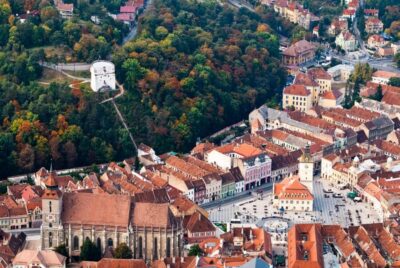
Dracula Castle, Peles Castle & Brasov Guided Tour
Read our review →