Reviewed · TOURS
9 days Balkans Tour from Bucharest to Sofia and Budapest
A road trip through the Balkans, without the chaos. This 9-day tour links Bucharest to Budapest with guided walking tours at standout UNESCO sites, plus 4-star hotels and breakfast each morning. I like that the route avoids backtracking, so you spend your time moving forward, not correcting the schedule. I also like that you get local guidance at key cities, so landmarks come with context, not just photos. The main drawback to weigh is vehicle and timing, since comfort can vary and some days may start later than you want, which can shrink prime daylight.
You’ll be walking most days at an easy to moderate pace, usually 2 to 4 km and sometimes up to 7 km, plus a bit of stair and step work when checking in. The tour is sold as an easy walk, but it still asks you to be game for daily strolling and a little bag-carrying. If you know that style fits you, this can be a strong value way to see a lot of the region in a short window.
In This Review
- Key Points That Matter Before You Go
- Price and What You’re Actually Paying For
- Getting There, Start Times, and How the Days Run
- Day by Day: What You’ll See and What It Feels Like
- Bucharest Morning to Bulgaria’s Caves and Falls
- Lovech Covered Bridge and Sofia’s Cathedral and Shopping Street
- Rila Monastery to Skopje: Big UNESCO and Mother Teresa’s City
- Ohrid After Skopje: Lake Views and Old-Town Corners
- Tirana: Main Square, Mosque, and City Center Orientation
- Kotor Old Town: A Fortified UNESCO Evening
- Mostar to Sarajevo: The Bridge Story and the WWI Trigger
- Belgrade to Novi Sad to Budapest: The Danube Finale
- Comfort, Hotels, and the Stuff That Can Make or Break Your Mood
- Who This Tour Is Best For
- Should You Book This Bucharest to Budapest Balkans Tour?
- FAQ
- What is included in the tour price?
- Are breakfast and meals included after breakfast?
- What entrance fees should I expect?
- Do I need to pay tips during the tour?
- How much walking is involved?
- How big is the group?
- What time does the tour start in Bucharest?
- What do I need for travel documents?
- Can I get a full refund if I cancel?
Key Points That Matter Before You Go
- Air-conditioned transport and no backtracking: the one-way routing helps you keep energy for sights instead of riding in circles
- 4-star hotels, 8 breakfasts: you get daily breakfast and solid comfort baseline for the price
- Guided walking tours in major stops: Sofia, Skopje, Tirana, Sarajevo, and more are led with real landmark focus
- UNESCO in multiple countries: from Rila Monastery to Ohrid, Kotor, and Stari Grad in Montenegro
- Group size up to 46: big enough for variety, small enough that tours stay organized
- Watch the add-on costs: some entries like Devetàshka Cave and Krùshuna Falls are not included
Other Bucharest days worth the drive
- Bucharest: Dracula’s Castle, Peles Castle, & Brasov Old Town★ 4.5 · 17,858 reviews
- Bucharest: Dracula Castle, Peles Castle & Brasov Old Town★ 4.6 · 10,891 reviews
- Bucharest: Dracula’s Castle, Peleș Castle & Brașov Day Trip★ 4.4 · 6,100 reviews
- Bucharest: Palace of Parliament Tickets and Guide★ 4.3 · 3,182 reviews
Price and What You’re Actually Paying For
At about $1,191.42 per person for roughly 9 days, you are buying three big things: hotel nights, guided movement, and breakfast. The trip includes 8 nights in 4-star hotels, transport by air-conditioned vehicle for the entire tour, a professional tour leader, and 8 breakfasts. That mix matters, because Balkans road trips often get expensive fast once you add lodging plus daily logistics.
Where the value can wobble is in the extras. Entrance fees at museums are listed as not included, and the itinerary specifically flags tickets not included for Devetàshka Cave and Krùshuna Falls. Most walking tours are marked admission-free, but not everything is. If you budget a bit for entrances and snacks, the price feels much more reasonable. If you want every ticket included, you may feel nickel-and-dimed.
Also note the expected tipping: 5 euro per day per person for the driver and tour guide. That’s not outrageous, but it is a real cost you should plan for from day one, not at the end.
Getting There, Start Times, and How the Days Run
The tour starts in Bucharest at Bulevardul Regina Elisabeta 7. Your end point is Budapest, Kerepesi út 2, near the train station. You also get a listed start time of 8:30 am, while the first-day departure is shown as 08:00. Either way, treat this as an early start, because you want to be ready before the day begins.
The tour uses a guided format with local guides added in some countries, including Romania, Sofia, Skopje, Tirana, and Sarajevo. That’s a smart design. You get the “big picture” from the tour leader, then local specialists fill in the gaps where it counts.
Here’s the practical part: the walking tours can run from about 1.5 hours to 3 hours, and the total effort is described as easy walking with moderate pace. For me, that’s the sweet spot. You can enjoy sights without turning the day into a hike. Just bring shoes you trust, because stone streets and uneven old-town surfaces are everywhere in this route.
And one more thing: comfort and timing depend on the day and vehicle. If you’re sensitive to cramped seating or long drives, I’d bring a small cushion or travel pillow and pack a light snack plan for the road. Also, confirm the planned departure time each morning with your tour leader. When a tour starts late, you lose the best light for photos and the best pace for walking.
Day by Day: What You’ll See and What It Feels Like
Different day out, same corner of Romania:
Bucharest Morning to Bulgaria’s Caves and Falls
You leave Bucharest in the morning and head toward two nature stops before overnighting in Lovech. The first is Devetàshka Cave, a karst cave near waterfalls that is described as unusually well lit, with a lush green floor. That detail is important. Many caves feel dim and stark. This one, by contrast, can feel like a forest scene that happens to be underground.
Next comes Krùshuna (Krushunskiye) Waterfalls, Bulgaria’s biggest travertine cascade, known for terraces and small pools with mineral water. Even if you don’t buy into the mineral-water angle, the travertine look and layered shapes are visually satisfying, and the vegetation is part of the charm.
Because tickets are not included for both stops, you’ll want cash or card ready if you decide to go in and buy admission on-site. Plan for modest time there, and remember that the day is structured for sightseeing, not lingering.
Overnight is in Lovech at a 4-star hotel, which sets you up for an easy next day start.
Lovech Covered Bridge and Sofia’s Cathedral and Shopping Street
In Lovech, you focus on the Covered Bridge over the Osam River. This bridge connects the two halves of town and is described as a distinctive construction and a major Lovech landmark. It’s the kind of stop that’s quick but memorable because you can walk it and get the town’s rhythm in minutes.
Then you roll into Sofia for an evening city center walk. The walking tour includes Alexander Nevsky Cathedral, Sveta Sofia Church, Banya Bashi Mosque, the Sofia Synagogue, and the main shopping street Vitosha. That mix is the real value here. Sofia is not one single vibe. It’s Orthodox, Ottoman, Jewish, and modern all in one stroll.
If you like cities you can read with your feet, this evening segment works well. You get a compact orientation that makes the city feel navigable even if you have no time to explore on your own later.
Rila Monastery to Skopje: Big UNESCO and Mother Teresa’s City
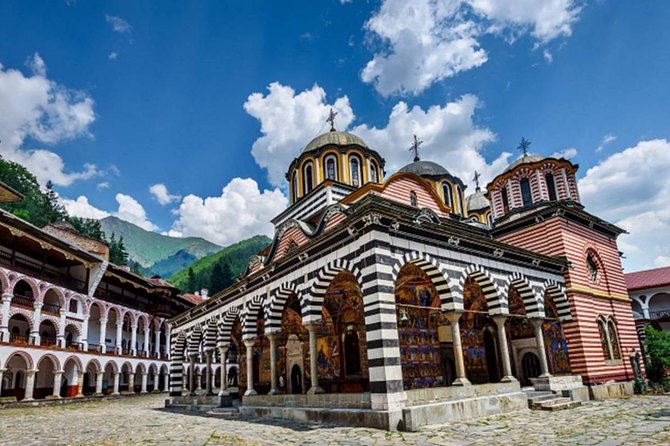
After breakfast, you head to Rila Monastery, Bulgaria’s best-known tourist site and a UNESCO World Heritage Site. It’s founded in the 10th century by Saint Ivan Rilsky (St John of Rila). What I like in the way this stop is framed is the art detail: the Church is adorned by major 19th-century masters from the Samokov, Bansko, and Debar schools of painting and woodcarving.
That makes it more than a box-check UNESCO site. You’re getting the religious story plus the artistic handiwork in the same place.
Then you continue to Skopje for an orientation and a centrally located hotel. Skopje’s walking tour covers major points like the Vardar River quay, the narrow streets of the Old Bazaar, Mother Teresa’s memorial house, Kale fortress, and Macedonia Square with the statue of Alexander the Great on horseback. Skopje can look surprisingly grand in places, so having someone point out what you’re seeing helps.
Ohrid After Skopje: Lake Views and Old-Town Corners
The next big cultural stop is Ohrid, also UNESCO. It sits on the banks of Lake Ohrid at the Macedonia-Albania border. The itinerary emphasizes the depth of time here, including that Lake Ohrid is Europe’s oldest lake, formed over three million years ago. Even if you do not get scientific about it, you still feel the scale of the place because the town is wrapped around the water.
Your walking tour covers narrow streets and squares, the Ancient Theater, older churches and monasteries including Sveti Sofia Church, Tsar Samuel’s Fortress, and a pedestrian shopping street. The mix is good: historical sites plus everyday lanes where life continues.
This is a day where you’ll probably want a snack and water. There’s a lot of ground to cover, and the old-town approach means you may not find a convenient stop every few blocks.
Tirana: Main Square, Mosque, and City Center Orientation
From Macedonia, you cross into Albania and arrive in Tirana. The walking tour focuses on the Skanderbeg main square, the National History Museum, Et’hem Bey Mosque, and Skanderbeg’s statue. If you’re used to more heavily touristed capitals, Tirana can feel like a different kind of energy. The fact that this tour keeps it centered on easy-to-find highlights is a plus.
This is one of those stops where the guide’s narrative matters, because the city’s modern identity is still unfolding for many visitors. You’ll likely leave with a clearer sense of what to prioritize if you return someday.
Kotor Old Town: A Fortified UNESCO Evening
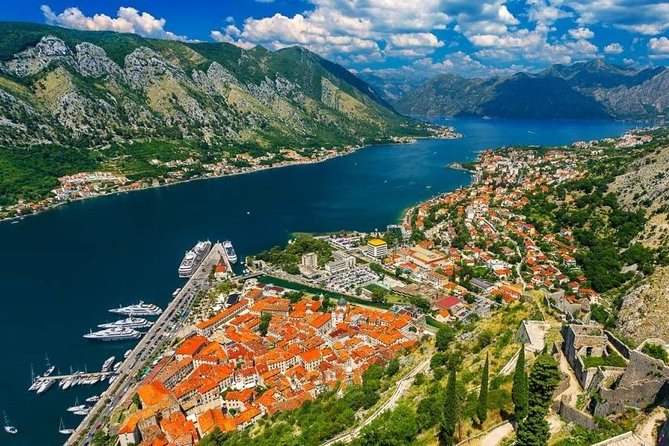
You head to Kotor and arrive in the evening to discover Stari Grad, Kotor’s fortified old town, UNESCO-listed. Your time here is about 3 hours, which is just enough to walk the core streets and get the sense of being inside a defensive shell.
Kotor works well in the evening because the streets feel atmospheric and the pace is gentler. If you want big views, you might feel tempted to climb higher, but with only a set window, stick to what the tour route covers and enjoy the old-town walk.
Mostar to Sarajevo: The Bridge Story and the WWI Trigger
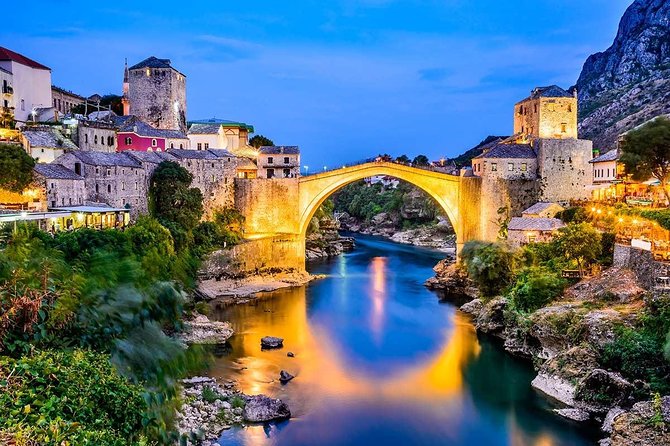
After breakfast, you go to Mostar for the old town and the Old Bridge of Mostar. The bridge was built in 1566 and later destroyed during the Siege of Mostar in November 1993. Your walking tour covers the reasons and legal facts behind that destruction, which turns the bridge from a pretty landmark into a story with weight.
There’s also the tradition of bridge jumping that developed afterward, with young divers competing for a few euros in front of tourists. If that kind of spectacle is not your thing, you can still appreciate the bridge itself and the surrounding neighborhoods without getting distracted.
Then you drive a scenic route through Jablanica Lake and the Neretva River canyon into Sarajevo. Your Sarajevo walking tour is about 2.5 hours, covering Ottoman and Austria-Hungarian parts, markets and bazaars, mosques, churches, and synagogues. You also visit the Latin Bridge and learn how WWI was triggered there.
The tour also flags the 1984 Winter Olympics and life during the Siege of Sarajevo. That is a lot to fit into a walk, but the pace is designed to give you a sense of layers, not a single straight-line story.
Belgrade to Novi Sad to Budapest: The Danube Finale
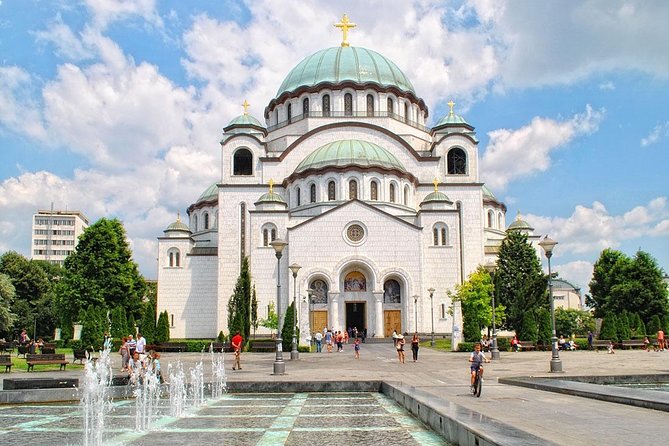
On day 8, you arrive in Belgrade and take a city tour covering Republic Square, the National Theater, the National Museum, Skadarlija (Bohemian Quarter), Kalemegdan Park, Belgrade fortress, and landmarks like Victor plus the confluence of the Sava and Danube rivers.
Belgrade can feel like it’s always in motion. This tour keeps it organized by focusing on the key anchors. Even if you skip museums, you’ll understand where people gather and why.
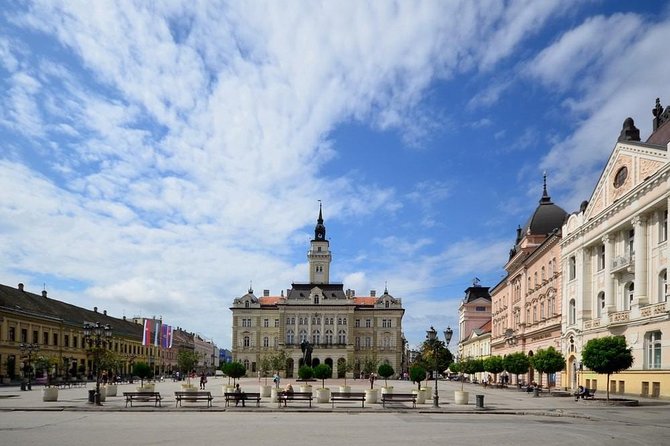
The next stop is Novi Sad, with a 1 hour visit. You’ll see Zmaj Jovina Street, the promenade, the ornate Palace of the Orthodox Bishop, and Dunavska street with its long line of 19th-century houses. You also view the area on the outside of Petrovaradin Fortress from across the river.
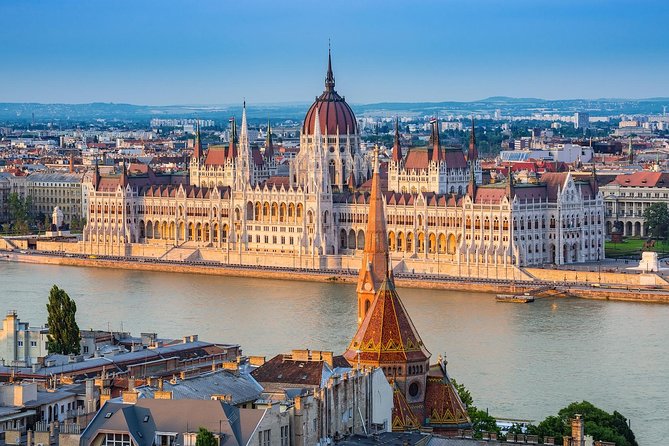
Then you continue to Budapest for an evening arrival and about 3 hours of city walking. This is your Danube finale, and it’s timed well for an end-of-trip orientation, even if you plan to return for deeper exploring later.
Comfort, Hotels, and the Stuff That Can Make or Break Your Mood
You get daily 3-star to 4-star level comfort in the description, and the included list says 8 nights in 4-star hotels with breakfast. In practice, that usually means decent rooms, breakfast you can work with, and elevators in many properties, so you are not constantly hauling your bags up stairs.
Still, one past participant flagged hotel quality and vehicle comfort. I cannot promise every room is the same. If sleep quality is a big deal for you, you may want to request higher-floor rooms when possible, and bring an eye mask or earplugs just in case.
On food: breakfast is included, but food and drinks are not included unless specifically noted. Most walking tours are admission-free, which helps, but lunch plans are on you. I suggest building in a flexible lunch strategy: grab something simple near your walking route so you do not lose time hunting.
Entrance fees are also a wildcard. The itinerary marks some admissions as free, but not all. Budget for a couple paid entries and you’ll feel less pressure.
Who This Tour Is Best For
This is a good fit if you want a guided, one-way, multi-country trip with daily structure. It’s also a good match for travelers who like walking but do not want strenuous hikes.
It’s less ideal if you have zero tolerance for long drives, very firm vehicle seating, or you get cranky when schedules slip. If you know you need perfect timing, you should be the kind of person who does morning check-ins and confirms plans every day.
Language is listed as English, and the tour has a maximum group size of 46, so you should expect a real group dynamic but not a massive cattle line.
You also need a current valid passport on the day of travel.
Should You Book This Bucharest to Budapest Balkans Tour?
I’d book it if you want a structured overview of the Balkans, with UNESCO stops, local-guided walking tours, and hotel comfort built in. The value is strongest when you treat it like what it is: a road-trip highlight reel, not a slow-study journey.
I would think twice if you are very picky about transport comfort or you hate late starts. If that’s you, do two things before booking: plan extra time buffer in your own day plans, and pack comfort items like a neck pillow and water to stay calm during long transfers.
If you come with reasonable expectations and good shoes, you will end up with a lot of real places in a short span, from Bulgarian monasteries to Sarajevo’s layered streets and finally the Danube glow in Budapest.
FAQ
What is included in the tour price?
The tour includes 8 nights in 4-star hotels, transport by air-conditioned vehicle for the entire tour, a professional tour leader, and breakfast (8).
Are breakfast and meals included after breakfast?
Breakfast is included each day it is listed, but food and drinks are not included unless specified.
What entrance fees should I expect?
Entrance fees at museums are not included. Some specific tickets are also listed as not included, such as Devetàshka Cave and Krùshuna Falls.
Do I need to pay tips during the tour?
Yes. Tips for the driver and tour guide are listed as 5 euro per day per person.
How much walking is involved?
The tour is described as easy walking (moderate pace). You should expect walking tours from about 2 hours up to 4/5 hours depending on the day, and some small effort like carrying your own bag on a few steps to enter hotels.
How big is the group?
The tour has a maximum group size of 46 travelers.
What time does the tour start in Bucharest?
The tour meeting start time is listed as 8:30 am. The first day departure is also shown as 08:00.
What do I need for travel documents?
A current valid passport is required on the day of travel.
Can I get a full refund if I cancel?
You can cancel up to 6 days in advance for a full refund. If you cancel between 2 and 6 days before, the refund is 50%, and if you cancel less than 2 days before, it is not refunded.
Newest Bucharest write-ups
- Private transfer to BRASOV
★ 5.0 · 1 review - Half Day Tour in Bucharest
★ 5.0 · 1 review - Bucharest: Capture the most Photogenic Spots with a Local
★ 5.0 · 1 review - Bucharest Private Custom Walking Tour with Guide (Private Tour)
★ 5.0 · 1 review - Uncover Transylvania: Private 2-Day Tour Bears & Medieval Wonders
★ 5.0 · 1 review - Transfer Bucharest to Constanta / Mamaia
★ 5.0 · 1 review - Private Day Trip to Peles Palace, Dracula’s Castle and Brasov
★ 5.0 · 1 review
Tours, compared.
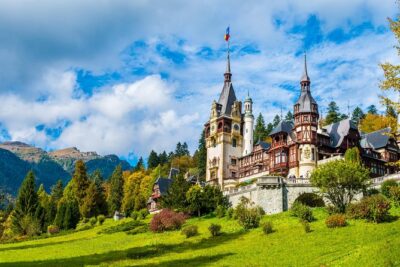
Bucharest to Dracula Castle, Peles Castle and Brasov Guided Tour
Read our review →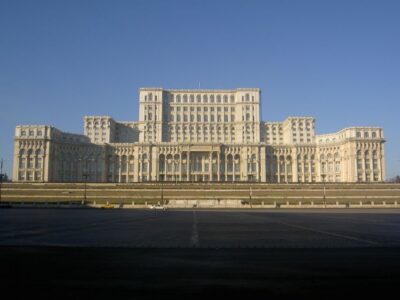
Transylvania and Dracula Castle Full Day Tour from Bucharest
Read our review →
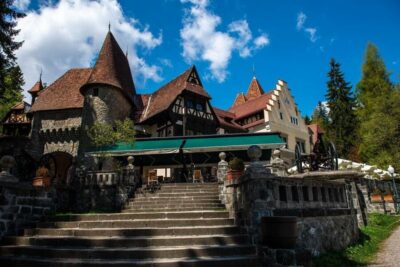
Peles Castle, Bran Castle, & Brasov Old Town Tour
Read our review →
Small-group tour Bran, Rasnov, and Peles Castles
Read our review →