Reviewed · TOURS
Best of Romania Motorcycle Tour
Road bends, legends, and big views. That is the whole point here.
I like how this route strings together Transfagarasan and Transalpina style riding with stops that feel genuinely Romanian, not just roadside photo ops. I also appreciate the English-speaking guide who is a motorcycle enthusiast and, according to the team, 100% Transylvanian, so the ride comes with real local context.
The one consideration: your price covers a lot, but gas and most entry fees are not included, so your final spend will depend on which ticketed sights you choose and how often you stop for food along the way.
In This Review
- Key highlights I’d plan around
- Cluj-Napoca pickup, Turda base, and a smooth start
- Turda Salt Mine and Borgo Pass: Dracula vibes done the practical way
- Heads up on tickets
- Transrarau Road to Bucovina: riding altitude, then UNESCO-style stops
- Moldovița and Sucevița: painted monasteries with real road energy
- Ticket planning
- Ceahlău and Bicaz Gorges: Hell’s Throat on two wheels
- Brasov’s medieval center: a great counterbalance day
- Peles Palace and Transbucegi: hairpins up to 1,925m
- Bran Castle and Transfagarasan: Dracula theater meets real mountain muscle
- Transalpina and Curtea de Argeș: high road days with monastery culture
- Urdele Pass and Alba Iulia: finishing strong with a fortress day
- Hotels, breakfasts, and what’s included in the price
- Value check on the $1,918.72 price
- Weather and riding fit: the real-world constraints
- Should you book this Romania motorcycle tour?
- FAQ
- What area of Romania does the tour focus on?
- How long is the Best of Romania Motorcycle Tour?
- Where does the tour start?
- What time does the tour start?
- Are motorcycles included?
- Is an English-speaking guide provided?
- Are hotels included?
- Are meals included?
- Are admission tickets included?
Key highlights I’d plan around
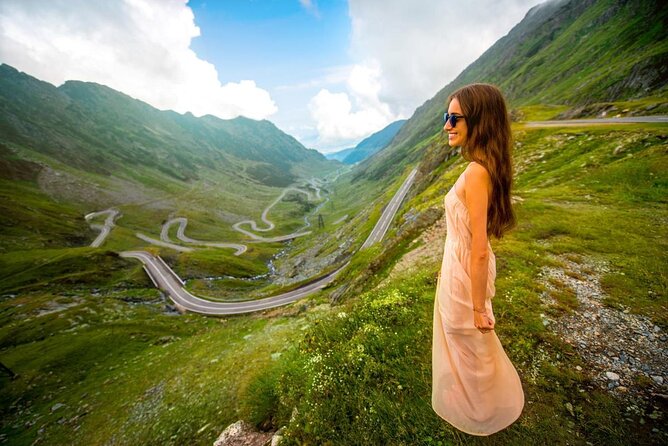
- Transfagarasan Highway included as a major riding day, built as a military road and famous for hairpin intensity
- Transalpina Road with high passes like Urdele Pass (2,145m) plus a long day of mountain terrain
- Bucovina monasteries on the painted route, including Moldovița and Sucevița in UNESCO territory
- Small-group vibe with a max of 9 people, which usually means easier pacing and fewer waiting moments
- 3-star and 4-star hotels booked for you, so you can focus on the riding and the views
- Pickup and mobile ticket support, which makes it simpler when you land and just want to start rolling
Also worth an afternoon in Transylvania:
- From Bucharest: 2-Day Medieval Transylvania Tour★ 4.8 · 71 reviews
- Private Hiking OR Climbing Experience in beaufitul gorges★ 5.0 · 50 reviews
- Carpathians in Romania: Bucegi Natural Park with native Spanish guide.★ 5.0 · 16 reviews
- Carpathians in Romania: Piatra Craiului National Park with native Spanish guide.★ 5.0 · 11 reviews
Cluj-Napoca pickup, Turda base, and a smooth start
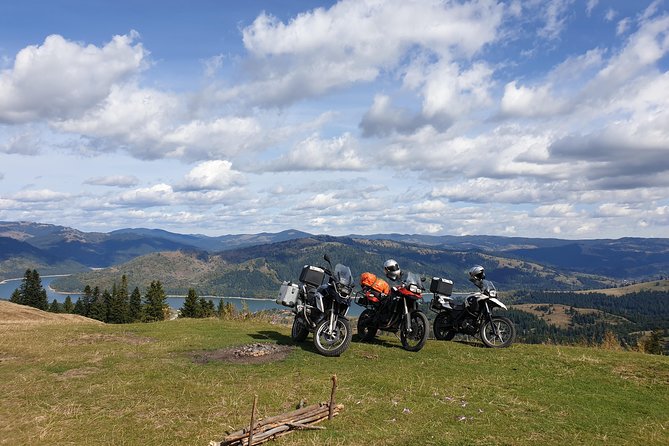
Most motorcycle tours start with a scramble. This one starts with a human meeting. Your guide picks you up at Cluj-Napoca Airport, then you ride toward Turda, a compact town with Roman roots (Turda’s Roman-era name was Potaissa). The feel is intimate, which matters on Day 1 because you are settling your gear, getting your bearings, and getting the bike sorted.
Later in the day, you add a sunset-focused ride to the nearby mountain area. That warm-up is smart. It helps you get comfortable with local road rhythm before the big carved-up passes start calling your name.
Turda Salt Mine and Borgo Pass: Dracula vibes done the practical way
Day 2 gives you a mix of surreal and cinematic without turning the day into a museum marathon. First stop is Turda Salt Mines, famous for huge underground halls and themed rooms named after kings and queens. It is one of the few stops where you can go indoors, cool down, and still feel like you are in an experience, not just a restroom break.
After that, the route follows the Bram Stoker Dracula storyline trail toward Borgo Pass, where you stay at a 3-star hotel built in Bram Stoker’s imagination. Then, after sunset, there is a visit to Dracula’s coffin. That kind of stop can feel cheesy on some tours. Here, it works because it is attached to a real riding day and a real overnight base, so it becomes part of the trip’s theme instead of a random detour.
Heads up on tickets
Turda Salt Mines admission is not listed as included, and the Dracula-related admission noted for Day 2 is also not included. It is not a deal-breaker, just plan for it.
Different day out, same corner of Romania:
Transrarau Road to Bucovina: riding altitude, then UNESCO-style stops
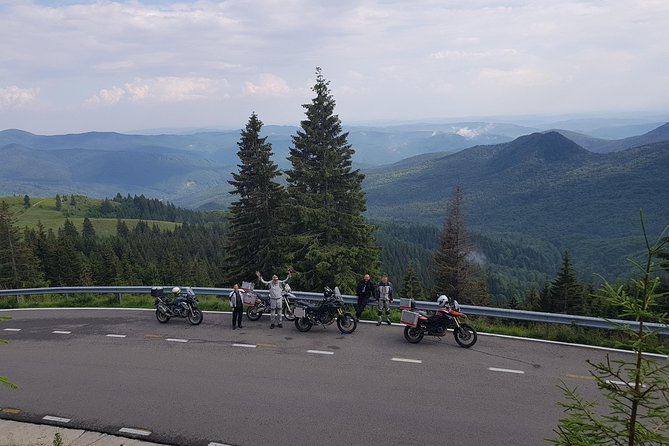
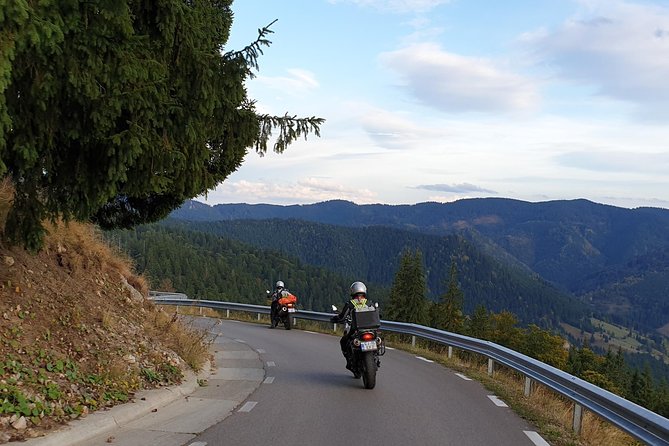
Day 3 is about getting your altitude legs. You head toward Transrarau Road, described as one of Romania’s most beautiful alpine roads, and the route climbs up to about 1,400m. If you like winding climbs where every turn feels earned, this is the kind of road that makes you slow down just to enjoy the sightlines.
You then cross from Transylvania toward the Bucovina region. That transition matters because Bucovina is the part of Romania that really leans into painted monasteries, plus local crafts like black ceramic workshops.
In the morning and into the ride, Transrarau has a “you earn the view” feel. It is also short enough that you are not exhausted before the next big cultural day.
Moldovița and Sucevița: painted monasteries with real road energy
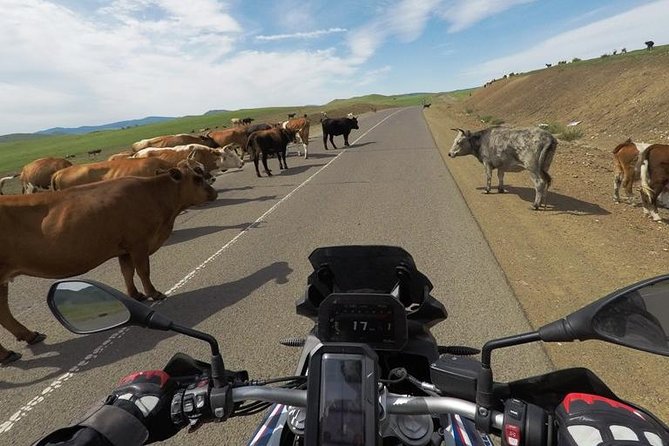
Day 4 brings you to Moldovița Monastery and the painted monasteries route, including Sucevița. The big reason I like this stop is simple: you are not parked on a flat city sidewalk. You ride in mountain terrain on winding roads, which means your day stays connected to the motorcycle theme.
These monasteries are UNESCO World Heritage sites, and that designation matters for a reason: the paintings are the point. Expect an atmosphere that feels separate from modern Romania, because the art and the architecture have that enduring, lived-in quality.
There is also mention of black ceramic workshops in the region. Even if you only see a shop or two, it is a reminder that this area is not only about famous monuments. It is a craft region too.
Ticket planning
Moldovița and Sucevița entry is not listed as included, so you should budget for it if you want to spend time inside.
Ceahlău and Bicaz Gorges: Hell’s Throat on two wheels
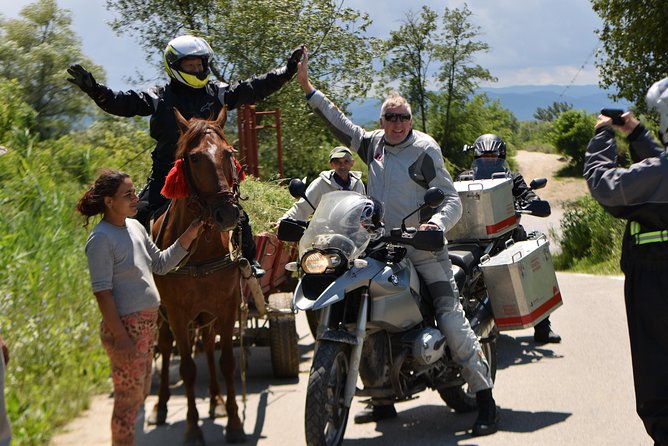
Day 5 starts by moving toward Târgu Neamț, home to Neamț Citadel, which dates to the 14th century. After that, you tackle Transceahlău Road, crossing Ceahlău National Park. This is the part where the route can feel more like adventure riding than city touring, with narrow segments and some gravel sections.
Gravel can sound scary if you do not ride it often. The key is that these short gravel bits are usually manageable if you keep it smooth, slow down before corners, and avoid sudden inputs. On a tour like this, you are not trying to race, you are trying to stay relaxed and see the view.
Day 6 is one of the most dramatic riding days: Bicaz Gorges, often described as Hell’s Throat. You cross narrow gorge territory with towering rocks rising to about 400m, with viewpoints that make you stop breathing for a second. This is the day where the route feels carved by nature, not by humans.
Brasov’s medieval center: a great counterbalance day
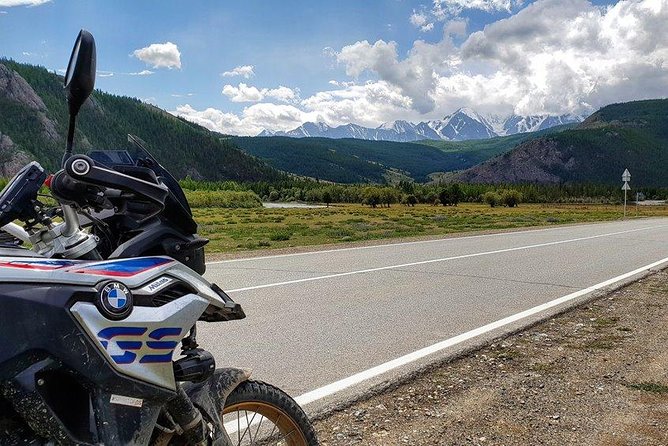
After the gorges, Day 6 continues to Brașov Historical Center. This is the useful contrast to the rock walls and high passes. Brașov has a preserved medieval feel, and the city is surrounded by mountains on all sides, so even on a walking stop you still get mountain context.
This day is ideal if you want your riding to be intense, then your mind to reset with a calmer streetscape and time to wander.
Ticket note: Brașov Historical Center entry is listed as free.
Peles Palace and Transbucegi: hairpins up to 1,925m
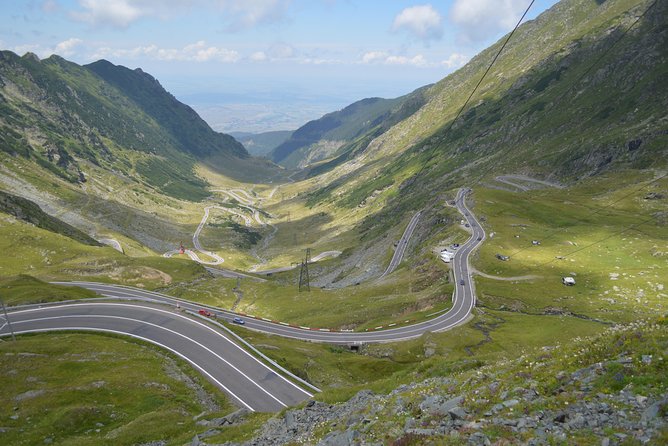
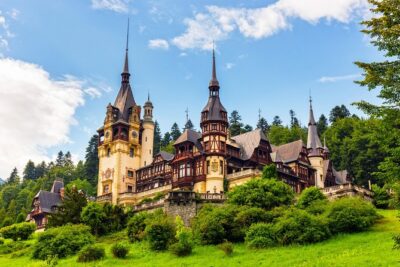
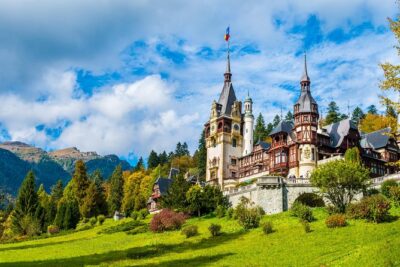
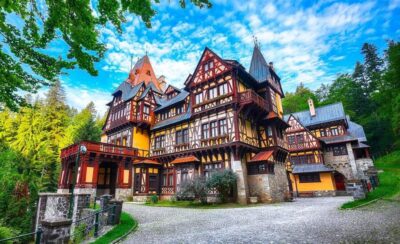
Day 7 is a top highlight for riders who like a serious climb with payoff at the top. You start with a ride through Prahova Valley, then visit Peleș Palace, known as one of the most beautiful royal residences in Europe and associated with Romania’s monarchs. Even if palaces are not your main interest, it is worth it here because it pairs culture with immediate riding momentum.
Then you move onto Transbucegi Road, also called Babele Road, crossing Bucegi Mountain and climbing to around 1,925m. It is described as narrow with hairpin curves. If you enjoy cornering rhythm and steady throttle management, you will likely love this section. It is the kind of road that feels custom-built for motorcyclists.
Ticket note: The tour lists admission for Peleș Palace and the Bucegi Natural Park stop as free.
Bran Castle and Transfagarasan: Dracula theater meets real mountain muscle
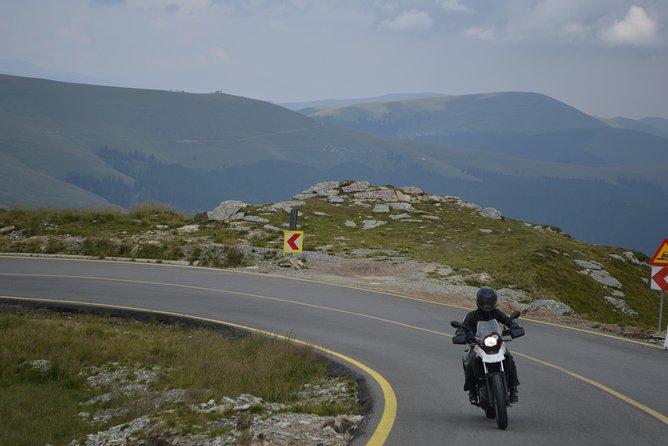
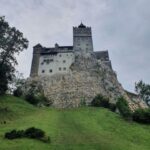
Day 8 is split into theme and intensity. First is Bran Castle, often called Dracula’s Castle. The tour points out the fame is tied to Bram Stoker’s myth, and Bran’s real charm is separate from the marketing. The experience works best if you go in knowing it is partly legend and partly a castle with presence.
Then comes Transfăgărășan Highway, one of Europe’s most challenging roads for motorcyclists. It was built between 1970 and 1974 as a military route, and the story behind it matters because it explains the scale and the tight engineering. You ride into the Carpathians and the satisfaction is not subtle. You will feel it in your forearms, your breathing, and the grin you cannot hide when the switchbacks open up.
Ticket note: Bran Castle entry is not included, but Transfăgărășan is listed as free for the ride stop.
Transalpina and Curtea de Argeș: high road days with monastery culture
Day 9 starts at Curtea de Argeș Monastery, with Byzantine style plus Moorish arabesques. It is also tied to regional legend. Afterward, you head into the mountains for Transalpina Road. Transalpina is described as one of Romania’s most spectacular roads and as the highest mountain road in Romania, which you feel the moment you start climbing.
The ride time listed is about 3 hours, which is long enough to get full value but not so long that you lose the day to fatigue.
Day 10 continues Transalpina again, which is honestly a smart choice. When you ride a road like this, you often want enough time to let it sink in and not just skim past it.
Ticket note: Curtea de Argeș admission is not included, while Transalpina is listed as free for the stops.
Urdele Pass and Alba Iulia: finishing strong with a fortress day
By Day 10, Urdele Pass is part of the plan, with the road cresting at 2,145m. The tour also mentions Transalpina is called the King’s Road by locals, and its historical connection to King Carol II, plus later WWII-era rebuilding by German troops. Even if you only catch the basics, it adds depth to why the road exists the way it does.
Then you end the touring rhythm with a city stop at Alba Iulia Citadel, a star-shaped fortress with seven bulwarks. This is a great “put a pin in it” day. You go from mountain bends to geometry and stone, and it gives your body a break while your brain still keeps traveling.
Ticket note: Alba Iulia Citadel entry is listed as free.
Hotels, breakfasts, and what’s included in the price
You get accommodation in very good 3-star and 4-star hotels, which is a practical upgrade for a motorcycle trip. After days of climbing, you want clean rooms, reliable hot showers, and sleep that actually helps you recover for the next road.
Breakfast is included for 10 days. That matters because it simplifies your mornings and keeps you from having to figure out food logistics while everyone is suiting up.
Inclusions you should care about:
- An English-speaking guide who rides with the group
- Accommodation in 3-star and 4-star hotels
- A general map
- A motorcycle as per your booking
- Breakfast (10)
Not included costs that can change your total:
- Gas
- Entry fees to mentioned attractions (some are listed free, others not)
- Lunches and dinners and beverages
- Plane ticket and airport fees
- Photo and video taxes or other fees not mentioned
Value check on the $1,918.72 price
For about 11 days, you are paying for guided riding across major mountain corridors, planned overnight hotels, and a motorcycle provided as per your booking. The price can look steep until you remember this is not a self-guided rental where you map everything yourself. You are paying for route design plus guide support plus the big-ticket hotel nights.
Your final value mostly depends on how much you plan to spend on non-included meals, gas, and ticketed sights.
Weather and riding fit: the real-world constraints
This experience requires good weather. That is not a minor detail. Mountain roads and gorges can change fast with rain or low visibility. If weather turns, you might be offered a different date or a full refund.
Physical fit is listed as moderate. That does not mean you have to be a mountaineer, but you should be comfortable with day-long riding, getting on and off the bike, and walking short distances around stops.
One more practical note: the group size is capped at 9 people. That tends to keep the ride manageable and helps the guide keep attention on the road, not on constant regrouping.
Should you book this Romania motorcycle tour?
If your idea of a great trip is a mix of legendary roads plus well-chosen stops with Dracula vibes, painted monasteries, and mountain scenery, then yes, this is a very strong fit. The route is built around major named roads like Transfăgărășan and Transalpina, and the day structure avoids wasting time in places that only exist for a quick picture.
I would book it if you:
- Want guided riding without the stress of doing everything solo
- Like a real road challenge, not just easy scenic cruising
- Appreciate a mix of culture and motorcycle momentum
I would hesitate if you:
- Want a price that is fully predictable, because gas and several entry fees are not included
- Dislike the idea that weather can affect the trip schedule
- Prefer very relaxed sightseeing days, since some stops are tied closely to riding time
If you want to ride Romania the way it was meant to be ridden, with mountains doing the talking, this tour is a good match.
FAQ
What area of Romania does the tour focus on?
The route is based in Transylvania, with riding that also goes into the Bucovina region and other parts of the Carpathians.
How long is the Best of Romania Motorcycle Tour?
It runs for 11 days (approximately).
Where does the tour start?
The tour starts with pickup from Cluj Napoca Airport, and the meeting point is Adventure Motorcycle Tours & Rentals Romania in Turda.
What time does the tour start?
The start time is listed as 1:00 pm.
Are motorcycles included?
Yes. The tour includes a motorcycle as per your booking.
Is an English-speaking guide provided?
Yes. The tour includes an English-speaking guide who is also described as a motorcycle enthusiast.
Are hotels included?
Yes. Accommodation is included in very good 3-star and 4-star hotels.
Are meals included?
Breakfast is included (10 breakfasts). Lunches and dinners are not included, and beverages are also not included.
Are admission tickets included?
Not always. Some stops list admission free, while others list admission as not included. Entry fees are generally not included unless specifically marked free.
Newest Transylvania write-ups
- 800cc Motorcycle Rental from Turda
★ 5.0 · 1 review - Cluj Napoca: Climbing or Hiking Experience in Turda Canion
★ 5.0 · 3 reviews - 2 Day Private Tour from Bucharest in Transylvania
★ 5.0 · 3 reviews - 7 Day Best of Transylvania Motorcycle Tour from Cluj
★ 5.0 · 4 reviews - 1250cc Motorcycle Rental from Turda
★ 5.0 · 4 reviews - Private Brown Bear Watching Experience near Odorheiu Secuiesc
★ 5.0 · 4 reviews - Bucharest: 3-Day Transylvania Halloween Tour
★ 5.0 · 6 reviews
Tours, compared.
Bucharest to Dracula Castle, Peles Castle and Brasov Guided Tour
Read our review →
Transylvania and Dracula Castle Full Day Tour from Bucharest
Read our review →
Peles Castle, Bran Castle, & Brasov Old Town Tour
Read our review →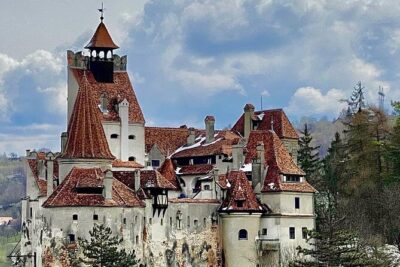
Small-group tour Bran, Rasnov, and Peles Castles
Read our review →