
Reviewed · ROMANIAN FOOD TOURS
Bucharest Panoramic City Tour & Street Food
Bucharest has two faces, fast. This 4-hour panoramic tour mixes interwar Little Paris elegance with communist-era contrasts, with great photo stops and an easy, chauffeured pace.
I especially like the comfort factor. You ride in a car or spacious air-conditioned van and get dropped off right where you started, so you can focus on seeing Bucharest instead of managing transit. I also love the way the tour ties big-name sights to everyday life, with a coffee and pastry start, then a real street-food moment at Obor market with mici and time to browse.
One thing to think about: the big monuments are mostly viewed from the outside, since entrances are not included. If you want to go inside everything, you will need extra time and money.
In This Review
- Key highlights that make this tour worth your time
- Morning pickup, roasted coffee, and a van that keeps you sane
- Calea Victoriei and Little Paris: where Bucharest flexes its interwar style
- Parliament Palace, Army House, and CEC Palace: seeing the scale up close
- Unirii Boulevard and Alba Iulia Square: the communist Champs Elysees idea
- Obor market and Romanian street food: mici, shopping, and real Bucharest energy
- Primaverii and the Ceaușescu villa area: power, memory, and photo angles
- Romanian Atheneum finale: a classical ending to a political day
- Price and value: is $150 per person fair for what you get?
- Should you book this panoramic city tour?
- FAQ
- How long is the Bucharest Panoramic City Tour & Street Food?
- What time does the tour start?
- Is hotel pickup and drop-off included?
- What language is the live tour guide?
- Is food included, or do I need to pay for meals?
- Does the tour include water and Wi-Fi?
- What vehicle will I ride in?
- Is the tour wheelchair accessible?
- Can I cancel for a full refund, and can I reserve without paying right away?
Key highlights that make this tour worth your time
- Little Paris on Calea Victoriei: interwar “French-style” Bucharest with museum houses and palaces.
- Communist neighborhood context: you get the story behind the buildings, not just the photos.
- Parliament Palace area viewing: a first look at Romania’s political mega-architecture.
- Obor market street food break: a tasting of Romanian mici plus a chance to snack and shop.
- Comfortable private transport: sedan for 1 to 3 people, van for 4 to 8, with AC.
- Romanian Atheneum finale: a classic music landmark to close the day.
More City Sightseeing in Bucharest
- Bucharest: City Highlights Guided Walking Tour★ 4.9 · 1,482 reviews
- Bucharest: Communism and History Guided City Walking Tour★ 4.9 · 918 reviews
- Bucharest: 2-Hour City Highlights Bike Tour★ 4.8 · 269 reviews
- Bucharest Tuk Tuk city tour★ 5.0 · 188 reviews
Morning pickup, roasted coffee, and a van that keeps you sane

This is built like a practical city reset. The tour typically starts around 10:00 A.M., with hotel or apartment pickup, so you avoid the scramble of figuring out where to begin in Bucharest. You’re also not stuck in a cramped ride. The operator plans vehicle size around your group, using a sedan for 1 to 3 people and a larger air-conditioned van for 4 to 8.
Right after pickup, you get a calm start: freshly roasted gourmet coffee with local pastries. That matters more than it sounds. Bucharest’s best photo angles and long streets come with sun, walking breaks, and waiting for traffic openings. Having caffeine early helps you stay upbeat while your guide walks you through the “why” behind each neighborhood.
Once you’re rolling, the route is designed to keep you moving while still giving time to stop, look, and shoot. You’re not sprinting between landmarks. You’re getting a guided “panoramic sweep,” where each stop adds a new layer to how the city looks today and what shaped it.
Calea Victoriei and Little Paris: where Bucharest flexes its interwar style
If you want a fast sense of Bucharest’s old-world ambition, Calea Victoriei is the spine. This street is famous for the museum houses and palaces lined along it, and it’s the core of the city’s Little Paris nickname from the interwar period. The contrast is part of the fun: you see the grandeur, then you’re reminded how different the city would become after later political shifts.
What I like about this stop is the way your guide frames details you might otherwise miss. You’re not just told that the street is pretty. You learn what the buildings meant at the time and how the city’s identity moved between European influence and local power.
This is also one of the best stretches for photography. Expect to pause for pictures from the vehicle and at safe roadside viewpoints. Bring your comfortable walking shoes, but don’t plan on a long trek here. The goal is to spot, enjoy, and move on.
Parliament Palace, Army House, and CEC Palace: seeing the scale up close
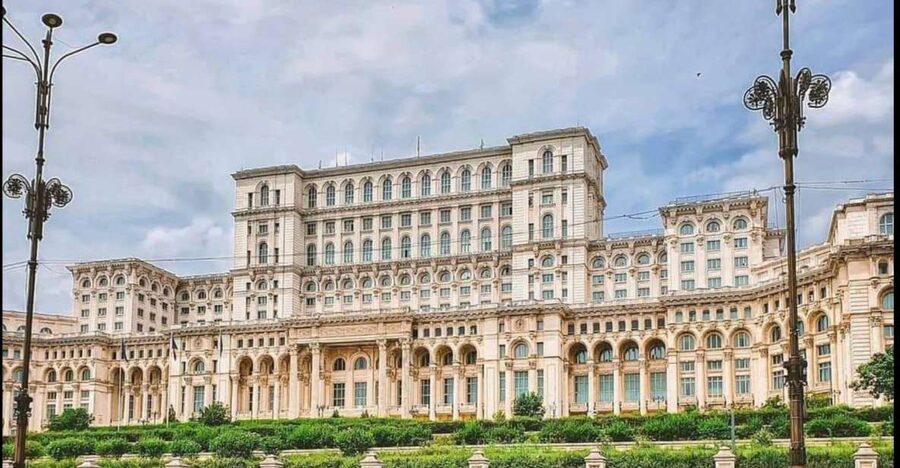
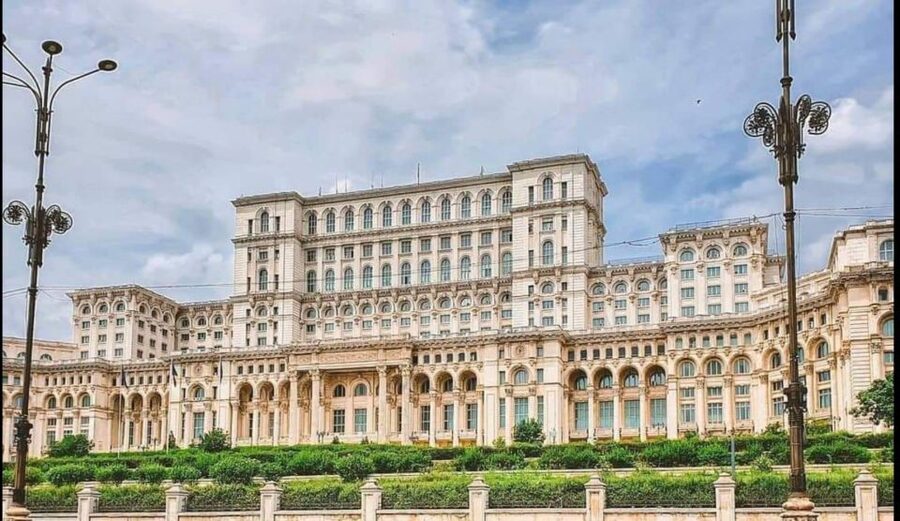
Bucharest’s most dramatic political architecture takes the spotlight for a reason. The Parliament Palace is the kind of building that changes how you feel in a city. It’s described as the second largest administrative building in the world, and even without entering, you can sense the intention behind the size.
On this tour, you also see the Army House and the CEC Palace in the same zone. These stops work because they build a theme: power made visible through stone, symmetry, and an almost stubborn sense of permanence. When your guide links each building to its era, the city becomes easier to understand as a whole, not a pile of unrelated landmarks.
One practical note: these are stop-and-look moments more than inside-the-building moments. Since entrances are not included, plan for viewing from outside and absorbing the details your guide points out. If you’re the type who loves reading plaques and buying tickets, you can still add separate entry days later. But for a single half day, the value is in getting oriented quickly.
More Food Tastings in Bucharest


Unirii Boulevard and Alba Iulia Square: the communist Champs Elysees idea
After the grand architecture, the tour turns toward Unirii boulevard, often compared to the communist-era Champs Elysees. That comparison is useful, because it hints at what Bucharest tried to do with these wide avenues: create a stage for public life and political messaging, using scale and perspective.
You’ll also visit Alba Iulia square, which gives you a sense of how space was designed to handle gatherings and how the city’s layout reflects historical priorities. The tour doesn’t treat these places like museum exhibits behind glass. It connects the architecture to everyday life, including what living in communist neighborhoods meant in practice.
This is one of those parts where a good guide can make or break the experience. If you’re lucky and you get a strong communicator like Andrei, who was noted for collecting people at 10 A.M. and explaining the route clearly, you’ll leave feeling like you can read the city’s patterns. If your guide is more talkative, treat it as free context for the rest of your trip.
Obor market and Romanian street food: mici, shopping, and real Bucharest energy
Here’s the part that turns the tour from sightseeing into living. The tour heads to Obor market, described as Bucharest’s biggest outdoor and indoor market. It’s a big change of pace from palaces and ceremonial avenues, and it’s exactly why the tour works.
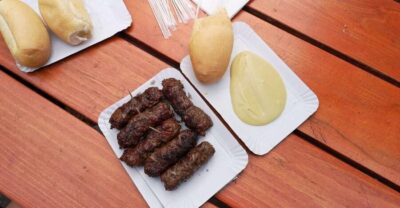
You get a tasting of Romanian mici and time in the market area. Even if you don’t buy much, you’ll get something valuable: a feel for how locals shop, snack, and move through space. In fact, one highlight from recent experiences was how easy it was to keep exploring after the tasting, including the chance to browse fresh fruit, plus items like salami and cheese.
One careful point: the tour says food and drinks are not included, but it also includes coffee pastries and the mici tasting. So think of this stop as a guided street-food moment, not a full meal package. If you want a second snack or bottled drink, budget for it separately.
If you’re the kind of traveler who likes markets because they are messy, loud, and human, you’ll love this stop. If you prefer quiet streets and you hate crowds, wear patience and take short breaks when you need them.
Primaverii and the Ceaușescu villa area: power, memory, and photo angles
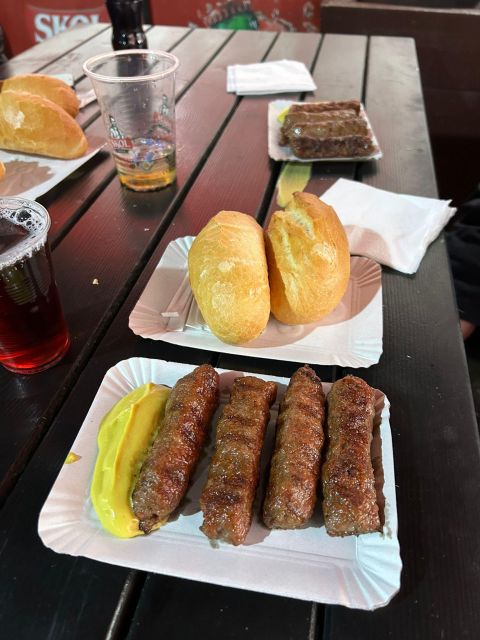
After Obor, the tour shifts toward Primaverii, associated with Nicolae Ceaușescu. You’ll see the area where he had his private house, sometimes described as his villa. This is history you can feel in Bucharest. The architecture and the neighborhood layouts help you picture how authority could shape everyday geography.
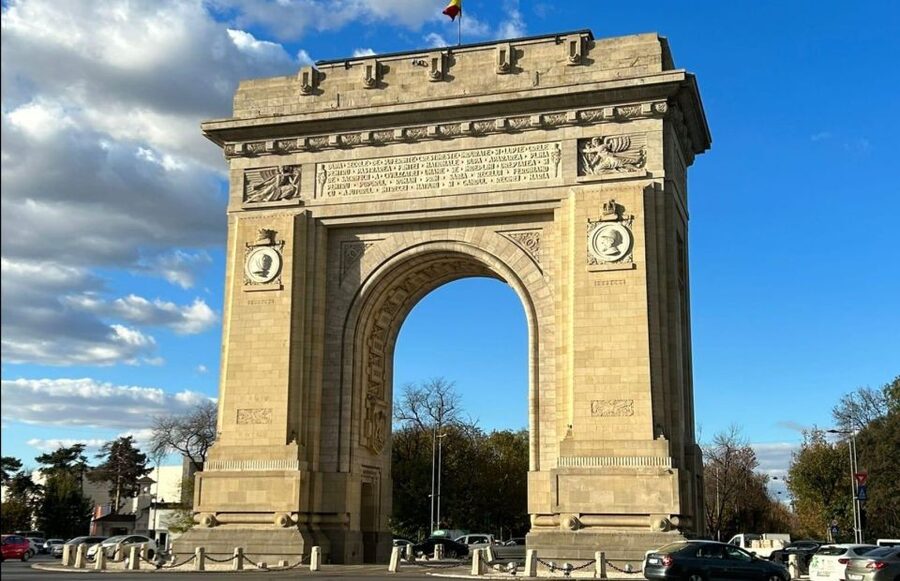
From there, you continue to the Triumph Arch area and the National Village Museum stop. These work well together because they point the city in two directions. The Triumph Arch connects to national symbolism and street-scale views. The Village Museum connects you to Romania’s rural heritage and a different kind of cultural storytelling.
In this section, I’d treat your camera like a tool, not a trophy. Stop for wide shots when the vehicle allows it, then use short walks for close-up angles if your guide offers them. This is a good time to ask your guide what to look for visually, like building shapes, fence lines, or how the landscape changes as you move.
Romanian Atheneum finale: a classical ending to a political day
The tour closes with a final landmark stop at the Romanian Atheneum, home of the Romanian Philharmonic Orchestra. That ending is smart. After palaces, squares, and markets, a music symbol tells you Bucharest is not only shaped by politics and industry. It also has strong cultural roots.
This is also where your pacing pays off. You finish the day without having to squeeze in another “big stop.” Even if you don’t go inside, you still get that last, memorable image that feels distinctly Romanian and very Bucharest.
Then you’re taken back to your drop-off location. You’ll appreciate this part if you’re traveling with limited time. Four hours in a city like Bucharest can disappear fast if you keep adding extra transportation decisions.
Price and value: is $150 per person fair for what you get?
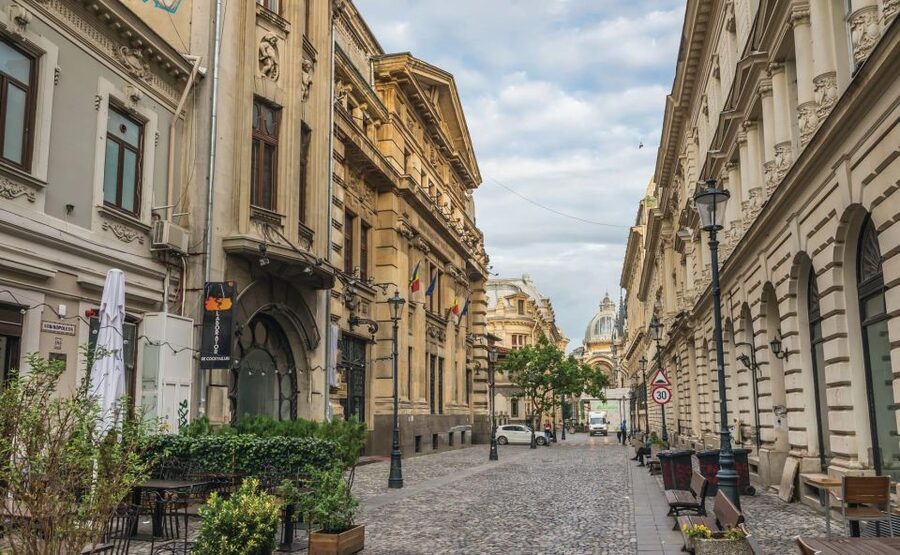
At $150 per person for a 4-hour private experience, the value depends on your travel style. Here’s what you’re paying for, in plain terms: a guided route, hotel pickup and drop-off, and private transport in a car or air-conditioned van, plus water and Wi-Fi. Those items are not small. They buy you time and reduce the stress of coordinating within Bucharest.
What’s not included is equally important. Entrances, food, and drinks are not part of the listed inclusions. Still, the plan does include coffee with pastries at the start and a mici tasting at Obor. So you do get a taste of local flavors, even if you’re responsible for any extra meals or beverages you want.
If you are the type who wants a guided “connect the dots” day, this price can feel fair. If you mostly want to hop out and roam on your own, you could spend less by using public transport and a self-guided walking list. But you won’t get the same smooth, story-based route and the same comfort factor.
Should you book this panoramic city tour?
Book it if you want a structured half day that shows Bucharest in layers, interwar Little Paris elegance, communist-era contrasts, and an authentic market break with mici. It’s also a smart choice if you prefer private guiding and you like the convenience of pickup.
Pass or consider alternatives if you’re hoping for lots of indoor visits. Since entrances are not included, this is mostly about seeing, spotting, and learning from outside viewpoints and short stops.
If you do book, my practical tip is simple: wear your most comfortable shoes, keep your camera ready for wide angles, and be ready to switch gears from palaces to markets. That contrast is the whole point of the day.
FAQ
How long is the Bucharest Panoramic City Tour & Street Food?
The tour duration is about 4 hours.
What time does the tour start?
The tour starts around 10:00 A.M., with pickup from your hotel or apartment.
Is hotel pickup and drop-off included?
Yes. Hotel pickup and drop-off are included, along with transportation.
What language is the live tour guide?
The live tour guide provides the tour in English.
Is food included, or do I need to pay for meals?
Food and drinks are not listed as included, but the experience includes a coffee with local pastries at the start and a tasting at Obor market. You should budget for any extra food or drinks you want.
Does the tour include water and Wi-Fi?
Yes. Water and WI-FI are included.
What vehicle will I ride in?
For 1 to 3 people, transportation is done by sedan car. For 4 to 8 people, transportation is done with a van. The van is described as comfortable and spacious with air-conditioning.
Is the tour wheelchair accessible?
No. The tour is not suitable for wheelchair users.
Can I cancel for a full refund, and can I reserve without paying right away?
Yes. There is free cancellation up to 24 hours in advance for a full refund. You can also reserve now and pay later.
Romanian Plates in Bucharest
- Bucharest: Street Food Tour with a Local Guide
★ 4.3 · 21 reviews - Bucharest Historical Food Tour in Old Center
★ 5.0 · 21 reviews - Premium 8-Day Private Culinary Vacation in Romania
★ 5.0 · 11 reviews - Bucharest: 4-Hour Walking Food Tour in the Old Town
★ 4.1 · 8 reviews
Newest Bucharest write-ups
- Half Day Tour in Bucharest
★ 5.0 · 1 review - Private transfer to BRASOV
★ 5.0 · 1 review - Bucharest: Capture the most Photogenic Spots with a Local
★ 5.0 · 1 review - Bucharest Private Custom Walking Tour with Guide (Private Tour)
★ 5.0 · 1 review - Transfer Bucharest to Constanta / Mamaia
★ 5.0 · 1 review - Uncover Transylvania: Private 2-Day Tour Bears & Medieval Wonders
★ 5.0 · 1 review - Private Day Trip to Peles Palace, Dracula’s Castle and Brasov
★ 5.0 · 1 review
Romanian Food Tours, compared.
Discover Bucharest: Private Highlights and Traditional Food Tour
Read our review →
Bite your way through Timisoara – Timisoara’s Street Food Tour
Read our review →
Premium 8-Day Private Culinary Vacation in Romania
Read our review →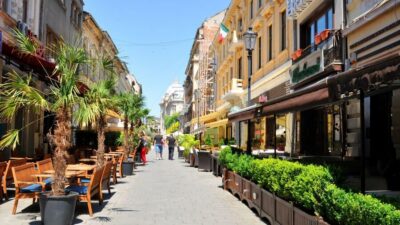
Browse the lists this tour appears in