Reviewed · GUIDED
From Bucharest: 10 Days Private Guided Tour in Romania
Your Romania route stays in your control. This private 10-day tour links big-city history in Bucharest to castles and painted monasteries, and you ride with Nicolas (a licensed English guide) and a private car for just your group. I love the way the plan can flex day by day, and I love that the experience is built around real time with your guide instead of constant group shuffling.
One big consideration is cost. At $3,310.33 per person, you should budget extra for things listed as not included, including accommodation and meals, plus entrance fees depending on how the ticket list is handled for the dates you book. Long road days are also part of the deal on a route this wide.
In This Review
- Key highlights you will feel on the road
- Bucharest first: the Palace, the Village Museum, and the Revolution sites
- From royal tombs to Transfagarasan’s cliff-edge views
- Hunedoara Castle and Sarmizegetusa Regia: Romania’s medieval muscle and Dacian focus
- Turda salt air, Surdesti’s tall wooden church, and a break from castle mode
- Maramureș: painted cemeteries, tall wooden monasteries, and communist memory
- Bukovina painted monasteries: Voroneț blue and the fortified church run
- Egg museum curiosities, naive sculpture, and Bicaz Gorges walks
- Sighisoara and Biertan: medieval living blocks and UNESCO fortification
- Brasov, Black Church, Bran Castle, and Peles Castle in one strong finish
- Price and logistics: what $3,310.33 per person buys you, and what it does not
- Should you book this private Romania guided tour?
- FAQ
- How long is the Romania private guided tour?
- What is the price per person?
- Is this a private tour?
- Is pickup offered?
- What does the tour include?
- What is not included in the price?
- Will I receive a mobile ticket?
- What is the cancellation policy?
Key highlights you will feel on the road
- A guide named Nicolas with the kind of local storytelling that makes the history click, not just facts on a sign.
- Private car for your group with complimentary wireless internet inside, so transfers feel easier.
- Big contrast route, from Bucharest’s political history to Transylvania fortresses and Bukovina frescoes.
- Transfagarasan access in season, since the highway is fully open only from June to October.
- Bukovina painted monasteries in a tight run, including the famous Voroneț blue.
- Two castle stops at the end with Brasov Old Town walking time plus Bran and Peles.
Other Bucharest days worth the drive
- Bucharest: Dracula’s Castle, Peles Castle, & Brasov Old Town★ 4.5 · 17,858 reviews
- Bucharest: Dracula Castle, Peles Castle & Brasov Old Town★ 4.6 · 10,891 reviews
- Bucharest: Dracula’s Castle, Peleș Castle & Brașov Day Trip★ 4.4 · 6,100 reviews
- Bucharest: Palace of Parliament Tickets and Guide★ 4.3 · 3,182 reviews
Bucharest first: the Palace, the Village Museum, and the Revolution sites
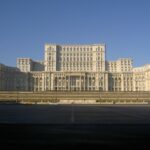
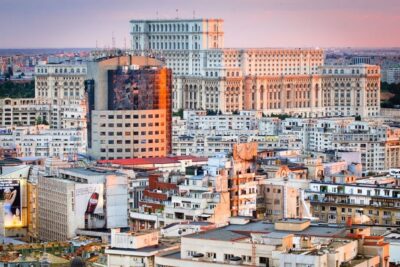
If your mental picture of Romania starts with castles, this tour corrects that quickly. You begin in Bucharest with a heavy hitter: the Palace of Parliament, also known as the People’s House. It is one of the most controversial administrative buildings ever built, and the scale is so extreme you feel small walking near it. The building is the second-largest administrative construction on the planet after the Pentagon, and yes, getting the right selfie angle can be hard because everything is so huge.
Next comes a completely different vibe at the Bucharest National Village Museum. This is where Romania’s traditions become tangible. You see how villagers created a kind of ecological and sustainable life right in their backyard, and you get a sense of simple routines and social harmony with the landscape. It is not just indoor exhibits, so it helps you cool down after the jaw-drop scale of the Parliament.
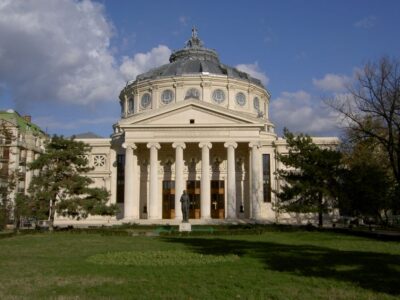
Then you shift back to culture with the Romanian Athenaeum on Calea Victoriei. It is one of Bucharest’s most representative symbols and is part of a European Heritage list. This stop works well when you want your tour to include more than monuments tied only to politics.
Finally, you end the Bucharest day in the political heart of the story at Revolution Square. You stand in the place where the dictator Ceaușescu was ousted and where the December 1989 Revolution began. You will also see the Senate Palace, which is tied to the Romanian Communist Party’s Central Committee. The value here is not just that it happened, but that your guide can explain why the modern city feels the way it does after that rupture.
Practical tip: wear shoes you can walk in easily. Bucharest stops are spread enough that you will appreciate comfort even if each site is a short hop.
From royal tombs to Transfagarasan’s cliff-edge views
After Bucharest, the route moves into Wallachia and the Carpathians, and the tone becomes more dramatic. Curtea de Argeș Monastery is a strong start, especially because of what it hides: royal tombs and layers of church and princely history. You also pass ruins tied to the Wallachian princely court and see the old royal church. The story has sadness built in, which is exactly why it lands. It gives you context for how power and faith got intertwined in Romania.
Then comes Poienari Fortress, perched high on a cliff above the Argeș River at the foothills of the Carpathians. This is the kind of site where you understand why fortresses were built to be hard to reach. The castle was begun in the early 13th century, later abandoned, and then tied back to Vlad’s story through consolidation efforts. When the Turks captured it in 1462, Vlad escaped via a secret passage through the mountains. Whether you come for the legend or the ruins, the views help you picture the strategy.
From there you head to Transfăgărășan Highway, Romania’s most spectacular and best-known road. This is the big scenic drive, with a highest point at 2,042 meters. The tunnel linking the northern and southern sides at Lake Bâlea is part of the thrill. The key detail: the highway is fully open only from June to October, so the timing of your trip matters a lot. If you are traveling outside that window, you might not get the same full access.
To balance the drive, the tour then folds in Sibiu’s older core around Piata Mare, also called the Big Square. This is one of those places that rewards slow walking. You get Evangelical Cathedral and Sibiu’s old city center, with architecture and atmosphere that made Sibiu European Capital of Culture for a reason.
Practical tip: bring a light layer. Even in warmer months, mountain air can feel cooler in the higher elevations.
Hunedoara Castle and Sarmizegetusa Regia: Romania’s medieval muscle and Dacian focus
The middle of the tour is where you get serious about stone, strategy, and scale. Corvin Castle, also called Hunyadi Castle or Hunedoara Castle, is one of the largest castles in Europe. It is Gothic-Renaissance in style, and it has that “movie set” quality without needing CGI. You also hear the names people use for it across cultures, which is a reminder that Transylvania has always been a meeting point.
Next you go to Densus Church, known as St Nicholas’ Church. This one is special because it layers time. It is the oldest stone church in Romania in its present form, built in the 13th century on a site that goes back to a 2nd-century Roman temple. Even the church’s murals matter. Inside, you can see 15th-century mural paintings where Jesus is shown wearing Romanian traditional clothes, plus later additions in the 18th century.
Then you reach the big Dacian landmark: Sarmizegetusa Regia. This was the Dacian capital and major religious, military, and political center before Roman wars. You climb to a mountain fortress system built around six citadels, designed as part of a defensive strategy in the Orăștie Mountains. It is one of those places where a guide makes a huge difference, because it is easier to understand a fortress system when someone explains how the different zones worked together.
Practical tip: if you want photos, take them early or late in the day. Midday light can be harsh on stone, and your patience will be tested if you feel rushed.
Different day out, same corner of Romania:
Turda salt air, Surdesti’s tall wooden church, and a break from castle mode
Not every day has to be a fortress day. In Transylvania, you get a change of pace at Salina Turda, the Turda Salt Mine. It is visually interesting, but the highlight is also practical: people associate the saline air with a purifying effect and it can be beneficial for respiratory issues like allergies or asthma. I would treat that as a common-sense reason to consider it, not a guaranteed medical fix, but the setting is genuinely different from everything above ground.
From there, the tour heads to Gradina Botanica Alexandru Borza. This pairs nicely with a broader feel for Cluj Napoca’s architecture, including Baroque, Renaissance, and Gothic-style buildings. If you like your cultural time balanced with some greenery, this is a nice reset. You may also notice why people recommend building in extra time for meals here, since local dining can attract lines.
Then you jump into wooden craftsmanship at Surdesti Wooden Church. This is not just a quick glance. The church is known for its height, with towers measuring an impressive 54 meters, and it dates to 1721. Wooden architecture at that scale takes real work, and the fact it still exists makes it feel like a living document of what builders knew long before modern tools.
Practical tip: expect some uneven paths at older churches and mines. Bring shoes with decent grip.
Maramureș: painted cemeteries, tall wooden monasteries, and communist memory
Maramureș is where Romania shifts into folk tradition and emotional history. You start at Sapanta’s Merry Cemetery. This place is famous for its colorful crosses and tombstones, each topped with humorous poems about the deceased. It sounds strange until you see it, then it makes sense. It captures a different approach to mortality, one that treats life and death as linked rather than separated by fear.
From there, you visit the Memorial of the Victims of Communism and of the Resistance. This is heavier. The value here is clarity: it helps you understand how Romanian people resisted communist oppression and how quick and damaging totalitarian rule was. If you have not studied this period before, this stop will likely change how you interpret the later political sites you already saw.
Next you visit Barsana Monastery, known for being one of the tallest wooden churches in Romania, at 57 meters. The courtyard and the wooden structure create a strong atmosphere, and the barefoot experience in the grass connection to the earth is described as part of the visit. Even if that specific moment is short, it is memorable because it slows you down.
Then you head to Tihuța Pass, a mountain pass linking Bistrița and Vatra Dornei. It became famous through Bram Stoker’s Dracula, where it is called the Borgo Pass. The tour notes that Stoker likely borrowed the name from a contemporary map rather than visiting the area. So you get myth plus a reality check, which I appreciate.
Finally, you visit Ciocănești, a village known for merry painted houses with traditional motifs. The setting matters too: pine spruce forests and fertile meadows nearby, plus the Golden Bistrița River. It is the kind of place where you can photograph doorways and windows and suddenly the region feels human instead of just historic.
Bukovina painted monasteries: Voroneț blue and the fortified church run
Bukovina is the highlight zone for many people, and this tour stacks the monasteries so you see the styles side by side. Manastirea Voroneț is often compared to the Sistine Chapel of the East because of the frescoes and the intense shade of blue known as Voroneț blue. It was built by Stephen the Great in 1488, in just over three months. If you like art history, this stop is a must because the color has a reputation for a reason.
Then you go to Humor Monastery, described as fortified. It is built about 500 years ago, and there is a story of an earlier church destroyed before this one remained. Again, the point is not only the religious layer but also the practical defensive logic that shaped where buildings were placed and how they survived.
Sucevita Monastery continues the pattern with biblical scenes and icons painted on the walls of a fortified church. It is UNESCO-listed, and that helps you understand why it draws serious attention. The tour experience emphasizes it as an open book in visual form, which is exactly how you should look at it. Don’t rush your reading of images. Let your guide walk you through what you are seeing.
Finally, Moldovița Monastery adds another style mix. It was built in 1532 and has mural artwork on both inside and outside surfaces. The fortified church combines Byzantine, Gothic, and Moldavian elements, but the murals are the main reason to show up. If you remember just one thing from the Bukovina run, let it be this: you are seeing a visual language that locals protected for centuries.
Practical tip: monasteries are sometimes chilly even in summer. A thin layer is worth it, especially in the morning.
Egg museum curiosities, naive sculpture, and Bicaz Gorges walks
Day eight keeps the pace but changes the type of attraction. The Muzeul International al Oualor Lucia Condrea is a unique museum devoted to eggs, featuring over 5,500 exhibits in display cases. If you thought museums had to be solemn, this one helps reset your expectations. It is an art-focused stop that still fits the broader theme of regional craft.
Next you visit The Popa Museum, founded in the 1970s by Nicolae Popa in his own house. The story behind it matters: he was wounded in World War II, imprisoned by communists for opposing the regime, and left without personal possessions besides his house. After that, he used hard work and commitment to create a body of naive sculpture and preserve Romanian values through art. This kind of origin story makes the objects feel more than decorative.
Then you go to Bicaz Gorges for a walk along the banks of the river that has carved its way through mountains and virgin forests. This is the break your body wants after days of frescoes and churches. Three hours of walking can be comfortable if you pace yourself, stop for photos when you see a viewpoint, and keep water handy.
Practical tip: treat this as your active day. Eat earlier, walk slower than you think, and protect your feet.
Sighisoara and Biertan: medieval living blocks and UNESCO fortification
You end up back in Transylvania’s medieval heart with Sighisoara. The Clock Tower and Arms Museum give you a focused introduction to life in a fortress town. Sighisoara is described as a living medieval citadel, inhabited for over 700 years, which is a rare thing in Europe. The citadel is built around 1280, and the long habitation turns it from a set-piece into a place you can imagine waking up in.
Then you go to Biertan Fortified Church, a UNESCO World Heritage site. This is a statement by the community: the church is set on a hillock with three defensive walls and seven bastions around it. The town dates back to 1224, and the fortified setup makes it easier to understand why Saxon settlements built defense into daily life.
If you are a fan of how architecture reflects politics, this is where it clicks. You see how faith and security overlap.
Brasov, Black Church, Bran Castle, and Peles Castle in one strong finish
The final day is built for atmosphere and variety. You start in Brasov with a walking tour of the Old Town, including the Black Church (Biserica Neagră), the Old Town square, and medieval city walls. You also get free time to absorb the vibe and grab coffee in one of the charming cafés. This break time matters because it lets you stop being a checklist tourist and start noticing details.
Next comes Bran Castle, widely linked to Dracula. The tour frames it as between myth and history, since Bram Stoker’s fictional Dracula is often connected to Bran Castle because descriptions match closely. Outside the castle, you get a chance to try traditional foods like handmade cheeses, pálinka made from plum and pear brandy, and traditionally-produced ham and sausages. That is a great practical touch because the castle area can be touristy, but food gives you a local anchor.
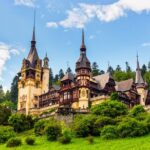
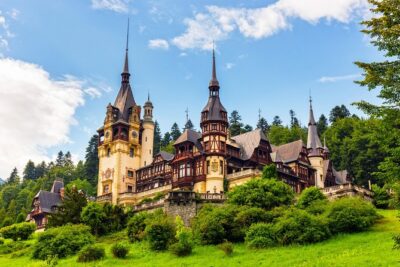
Finally, you visit Peles Castle, the Romanian royal family’s summer residence. It is one of the top castle experiences in Europe, and the point is simple: it looks and feels like royal craftsmanship. If you are castle fatigue-prone, this is the perfect “capstone” because it is different from the stark fortress style you saw earlier.
Price and logistics: what $3,310.33 per person buys you, and what it does not
This is not a cheap tour. At $3,310.33 per person, you are paying for a private car, available only for your group, plus a private licensed English-speaking guide/driver available throughout the trip. You also get complimentary wireless internet access in the comfortable car, and the plan promises great flexibility to change the daily itinerary even after it starts.
That flexibility can be worth money. Romania is a country where road conditions and timing can matter, and a private setup lets you adjust rather than just absorb delays. The trade-off is that the basics you might assume are included, like your own accommodation and meals, are explicitly listed as not included. Entrance fees are also listed as not included, even though the stop durations often show ticket inclusion. So I suggest you confirm the exact ticket coverage for your travel dates.
If you are the kind of traveler who values comfort, context, and a guide you can ask questions to all day, the price can make sense. If you mainly want to drive and self-explore, you can usually spend less elsewhere.
Should you book this private Romania guided tour?
Book it if you want one guide threading together Bucharest, Transylvania, and Bukovina without the stress of organizing every transfer yourself. I especially like this route if you care about explanations and you want time with someone local, because the experience strongly emphasizes a licensed English guide and the guide Nicolas has a reputation for being genuinely excellent.
Skip it or reconsider if you are on a tight budget. Even with a private car, the trip has extra costs to plan for, including accommodation, meals, beverages, and entrance fees. Also, if you dislike long driving days, this “wide Romania in 10 days” style may feel like too much in one stretch.
If you do book, do one thing that makes the whole trip better: tell your guide what you care about most, political history, castles, frescoes, folk traditions, or scenic drives, and use that flexibility while you still feel fresh.
FAQ
How long is the Romania private guided tour?
The tour is about 10 days.
What is the price per person?
The price listed is $3,310.33 per person.
Is this a private tour?
Yes. It is a private tour/activity with only your group participating.
Is pickup offered?
Yes, pickup is offered.
What does the tour include?
It includes a private car (tourism or minibus) only for your group, a private licensed English speaking guide/driver available throughout the tour, accommodation, meals, and entrance fee for the guide, and complimentary wireless internet access in the car.
What is not included in the price?
Accommodation, meals and beverages, and entrance fees as per the itinerary are listed as not included.
Will I receive a mobile ticket?
Yes. A mobile ticket is included.
What is the cancellation policy?
You can cancel for free up to 24 hours in advance for a full refund. Cancellation cut-off times are based on local time.
Newest Bucharest write-ups
- Discover Bucharest’s most Photogenic Spots with a Local
★ 5.0 · 1 review - Real Roma Community Crafting Workshop
★ 5.0 · 1 review - Chauffeur Service in Bucharest
★ 5.0 · 1 review - Peles, Bran, Brasov
★ 5.0 · 1 review - Panoramic Bucharest City Tour
★ 5.0 · 1 review - From Bucharest: Carpathian Villages and Sinaia Day Trip
★ 5.0 · 1 review - 3 Days Private Tour in Transylvania from Bucharest
★ 5.0 · 1 review
Guided, compared.
Bucharest to Dracula Castle, Peles Castle and Brasov Guided Tour
Read our review →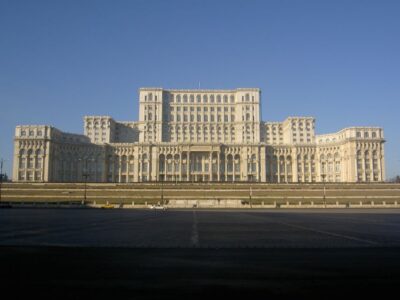

Palace of Parliament in Bucharest – fast-track tickets and guide
Read our review →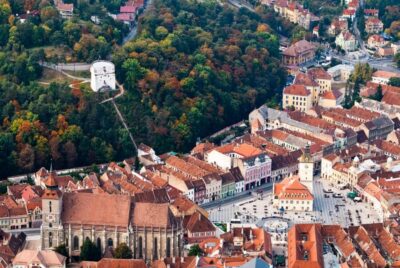
Dracula Castle, Peles Castle & Brasov Guided Tour
Read our review →