
Reviewed · JEWISH HERITAGE WALKS
4h Jewish Legacy in Bucharest – Private Tour by Car and Walking
Jewish Bucharest hits hard, then heals. This private 4-hour tour strings together major Jewish landmarks with a comfortable, climate-controlled ride, and it includes an English-speaking guide who can bring the buildings to life, like Radu sharing stories from his Bucharest roots. I also like the pacing, you get short, focused time at each site instead of rushing. One possible drawback is that access can change, some synagogues may be closed on certain days and the Jewish State Theatre visit depends on whether there are rehearsals.
If you like cities that reward slow looking, this works well. You start at 10:00 am, use pickup and drop-off at your hotel, and mix car time with walking that stays manageable for most people. And because the Holocaust Memorial is on the route, the tour balances daily life and worship sites with a clear reckoning.
Just note up front: the price includes your guide and private transportation, but several entrances cost extra (they are listed as separate site fees). Bring some patience for one of those “Romanian time” moments when a schedule or opening situation shifts.
In This Review
- Key things that make this tour worth it
- A 10:00 am route built for comfort and focus
- Choral Temple, an active synagogue with a 1945 comeback
- Holy Union Temple museum, where liturgical objects meet lived community
- Romania’s Holocaust Memorial, “zachor” in Hebrew letters
- Teatrul Evreiesc de Stat, Jewish culture on stage (if rehearsals allow)
- The guide is the real engine, especially when synagogues are closed
- Price and value: what you pay, what it includes, what it does not
- Who this tour suits best, and who should plan extra flexibility
- Should you book 4h Jewish Legacy in Bucharest?
- FAQ
- What sites are included on this 4-hour Jewish Bucharest private tour?
- Is pickup and drop-off included?
- What is the total cost if I include entrance fees?
- What if a synagogue or site is closed?
- Can I count on visiting the Jewish State Theatre?
- What is the cancellation policy?
Key things that make this tour worth it
- Active synagogue time at the Choral Temple, not just photo stops
- Museum visit in the former Holy Union Temple, with a focus on how Bucharest’s Jewish community lived
- Holocaust Memorial stop is free, and the Hebrew lettering message makes it stick
- The Jewish State Theatre may or may not work, depending on rehearsals that day
- Guide quality matters here, including mentions of Radu and Sebastian and their strong command of details
- Private car plus hotel pickup keeps the day comfortable and efficient
More Guided Walks in Bucharest
- Bucharest: City Highlights Guided Walking Tour★ 4.9 · 1,482 reviews
- Bucharest: Communism and History Guided City Walking Tour★ 4.9 · 918 reviews
- Bucharest Highlights Walking Tour★ 5.0 · 469 reviews
- Bucharest: Hidden Markets Walking Tour with Tastings★ 4.9 · 329 reviews
A 10:00 am route built for comfort and focus
This is a true half-day plan, clocking in at about 4 hours. You start at 10:00 am, and you are picked up and dropped off at your hotel, which matters in Bucharest. Stops are spread out enough that walking the whole thing would be annoying, so the private car time helps you actually see things instead of just getting from place to place.
The vehicle is climate-controlled, and that is not a small detail in Romania. Even if the sites are worth it, long days of waiting in heat or cold can drain your energy. Here, the ride keeps you comfortable so the emotional stops land with the right kind of attention.
It is also paced for listening. You are not dumped into a museum and told good luck. With a private guide in English, you get context as you stand in front of synagogues, the museum building, and the memorial space. That turns “I saw a place” into “I understood why this place exists.”
One more practical note: this tour is private, so only your group participates. That reduces the common problem of trying to hear a guide while another group talks over you. It also gives your guide flexibility when something is unexpectedly closed, like a synagogue being closed for a holiday or a theatre not allowing entry during rehearsals.
Choral Temple, an active synagogue with a 1945 comeback
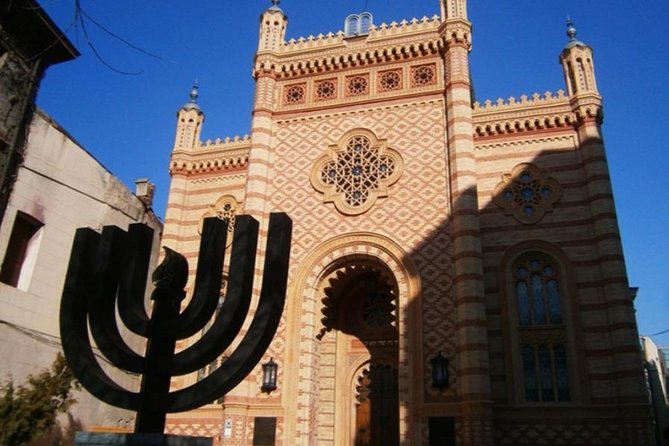
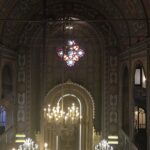
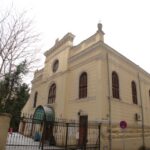
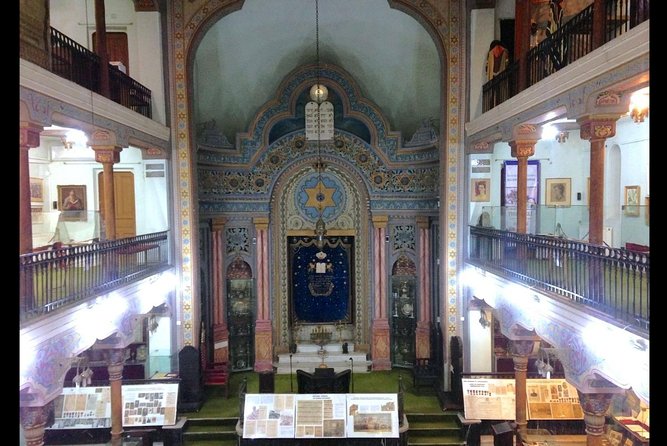
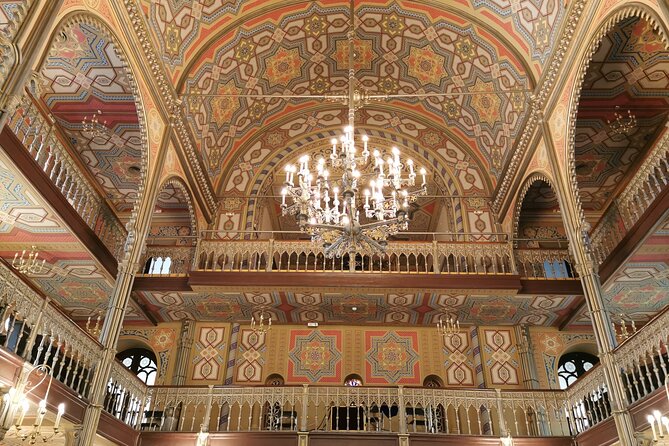
The Choral Temple is a synagogue in Bucharest that still has regular religious services in a small hall. It is described as a copy of Vienna’s Leopoldstadt-Tempelgasse Great Synagogue, which is a useful detail because it tells you this is not only local architecture, it is part of a wider Jewish architectural lineage.
What gives this stop weight is the wartime story. The synagogue was devastated by far-right Legionaries and Nazis, then restored after World War II in 1945. Standing in a place that carries that kind of history, while still functioning today, changes the feel of the visit. It is not a memorial building pretending to be a synagogue. It is a working house of worship.
You should also expect a practical reality: access can vary. Some days, a synagogue visit works smoothly, and other days, openings depend on schedules and holidays. Even when a synagogue is not open, a skilled guide will often help you make sense of the site you cannot fully enter.
The entrance fee for the Choral Temple is 30 RON (about €6.00) and is not included in the tour price. If you want to minimize spending surprises, you can budget for these site fees ahead of time.
Holy Union Temple museum, where liturgical objects meet lived community
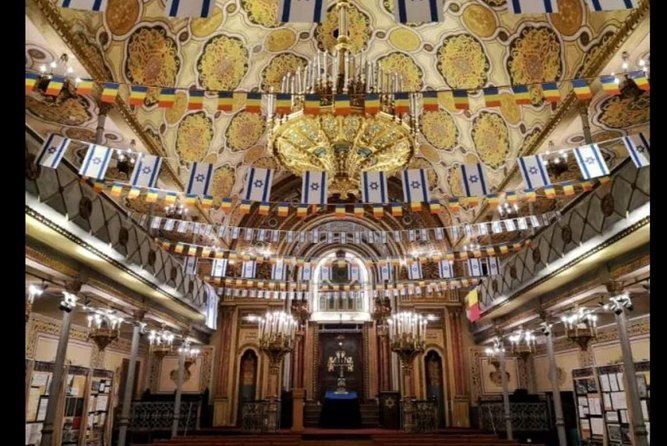
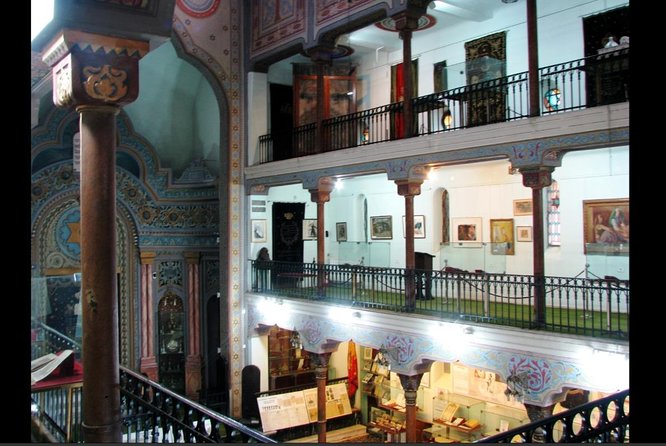
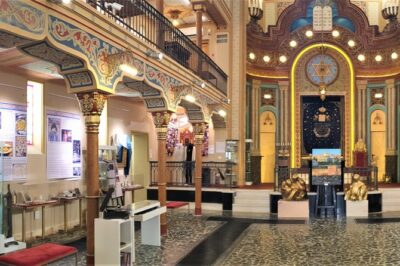
Next is the Museum of History of the Jewish Community, inside the Holy Union Temple synagogue building. The building dates to 1836, and since 1978 it has served as a museum of Jewish history. That date range is worth noting because it means you are not looking at a brand-new exhibit. You are walking into a museum established with the goal of preserving community memory long enough to have matured into a place with a clear voice.
The museum houses separate exhibitions showing how the Jewish community of Bucharest lived, plus an impressive liturgical collection. One name comes up again and again: Moses Rosen, Romania’s chief rabbi from 1964 to 1994. He assembled much of the liturgical material and helped found the museum. That makes this stop feel personal in a way that pure “display cases only” museums sometimes miss. You get to see how leadership shaped preservation, not just how curators arranged objects.
What I like about this stop for practical travelers is that it answers the question most people quietly have: what did Jewish life look like here, day to day, beyond the big historical events? You get a sense of patterns, traditions, and communal structures that are hard to pick up from a quick walking tour alone.
Admission is 30 RON (about €6.00) and is not included. If you are short on time, still plan to slow down at the exhibits that connect objects to routine life, because that is where the museum stops being a list and starts being a story.
More Jewish heritage stops in Bucharest:
Romania’s Holocaust Memorial, “zachor” in Hebrew letters
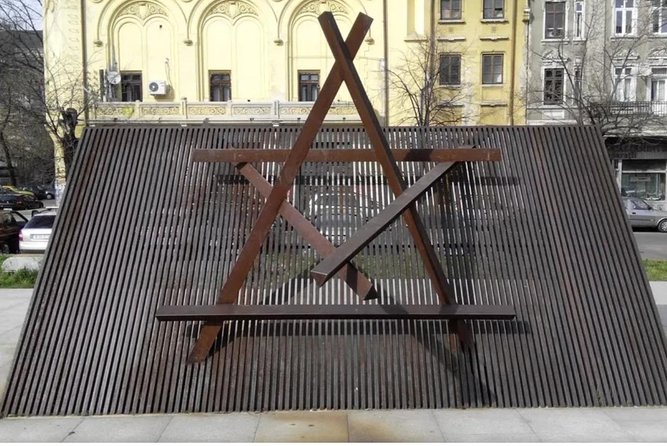
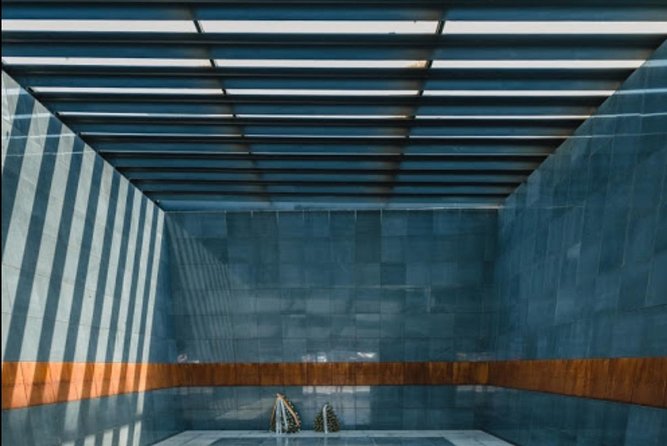
The Holocaust Memorial is a different kind of stop. It was unveiled in October 2009, and it explicitly recognizes Romania’s role in the genocide of Europe’s Jews. The message is not vague, and the way it is framed can be heavy.
The memorial’s core symbolism is simple and memorable: it includes a column with Hebrew letters written on each side. Taken together, they spell zachor, meaning remember. In a world where memorial design can get too abstract, this one is direct. You feel the intention.
There is also a hall of remembrance and plaques containing names of many Romanian Holocaust victims. That combination helps you do the right mental shift: from history as headlines to history as people.
Importantly, this stop is free. No ticket cost, no extra steps, just go in and let the space do its work. Time-wise, you will have around an hour, which is long enough to read carefully without feeling like you must “power through” the meaning.
Because this topic is sensitive, it is also a place where a good guide really matters. A straightforward, respectful explanation can help you understand what you are seeing without trying to soften the truth. If you want the tour to handle this part with care, look for the kind of guide who discusses the context plainly and avoids turning tragedy into a lecture you can zone out of.
Teatrul Evreiesc de Stat, Jewish culture on stage (if rehearsals allow)
The last cultural stop is the Jewish State Theatre, Teatrul Evreiesc de Stat. This is one of those experiences where you should go in with flexible expectations. The theatre can be visited only if there are no rehearsals.
That means your guide may plan a nearby alternative if entry is not possible. In practice, this is usually the difference between a smooth cultural finale and an “almost, but not quite” day. It is not about quality, it is about access.
You may also need to factor in the entrance fee for the theatre, listed as 25 RON (about €5.00) per person, and not included in the base price.
From guide-led discussions and past tour experiences, this stop often connects to the Yiddish-language performing tradition. One review called out the theatre as uniquely tied to plays done entirely in Yiddish, and that gives you a strong sense of what to listen for while you are there. Even if your theatre time is shorter than you hope, the guide’s context can help you appreciate why the building and programming matter to Jewish cultural life in Romania.
If you are visiting during a season when rehearsals are frequent, or the day is packed with site access issues, you might prioritize the synagogue and museum stops. Still, if theatre entry works, it turns the tour from “heritage in buildings” into “heritage in living art.”
The guide is the real engine, especially when synagogues are closed
A private tour is only as good as the person driving the day. The strongest praise from past experiences points again and again to guides who know Bucharest personally and can explain what you are seeing in plain language.
Radu is one name that comes up with particular warmth. One review describes him as a retired chemical engineer with deep knowledge and an ability to explain history comprehensively. Another review says he was born in Bucharest and had a lot to share from his own life, which is exactly the kind of local perspective that makes heritage tours feel real instead of generic.
Sebastian is another guide mentioned positively, with people highlighting how welcoming, comfortable, and ready to share his hometown knowledge he was. When you pick a private tour, this human element matters more than it seems, because it affects how you interpret emotional places like the Holocaust Memorial.
You also want a guide who adapts when something is closed. In at least one experience, synagogues were not open due to a religious holiday, and the guide compensated by driving around and still talking through the sites. That is the right approach. You cannot always control opening times, but you can control whether the day becomes confusing or coherent.
One extra detail that shows guide quality: a past experience included arriving during a Torah procession at a major synagogue, which is the kind of moment that turns history into something you can feel. Even if that exact timing is not guaranteed, it signals what a top guide watches for when planning your day.
Price and value: what you pay, what it includes, what it does not

The tour price is $130.97 per person for an approximately 4-hour private experience by car and walking. That price includes a professional English-speaking guide and private transportation.
Here is where the value math gets practical. Several site entrances are not included, so you will likely pay extra on the day:
- Choral Temple: 30 RON (about €6.00)
- Museum of History of the Jewish Community: 30 RON (about €6.00)
- Jewish State Theatre: 25 RON (about €5.00)
- Holocaust Memorial: free
If you add those up, you are looking at roughly €17 for the paid sites, depending on currency conversion and the exact entry situation. So you are mostly paying for the guided experience plus the private transport, and then you cover the fixed admission fees yourself.
In Bucharest, that is often how you should think about private heritage tours: the “expensive” part is the time of an expert guide and the convenience of a dedicated car. The entrances are usually smaller and predictable. If you were to hire a car and book a guide separately, you would likely lose time and spend more effort. For a focused half-day, this pricing can be fair, especially if you want to hear context rather than just wander.
If you are traveling solo, the per-person cost may feel high. If you are traveling with two or more people, you may feel better about it because private transportation becomes less costly per person.
Who this tour suits best, and who should plan extra flexibility
This tour is designed for people who want a clear route and expert context without juggling public transit, tickets, and opening hours themselves. It also tends to work well for travelers who care about Jewish heritage across multiple angles, worship, community life, remembrance, and culture.
It is also a good fit if you want a respectful pace. The Holocaust Memorial stop is free, but it is not quick or superficial. You need space in your head for what you read and see.
Most travelers can participate, and the day mixes car time with walking. Still, you should wear comfortable shoes. You are touring sacred and museum spaces, which usually means surfaces can be uneven and you will spend more time standing than you think.
The one group that should plan extra flexibility is anyone expecting every single stop to be fully accessible. The information you are given includes that synagogue opening times can vary, the Jewish Theatre visit depends on rehearsals, and another synagogue may not open every day (not all sites are consistent day to day). If your ideal day is “four perfect entries,” you might be disappointed. If your ideal day is “a well-run guided explanation, with meaningful stops even when access changes,” you will likely be happy.
Should you book 4h Jewish Legacy in Bucharest?
I would book it if you want a structured, private way to understand Jewish Bucharest in a short time. The mix is strong: an active synagogue visit, a museum focused on community life and liturgical collections, a Holocaust Memorial that is direct and free, and a theatre stop that can add real cultural texture if rehearsals allow.
I would hesitate if you are the kind of traveler who hates last-minute changes. Opening hours and rehearsal schedules can affect what you physically see that day, and entrance fees for the major stops are extra. But even when access is limited, the best experiences here show that a strong guide can still keep the day meaningful.
If you book, do two simple things: budget for the site fees on arrival, and keep your expectations flexible. Then you will get the best version of this tour, a half-day that connects place, memory, and culture without turning it into a checklist.
FAQ
What sites are included on this 4-hour Jewish Bucharest private tour?
You’ll visit four main stops: the Choral Temple, the Museum of History of the Jewish Community, the Holocaust Memorial, and Teatrul Evreiesc de Stat (the Jewish State Theatre). Admission fees for some sites are not included.
Is pickup and drop-off included?
Yes. Pickup is offered and you are dropped off at your hotel.
What is the total cost if I include entrance fees?
The tour price is $130.97 per person. Entrance fees are separate for the Jewish State Theatre (25 RON), the Museum of the Jewish Community (30 RON), and the Choral Temple (30 RON). The Holocaust Memorial is free.
What if a synagogue or site is closed?
The tour can be affected by opening situations, including religious holidays and daily access limits. The experience information notes that some sites may not be open every day, and if access is limited, your guide will adjust where possible.
Can I count on visiting the Jewish State Theatre?
Only if there are no rehearsals. The experience information states that the Jewish Theatre can be visited only when rehearsal schedules allow.
What is the cancellation policy?
You can cancel for a full refund up to 24 hours before the experience starts.
Newest Bucharest write-ups
- Private transfer to BRASOV
★ 5.0 · 1 review - Half Day Tour in Bucharest
★ 5.0 · 1 review - Bucharest: Capture the most Photogenic Spots with a Local
★ 5.0 · 1 review - Bucharest Private Custom Walking Tour with Guide (Private Tour)
★ 5.0 · 1 review - Uncover Transylvania: Private 2-Day Tour Bears & Medieval Wonders
★ 5.0 · 1 review - Transfer Bucharest to Constanta / Mamaia
★ 5.0 · 1 review - Private Day Trip to Peles Palace, Dracula’s Castle and Brasov
★ 5.0 · 1 review
Jewish Heritage Walks, compared.
Bucharest Jewish Heritage | Holocaust Memorial | Private Car Tour
Read our review →
Half-Day Jewish Heritage Walking Tour in Bucharest
Read our review →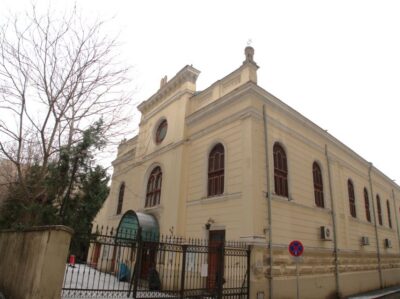
The Jewish heritage of Bucharest – half day walking tour
Read our review →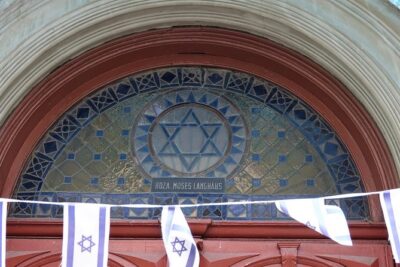
Bucharest Jewish Heritage | Private Walking Tour
Read our review →
Browse the lists this tour appears in