
Reviewed · COMMUNIST-ERA TOURS
6h Communism Tour in Bucharest with Ceausescu Mansion
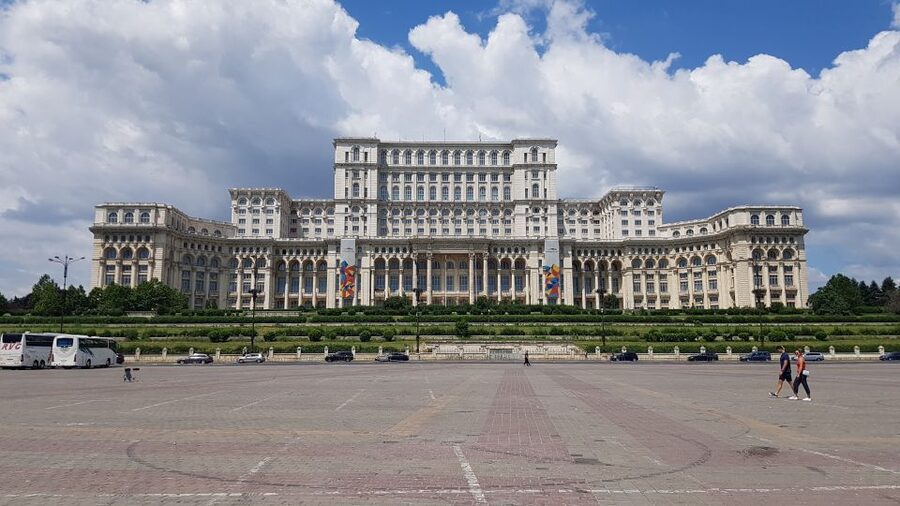
A country’s story can feel loud and quiet at the same time. This 6-hour private tour takes you through Bucharest’s most important communist landmarks, where you’ll see how power shaped the city and the everyday lives around it. You start with the massive Palace of Parliament, then move to the Village Museum, Revolution Square, and finally the House of Ceaușescu.
Two things I like a lot are the private, licensed guide format and the balance between brutal politics and human-scale life. You’re not only staring at monuments, you’re also getting context that helps the buildings make sense. The one drawback to plan for is that entry to the Ceaușescu residence can be affected by access and site rules, and since entry fees are not included, you may pay extra on top of the tour price.
In This Review
- Key Points You Should Know Before Going
- Palace of the Parliament: Bucharest’s Monument to Power
- Dimitrie Gusti National Village Museum: Real Life, Not Just Regime Posters
- Victory Avenue, French Facades, and the City’s Mixed Message
- Revolution Square: Walking the Geography of December 1989
- A Viewpoint Moment: Getting Your Bearings on Scale
- House of Ceaușescu: The Private Residence and the Regime’s Human Face
- Private Tour Value: What You Really Get for $208
- Who This Tour Suits Best
- How to Plan Your 6 Hours Like a Pro
- The Big Takeaway: Why This Day Feels Different
- Should You Book This 6h Communism Tour in Bucharest?
- FAQ
- How long is the Bucharest Communism Tour?
- Is this a private tour or a group tour?
- What’s included in the price?
- Are entry fees covered?
- Do they offer pickup from the airport?
- What languages are available for the live guide?
- Can the itinerary be changed during the tour?
Key Points You Should Know Before Going
- Palace of Parliament first: You see Romania’s communist-era power symbol early, when you can still fully absorb it.
- Village Museum for contrast: You get a look at traditional homes and sustainable village life, not just totalitarian architecture.
- Revolution Square stop: You’ll connect the streets you walk with the events of December 1989.
- Private transport, not a bus shuffle: Stops are paced for a 6-hour window without rushing you as a large group might.
- Ceaușescu Mansion focus: You finish at the private residence area, which changes the mood from public propaganda to personal rule.
More of communist-era Bucharest:
- Bucharest: Communism and History Guided City Walking Tour★ 4.9 · 918 reviews
- The Real tour of Communism★ 5.0 · 666 reviews
- Life under Communism★ 5.0 · 358 reviews
- 3-Hour Guided Tour of Communist Bucharest★ 4.9 · 303 reviews
Palace of the Parliament: Bucharest’s Monument to Power
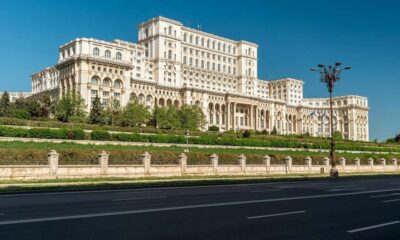
Starting at the Palace of the Parliament is a smart move, because it sets the tone in minutes. The building is described as the second largest administrative structure in the world after the Pentagon, and even from the outside you can feel why the communist era wanted monuments on a mega scale. Your guide helps you read what you’re seeing, including how the regime used such spaces to project control.
This stop is planned for about 2 hours, which matters. You’ll have time to take in the scale, understand why it became an icon, and walk around enough to connect the building to the city. If you’re sensitive to heavy themes, it helps to know you’re not doing this as a horror-story marathon. The goal is understanding, not gloom.
One practical tip: wear shoes you can walk in comfortably. This site area can involve plenty of walking and standing time, and the “big building” effect makes you want to look up, back, and around more than you expect.
Dimitrie Gusti National Village Museum: Real Life, Not Just Regime Posters
After the Palace, the tour shifts gears to the Dimitrie Gusti National Village Museum, and that contrast is valuable. Instead of more official-state architecture, you see traditional homes and the way Romanian villagers shaped their daily lives. It’s about how communities built in ways that worked with their surroundings.
The museum stop is about 1 hour, which is enough time to get the overview without feeling like you’re stuck. Your guide explains how the village layout reflects ideas of ecological and sustainable living, and you’ll come away thinking about history as something lived in kitchens, courtyards, and backyards, not only in offices.
Why this part matters: totalitarian regimes are remembered through tanks and symbols, but they also reshaped ordinary life. Seeing traditional village environments right after the Palace helps you feel the difference between what power demanded and what communities already knew how to sustain.
Victory Avenue, French Facades, and the City’s Mixed Message
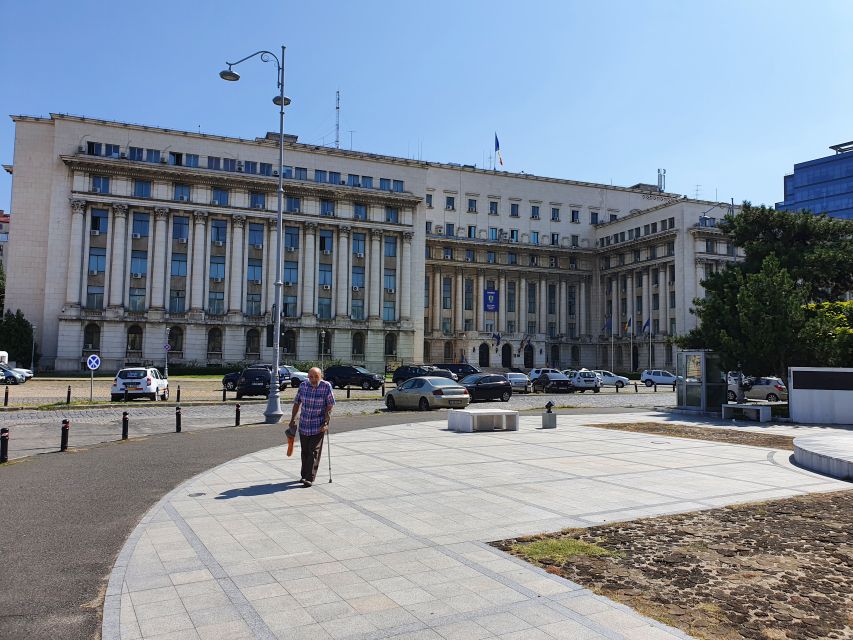
You’ll also spend time in the area around Victory Avenue, a boulevard known for communist-era buildings. The interesting twist here is that you can admire French architecture along the same corridor, so you don’t just get one style or one era. Bucharest has layers, and this is one of the clearer places to spot that.
This stop works best if you slow down and look at details. Notice how styles sit side by side, and how the city reads like a negotiation between old and new. Even without long explanations, the contrast gives you a visual shortcut to understand how regimes tried to rewrite public space without fully erasing earlier culture.
Other Bucharest days worth the drive
Revolution Square: Walking the Geography of December 1989
Then comes Revolution Square, where the tour turns from architecture into action. You’ll spend about 45 minutes here, with your guide explaining the Romanian Revolution in December 1989. This is one of those stops where the street layout matters, because you can connect what you see on the ground with how events unfolded in people’s minds at the time.
I like this stop because it keeps the story grounded. Instead of treating communism as distant history, you’re placed in the actual urban stage where change accelerated. Your guide helps you connect the dots, so you’re not just memorizing dates, you’re understanding the cause-and-effect feel of rapid political shifts.
If you’re the type who likes photos, this is a good place to take them. Just don’t let the camera run your brain. Spend a few minutes looking first, then start photographing, so you remember what you felt and saw, not only what you captured.
A Viewpoint Moment: Getting Your Bearings on Scale
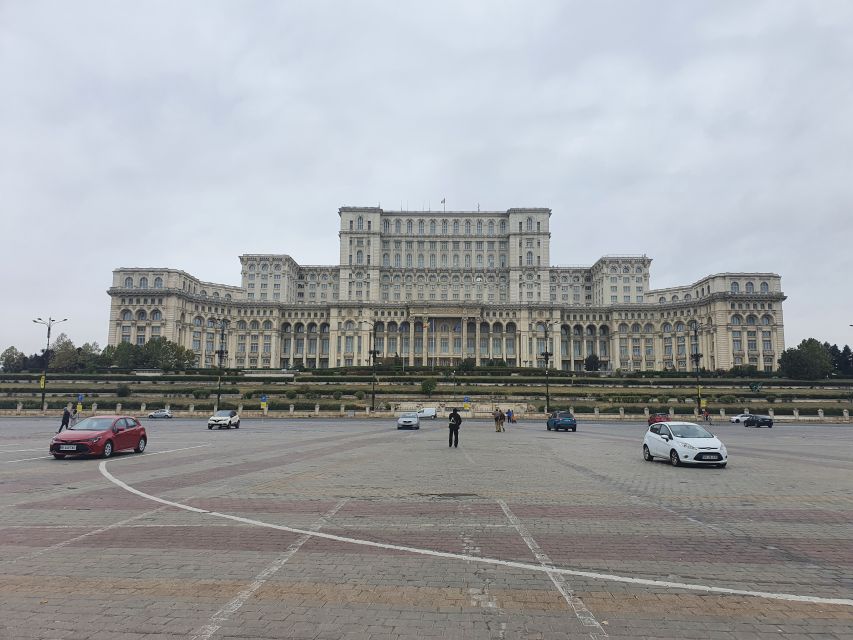
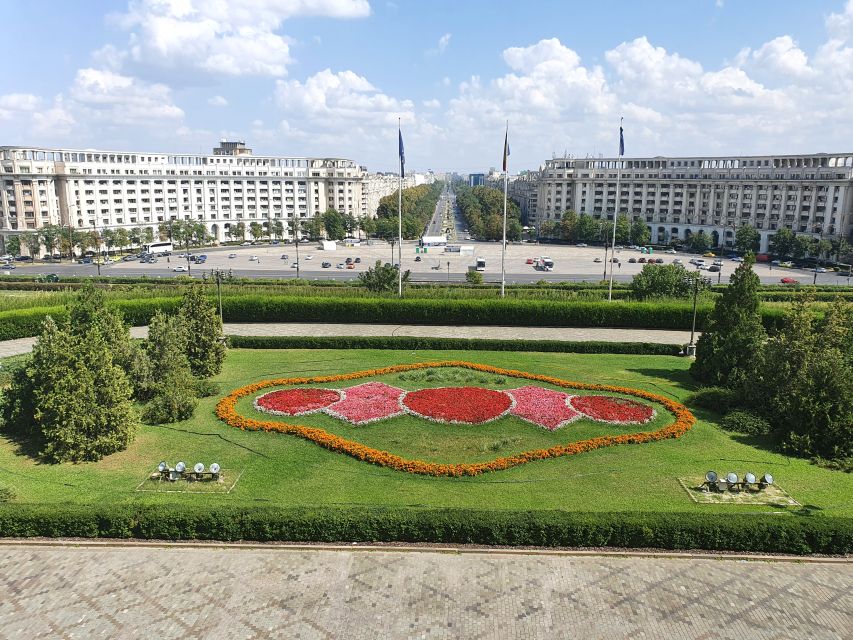
There’s a scheduled viewpoint stop for about 45 minutes. Even if you think you already know Bucharest from postcards, a viewpoint changes your perspective quickly. You can start to see the “why” behind where major buildings and avenues were built and how neighborhoods connect.
This portion is useful for two reasons. First, it breaks the heavier stops with a chance to regroup. Second, it makes the architecture feel less random. When you understand scale, the communist-era building choices feel clearer, even when they’re uncomfortable.
Practical note: view areas can mean wind or sun depending on the day. Bring something light for weather changes, and keep water handy even if you’re not buying drinks during the tour.
House of Ceaușescu: The Private Residence and the Regime’s Human Face
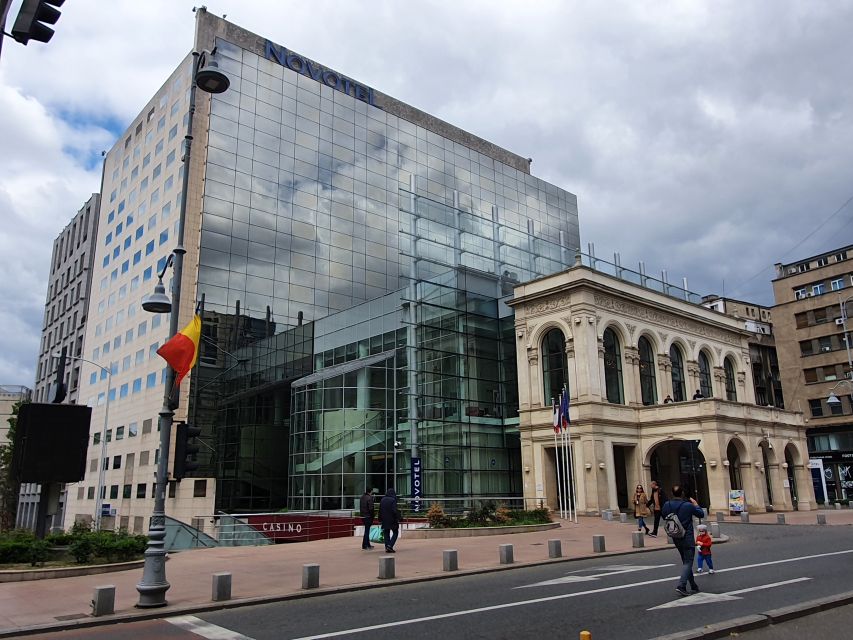
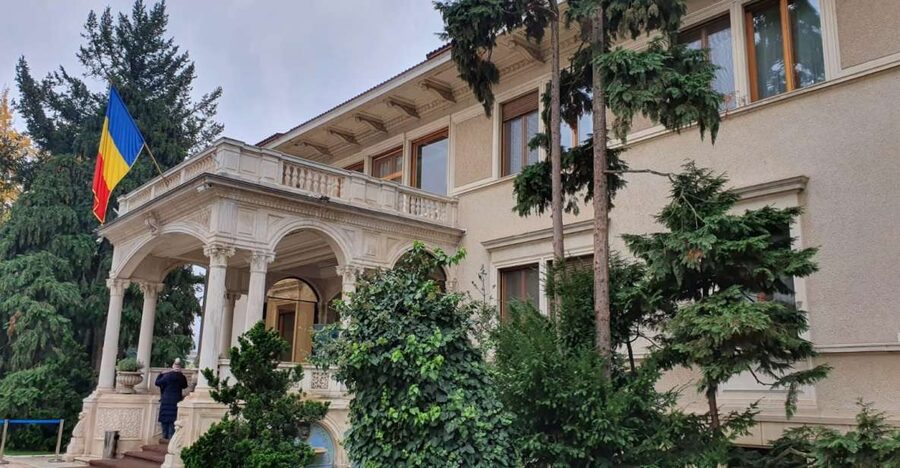
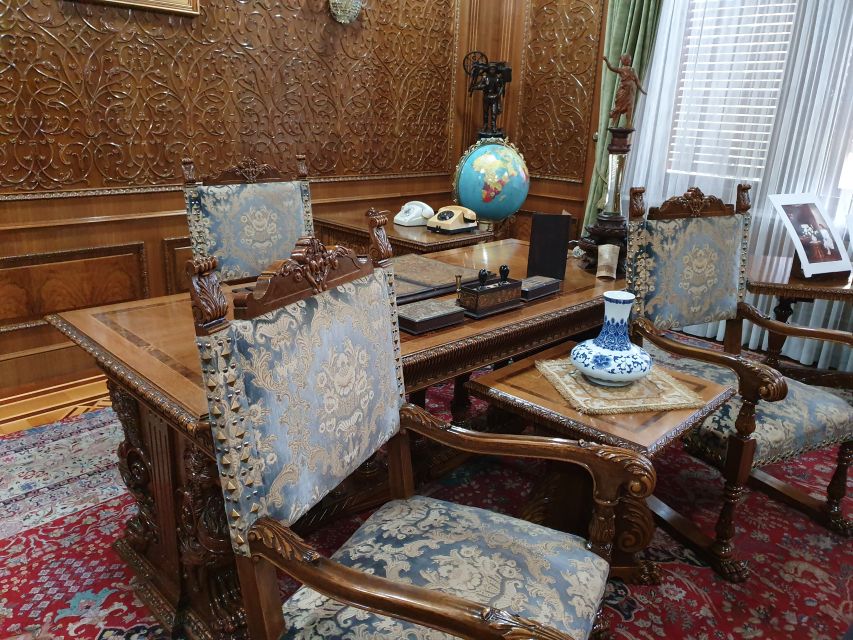
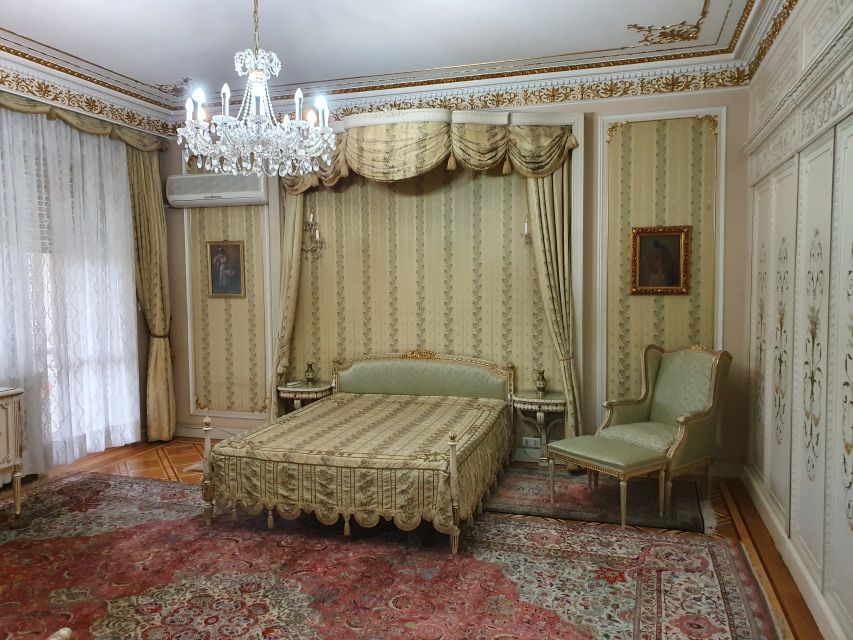
Finishing at the House of Ceaușescu (the private residence of Nicolae and Elena Ceaușescu and their children for about a quarter of a century, from 1965 to 1989) is the emotional pivot of the day. The mood here tends to feel more personal, because it’s one thing to view power from outside, and another to learn about the home side of rule.
This stop is planned for about 1.5 hours, which is a strong amount of time. You should use that time to focus on contrasts: the private comfort tied to public control, and the way people’s lives moved under a system they could not negotiate.
Important planning consideration: access can sometimes be limited. One clear issue to keep in mind is that you may not be able to access the residence as intended, depending on what the site allows that day. Since entry fees are not included in the tour price, you should also expect that some on-site costs may come up if you want maximum access.
If your main goal is to see the interior parts connected to the Ceaușescu family, this is the one moment where you should check what’s possible with your operator before you go. A private guide can often adjust your experience, but you still want realistic expectations.
Private Tour Value: What You Really Get for $208
The price is listed at $208 per person for a 6-hour private tour, with private transport and a licensed, private English-speaking driver-guide. That number looks high until you break it down into what you actually receive: a dedicated guide time slot, hotel or airport pickup and drop-off, and the flexibility to adjust the itinerary even after it starts.
So is it good value? For many people, yes, because this is not a “ride-by” history talk. You’re getting a full day arc through major sites, and you’re doing it with transport that avoids the hassle of coordinating between scattered attractions. Also, the tour includes skip-the-ticket-line, which can save time at at least one busy stop, so you spend more of your day seeing and less waiting.
Where value can shrink a bit is the practical add-ons. Entry fees and food and drinks are not included, so the final cost may rise depending on what you choose to pay for at each site and what you buy for meals.
Also, you’re getting a private group experience. That matters in history tours, because you can ask questions without feeling rushed or drowned out.
Who This Tour Suits Best
This tour fits best if you want more than photos and basic facts. I think you’ll enjoy it most if you like a guided narrative that connects buildings to politics and streets to events.
It also suits people who appreciate contrast. You’re not only seeing communist-era power structures. You’re also seeing a village museum that emphasizes traditional life and sustainability, plus a city corridor that shows communist buildings alongside French architecture. That mix helps you understand how history repeats in patterns, even when styles change.
If you want a purely light sightseeing day, this one might feel heavy. The focus is totalitarianism and revolution, so you should be mentally ready for serious subject matter.
How to Plan Your 6 Hours Like a Pro
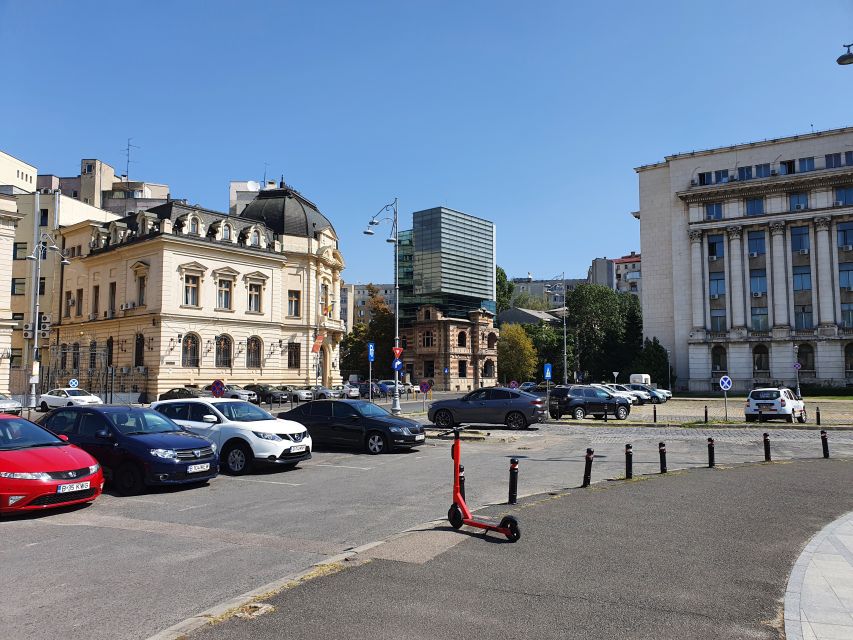
The schedule is built like a tight loop: Palace of the Parliament first, then the Village Museum, Revolution Square, a viewpoint, and finally the House of Ceaușescu, with pickup and drop-off back at your hotel or the airport.
Because it’s a 6-hour private tour, timing is usually smooth, but you still need to protect your energy. Bring water, wear comfortable walking shoes, and keep your phone battery charged for photo stops. If you know you’ll want to buy a snack, plan it around longer breaks, since food is not included.
One more practical note: the tour is flexible, and the itinerary can be adjusted even after the start. That’s a big deal if you want to spend extra minutes where you’re most interested, or if a site changes access.
The Big Takeaway: Why This Day Feels Different
What makes this tour click is that it treats communism as a physical experience. You see how power builds, how cities are reshaped, and how political violence connects to urban space. Then you end with the private residence, which shifts your perspective from ideology to personal control.
I also like that you get a guide who can explain what you’re seeing in plain language. The overall impression of the guiding style is that questions are welcome and answers come with context. That’s exactly what you want for a topic that can otherwise feel like memorizing dates.
Should You Book This 6h Communism Tour in Bucharest?
Book it if you want a focused, high-value half day that covers the major communist landmarks in a logical order, with private transport and a licensed guide. The mix of Palace of the Parliament, Village Museum, Revolution Square, and House of Ceaușescu gives you a full story arc, not just a checklist.
Consider skipping or adjusting expectations if your top priority is guaranteed interior access to the Ceaușescu residence. Since entry fees are not included and access can vary, you should plan for the possibility that parts of the experience could be limited.
If you’re curious about how regimes use architecture and public space to control a nation, this tour is a strong match. You’ll leave with a clearer sense of why Bucharest looks the way it does, and what it cost people to get there.
FAQ
How long is the Bucharest Communism Tour?
The tour duration is listed as 6 hours.
Is this a private tour or a group tour?
It is a private group experience with private transport.
What’s included in the price?
Included are private transport, a licensed private English-speaking driver-guide, and hotel or airport pickup and drop-off. Entry fees are not included.
Are entry fees covered?
No. Entry fees are not included in the tour price.
Do they offer pickup from the airport?
Yes. If you’re picked up from the airport, the driver waits next to the InfoDesk in Arrivals on the main floor with a sign with your name. The tour starts from there.
What languages are available for the live guide?
The guide is available in English, Italian, Romanian, French, and Spanish.
Can the itinerary be changed during the tour?
Yes. The itinerary is flexible and can be adjusted even after the tour starts.
Newest Bucharest write-ups
- Half Day Tour in Bucharest
★ 5.0 · 1 review - Private transfer to BRASOV
★ 5.0 · 1 review - Bucharest Private Custom Walking Tour with Guide (Private Tour)
★ 5.0 · 1 review - Bucharest: Capture the most Photogenic Spots with a Local
★ 5.0 · 1 review - Transfer Bucharest to Constanta / Mamaia
★ 5.0 · 1 review - Uncover Transylvania: Private 2-Day Tour Bears & Medieval Wonders
★ 5.0 · 1 review - 7-Days Grand Romania tour from Bucharest
★ 5.0 · 1 review
Communist-Era Tours, compared.

Parliament, Ceausescu House & Village Museum Tour
Read our review →
Bucharest Essential Tour: Old Town, Calea Victoriei & Communism
Read our review →
Communism in Bucharest – Landmarks, Museum & Communist Appetizers
Read our review →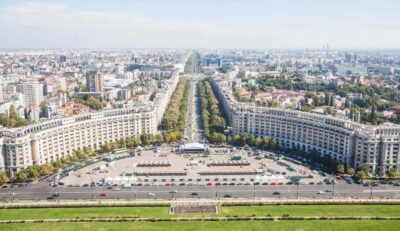
Palace of Parliament, Ceausescu House & Village Museum
Read our review →Browse the lists this tour appears in