
Reviewed · 7-DAY EXPERIENCES
7-Day Romania Tour -Transylvania and Painted Churches
Road trip Romania, minus the planning headaches. This 7-day loop is built for big contrasts, from royal splendor to painted Orthodox monasteries, with Transylvania and UNESCO sites stitched together by a local driver- guide.
I like the way the route avoids you thinking about logistics. You start in Bucharest, you end in Bucharest, and you spend your energy on places like Peles Castle in Sinaia and the medieval fortress town of Sighisoara.
One consideration: you are in a car a lot. The drive days can feel long, so pack comfort items and be ready to do the sit-stare-scenery thing.
In This Review
- Key things you should know
- Bucharest First, with the Palace of Parliament as your opener
- Sinaia and Peles Castle, where ornament is the point
- Bran Castle and the Dracula story, myth with real terrain
- Brasov old town and the Tâmpa lookout view
- Bucovina’s painted monasteries, Orthodox art you can actually see
- Red Lake and the road through Dracula country geography
- Sighisoara, medieval fortress life and Vlad Tepes birthplace
- Biertan Fortified Church, Saxon settlement life behind three rings of defense
- Sibiu walking tour highlights: Brukenthal, Liar’s Bridge, and St Sophia style
- Curtea de Arges before heading back to Bucharest
- Price and what you are really paying for
- Who this tour suits best
- Should you book this tour?
- FAQ
- Where does the tour start and end?
- How long is the tour?
- Is this a private tour?
- Is pickup offered?
- What’s included in the price?
- Are meals included?
- Are admission tickets included?
- Which UNESCO sites are included?
- What time does the tour start each day?
- How much notice do I need to cancel for a full refund?
Key things you should know
- Two UNESCO World Heritage stops in one week, including Sighisoara and Biertan
- Painted monastery wall art in Bucovina, with churches like Voronet, Moldovita, and Sucevita on the route
- Dracula-adjacent sights at Bran Castle plus Sighisoara highlights like Vlad Tepes birthplace
- Sinaia’s Peles Castle as a high-style break from the road, with ornate interiors and Wagner-themed details
- B&B-style overnights plus a driver- guide, so you are not juggling trains and transfers all week
Other Bucharest days worth the drive
- Bucharest: Dracula’s Castle, Peles Castle, & Brasov Old Town★ 4.5 · 17,858 reviews
- Bucharest: Dracula Castle, Peles Castle & Brasov Old Town★ 4.6 · 10,891 reviews
- Bucharest: Dracula’s Castle, Peleș Castle & Brașov Day Trip★ 4.4 · 6,100 reviews
- Bucharest: Palace of Parliament Tickets and Guide★ 4.3 · 3,182 reviews
Bucharest First, with the Palace of Parliament as your opener
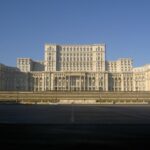
You start in Bucharest, with the Palace of Parliament as the first headline stop. Depending on your arrival hour at Bucharest-Henri Coanda Airport, you can also squeeze in an orientation look at the city’s most important sights.
This opening works because it sets the tone. You are coming in fresh, you get a clear “Romania today” snapshot, and then you gradually shift into the older worlds of Transylvania and Wallachia.
Practical note: the Palace visit is listed with admission ticket not included. So if you want the full indoor experience, plan to budget for entrances as you go.
Sinaia and Peles Castle, where ornament is the point
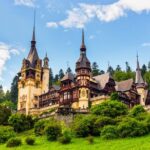
Crossing toward the Southern Carpathians, the first real “wow” stop is Peles Castle in Sinaia. It is described as one of the best-preserved royal palaces in Eastern Europe, and you feel that quickly. The castle is packed with decoration both outside and in, including intricate wood sculptures and paintings tied to scenes from Richard Wagner’s works.
I love how Peles is not just a pretty facade. It is a focused royal workshop of art, and it gives your eyes a break from the road and the country churches later in the trip.
Expect a solid chunk of time here, and remember the castle admission is not included. If you are the type who likes to linger, this is your stop. If you are rushing, at least you will still get the castle’s most famous visual impact.
Bran Castle and the Dracula story, myth with real terrain
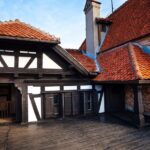
Then comes Bran Castle in Bran Village, commonly linked to the Dracula legend. The castle sits high on a hill, and that striking position is part of why the myths stuck in the first place.
Here is the balanced take I recommend: go for the setting, the atmosphere, and the medieval feel, but treat Dracula as a cultural hook rather than a documentary record. You will still enjoy walking the castle grounds because the views and the architecture do the heavy lifting.
It is another stop where admission is not included. So if you want to avoid surprise spending, set aside budget for ticketing early.
Different day out, same corner of Romania:
Brasov old town and the Tâmpa lookout view
After you get your bearings in Transylvania’s center, you land in Brasov. The old city center is described as very well preserved, and the trip includes a cable-car ride up Tâmpa Mountain (995 m) for a lookout.
I like this approach because it gives you two Brasov experiences in one: streets at street level, then a city read from above. From the top, you can understand where the neighborhoods sit against the mountains, and that makes your later Transylvania drives feel less random.
This stop is also labeled as admission free, at least for the cable-car viewpoint listed under the tour’s free category. Still, cable-car pricing can vary, so if you are sensitive about surprises, confirm what’s covered versus not when you receive your final details.
Bucovina’s painted monasteries, Orthodox art you can actually see
Daytime in Bucovina is where the tour gets truly memorable. You visit Voronet Monastery, Moldovita Monastery, and Sucevita Monastery, plus Agapia Monastery earlier in the flow.
Voronet is famous for its exterior murals, including the Last Judgment scene on the western wall. The description notes a mix of Byzantine, Gothic, and local elements, so you are not just looking at one style. You are seeing a blend that reflects how Romanian Orthodox visual culture developed.
Then Moldovita adds dramatic storytelling. The central painted church has frescoes from 1537, and the southern exterior wall includes the Siege of Constantinople from AD 626, with besiegers shown in Turkish dress. That detail is exactly the kind of “the art is the lesson” moment you want on a cultural trip.
Sucevita focuses on the “Virtue Staircase,” highlighted for contrast between angelic order and devil’s chaos. If you like symbolic artwork that is easy to photograph and hard to forget, this is your sequence.
And Agapia adds the human scale. It is described as one of the largest nunneries in Romania, with more than 300 nuns working in workshops where you may see painted icons and handmade carpets.
One key drawback to keep in mind: this section is visually intense. You will want breaks for your brain, not just your legs. If you pace yourself with water and snack breaks, the monastery art lands better, and you avoid the “everything was beautiful, but I remember nothing” problem.
Red Lake and the road through Dracula country geography
From Bucovina and toward Transylvania proper, the trip passes through dramatic car country. You cross the Eastern Carpathians via Bicaz Gorge, and then you reach Red Lake.
The tour description frames this as a mysterious realm connected to Bram Stoker’s Dracula. Even if you do not care about literature, the setting is the payoff. This is where the scenery and the mood start to match the stories.
Red Lake is listed with admission free, so the main cost here is time. Build in a slow walk and a couple of photo stops, because the value of this part is seeing the terrain for yourself, not just rushing past it.
Sighisoara, medieval fortress life and Vlad Tepes birthplace
Evenings are your friend on this leg. You reach Sighisoara Medieval Town in the evening, and Sighisoara Citadel is noted as the only still inhabited medieval fortress in Europe and UNESCO listed.
Then in the morning, you get the old town on cobbled streets, with burgher houses and ornate churches. The tour includes the Clock Tower, the Church on the Hill, and Dracula’s house, described as the place where Vlad Tepes was born in 1431.
This is a great combination of atmosphere and specifics. The citadel is visually strong, but you also get anchored details that help you connect the Dracula connection to the place itself. I also like that you get time to walk rather than only doing quick photo stops.
Admission is not included for these Sighisoara items listed. Plan for entrance fees if you want every interior highlight, especially around towers and the most ticketed sights.
Biertan Fortified Church, Saxon settlement life behind three rings of defense
Next up is Biertan Fortified Church, another UNESCO site. The tour description highlights that it was built by German peasants in Transylvania, used for nearly 300 years as the residence of the Transylvanian Archbishop, and surrounded by three rows of fortifications.
I love fortified church stops because they explain how people lived, not just what they believed. In a place like Biertan, defense and faith are literally built into the town plan, so you can feel the community’s priorities when you stand inside the walls.
There is also a detail you may find surprisingly human: a room in the citadel was used for reconciliation for couples about to divorce, and you are told the full story on spot. That kind of local social history helps the site feel real.
Admission is not included here either, so if you want to experience the fortifications and interior spaces thoroughly, budget accordingly.
Sibiu walking tour highlights: Brukenthal, Liar’s Bridge, and St Sophia style
Sibiu is the next cultural shift, from fortified Saxon heritage to a gentler walking pace. You start at a Sibiu Tourist Information Center, then do a leisurely walking tour of the old town, including old defense walls and remaining towers tied to guilds.
Then you go deeper with Brukenthal Museum, assembled by Baron Brukenthal, governor of Transylvania at the end of the 18th century. You also have a stop at the Evangelical Cathedral, where the current shape dates to 1520, and the description calls out a Crucifixion fresco on the north wall of the choir dating from 1445.
Two of Sibiu’s most fun landmarks are also included: the Passage of Stairs linking the Upper town to the Lower town, and Liar’s Bridge built in 1859. And you even get a church contrast with a Byzantine style Orthodox Cathedral, described as a replica of St. Sophia in Constantinople.
The balanced takeaway: Sibiu is a good fit if you want variety without constant big drives. It is also an excellent place to slow down and walk off your schedule stress.
Admission is listed as not included for these Sibiu items. If you want the museum interior, check ticket expectations early.
Curtea de Arges before heading back to Bucharest
On your final stretch, you stop at Curtea de Arges Monastery. The tour describes it as the first capital of Wallachia with the old Princely Court, and it notes that three of the four Romanian kings of the Hohenzollern dynasty are buried there.
This stop works as a historical contrast to the Saxon and Transylvanian sites you have been seeing. It shifts your lens toward Wallachia’s political center and monarchy story.
Then you drive back to Bucharest, finishing the loop you started at 8:00 am with that first morning planning-light entry.
Again, admission is listed as not included for this stop, so keep your ticket budget in your pocket for the final day.
Price and what you are really paying for
The tour price is $1,708.12 per person, and it covers a lot of the stuff that usually eats your time. Included are 6 nights of accommodation on a B&B basis, a driver- guide, and transport by air-conditioned car, minivan, or minibus, plus fuel and parking fees.
That matters because Romania is big on driving between regions. Paying for transportation and a guide reduces friction, and it means you can spend your day doing what the itinerary is designed for, visiting sights, not figuring routes.
Food and drinks are not included unless specified. Also, admission tickets are not included for many stops. So when you weigh value, look at it as a “guide plus route plus beds” package, with ticket costs mostly on you.
If you are traveling solo or as a couple and you want a guided plan that hits UNESCO sites plus painted monasteries without you doing the heavy lift, this price can feel reasonable. If you love self-paced travel and you hate paying for organized time blocks, you might find the admissions and guide structure add up.
Who this tour suits best
This is a strong fit if you want classic Romanian highlights with minimal planning. You get castles, fortress towns, Orthodox monastery art, and UNESCO sites in one coherent week.
It also suits you if you like a mix of interior culture and outdoor setting. Peles Castle gives you ornate interiors, Sighisoara gives you medieval streets and walls, and Bucovina gives you painted church exteriors that are meant to be looked at straight-on.
And based on the tour’s emphasis on a guide who speaks very good English, you should expect a smoother explanation flow, especially when you are learning what you are seeing at monasteries and historical sites.
Should you book this tour?
I’d book it if you want a structured week that hits the big cultural targets, while still letting you enjoy the scenery without map work. The combination of painted monastery stops, Sighisoara, Biertan, and Peles Castle is a practical way to see what most people come to Romania for.
I’d think twice if you hate long car days. This itinerary is built on regional hops, and comfort in the vehicle matters. If you are ready for that, bring snacks, hydrate, and lean into the road scenery.
If you want, tell me your travel month and your comfort level with driving. I can suggest how to pace your photos, meals, and ticket budgeting across the week.
FAQ
Where does the tour start and end?
The tour begins and ends in Bucharest.
How long is the tour?
It is listed as 7 days approximately, with 6 nights of accommodation included.
Is this a private tour?
Yes. It is described as private, with only your group participating.
Is pickup offered?
Pickup is offered.
What’s included in the price?
Included are 6 nights accommodation on a B&B basis, a driver- guide, transport by air-conditioned car or minivan, and fuel and parking fees.
Are meals included?
Food and drinks are not included unless specified.
Are admission tickets included?
For many stops, admission tickets are noted as not included.
Which UNESCO sites are included?
The itinerary highlights two UNESCO World Heritage Sites: Sighisoara Citadel and Biertan Fortified Church.
What time does the tour start each day?
The start time is listed as 8:00 am.
How much notice do I need to cancel for a full refund?
You can cancel up to 6 days in advance of the experience for a full refund, meaning at least 6 full days before the start time.
Newest Bucharest write-ups
- Half Day Tour in Bucharest
★ 5.0 · 1 review - Private transfer to BRASOV
★ 5.0 · 1 review - Bucharest Private Custom Walking Tour with Guide (Private Tour)
★ 5.0 · 1 review - Bucharest: Capture the most Photogenic Spots with a Local
★ 5.0 · 1 review - Transfer Bucharest to Constanta / Mamaia
★ 5.0 · 1 review - Uncover Transylvania: Private 2-Day Tour Bears & Medieval Wonders
★ 5.0 · 1 review - 7-Days Grand Romania tour from Bucharest
★ 5.0 · 1 review
7-Day Experiences, compared.
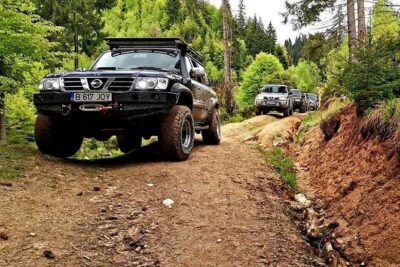
4×4 Driving Experience at Flying Altitudes – 7 Days
Read our review →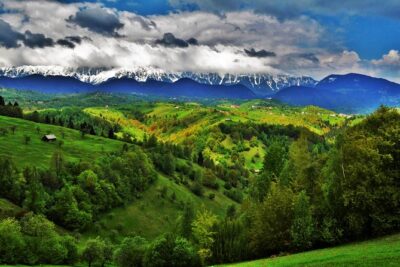
7-Day Private Tour of Transylvania from Bucharest
Read our review →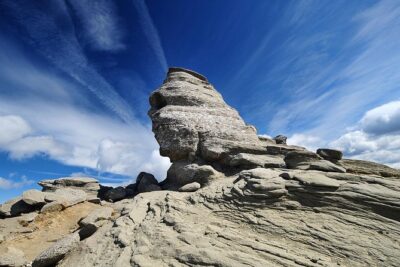
Amazing Romania – Seven day private tour from Bucharest
Read our review →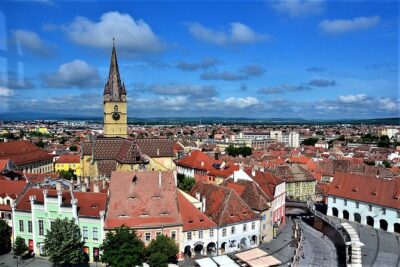
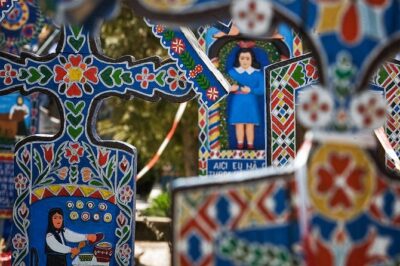
7 days Private Romania Grand Tour from Bucharest
Read our review →
7 Days Private Guided Tour in Romania from Bucharest
Read our review →
Discover Medieval Transylvania Small Group Tour – 7 days
Read our review →
7 Day Best of Transylvania Motorcycle Tour from Cluj
Read our review →Browse the lists this tour appears in