
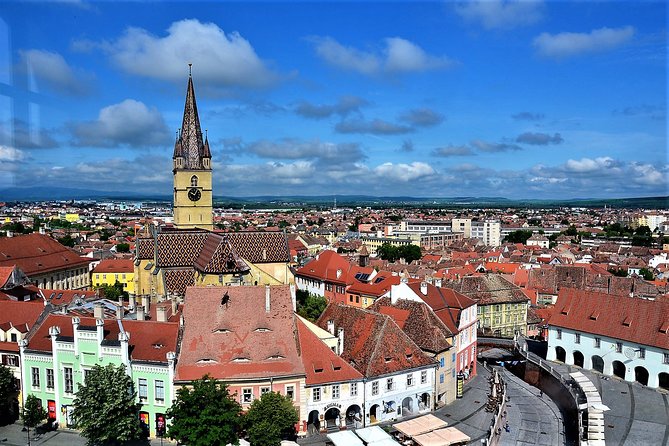
Reviewed · 7-DAY EXPERIENCES
Transylvanian week
Fortress churches and real Dracula vibes. This private Transylvania week makes the planning headache disappear while a licensed guide connects the places to the stories, from Cozia Monastery to Vlad the Impaler legends. I especially like the mix of UNESCO fortified churches and major castles, because you see Transylvania in layers, not just postcard stops. One thing to consider is that it is a car-heavy route, so plan for long days and bring comfortable walking shoes.
You also get real logistics covered: 6 nights in 3-star superior hotels or guesthouses with breakfast, plus lunch on the tour day flow. You’ll ride in an air-conditioned vehicle with pickup in Bucharest, and you can tap a mobile ticket to keep things simple.
If you want castles, legends, and city strolling without arranging every booking yourself, this kind of guided route is a smart value play.
In This Review
- Key Things I’d Focus On Before You Go
- The Core Idea: A Private Transylvania Week That Does the Hard Work
- Day 1: Cozia Monastery on the Olt Valley, Then Sibiu’s Squares and Towers
- Sibiu to Alba Iulia Level: How Corvin Castle and John Hunyadi’s World Line Up
- Day 3’s UNESCO Route: Biertan, Malancrav Frescoes, and Sighisoara’s Late-Day Magic
- Day 4: Fortified Churches Between Sighisoara and Brasov, Plus Rope Street in the Evening
- Day 5: Poiana Brasov Cable Car Views, Bran Pass Dracula Theater, and Black Church Quiet Power
- Day 6: Prahova Valley to Sinaia for Peles, Then a Guided Bucharest Evening
- Price and What You Get for Around $2,166.68 Per Person
- Comfort, Timing, and Practical Tips That Actually Matter
- Who This Tour Suits Best
- Should You Book This Transylvanian Week?
- FAQ
- How long is the Transylvanian week tour?
- Where does the tour start?
- What’s included in the price?
- What meals are included?
- Are entrance tickets included?
- What kind of transportation will we use?
- How many nights do we stay in hotels or guesthouses?
- Is this tour private?
- Are service animals allowed?
- Can I cancel or change the booking for a refund?
Key Things I’d Focus On Before You Go
- Private, guided route means you’re not fighting schedules between cities and sights.
- UNESCO fortified churches like Biertan and Prejmer give you more than one kind of medieval wow.
- Castles with context including Corvin and Bran, linked to the people and power behind them.
- Comfort perks include 6 nights in 3-star superior stays with breakfast and air-conditioned transport.
- Carpathian views timing with cable car access at Poiana Brasov, when the weather cooperates.
- A Bucharest wrap-up so you finish with a guided evening, not just a drop-off.
Other Bucharest days worth the drive
- Bucharest: Dracula’s Castle, Peles Castle, & Brasov Old Town★ 4.5 · 17,858 reviews
- Bucharest: Dracula Castle, Peles Castle & Brasov Old Town★ 4.6 · 10,891 reviews
- Bucharest: Dracula’s Castle, Peleș Castle & Brașov Day Trip★ 4.4 · 6,100 reviews
- Bucharest: Palace of Parliament Tickets and Guide★ 4.3 · 3,182 reviews
The Core Idea: A Private Transylvania Week That Does the Hard Work
This is not a low-effort tour where you get dropped at a gate and left to guess. It is designed around private transportation from Bucharest, with your licensed guide shaping the day so you understand what you’re looking at. That matters in Transylvania, where castles and churches are tied to shifting borders, ethnic communities, and centuries of conflict.
What you’ll like is the rhythm. You’re not only chasing Dracula-style imagery, you’re also seeing the military and religious architecture that made Transylvania such a strategic region. And since you’re traveling as one group by car, you avoid the constant question of how to connect the next sight.
The trade-off is pace. Several days pack multiple stops plus travel time, so if you like slow mornings and zero rushing, you may want to mentally prepare for a more active week.
Day 1: Cozia Monastery on the Olt Valley, Then Sibiu’s Squares and Towers
Your day starts with pickup from your Bucharest hotel or the airport. Then you head south through the scenic Olt River Valley, which sets the mood fast, even before the first church stone hits your eyes.
Cozia Monastery is your first anchor, founded in 1388 by Mircea the Elder, a Wallachian prince tied to the Vlad family story in local legend. Even if you’re not a medieval scholar, you’ll feel the importance here, because monasteries like this were also cultural centers, not just places to pray.
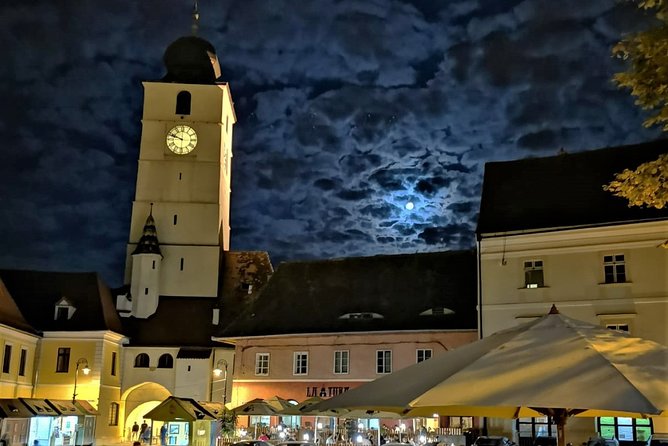
After that, you reach Sibiu, where you get a guided walk through the old city and the main plazas. The route includes the Grand Square, the Small Square, and Albert Huet Square, dating to the 12th century, plus a look at the Orthodox Cathedral. One cool detail your guide can point out is the similarities to Saint Sofia’s Basilica in Constantinople, because it helps you see how art and faith moved across regions. You’ll also visit the Evangelical Church.
A real practical tip for Sibiu: the big views come after climbing the medieval stairs of the Council Tower. If you prefer minimal stairs, you can pace yourself on the ascent and take a short break rather than forcing it.
Sibiu to Alba Iulia Level: How Corvin Castle and John Hunyadi’s World Line Up
Day 2 shifts into power and military leadership, and that’s a big reason I like this tour. You’re not just checking off famous buildings, you’re learning who mattered and why they could build or defend what you see.
First stop is Castelul Corvinilor (Corvin Castle) in Hunedoara. This part of the story centers on John Hunyadi, one of the Middle Ages’ key leaders and statesmen. You’ll hear the chain of events involving Voicu (Vojk), his ennoblement, the gift of the castle by King Sigismund of Luxembourg, and how John Hunyadi later gained influence and played a major role in resisting the Ottomans.
Then you continue to Cetatea Alba Iulia (Alba Iulia fortress), where John Hunyadi was laid to rest in the impressive ancient Saint Michael Cathedral. The day also includes visits to the Orthodox Coronation Cathedral and ruins of a Roman castrum linked to the elite 13th Gemina Roman Legion. That mix is helpful: it shows that strategic importance in this region goes back long before the 1400s.
By the time you return to Sibiu for your second overnight, you should feel like you’ve moved from church-and-city life into defense-and-authority life, which is exactly how Transylvania tends to feel when you connect the dots.
Different day out, same corner of Romania:
Day 3’s UNESCO Route: Biertan, Malancrav Frescoes, and Sighisoara’s Late-Day Magic
Day 3 is where the fortified church theme really clicks. You leave Sibiu and travel through the Hartibaciu Valley road to reach Sighisoara, crossing Saxon villages and going through deep forests. That drive matters, because the fortified church sites don’t feel like random stops once you see the landscape that shaped settlement patterns.
Biertan Fortified Church is first, and it’s one of Transylvania’s major fortified church anchors. Your guide frames it as more than an attraction, explaining the role these communities played in defense and identity.
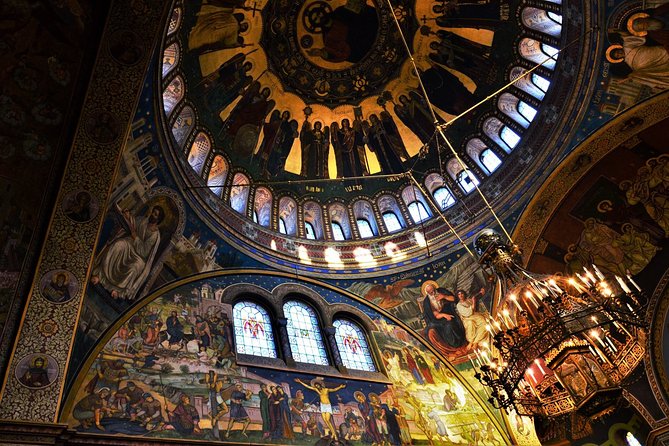
Next is Fortified Lutheran Church of Malancrav, about 25 kilometers from Sighisoara. This is a standout stop for the visual story it tells. The church is known for the largest Gothic church fresco in Transylvania, found during restoration in 1914 beneath layers of paint applied after the Lutheran reform. You don’t need to be an art historian to appreciate the surprise element, because it turns a church visit into a real discovery moment.
Then you end in Sighisoara, a UNESCO site and a place strongly connected to Vlad the Impaler’s story. You’ll spend time in the medieval citadel, including the Clock Tower area, and you get to enjoy the late afternoon and evening. That timing is a big deal. Sighisoara’s atmosphere is best when the day cools down and you have enough time to wander without feeling trapped by strict hours.
Day 4: Fortified Churches Between Sighisoara and Brasov, Plus Rope Street in the Evening
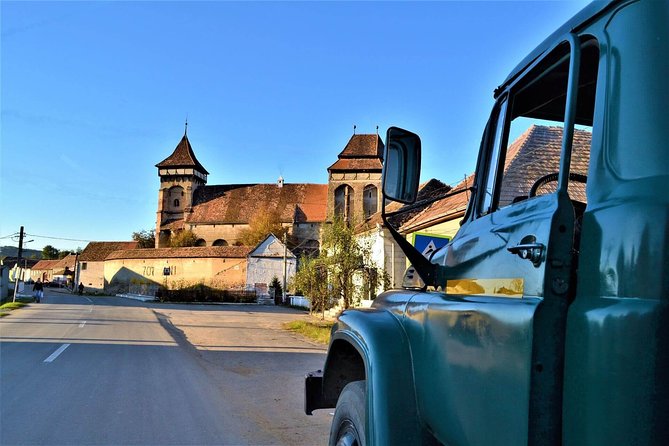
Day 4 is built around the UNESCO fortified churches circuit that makes this region famous. You start with Saschiz fortified church, a UNESCO World Heritage monument from the end of the 15th century, and it includes a tower with a reminder of Sighisoara’s Clock Tower.
Then you stop in Viscri, where you enjoy lunch and see a fortified church in a remote Saxon village. Prince Charles famously connected with Viscri after buying an old Saxon household there, including a blue house built in 1753. For me, what makes this stop valuable is how it bridges old life and modern attention, without turning the site into a theme park.
Along the route toward Brasov, you can also catch sight of Rupea fortress, described as one of the oldest fortifications in Romania, built over earlier Roman and Dacian fortresses. Even if you only get a partial view from the road, it helps you feel how layered Transylvania is.
You finish the fortified church segment at Prejmer Fortified Church, tied to the Teutonic Knights and later reinforced by Saxon settlers after the military order conflict with the king. Prejmer is one of the seven Saxon fortifications in Transylvania listed by UNESCO. This is a good moment to step back and notice how church, walls, and community defense all worked together.
Finally, you reach Brasov Historical Center. After check-in, you visit the medieval fortress fortifications, bastions, and towers, plus Rope Street, known as one of the narrowest streets in Europe. If you’re the type who enjoys small city details, Rope Street is the kind of street you’ll want to photograph slowly, not from the curb.
Day 5: Poiana Brasov Cable Car Views, Bran Pass Dracula Theater, and Black Church Quiet Power
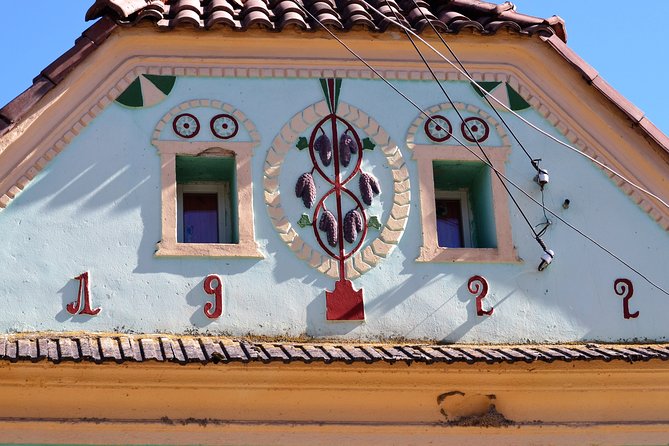
Day 5 starts with Poiana Brasov, using the high road and a cable-car ride up near Postavaru Peak, listed around 1,722 meters. If the weather cooperates, this is when you’ll get big views over the Carpathians and Transylvanian plateau. If clouds roll in, you still get the mountain air and a break from the city walking, so it’s not a total loss.
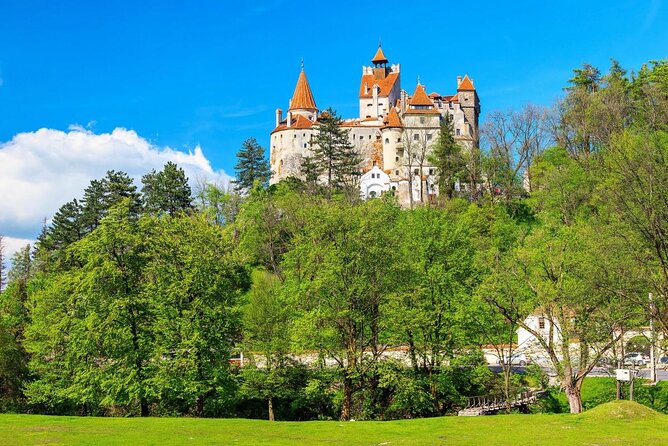
From there you visit Bran Castle, built in the 14th century to guard the strategic route between Wallachia and Transylvania. This is the moment many people come for, because the castle is strongly identified with Dracula legends. Even if you treat the Dracula connection as folklore, Bran Castle still works as a real defensive architecture site, built on rock with steep drop-offs.
On the return trip, you get an overview from afar of Rasnov fortress, a 13th-century fortification connected to the Teutonic Knights period.
Back in Brasov, you finish with Black Church (Biserica Neagra), an imposing Gothic church. The name alone draws attention, but what matters more is the scale and atmosphere inside. It gives you a different tone from the castles, which is a nice balance after the Bran Dracula energy.
Day 6: Prahova Valley to Sinaia for Peles, Then a Guided Bucharest Evening
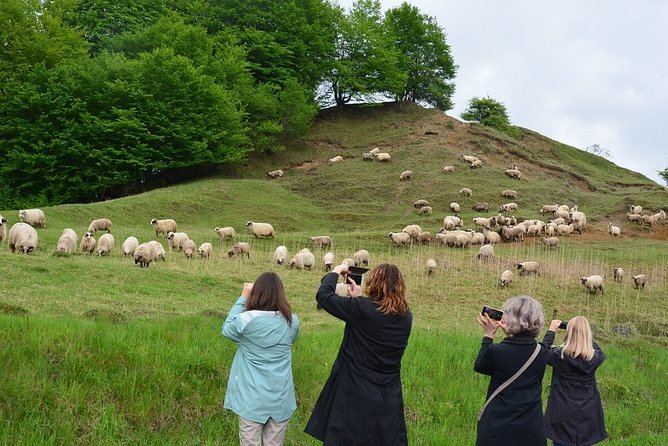
On your final day, you leave Transylvania heading south through the Prahova Valley toward Bucharest. The drive is scenic by design, and it’s a good way to end, because you transition from fortress towns to the larger national story.
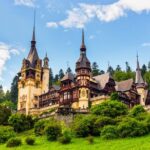
In Sinaia, you visit Peles Castle, built in the late 19th century and tied to King Carol I of Romania. What I like here is the contrast: Peles Castle is flamboyant, and it highlights how leadership wanted to project a modern European identity. The castle visit also gives your trip a break from medieval defense stories, so you finish the week with variety rather than repeating the same architectural theme.
Then you return to Bucharest, check in, and get an evening guided tour that centers on Stavropoleos Monastery, built in 1724 in the heart of the city. It’s a satisfying final note because Bucharest changes your view from castles-as-destinations to cities-as-living places.
If you’re the kind of person who likes to process, use the time after check-in to slow down. A full day of driving and tours can make your brain feel like it’s still on “sight mode,” so giving yourself a small buffer helps.
Price and What You Get for Around $2,166.68 Per Person
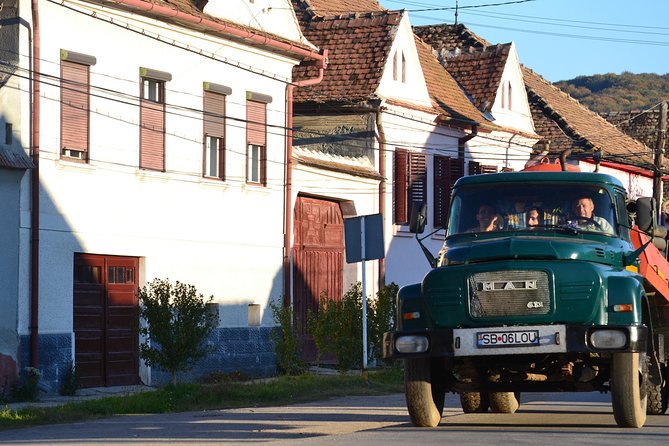
Let’s talk value, because this is the part that decides if a guided week makes sense for you.
At about $2,166.68 per person, you’re paying for a package that includes 6 nights of 3-star superior lodging with breakfast, private air-conditioned transportation, and lunch, plus the tour’s fees and taxes. The biggest value is that you are not spending time planning route connections, negotiating local logistics, or lining up day-by-day reservations for each major sight.
If you were doing this on your own, you’d likely spend time and energy solving for transport between Bucharest, Sibiu, Sighisoara, Brasov, and the Sinaia stop, while trying to match opening hours across fortresses and churches. This tour removes that decision fatigue and replaces it with a fixed flow and guide interpretation, which is hard to price.
The one cost consideration is also straightforward: meals besides lunch and photo fees are not included, so budget for those personal add-ons. But since lunch is included, you avoid one big daily expense.
Also note that group discounts are mentioned, which can help if you’re traveling with friends or family and want to keep your per-person share down.
Comfort, Timing, and Practical Tips That Actually Matter
This route is built around multiple stops each day, with car travel between regions. That means you’ll want to pack for both walking and riding. Bring comfortable shoes for old stone streets and any tower stair climbs, and plan for different temperatures, especially if you’re visiting mountain viewpoints like Poiana Brasov.
You should also plan your camera habits. Entrance tickets are handled for the included stops, but photo fees are listed as not included, so expect that if you see signs about extra fees for photography in some sites, you’ll have to decide case by case.
The tour also uses mobile tickets, and there’s pickup from your hotel in Bucharest or the airport. That’s helpful because it keeps you from hunting meeting points around the city when jet lag hits.
One more practical point: because it’s private, it is only your group. That generally gives you flexibility to keep a comfortable walking pace and ask questions, instead of listening to a big group schedule that never fits anyone.
Who This Tour Suits Best
This experience fits best if you want a guided route that covers the Transylvania highlights without turning your trip into a logistics puzzle. It’s especially good for couples or small groups who like history tied to place, not just name recognition.
It’s also a strong pick if you care about the fortified churches circuit and want the interpretation that makes them more than just impressive walls. If Dracula legends are your entry point, the guide’s Vlad the Impaler storytelling adds context without making the entire week about one myth.
If you prefer to travel slowly and pick a few sights per day, you might find the schedule packed. But if you like action with structure, this is a very efficient way to see a lot of region in a single week.
Should You Book This Transylvanian Week?
I’d book it if you want castle-and-church Transylvania with someone licensed to explain how it all connects, and you want comfortable hotels plus transport handled for you. The combination of Sibiu and Sighisoara old-town time, UNESCO fortified churches, and the big hitters like Corvin and Bran makes it a balanced week, not a one-note Dracula trip.
I would hesitate if you hate long car days, or if you are the type who needs lots of free time with zero schedule. In that case, you might prefer a slower self-guided plan.
If your goal is to see Transylvania efficiently, with interpretation and practical support, this is an easy yes.
FAQ
How long is the Transylvanian week tour?
It runs for 6 days (approximately).
Where does the tour start?
It starts in Bucharest, with pickup offered at your hotel in Bucharest or at the airport.
What’s included in the price?
Included are 6 nights of accommodation in a double room setup (breakfast included) in 3-star superior hotels or guesthouses, air-conditioned vehicle transportation, lunch, and all fees and taxes.
What meals are included?
Lunch is included. Meals besides lunch are not included.
Are entrance tickets included?
All fees and taxes are included, and the day plan notes entry as included or free for specific stops. Photo fees are not included.
What kind of transportation will we use?
You travel by private transportation in an air-conditioned vehicle.
How many nights do we stay in hotels or guesthouses?
You get 6 nights of accommodation.
Is this tour private?
Yes. It is a private tour or activity, and only your group participates.
Are service animals allowed?
Yes, service animals are allowed.
Can I cancel or change the booking for a refund?
No. The experience is non-refundable and cannot be changed for any reason. If you cancel or ask for an amendment, the amount you paid will not be refunded.
Newest Bucharest write-ups
- Half Day Tour in Bucharest
★ 5.0 · 1 review - Private transfer to BRASOV
★ 5.0 · 1 review - Bucharest: Capture the most Photogenic Spots with a Local
★ 5.0 · 1 review - Bucharest Private Custom Walking Tour with Guide (Private Tour)
★ 5.0 · 1 review - Transfer Bucharest to Constanta / Mamaia
★ 5.0 · 1 review - Uncover Transylvania: Private 2-Day Tour Bears & Medieval Wonders
★ 5.0 · 1 review - 7-Days Grand Romania tour from Bucharest
★ 5.0 · 1 review
7-Day Experiences, compared.
4×4 Driving Experience at Flying Altitudes – 7 Days
Read our review →
7-Day Private Tour of Transylvania from Bucharest
Read our review →
Amazing Romania – Seven day private tour from Bucharest
Read our review →7-Day Romania Tour -Transylvania and Painted Churches
Read our review →
7 days Private Romania Grand Tour from Bucharest
Read our review →
7 Days Private Guided Tour in Romania from Bucharest
Read our review →
Discover Medieval Transylvania Small Group Tour – 7 days
Read our review →
7 Day Best of Transylvania Motorcycle Tour from Cluj
Read our review →Browse the lists this tour appears in