
Reviewed · WALKING TOURS
Best Walking Tour of Bucharest’s City Center – 2.5 hours
Bucharest clicks into place on foot. I like how this walk threads Romanian monarchy through the city center and then lands at Orthodox spirituality in the Old Town, with short stops and solid context. I also appreciate that you get indoor time at key churches and a guided story at each site, not just photos and names. One thing to watch: there are a few reports of guide no-shows or last-minute cancellations, so it’s smart to be alert and confirm plans close to departure.
This is a mid-morning, English-language walk that moves between the grand monuments of central Bucharest and the medieval heart around Curtea Veche. The pace is designed for a smooth overview in about 2 to 3 hours, with a small group cap of 14, so you can ask questions without feeling rushed. If you’re trying to get your bearings on day one, it’s the kind of route that helps you understand what you’re seeing and why it matters.
In This Review
- Key highlights to know before you go
- The route in plain terms: what this Bucharest walk is really good at
- Meeting at Manuc’s Inn and ending at the Romanian Atheneum
- Ateneul Roman: French-style architecture and the monarchy thread
- University buildings, Carol I statues, and the meaning of Kilometer 0
- Revolution Square and the Memorialul Renasterii obelisk
- A city of churches: Byzantine architecture and Orthodox spirituality
- Stavropoleos Monastery: small, ornate, and practical for photos
- Old Town churches: the White Princess and the Curtea Veche area
- Manuc’s Inn: where you start, then why lunch is part of the story
- Optional add-ons: Unirii Square views and the Patriarchal Cathedral
- Price and value: what $54.77 really buys you
- Who should book this tour, and who might not
- Reliability check: the one thing you should take seriously
- Should you book this Bucharest city-center walking tour?
- FAQ
- How long is the Best Walking Tour of Bucharest’s City Center?
- What language is the tour offered in?
- What is included in the price?
- Where does the tour start and end?
- Do I need to print anything?
- How large are the groups?
- Are the Unirii Square view and Patriarchal Cathedral stops included?
Key highlights to know before you go
- Monarchy to modern Romania, explained through landmark buildings and the kings Carol I, Ferdinand I, Carol II, and Michael I
- Revolution Square storytelling, including the Memorialul Renasterii obelisk nicknamed The potato
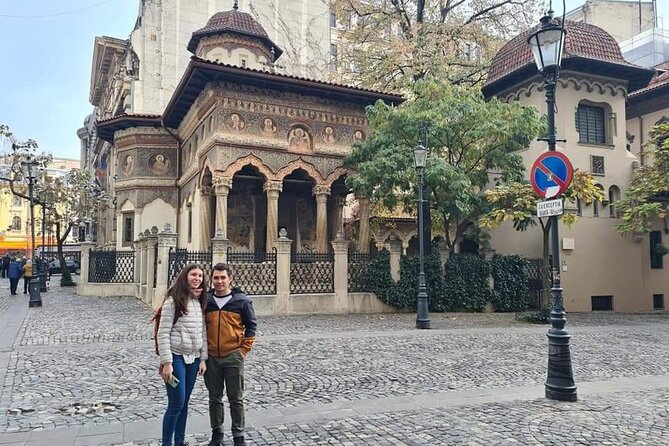
- Orthodox and Byzantine interiors, with stops like Stavropoleos Monastery and historic churches in the Old Town
- Curtea Veche context, tied to Wallachian rulers and Vlad the Impaler’s connection to the area
- A walk that feels like a local route, starting at Manuc’s Inn and finishing at the Romanian Atheneum
More City Sightseeing in Bucharest
- Bucharest: City Highlights Guided Walking Tour★ 4.9 · 1,482 reviews
- Bucharest: Communism and History Guided City Walking Tour★ 4.9 · 918 reviews
- Bucharest: 2-Hour City Highlights Bike Tour★ 4.8 · 269 reviews
- Bucharest Tuk Tuk city tour★ 5.0 · 188 reviews
The route in plain terms: what this Bucharest walk is really good at
At its best, this tour does two jobs at once. First, it gives you the big-picture map of Bucharest’s center. Second, it turns that map into a story, linking buildings, statues, and squares to the monarchy and then to the December 1989 Revolution.
The timing works well if you want a morning plan that doesn’t eat your whole day. The official duration is about 2 to 3 hours, and you’ll be moving at a walk-and-stop pace that keeps energy up without sprinting from one site to the next.
The small-group size also matters. With a maximum of 14 travelers, you’re not lost in a sea of people at each stop. That helps when a guide is pointing things out at eye level, like architectural details or a specific statue you might otherwise miss.
Meeting at Manuc’s Inn and ending at the Romanian Atheneum
You start at Manuc’s Inn (Hanul lui Manuc), Str. Franceză 62, București 030167, a classic Old Town landmark tied to local lore. The tour then finishes at the Romanian Atheneum, Strada Benjamin Franklin 1-3, București 010287, where the group wraps up around the end of the morning.
One practical upside of this setup: you cover a logical chunk of central Bucharest in one direction. You begin in the Old Town atmosphere and finish in the grand, monumental zone around the Atheneum. It helps you feel how Bucharest expands from medieval streets toward more formal, national symbolism.
Also, the package is set up for mobile tickets, and it runs in English. That makes planning simpler if you’re arriving without Romanian phrases.
Ateneul Roman: French-style architecture and the monarchy thread
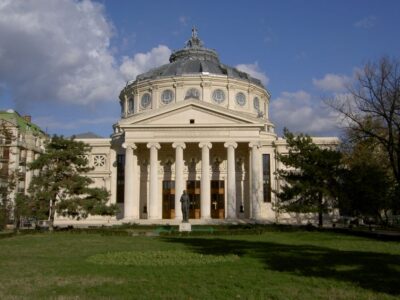
The tour’s ending stop is the Romanian Atheneum (Ateneul Roman), described as a symbol of modern Romania with architecture that recalls a French style. This is a great choice for a finale because it’s the kind of place where the city feels intentional, like it is presenting itself.
What I especially like here is how the guide is set up to connect the building to the monarchy. Expect names like Carol I, Ferdinand I, Carol II, and Michael I to show up as part of the story, not as random history facts. When a tour makes those connections, you start to notice patterns, like how power and national identity show up in public spaces.
Included value note: the tour mentions a Romanian Atheneum visit if open. At the same time, one schedule note says admission ticket not included for that stop. So if you’re set on going inside, I’d treat it as a day-of confirmation item with the guide or at booking. The Atheneum also has a stated opening window (10:30 AM to 1:00 PM), which is consistent with a mid-morning tour.
More Guided Walks in Bucharest



University buildings, Carol I statues, and the meaning of Kilometer 0
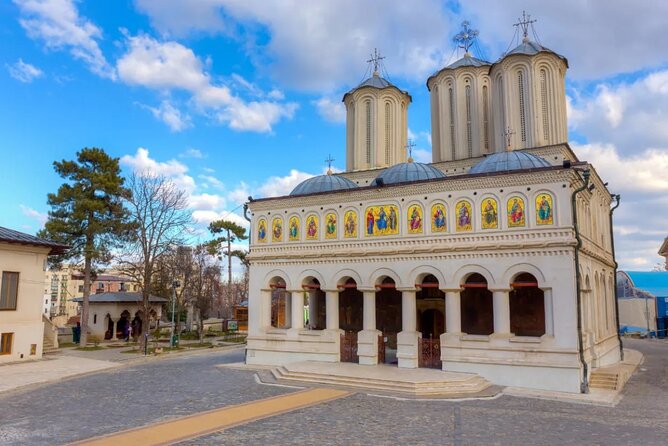
From there, the walk moves into the central belt near major institutions. A key stop is the Central University Library (Biblioteca Centrala Universitara), an impressive building erected under Carol I, the first Romanian king. In front, you’ll see Carol’s equestrian statue, which is one of those details that makes the area feel officially symbolic.
Then the tour shifts toward a different kind of measuring point: University Square. Here you’ll find the headquarters of major Romanian universities, plus Kilometer 0 of democracy, a symbol tied to the December 1989 Revolution.
That’s not just a marker for photos. It’s a quick way to understand what Bucharest chose to remember. The guide’s angle is that the Revolution wasn’t only a political event, it became a new way of labeling public space. Once you get that concept, you’ll start spotting similar themes in street names, statues, and memorials later in the Old Town.
Revolution Square and the Memorialul Renasterii obelisk
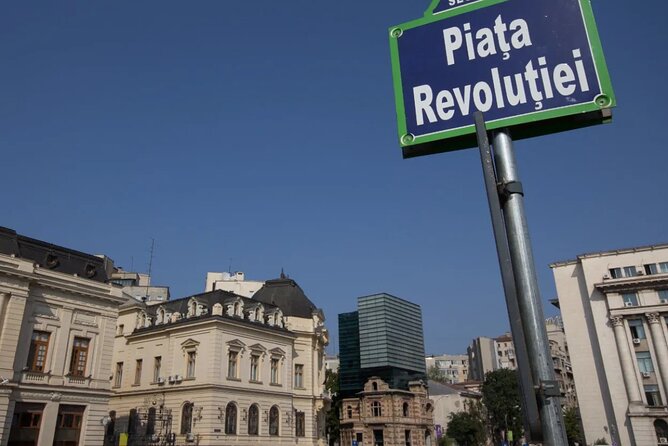
One of the most memorable stops is Memorialul Renasterii, an obelisk nicknamed The potato. This is tied directly to events after the December 1989 Revolution, and it sits right where the Revolution story happened in a visible, public way.
The guide focuses on the closing days of communism and emphasizes how young people fought against the regime. The square also holds statues connected to major personalities who were captured and tortured under communist rule, so the memorial isn’t vague or abstract. It’s pointed and personal.
If you’re traveling with teenagers or people who usually tune out history, this is often the portion that turns attention back on. It’s close to street level, emotionally direct, and tied to specific, recognizable public memory.
A city of churches: Byzantine architecture and Orthodox spirituality
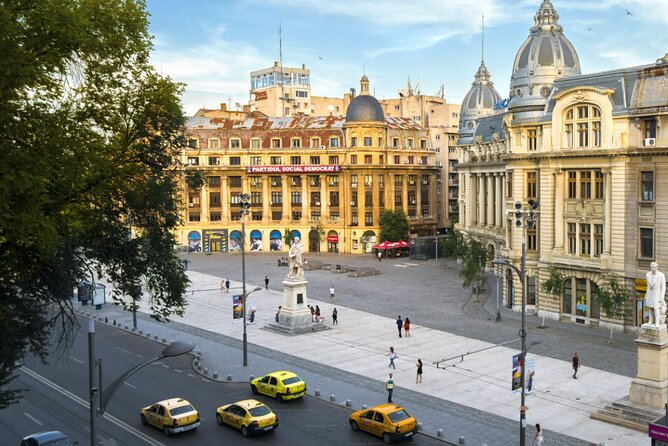
After the Revolution area, the tour spends time on Bucharest’s spiritual architecture, especially the Byzantine influence and the Orthodox tradition. The message is simple: much of Romania’s Christian life is connected to Eastern spirituality, and that shows in the look and feel of churches.
Two big standouts here are the Old Town churches and the monastery stop.
Stavropoleos Monastery: small, ornate, and practical for photos
Stavropoleos Monastery is described as small and a bit of a jewel, and the focus is on its Byzantine architecture and spirituality. If you’ve seen painted monastery scenes from Bucovina, the guide helps you connect the visual language.
Even with a short time window, this stop is worth it because monasteries like this are often layered: icon-like details, a sense of quiet, and a different scale than the wide boulevards. It’s also one of the clearer places to understand why people describe the Old Town as more than scenery.
Old Town churches: the White Princess and the Curtea Veche area
You’ll also stop at Biserica Sf. Dumitru Posta, nicknamed the White Princess of the Old Town. The tour frames it as a church with an interesting history, and it’s presented as a place where you can appreciate the interior atmosphere and beauty.
Then you move into the Curtea Veche zone with the Old Princely Court Museum. This area is tied to the oldest historical testimonies in Bucharest, with dates reaching back to the 13th century, and Wallachian rulers residing here from the 14th century. The guide brings in Vlad the Impaler’s connection to the site, which makes the medieval layer feel concrete rather than vague.
Just nearby is Biserica Sfantul Anton (Curtea Veche), where you get the historical importance and the sense of the space from inside. That inside-outside rhythm is one of the reasons this tour beats a pure driving or bus tour version. You see facades, then you step into the religious heart of the neighborhood and feel the contrast.
Included value note: the tour’s inclusions list entrances for churches and monasteries, specifically Stavropoleos Monastery, St. Anthony, and St. Demeter Church. That is a real value win because many city-center church visits add up fast if you’re buying tickets one by one.
Manuc’s Inn: where you start, then why lunch is part of the story
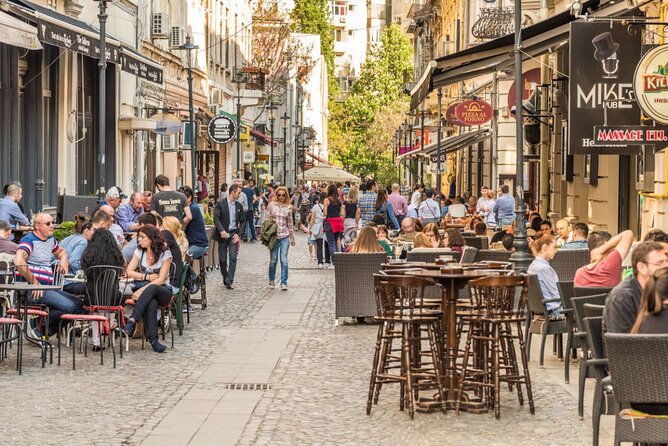
Even though the tour starts at Manuc’s Inn, the route gives you more than just a meeting photo. You also get the inn’s story: it’s described as the oldest inn and restaurant in town, and it tells the tale of a rich and cunning boyar whose actions supposedly shocked both Russian and Ottoman powers.
There’s a practical reason to bring up this stop in a walking tour. It sets you up for lunch in a place that feels tied to the local narrative, not just a convenient restaurant block. The tour specifically suggests booking and having lunch there if you want to continue the day at a relaxed pace.
If you’re thinking ahead, this is a good moment to decide whether you want a full lunch or just a lighter meal, because the tour can add optional viewpoints depending on time.
Optional add-ons: Unirii Square views and the Patriarchal Cathedral
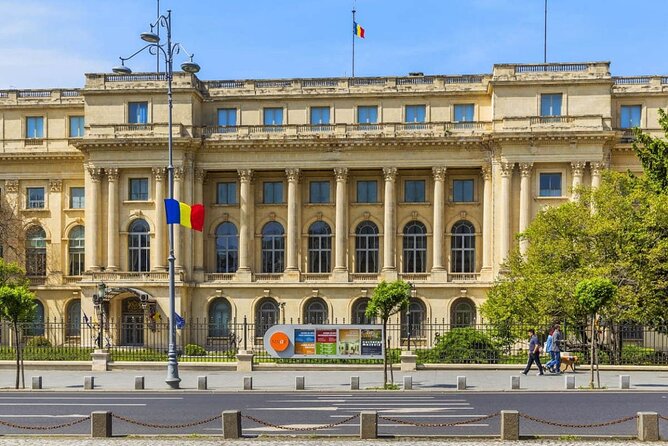
Near the end, you may get an optional stop with a view from distance from Unirii Square. The tour treats this as flexible, depending on time and your interest.
Another optional stop is the Patriarchal Cathedral, located on a hill next to Unirii Square. The emphasis is on entering a sacred space with paintings and decorations. If you like your church stops to be visually rich, this is the kind of add-on that can make the final stretch feel special.
Keep it in mind: optional stops are not guaranteed. You’ll get the core experience either way, but you may trade a viewpoint or cathedral entry for finishing on time.
Price and value: what $54.77 really buys you
At $54.77 per person, this tour isn’t the cheapest option in Bucharest. But it is priced like a focused guided experience with meaningful inclusions.
Here’s where the value shows up:
- Indoor access is part of the plan, with entrances included for churches and monasteries (and Atheneum visit if open).
- The route is designed to give you an overview deeper than a bus tour, with time to ask questions at each stop.
- You get a small group cap of 14, which usually helps the quality of the explaining, especially in places where you need a guide to point out details.
In other words, you’re paying for interpretation, not just movement. If your goal is understanding the center quickly and accurately, this price can feel fair.
If your priority is only exterior photos and you don’t care about church interiors or memorial context, you might prefer a self-guided route. But if you want the story tied to the architecture, this is the right kind of structure.
Who should book this tour, and who might not
This walk is a strong fit for:
- First-time visitors who want a fast orientation without losing the human story behind the buildings
- People who like history that connects to what you can see on the street
- Travelers who enjoy church interiors, especially Byzantine and Orthodox styles
You might not love it if:
- You hate walking and want zero outdoor time between sites
- You’re only interested in modern Bucharest and don’t want the monarchy and 1989 Revolution focus
- Your schedule is tight and you cannot tolerate a day-of change, because there are some signals of reliability problems in past bookings
Reliability check: the one thing you should take seriously
I’ll be direct: there are a few reports tied to guide no-shows and last-minute cancellations. The tour operator is listed as Soca Tour, and the refunds are mentioned when something goes wrong, but missing your only morning in Bucharest is still painful.
So here’s what I’d do to protect your trip: plan this for an early day so you have backup time. If you’re close to your departure and you don’t see clear confirmation, reach out through the official channel listed at booking. If you hear anything uncertain, have a Plan B for a museum or a self-guided Old Town walk.
Should you book this Bucharest city-center walking tour?
Book it if you want Bucharest to make sense fast, and you like your city tours with monarchs, revolution stories, and real interior church time. The included entrances and the small-group feel do real work for the price.
Skip or be cautious if your vacation schedule is rigid or you cannot handle uncertainty. The potential reliability hiccup is the main reason not to treat this as a guaranteed box-check.
If you do book, I’d pair it with comfortable shoes and a flexible lunch plan around Manuc’s Inn. This is the kind of experience that turns a short walk into a map you can use for the rest of your trip.
FAQ
How long is the Best Walking Tour of Bucharest’s City Center?
It runs about 2 to 3 hours.
What language is the tour offered in?
The tour is offered in English.
What is included in the price?
The package includes a souvenir, a visit to the Romanian Atheneum if it is open, and entrance coverage for churches and monasteries including St. Anthony, Stravropoleos Monastery, and St. Demeter Church.
Where does the tour start and end?
It starts at Manuc’s Inn, Hanul lui Manuc, Str. Franceză 62, București 030167, Romania. It ends at the Romanian Atheneum, Strada Benjamin Franklin 1-3, București 010287, Romania.
Do I need to print anything?
No. It uses a mobile ticket.
How large are the groups?
The maximum group size is 14 travelers.
Are the Unirii Square view and Patriarchal Cathedral stops included?
They are optional and depend on time and your desire to continue the tour.
Newest Bucharest write-ups
- Half Day Tour in Bucharest
★ 5.0 · 1 review - Private transfer to BRASOV
★ 5.0 · 1 review - Bucharest Private Custom Walking Tour with Guide (Private Tour)
★ 5.0 · 1 review - Bucharest: Capture the most Photogenic Spots with a Local
★ 5.0 · 1 review - Transfer Bucharest to Constanta / Mamaia
★ 5.0 · 1 review - Uncover Transylvania: Private 2-Day Tour Bears & Medieval Wonders
★ 5.0 · 1 review - 8 Days – Transylvanian Delights-Guaranteed departures
★ 5.0 · 1 review
Walking Tours, compared.

Ghost Stories & Romanian Mythology Walking Tour
Read our review →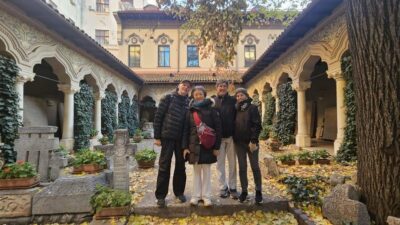
Browse the lists this tour appears in