
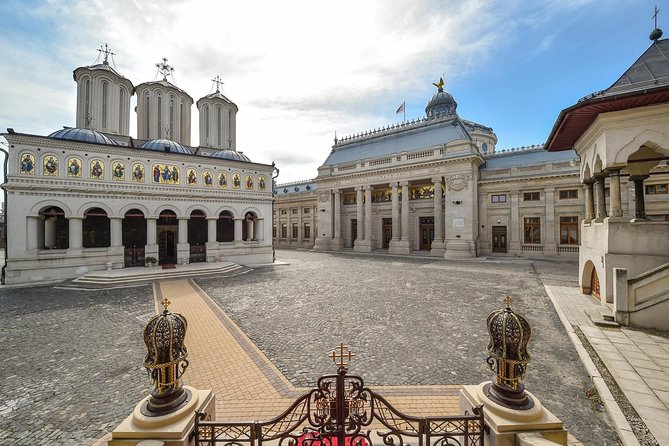
Reviewed · COMMUNIST-ERA TOURS
Bucharest: Communist Bike Tour
Bucharest has two cities, and you cycle between them. This Communist Bike Tour uses pedaling as a way to understand how ideology, power, and occupation reshaped the streets, from the old center to the grand buildings that came with big plans and broken promises.
I like two things a lot: the guide-led context that connects buildings to real political turning points, and the pace of riding that lets you see far more in four hours than a slow walking loop. You’ll hear how the communist period damaged Bucharest’s historic fabric, then you’ll watch that story unfold block by block.
One consideration: this is not for people with limited mobility, and you do need to feel comfortable cycling in dense city traffic. If you want easy sightseeing with minimal riding, look for a slower option.
In This Review
- Key highlights worth your attention
- Entering Bucharest’s old center with a political map
- Coral Temple and the early 1920s story you might miss
- The communist bomb attack site and the first Romanian Parliament
- Stalin-era elite housing, and how power hides in plain sight
- Casa Radio, the unfinished project that still tells the story
- Revolution Square, then the Communist Central Committee ending
- Bikes, helmets, and a four-hour format that actually works
- Price and value: why about $53 feels reasonable
- Riding tips that make the difference in Bucharest traffic
- The guide quality: why Horia, Alex, and Chorea matter
- Who this bike tour suits best
- Should you book the Bucharest Communist Bike Tour?
- FAQ
- What’s the duration of the Bucharest Communist Bike Tour?
- How much does the tour cost?
- Where do I meet for the tour?
- What’s included in the price?
- Are food and drinks included?
- Is the tour available in English?
- What should I bring?
- Is the tour suitable for people with limited mobility?
- What’s the cancellation policy?
Key highlights worth your attention
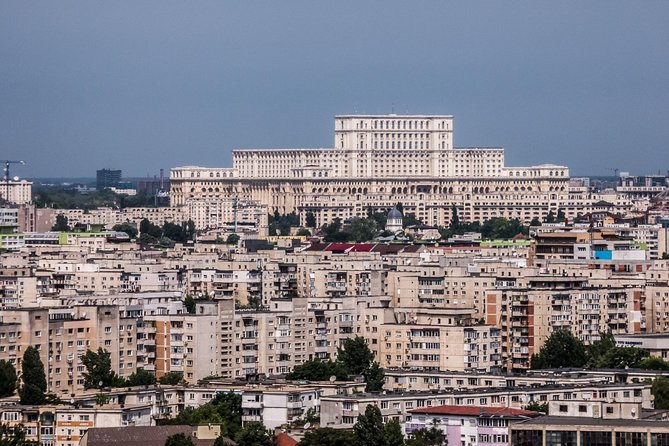
- First Romanian Parliament stop tied to the communist bomb attack against the democratic government
- Coral Temple area and how early 1920s Jewish community involvement links to later events
- Stalin-era elite neighborhood where Soviet-era power lived right in the city fabric
- Casa Radio as the biggest unfinished communist urban project you’ll pass along the way
- Revolution Square and the Communist Central Committee ending at the site of Ceaușescu’s last speech
- Guides named Horia, Alex, and Chorea bring clear, organized explanations that make the stops click
More Cycling Days in Bucharest
- Bucharest: Half Day Bike Tour★ 4.9 · 379 reviews
- Bucharest Half a Day Bike Tour★ 5.0 · 325 reviews
- Bucharest: 2-Hour City Highlights Bike Tour★ 4.8 · 269 reviews
- Bucharest Highlights Bike Tour★ 5.0 · 102 reviews
Entering Bucharest’s old center with a political map
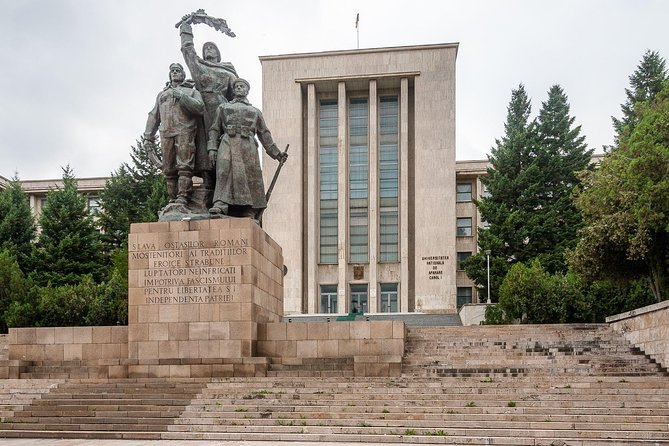
The tour starts in Bucharest’s old city center, with a quick setup so you can read what you see. Before you really crank the pedals, your guide frames the communist era not as a distant concept, but as something that actively rearranged the city. That matters because Bucharest’s architecture does not come with labels. Once you learn what to look for, the street view starts to talk.
You’ll begin around the meeting point just across from the restaurant Hanu’ Berarilor (Casa Oprea Soare). From there, you’re guided through the layers of the city’s past, including how the communist system affected the historic core. It’s a great way to get your bearings fast, then keep building on that understanding while you explore on your own the rest of the trip.
Coral Temple and the early 1920s story you might miss
One of the most interesting segments is the stop at Coral Temple. The guide connects this location to the Jewish community’s role as among the initiators of the communist movement in the early 1920s. That sounds like a small detail, but it helps you avoid the oversimplified version of history that reduces everything to a single faction or a single country.
This stop is useful because it shows how political currents had local and community roots, not just slogans from far away. Even if you already know some Romania history, you’ll likely pick up a new angle on how different groups understood the era and pushed for change.
Practical note: this part of the tour still uses riding time, so you’re not just standing still. You’ll get your explanation, then you move on, which keeps the momentum going.
The communist bomb attack site and the first Romanian Parliament
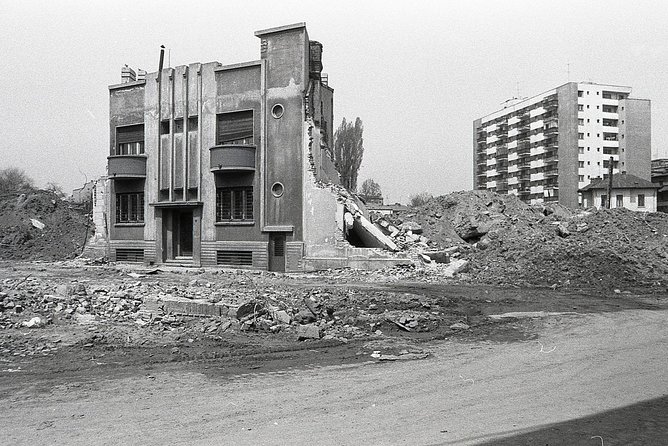
Next, you’ll cycle to the area tied to the communist bomb attack against the democratic Romanian government, at the site connected with the first Romanian parliament. This is the kind of stop where a guide really changes your experience. Without context, you might just see a building or a junction. With context, you understand that the same place can represent competing visions of governance, legitimacy, and public life.
For me, this is where the tour becomes more than “Soviet-era buildings.” The tour uses the city as evidence. You see how political conflict plays out in physical landmarks and power symbols, and why those symbols matter to people at the time.
If you like big-picture explanations, this is a high value moment. If you hate lectures, you might still appreciate how the guide keeps it tied to what you can look at right now.
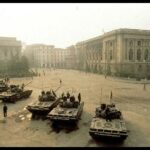
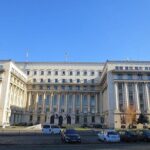
More of communist-era Bucharest:

Stalin-era elite housing, and how power hides in plain sight
After the early conflict stops, the route advances into the post-World War II period when Romania ended up occupied by the Soviet Union for 12 years. Then you’ll ride through the neighborhood where Russian army generals who were in charge lived.
That neighborhood walk-by matters because elite housing often looks normal from a distance. The tour helps you notice the subtle urban patterns that reflect who had resources, proximity to decision-making, and protection. You stop seeing poverty and wealth as separate worlds and start seeing how regimes built spatial separation into the city.
This part also reinforces something useful for your own sightseeing: communist power was not only in speeches and uniforms. It showed up in where people lived, how neighborhoods were planned, and which areas got attention.
Casa Radio, the unfinished project that still tells the story
The highlights promise the biggest unfinished communist urban project: Casa Radio. You’ll see it as part of your route, and even from the outside, the place communicates what communist planning often meant in practice.
Unfinished projects are not just an architectural curiosity. They’re a clue about priorities, funding, and shifting political decisions. When you watch something large and public stall out, you get a concrete reminder that ideology does not automatically produce smooth results on the ground.
If you like urban stories, this stop is a keeper. The guide’s job here is to connect the building to the system that created it, so you do not just register a strange structure and move on.
Revolution Square, then the Communist Central Committee ending
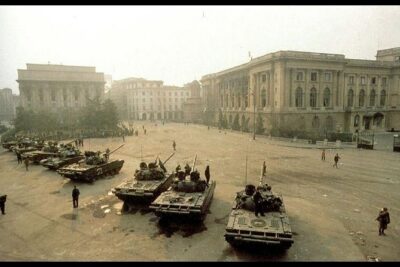
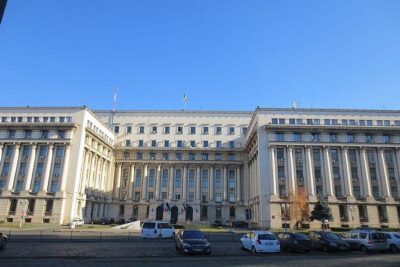
The tour’s closing arc runs through Revolution Square, then ends in front of the Communist Central Committee where Ceaușescu held his last speech, and where the revolution started in December 1989.
This ending is powerful because it ties the long timeline together. Early turmoil links into regime consolidation. Soviet occupation links into the restructuring of power. Unfinished monuments and reshaped buildings hint at the friction between plans and reality. Then you reach a specific moment in December 1989 that helped flip the story.
The best part is that the tour does not treat 1989 like a movie scene. It treats it like a culmination you can understand, based on what you just rode through.
Bikes, helmets, and a four-hour format that actually works
This is a 4-hour experience, and that length is part of the value. Four hours is long enough for multiple time periods, but short enough that you are not stuck in one neighborhood for the entire session.
You get bikes, helmets, and bike locks included. That matters because it reduces the friction for a visitor who just arrived in town. You do not have to hunt for rental gear, and you do not have to manage your valuables with improvisation. The tour also includes a live English-speaking guide.
Because the ride covers several major points, the bike format makes sense. You’re essentially using your transportation as part of the curriculum. The route is designed so you can connect dots between sites instead of treating each stop as a standalone postcard.
Price and value: why about $53 feels reasonable
At $53 per person for a 4-hour guided bike tour, the value mostly comes from the “how,” not just the “where.” You are paying for:
- a live guide who explains the political logic behind the landmarks
- included bikes, helmets, and locks
- a route that strings together multiple eras in one session
In other words, it’s not only about sightseeing. The guide is doing the heavy lifting for you, especially for stops like the bomb attack site and the Central Committee area. If you plan to spend your remaining days doing independent walks without a structure, this tour gives you a framework that pays off later.
If you are budget-conscious, I’d still weigh one thing: you’re not getting food or drinks. So plan a meal or snack before or after, and budget a little extra for yourself.
Riding tips that make the difference in Bucharest traffic
I’ll be blunt: the best version of this tour happens when you’re comfortable cycling in city conditions. One review specifically flagged that for people comfortable riding in dense city traffic, the extended action range is worth it. So if you’re a confident rider, you’ll get more out of the full route.
Here’s what I recommend you do before you show up:
- Wear comfortable shoes, since you will be getting on and off the bike during stops
- Keep your focus on the road at crossings, even when the guide is talking
- Bring a little patience, because Bucharest traffic does not stop just because you want photos
Also, expect explanations at key stops rather than constant narration from the start to finish. That balance keeps you from feeling like you are trapped inside someone else’s presentation.
The guide quality: why Horia, Alex, and Chorea matter
What stands out most is how guides teach the city. You might have Horia or Alex or Chorea as your guide, and the common thread is clear: they give the full context, not just names and dates.
Some guides also broaden beyond communism into city founding days, the role of the Orthodox church, and city life today. That extra framing helps you connect the communist period to the rest of Bucharest, instead of treating it as an isolated chapter.
If you like your tours with structure, this is a strong match. You get a timeline feel, plus explanations of populations and motivations, so the streets start making sense.
Who this bike tour suits best
This tour is a strong fit if you:
- like history that connects directly to what you can see
- enjoy bike tours and can handle riding for several hours
- want a guided start to Bucharest that improves your self-guided exploring later
It’s not a good fit if you have limited mobility. The tour isn’t recommended for that, and you should take that seriously rather than hoping for a workaround.
If you’re traveling with kids, you’ll need to think carefully about cycling comfort and pace, since the tour is not described as kid-focused. When in doubt, choose based on your group’s ability to ride confidently.
Should you book the Bucharest Communist Bike Tour?
Book it if you want a fast, guided way to understand how the communist era shaped Bucharest’s key landmarks, especially if you care about the story behind places like the first Romanian parliament area, Coral Temple, Casa Radio, Revolution Square, and the Central Committee.
Skip it if you want an easy, low-effort sightseeing day, or if cycling in dense traffic makes you anxious. And remember, the tour does not include food or beverages, so you’ll want to plan meals around the ride.
If you’re the kind of traveler who likes to see a city with a “why” attached, this is one of the better ways to do it in four hours.
FAQ
What’s the duration of the Bucharest Communist Bike Tour?
The tour lasts 4 hours.
How much does the tour cost?
It costs $53 per person.
Where do I meet for the tour?
Meet just across from the restaurant Hanu’ Berarilor (Casa Oprea Soare).
What’s included in the price?
The ticket includes a live guide, bikes, helmets, and bike locks.
Are food and drinks included?
No. Food and beverages are not included.
Is the tour available in English?
Yes, the live guide is English.
What should I bring?
Bring comfortable shoes.
Is the tour suitable for people with limited mobility?
No, this tour is not recommended for people with limited mobility.
What’s the cancellation policy?
You can cancel up to 24 hours in advance for a full refund.
Newest Bucharest write-ups
- Half Day Tour in Bucharest
★ 5.0 · 1 review - Private transfer to BRASOV
★ 5.0 · 1 review - Bucharest: Capture the most Photogenic Spots with a Local
★ 5.0 · 1 review - Bucharest Private Custom Walking Tour with Guide (Private Tour)
★ 5.0 · 1 review - Transfer Bucharest to Constanta / Mamaia
★ 5.0 · 1 review - Uncover Transylvania: Private 2-Day Tour Bears & Medieval Wonders
★ 5.0 · 1 review - Private Day Trip to Peles Palace, Dracula’s Castle and Brasov
★ 5.0 · 1 review
Communist-Era Tours, compared.

Parliament, Ceausescu House & Village Museum Tour
Read our review →
Bucharest Essential Tour: Old Town, Calea Victoriei & Communism
Read our review →
Communism in Bucharest – Landmarks, Museum & Communist Appetizers
Read our review →
Palace of Parliament, Ceausescu House & Village Museum
Read our review →Browse the lists this tour appears in