
Reviewed · COMMUNIST-ERA TOURS
Bucharest: Communist Tour with Museum & Communist Appetizers
There is nothing polite about Bucharest’s communist era. This 3-hour small-group walk pulls you from the Ceausescu-era core to Revolution Square, then stops for an interactive Museum of Communism visit with vintage food and drink.
I really liked how the tour is hands-on at the museum, not just a slideshow of photos and dates. I also liked that you get personal stories alongside the big ideas, which makes the whole topic feel less abstract.
One consideration: it is moderate walking, and it is not suitable for wheelchair users. If you hate walking for a few blocks at a time, plan for that.
In This Review
- Key Things to Know Before You Go
- Finding Your Purple Guide and Getting Oriented Fast
- Walking the Ceausescu-Era Bucharest to Revolution Square
- Museum of Communism: Touch History Instead of Only Reading It
- Nechezol Coffee and Communist Snacks, What You Actually Taste
- Revolution Square: The Turning Point You Can Feel in the Space
- Stories That Make Communist Ideology Human-Scale
- Price and Logistics: Is $47 for 3 Hours Good Value?
- What to Bring, and How to Keep the Walk Comfortable
- Who This Tour Suits Best (and When to Skip It)
- Should You Book This Bucharest Communist Tour?
- FAQ
- How long is the Bucharest Communist Tour?
- Is the tour guided in English?
- What group size is this tour?
- What is included in the Museum of Communism visit?
- What food and drink are included?
- What should I bring, and is it wheelchair accessible?
Key Things to Know Before You Go
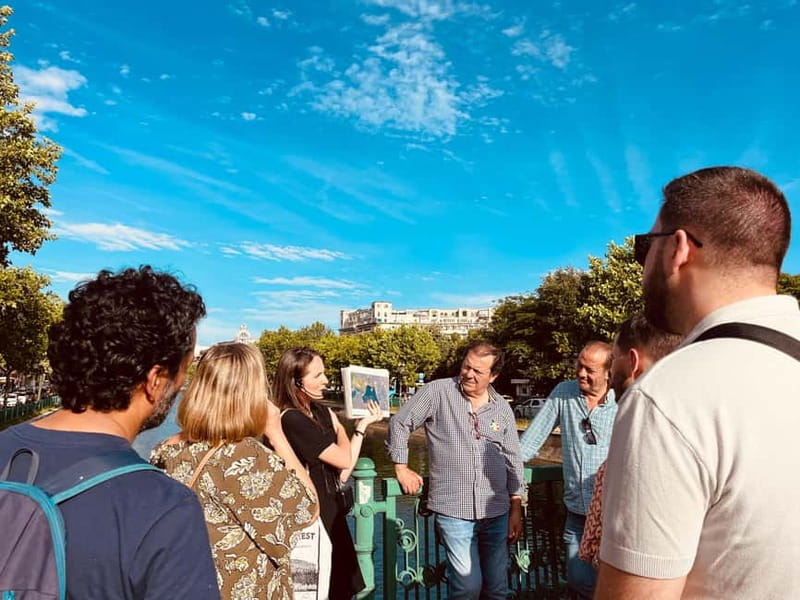
- Small group (up to 8) keeps the pace conversational, so you can ask questions as you walk.
- Ali, the guide, is specifically noted for being engaging and knowledgeable, which sets a strong tone from minute one.
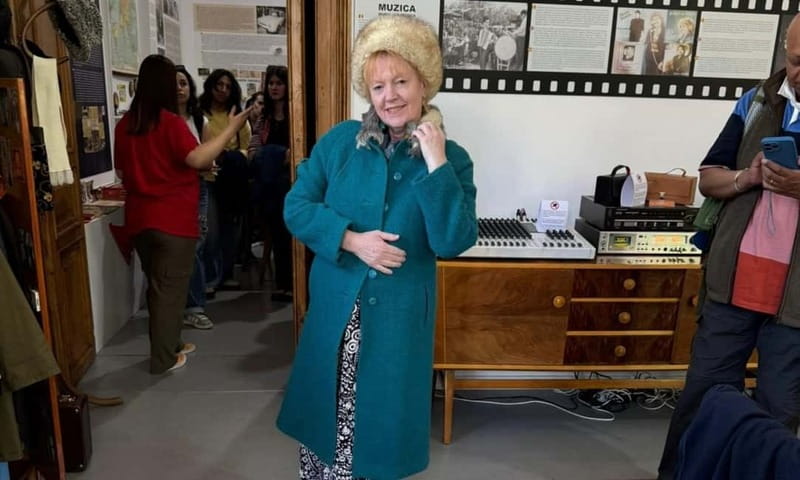
- Museum of Communism is interactive, with you reading, taking photos, sitting on old furniture, and trying period clothing and hats.
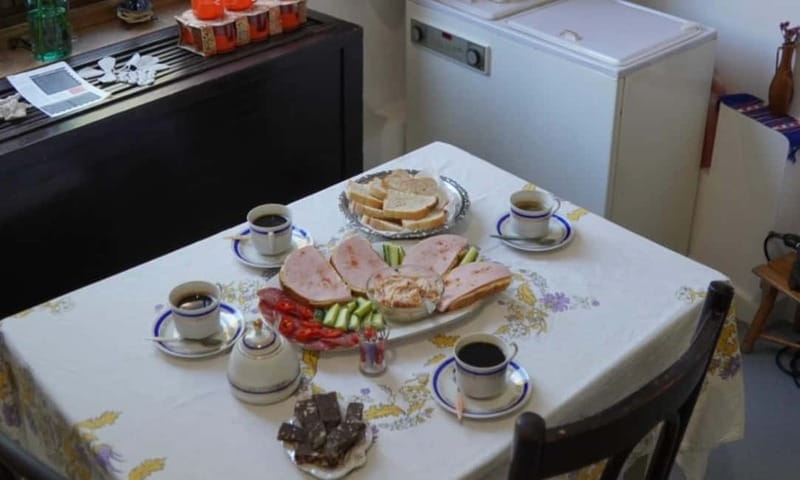
- Nechezol coffee substitute and 80s snacks are served in vintage communist tableware, so you taste the era, not just hear about it.
- Revolution Square is a key endpoint, tied to Nicolae Ceausescu’s last public speech and the moment of his death with Elena.
- Skip the ticket line for the museum portion, which helps you keep the tour flowing without delays.
More of communist-era Bucharest:
- Bucharest: Communism and History Guided City Walking Tour★ 4.9 · 918 reviews
- The Real tour of Communism★ 5.0 · 666 reviews
- Life under Communism★ 5.0 · 358 reviews
- 3-Hour Guided Tour of Communist Bucharest★ 4.9 · 303 reviews
Finding Your Purple Guide and Getting Oriented Fast
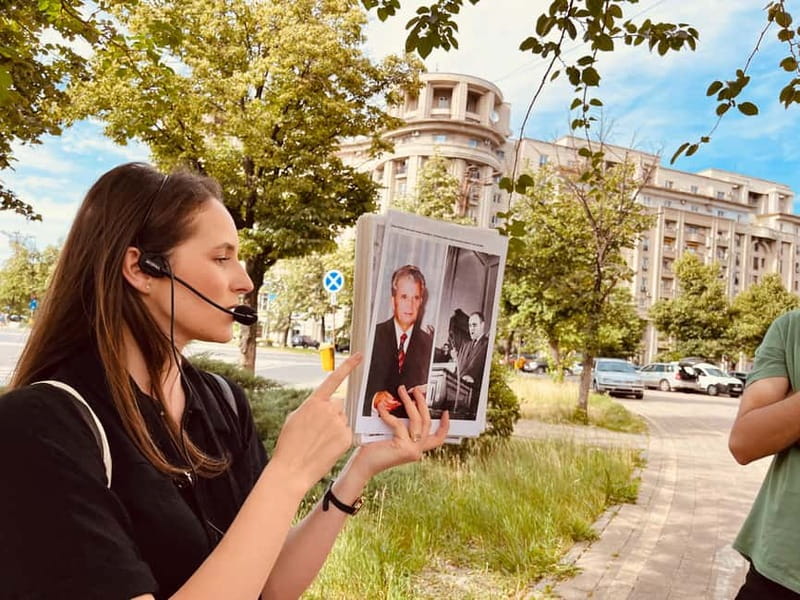
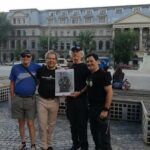
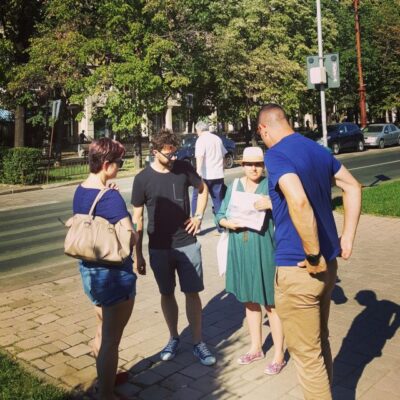
Meeting up is simple. You meet in front of the restaurant, and your best “spot me fast” trick is to look for the guide wearing a purple t-shirt, or carrying a purple umbrella or bag marked Bucharest by Foot. If you show up a few minutes early, you’ll have time to confirm you are at the right starting point and start with no stress.
From the start, the tour sets expectations: you are not just doing a scenic walk. You are walking through how power shaped daily life in communist Romania, and how the country changed by the time of the 1989 Revolution. That focus matters, because it changes what you notice on the street. Instead of only seeing buildings, you start reading them like clues.
The guide also keeps the energy moving for a 3-hour format. You’ll spend time outside, then shift into the museum for interactive exhibits and a snack break. If you like tours with a clear arc, this one gives you that, from Ceausescu’s influence to the revolutionary turning point.
Walking the Ceausescu-Era Bucharest to Revolution Square
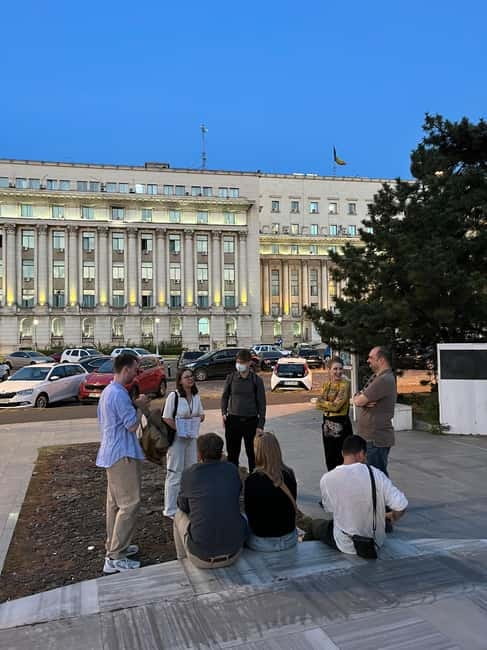
The walking portion centers on major landmarks linked to Nicolae Ceausescu’s imprint on Bucharest. The route starts in front of Parliament, the huge building described on the tour as the heaviest building on Earth, and it ends at Revolution Square.
Why this matters: Ceausescu’s era was not just politics. It was city planning, monuments, and a message built into stone. Walking from the Parliament area toward Revolution Square helps you connect two extremes of the same story. One place represents state power at full volume. The other place represents the collapse of that power.
As you go, the guide keeps the context moving from ideology to lived experience. You’ll hear explanations of the communist ideology and how international context influenced its implementation in Romania. Then you connect that to the daily realities: shortages, social control, and the way ordinary people adjusted their routines.
The walk also acts like a slow warm-up before the museum. You see the scale of the setting, then later you step into rooms designed to make you feel how life looked and sounded under the regime. In a tour like this, that sequencing is a big deal. It makes the museum feel like continuation, not a detour.
Museum of Communism: Touch History Instead of Only Reading It
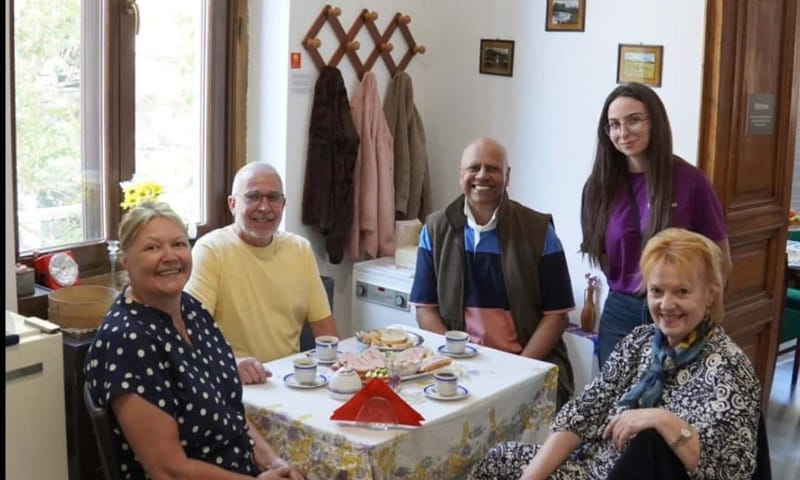
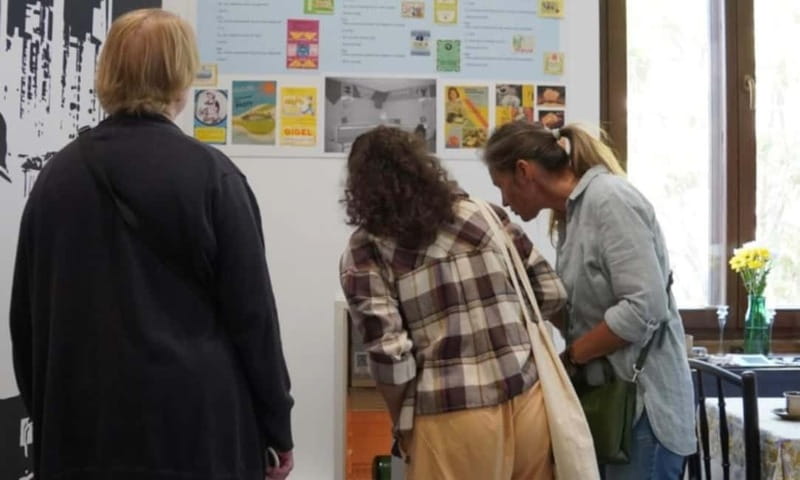
Mid tour, you head to the Museum of Communism for the interactive part. You get a guided visit there too, not a self-guided wandering session. That helps because the exhibits can feel scattershot if you are on your own. With the guide, you understand what you are looking at and why it matters.
Here is what makes the museum the centerpiece. It invites you to do things, not just look:
- You can read books tied to the era.
- You can take pictures.
- You can sit on old pieces of furniture.
- You can try on hats and clothes from the 70s and 80s.
That may sound like “fun props,” but it works for a purpose. When you handle period items and wear period clothing, the era stops being theoretical. You start to understand how clothes, objects, and routines fit together when life is shaped by scarcity and ideology.
It also supports the tour’s bigger message: communist ideology did not live only in speeches and posters. It lived in household settings, daily habits, and public rules. The interactive format helps you remember the details, because you experience them with your own body for a minute.
A practical note for your visit: you are there for about 3 hours total including the museum, so plan to treat the museum like the “main event.” Wear shoes that can handle standing and moving around, and bring your camera if you want photos of the props and period displays.
More museums worth an hour in Bucharest:


Nechezol Coffee and Communist Snacks, What You Actually Taste

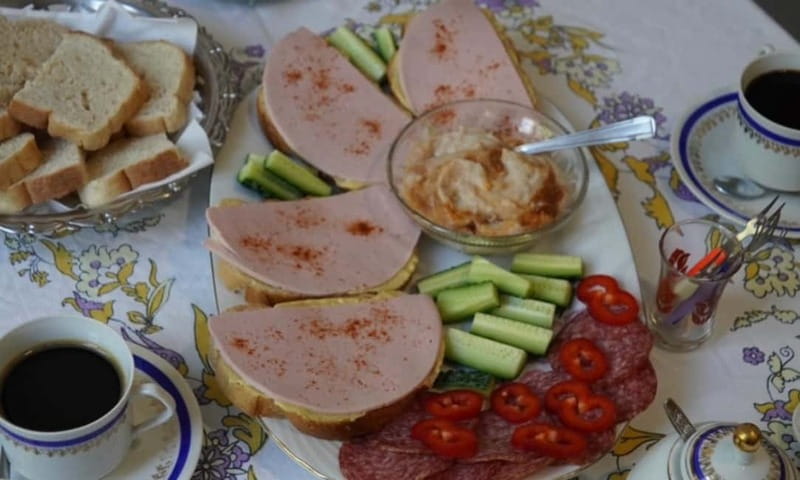
The tour includes a snack and a cup of nechezol, described as a coffee substitute popularly drunk during the 80s. The key detail here is why it’s included: Romania faced dramatic food scarcity in that period, and nechezol became part of how people made do.
You also get salty and sweet snacks typical of communist Romania. That pairing is smart because it mirrors the “practical survival” vibe of the era. People weren’t shopping for treats. They were working with what they could get, which shaped both daily taste and daily morale.
Even better, the snacks and beverages are served in vintage communist tableware. That detail is not just decoration. It reinforces the theme that this isn’t about nostalgia. It’s about understanding the environment people lived in, down to the objects on the table.
If you’re the kind of person who normally skips tour food, keep an open mind here. The food is tied to the story of shortages and adaptation, and it is part of the tour’s context, not a random add-on.
Revolution Square: The Turning Point You Can Feel in the Space
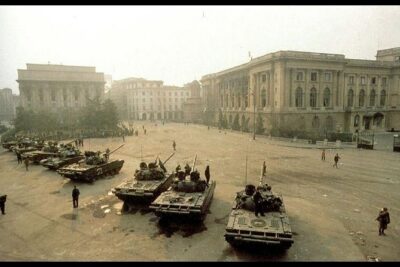
The endpoint is Revolution Square, linked directly to Nicolae Ceausescu’s final public speech before he was publicly killed, along with his wife Elena.
This stop carries weight, and the guide handles it with the purpose the tour has been building toward. You start with the visible symbols of the regime’s influence, then you arrive at the place associated with its end. By the time you stand there, the 1989 Revolution is no longer a line on a timeline. It feels like the conclusion to everything you were told earlier about ideology, implementation, and day-to-day life.
One thing I appreciate about this kind of stop is that it gives you a physical “anchor.” You can map what you learned from the walk and museum to a single location. When you compare that to purely indoor history tours, the difference is that Bucharest itself becomes the explanation.
If you prefer quiet reflection during history stops, this is a good place for it. Bring your camera if you want to capture the square, but also leave a minute to just stand and take in the atmosphere.
Stories That Make Communist Ideology Human-Scale
The tour doesn’t treat communist Romania like a distant concept. You hear personal stories about life under the communist regime, and those stories are what connect the museum’s objects to the walking tour’s landmarks.
This is where I found the tour most effective. Ideology is often taught as abstract terms. Here, the guide translates it into daily choices and daily restrictions. You hear how people experienced the system, not only how the system described itself.
That is why the museum’s interactive portion and the tasting portion work together. The exhibits give you material culture, and the snack and nechezol give you a sensory memory. Then the personal stories tell you why those things mattered.
The end result is that you walk away with more than a list of sights. You get a better sense of how the regime shaped habits, stress levels, and even what people could afford to eat. It is history with texture.
Price and Logistics: Is $47 for 3 Hours Good Value?
At $47 per person for about 3 hours, this is a fair price if you care about guided context plus a museum stop. You are getting:
- A guided walking tour focused on communist-era themes in Bucharest
- Admission to the Museum of Communism, with guided interactive exhibits
- A snack and a cup of nechezol
- Service using vintage communist tableware
- Skip-the-ticket-line museum entry
That mix is the value part. Many tours try to add food as an afterthought. Here, food and the museum both tie to the same era and the same story. Plus, the guided format matters. If you only bought museum entry on your own, you might see a lot of objects. You might not get the connective tissue that makes the objects feel like they belong to a specific moment in Romanian life.
Group size is limited to 8, which is another quiet advantage. Smaller groups usually mean fewer bottlenecks at interactive displays, and you can actually hear the guide while people are trying things on and taking photos.
English is the tour language, and the tour guide is live, so you are not stuck with audio and guesswork. For many visitors, that alone is worth something.
What to Bring, and How to Keep the Walk Comfortable
The essentials are straightforward:
- Comfortable shoes (you will do a moderate amount of walking)
- Water (bring it, and hydrate)
- A camera (you’ll want photos at the museum and around key landmarks)
Because the museum includes trying on hats and clothes, think about what you’ll be willing to put on for a quick photo moment. Wear something practical, and keep your hands free for snacks later.
Also, plan your expectations for a short afternoon or morning slot. This is a 3-hour tour, not an all-day event. That’s great if you want a focused experience that still leaves time for other parts of Bucharest.
Who This Tour Suits Best (and When to Skip It)
This tour is a strong match if you want:
- A guided, story-driven look at communist Romania
- An interactive museum experience where you can touch history (in the permitted ways) and try period items
- Food and drink tied to the era, especially nechezol and communist-style snacks
- A small group pace with time to ask questions
It may be less ideal if:
- You struggle with walking or need wheelchair access (it is not suitable for wheelchair users)
- You prefer modern, light topics only, with minimal discussion of political violence
If you enjoy history with a human scale, you’ll likely appreciate how the guide connects architecture, ideology, and everyday life.
Should You Book This Bucharest Communist Tour?
If you’re curious about how communist Romania felt in real life, I’d book it. The combo of Parliament-to-Revolution Square walking plus the interactive Museum of Communism is a smart way to learn. You don’t just look. You taste, you try on period items, you sit on old furniture, and you hear personal stories that connect it all.
If the idea of moderate walking or period-themed museum props doesn’t sound fun to you, then you can skip it. But if you want a guided, compact experience that makes the era concrete, this tour fits the bill. Especially at a small-group size and with the food and nechezol included, it is good value for how much you get in 3 hours.
FAQ
How long is the Bucharest Communist Tour?
The tour lasts 3 hours.
Is the tour guided in English?
Yes, the live tour guide speaks English.
What group size is this tour?
It is a small group limited to 8 participants.
What is included in the Museum of Communism visit?
You get admission to the Museum of Communism with interactive exhibits, plus a guided portion inside the museum.
What food and drink are included?
You’ll receive a communist-era snack and a cup of nechezol, a coffee substitute from the 1980s.
What should I bring, and is it wheelchair accessible?
Bring comfortable walking shoes, water, and a camera. The tour is not suitable for wheelchair users.
Newest Bucharest write-ups
- Half Day Tour in Bucharest
★ 5.0 · 1 review - Private transfer to BRASOV
★ 5.0 · 1 review - Bucharest: Capture the most Photogenic Spots with a Local
★ 5.0 · 1 review - Bucharest Private Custom Walking Tour with Guide (Private Tour)
★ 5.0 · 1 review - Transfer Bucharest to Constanta / Mamaia
★ 5.0 · 1 review - Uncover Transylvania: Private 2-Day Tour Bears & Medieval Wonders
★ 5.0 · 1 review - 7-Days Grand Romania tour from Bucharest
★ 5.0 · 1 review
Communist-Era Tours, compared.



Parliament, Ceausescu House & Village Museum Tour
Read our review →
Bucharest Essential Tour: Old Town, Calea Victoriei & Communism
Read our review →
Communism in Bucharest – Landmarks, Museum & Communist Appetizers
Read our review →
Palace of Parliament, Ceausescu House & Village Museum
Read our review →Browse the lists this tour appears in