
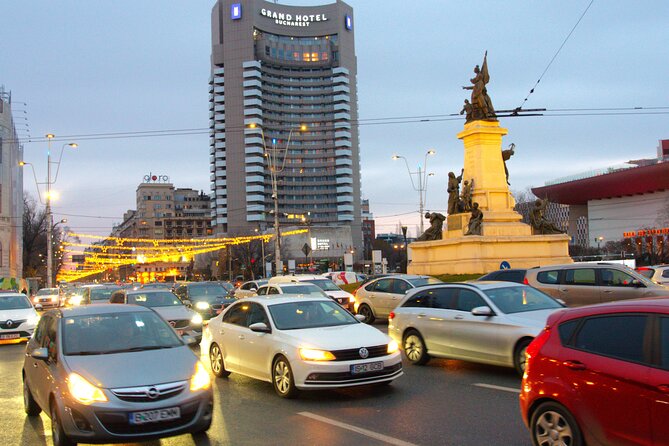
Reviewed · WALKING TOURS
Bucharest in a nutshell – half day private walking tour
A walk through Bucharest turns into a time machine fast. This half-day private tour strings together the city’s key eras in order, so you’re not just looking at buildings, you’re understanding why they exist. I like that it covers everything from late Middle Ages vibes and Ottoman influence remains to the big 20th-century breaks, then lands in a modern perspective on Romania. I also love that it’s flexible and interactive, with a local guide who adjusts to your interests. A possible drawback: because it’s chronological and time tight, you will have to skim some stops rather than linger for photos or long explanations at every corner.
You get a licensed local guide, and that matters in Bucharest. The route moves through recognizable landmarks like Stavropoleos Monastery, Revolution Square, and the Romanian Athenaeum, while also guiding you through smaller, story-rich moments in between. From the reviews, the guide Razvan Trancu stands out for being an encyclopedia who explains history in a fun way, with sharp communication, solid timing, punctuality, humor, and flexibility. My consideration for you: if you prefer a slow, photo-only stroll, this format will feel structured, not wandering.
In This Review
- Key Highlights You’ll Actually Feel
- Where the Walk Starts, and Why Orientation Matters
- Starling the Past at Biserica Sfantul Anton
- Cărturești Carusel, Small Stop, Big City Mood
- National Bank of Romania, Passing With Purpose
- Stavropoleos Monastery, Where Bucharest Gets Quiet
- Caru’ cu bere, Architecture Meets Appetite
- CEC Palace and Calea Victoriei, the Big-Deal Boulevard Moment
- University Square and the Practical Feeling of a City’s Mind
- National Military Circle, Passing by With Context
- Revolution Square and the Communism Chapter You Can Sense
- Finishing at the Romanian Athenaeum, With Culture as a Closing Note
- Price and Value: What $188 Buys for Your Four Hours
- Who This Tour Fits Best (and Who Might Want Something Else)
- Guide Razvan Trancu, Based on What Guests Remember
- Should You Book This Bucharest Walking Tour?
- FAQ
- FAQ
- How long is the Bucharest in a nutshell private walking tour?
- What is the meeting point for the tour?
- Is this tour private?
- How many people are in a group?
- What languages are offered by the guide?
- What does the tour include?
- Is the tour wheelchair accessible?
- What is not included in the tour price?
- What is the cancellation and payment policy?
Key Highlights You’ll Actually Feel
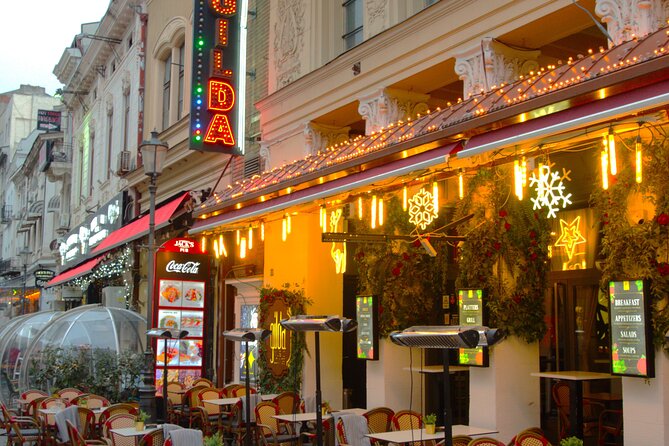
- Chronological storyline that helps you connect medieval roots to Ottoman traces, then monarchy-era grandeur to Communism and beyond
- Private, licensed guiding that keeps pace comfortable and questions welcome
- Revolution Square to the Romanian Athenaeum gives you a strong through-line from hardship to cultural identity
- Old-center landmarks plus quick stops for texture, not just postcard views
- Razvan Trancu’s style: humor, flexibility, and excellent time management based on past guests
- Multi-language options (English, Italian, Spanish) for smoother explanations
More Guided Walks in Bucharest
- Bucharest: City Highlights Guided Walking Tour★ 4.9 · 1,482 reviews
- Bucharest: Communism and History Guided City Walking Tour★ 4.9 · 918 reviews
- Bucharest Highlights Walking Tour★ 5.0 · 469 reviews
- Bucharest: Hidden Markets Walking Tour with Tastings★ 4.9 · 329 reviews
Where the Walk Starts, and Why Orientation Matters
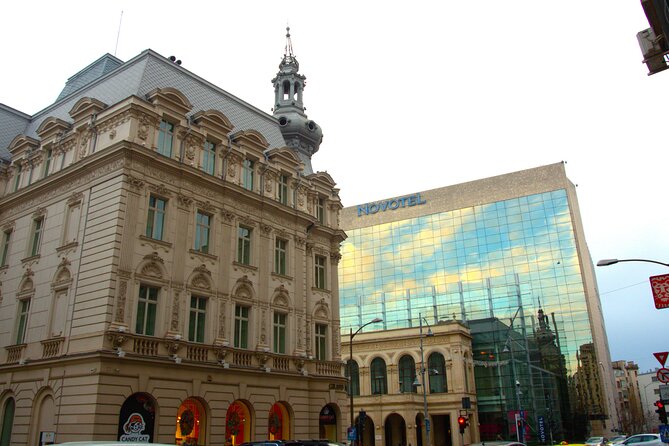
The tour begins at the Starbucks coffee shop at Hanul lui Manuc, main door. That’s a practical choice, because Hanul lui Manuc is one of those anchors in the historic center that helps you mentally reset quickly. You’ll meet the guide, then get a clear sense of what you’re going to cover in the next four hours.
Right away, you’ll notice the tour’s emphasis on flow. You’re not shuttled by bus or stuck in a museum line. It’s a walking route built to connect places in a single timeline, which is exactly what makes Bucharest easier to process. If you’ve ever felt lost in a city where architecture changes every few blocks, this format is the fix.
Because it’s private, you’re not fighting a large group for attention. Up to 12 people per group keeps things human. The guide can also adapt if you care more about architecture, social history, or just how Romania got from then to now.
Starling the Past at Biserica Sfantul Anton
One of the first stops is Biserica Sfantul Anton, with a guided visit of about 20 minutes. Churches in Bucharest can feel like history lessons written in stone and plaster, especially when you hear what to look for instead of just staring at the façade.
In a chronological tour, this is a key moment. It acts like a hinge between everyday street life and the deeper layers that shaped the city over time. Even if you’re not a religious-history person, guided context turns a short stop into useful orientation.
A practical tip: wear comfortable shoes. The route is designed for walking efficiency, and you’ll move steadily between stops. This is one of those tours where good footwear makes the difference between relaxed and drained.
Cărturești Carusel, Small Stop, Big City Mood
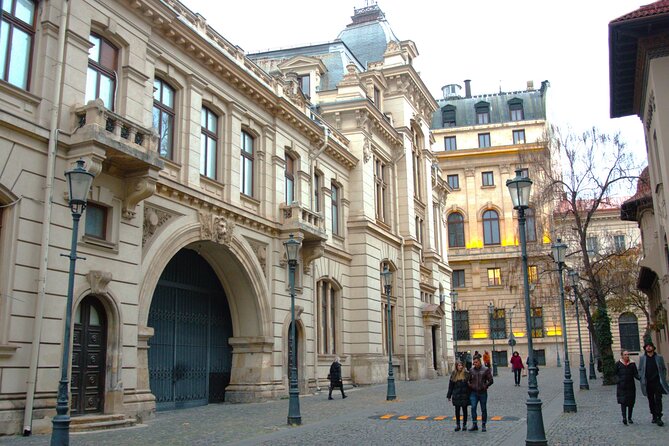
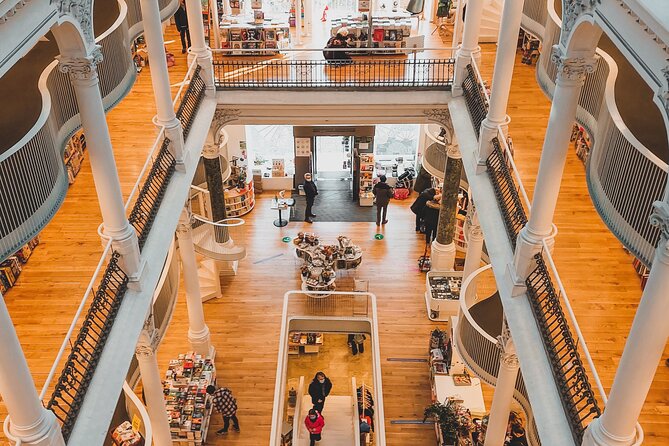
Next up is Cărturești Carusel, a quick visit (around 10 minutes). This kind of stop matters because it adds a contemporary cultural layer to the old-center story. You’re not only marching through “serious history.” You’re also picking up how Bucharest lives now, in spaces that feel like they belong to modern readers and shoppers.
Think of it as atmosphere. Short stops like this are what keep the day from becoming one long lecture. If you’re traveling with people who get tired of monuments, this is the sort of pause that keeps momentum.
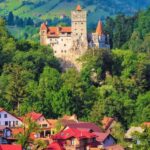
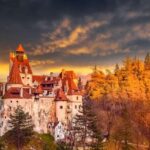
Different day out, same corner of Romania:

National Bank of Romania, Passing With Purpose
You’ll pass by the National Bank of Romania for about 10 minutes. This is one of those stops where the goal is not a long visit, it’s the connection. Along a timeline, institutions like banks help explain shifts in power, economy, and civic life.
Even from the sidewalk, the guide can frame why the location matters in the larger story. This is the kind of context you usually miss when you self-tour.
If you’re the type who likes to photograph façades and details, this is a moment to do it quickly without slowing the group.
Stavropoleos Monastery, Where Bucharest Gets Quiet
Then comes Stavropoleos Monastery, with a guided visit of about 20 minutes. This is a strong choice for your route because it offers a different tempo. Monasteries tend to feel calmer than the broad avenues, and they make the city’s layered past feel more human.
A guided stop here is especially useful because you’ll likely get “what you’re seeing and why it matters” explanations rather than a simple location stamp. In cities like Bucharest, details are everything, and the guide’s job is to point them out in a way that sticks.
One practical consideration: take a moment to look around beyond the main entrance. Guided tours often focus on the most iconic points, but monasteries reward slower glances, even during a timed visit.
Caru’ cu bere, Architecture Meets Appetite
You’ll visit Caru’ cu bere for about 10 minutes. This is not just a pretty building. It’s a chance to connect the idea of urban pride and social life to a place people still use.
If you like travel that doubles as a meal plan, this stop is useful. The guide can often suggest where to eat and what fits your tastes, since dining advice is included. Even if you do not stop for a full meal here, you’ll leave with a stronger sense of where traditional Bucharest hospitality lives.
If you do want to eat later, keep an eye on what you liked during this short visit. It helps you choose restaurants that match the mood you’re seeking.
CEC Palace and Calea Victoriei, the Big-Deal Boulevard Moment
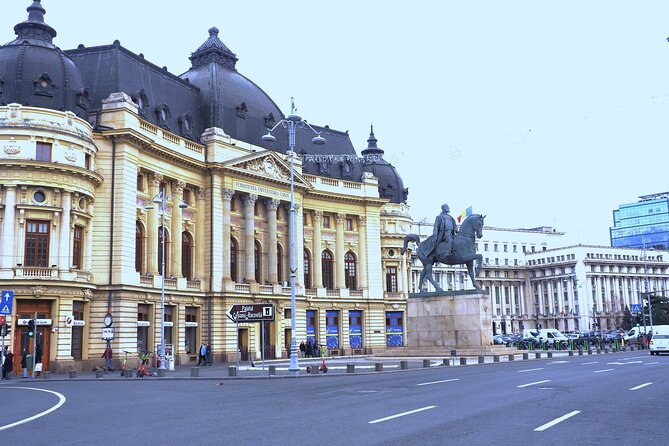
Next, you’ll pass CEC Palace for about 10 minutes, then walk through Calea Victoriei for around 20 minutes. These moments are where the tour leans into monarchy-era and “end of century glory days” atmosphere, which is one of the main highlights.
Here’s why it’s valuable: Bucharest’s grand boulevards can look similar if you rush past them. Guided context turns them into a readable map of shifting ambition. Along Calea Victoriei, you’re seeing how the city presented itself, what it valued, and how architecture broadcast power.
Practical note: this is also where you’ll appreciate time planning. The route uses these segments to build momentum before the heavier stops later.
University Square and the Practical Feeling of a City’s Mind
You’ll spend about 30 minutes on University Square, Bucharest, with a guided visit. This is a good place in the itinerary because it links physical space to ideas. Universities and public squares tend to reflect who the city is trying to become, not just who it used to be.
Even if you focus mostly on architecture, this kind of stop helps you understand the civic “why.” It’s also a nice contrast after the boulevard grandeur.
If you’re the type who likes to ask questions, this is a great moment. A good guide can connect education, politics, and the economy without turning it into a textbook.
National Military Circle, Passing by With Context
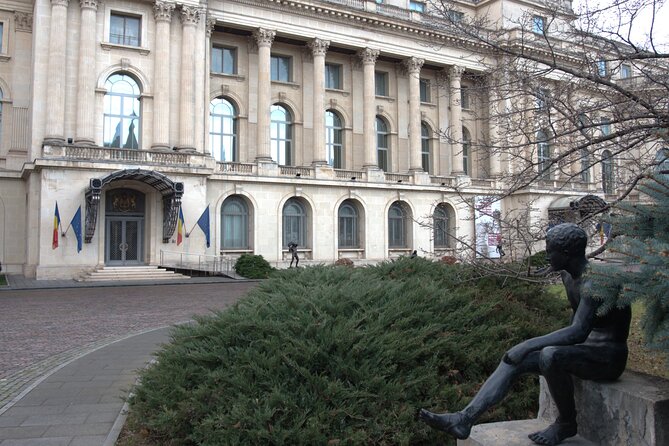
You’ll pass by the National Military Circle for about 10 minutes. Military buildings often show up in historic cities as symbols, not just structures. The value here is in the framing, not the duration.
A short pass-by is not a weak moment. It’s a strategic one. It keeps the story moving while still touching the key institutions that shape a society.
If you like details, you might find it helps to look up. Even quick stops can reward those who scan façades and entrances.
Revolution Square and the Communism Chapter You Can Sense
The tour’s emotional center is Revolution Square, Bucharest. You’ll visit it for about 30 minutes, with guided context. This is where the “gruesome social experiment of Communism” theme becomes real in your head, not just words on a page.
Why this stop is worth your time: Revolution Square is not only about buildings. It’s about how a city remembers its breaks. Guided explanation matters because without it, you can miss what the space is trying to communicate.
It’s also where the tour becomes more than sightseeing. It turns into an understanding of Romania’s modern social traits and the costs behind political shifts. Expect the guide to keep it clear and structured, since the tour is chronological and meant to build toward a modern perspective at the end.
Take a breath here if you need it. You are walking through history that is not abstract, and a little pause helps the meaning land.
Finishing at the Romanian Athenaeum, With Culture as a Closing Note
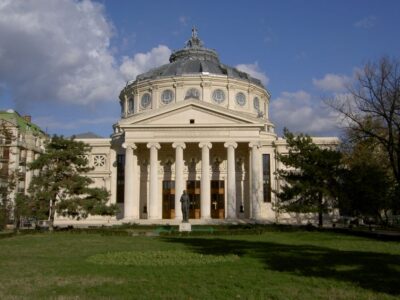
The tour finishes at the Romanian Athenaeum. This ending choice is smart. You start with the roots, you move through empire and ideology, and you close at a cultural landmark that helps you understand identity after upheaval.
The Athenaeum finish gives you something tangible to hold onto. If you’ve been collecting dates and names, this final stop is a reminder that cities express themselves through arts and public life too.
A good way to use the ending: take a moment to look at it from the outside and reflect on how the story you heard connects to the building you’re seeing now. That connection is the whole point of a well-built chronological walking tour.
Price and Value: What $188 Buys for Your Four Hours
The price is $188 per group, up to 12 people, for a duration of 4 hours. For a private walking tour with a licensed local guide, that pricing can be good value, especially if you travel with a small group that wants direct access to a guide.
Here’s a simple way to think about it:
- If you fill the group closer to 12, the per-person cost drops a lot.
- If it’s just a couple of you, it costs more per person, but you’re paying for privacy, flexibility, and guided context without competing with strangers.
What makes it worth it is not just the landmark list. It’s the structure: a timeline across the old historic center with built-in context. In Bucharest, that structure saves you from the most common travel frustration, which is seeing beautiful places without knowing why they matter.
You also get dining and activity suggestions included. That’s not a throwaway add-on. In practice, it can steer you toward better meals and better use of your remaining time.
Who This Tour Fits Best (and Who Might Want Something Else)
This tour fits you well if you want a clear story in a limited time. It’s ideal for first-time Bucharest visitors who feel overwhelmed by dates, buildings, and political history. It’s also a strong choice if you care about both aesthetics and social context.
It’s a great pick for couples, small friend groups, and families who want a guided experience that can adapt to interests. The reviews highlight Razvan Trancu’s ability to make the explanations fun and flexible, which usually translates into less lecturing and more back-and-forth.
It might be less ideal if you prefer long, unstructured time at a single site, like a slow museum day. The route is designed for movement and coverage. You will get breadth, not deep immersion in one spot.
Guide Razvan Trancu, Based on What Guests Remember
The most praised aspect from prior guests is the guide’s delivery. Razvan Trancu is described as an encyclopedia, with fun and exciting storytelling. The same reviews call out communication, impeccable time management, punctuality, humor, and flexibility.
That combo matters. Good timing means you see the main sights without the day slipping. Humor keeps heavy topics easier to digest. Flexibility means if you ask for a slight change, the tour is likely to accommodate rather than rigidly push forward.
In short, you’re paying for a guide who can turn Bucharest into a readable narrative in one afternoon.
Should You Book This Bucharest Walking Tour?
Yes, you should book if you want the fastest way to understand Bucharest’s layers without getting lost. The tour’s biggest strength is its chronological storyline, tied directly to major places like Revolution Square and the Romanian Athenaeum, while still giving you smaller stops that add texture.
Book it if you like guided explanation and you want practical suggestions for the rest of your trip, from dining to possible day trips outside Bucharest. Skip it if you want a slow wander with no structure, because the route is built to move and cover eras efficiently.
FAQ
FAQ
How long is the Bucharest in a nutshell private walking tour?
The tour lasts about 4 hours.
What is the meeting point for the tour?
You meet at Starbucks coffee shop at Hanul lui Manuc, main door.
Is this tour private?
Yes, it’s a private group tour.
How many people are in a group?
The price is per group up to 12 people.
What languages are offered by the guide?
The tour is offered in English, Italian, and Spanish.
What does the tour include?
It includes a private tour with a local licensed tour guide, plus suggestions for other local activities such as dining and 1-2 day tours outside Bucharest.
Is the tour wheelchair accessible?
Yes, the tour is wheelchair accessible.
What is not included in the tour price?
Snacks, souvenirs, and personal expenses are not included.
What is the cancellation and payment policy?
Free cancellation is available up to 24 hours in advance for a full refund, and you can reserve now and pay later.
Newest Bucharest write-ups
- Half Day Tour in Bucharest
★ 5.0 · 1 review - Private transfer to BRASOV
★ 5.0 · 1 review - Bucharest: Capture the most Photogenic Spots with a Local
★ 5.0 · 1 review - Bucharest Private Custom Walking Tour with Guide (Private Tour)
★ 5.0 · 1 review - Transfer Bucharest to Constanta / Mamaia
★ 5.0 · 1 review - Uncover Transylvania: Private 2-Day Tour Bears & Medieval Wonders
★ 5.0 · 1 review - Private Day Trip to Peles Palace, Dracula’s Castle and Brasov
★ 5.0 · 1 review
Walking Tours, compared.




Ghost Stories & Romanian Mythology Walking Tour
Read our review →
Browse the lists this tour appears in