
Reviewed · WALKING TOURS
Bucharest Past and Present – Step by Step Walking Tour
Bucharest tells its story fast, if you know where to look. This step-by-step walking tour threads past and present through key squares and landmarks, from the Holocaust Memorial area to Revolution-era sites. You’ll walk a compact route with an expert guide and spend most of your time outside, learning as you go.
What I like most is the pace and the access you get with a private group. You see major Bucharest touchpoints close up, including Revolution Square, Lipscani, and the Palace of Parliament area, without it feeling like a checklist. I also like that you get free admission at many stops, which keeps value high.
The main thing to consider is language match. The tour is offered in English, but guide language can vary by group, and I saw one low rating tied to limited Italian.
In This Review
- Key things that make this Bucharest walk worth your time
- Why this past-and-present Bucharest route works so well on foot
- The route, the meeting point, and how long to plan
- Stop 1: University Square and the Revolution Martyrs Memorial
- Stop 2: Revolution Square, the Royal Palace, and communist-era power
- Stop 3: Royal Palace Museum area, a quick context boost
- Stop 4: The Palace of Parliament, the People’s House, and why size matters
- Stop 5: Stavropoleos Monastery, 18th century calm in the city center
- Stop 6: Palatul CEC and the architecture you might otherwise miss
- Stop 7: Lipscani, the historic merchant street feel
- Stop 8: National Museum of Romanian History, seen on the way to Parliament Palace
- Stop 9: Romanian Atheneum exterior, plus an optional inside visit if available
- What you’ll learn from the guide, and what stands out about Marius
- Price and value: is $54.07 per person a fair deal?
- Who should book this walk (and who might want a different style)
- Quick practical tips before you go
- Should you book Bucharest Past and Present?
- FAQ
- How long is the Bucharest Past and Present walking tour?
- Where do I meet and where does the tour end?
- Is this tour private or shared?
- What language is the tour offered in?
- Is admission included for every stop?
- Does the tour include tickets or a mobile pass?
- Is the tour suitable for most people, and are service animals allowed?
- Is there anything I should know about weather and cancellation?
Key things that make this Bucharest walk worth your time
- Private, not crowded: only your group, with an experienced guide speaking English and also French and Italian depending on availability.
- A tight route with big contrasts: Holocaust-era memory, communist power buildings, and the charm of Lipscani.
- Many stops with free admission: multiple landmarks are free to view or visit during the tour.
- Atheneum option, limited by access: you can see the exterior and, when possible, go inside the lobby and concert hall (not included).
- Old Town finish: you end in Lipscani, so you can keep exploring right after.
More Guided Walks in Bucharest
- Bucharest: City Highlights Guided Walking Tour★ 4.9 · 1,482 reviews
- Bucharest: Communism and History Guided City Walking Tour★ 4.9 · 918 reviews
- Bucharest Highlights Walking Tour★ 5.0 · 469 reviews
- Bucharest: Hidden Markets Walking Tour with Tastings★ 4.9 · 329 reviews
Why this past-and-present Bucharest route works so well on foot
Bucharest can feel like two cities at once. You’ve got sleek avenues and grand civic buildings, then you turn a corner and hit older neighborhoods with tight streets, old churches, and merchant history. This tour is built to help you connect those dots.
You start in the civic core, where national theater and memorials anchor the story. Then you move toward Revolution Square, which is basically the city’s stage for 20th century change. After that, you shift into religious and historic Bucharest at places like Stavropoleos Monastery and on toward Lipscani, where the city’s older trading life still shows up in the street layout.
Because it is a walking tour, you do not just look at landmarks from far away. You get a sense of how people actually move through the center. That matters in Bucharest, because the meanings of buildings come through more in context than in photos.
The route, the meeting point, and how long to plan
You’ll meet at the Ion Luca Caragiale National Theatre (Bulevardul Nicolae Bălcescu 2, București 010051) and finish in Old Town. The tour runs about 2 to 3 hours, so it is a good fit for a first day, or a day when you want a guided orientation without losing half of your time in transit.
It is also a private tour/activity, meaning only your group participates. That helps if you want questions answered, or if your group walks at a slightly different pace. One positive theme in the feedback is that the guide stayed flexible, lingering where questions took longer.
Expect it to be mostly outdoors. Good weather matters here, and the experience notes that it requires good weather. If skies look iffy, dress for real walking conditions, not just sightseeing comfort.
Stop 1: University Square and the Revolution Martyrs Memorial
The tour begins at University Square, near the National Theatre area. This is where Bucharest’s identity as a modern capital shows up, while the memorial context keeps the tone grounded.
At this first stop, you also pass the Revolution Martyrs Memorial. Even if you do not read every plaque, your guide can frame what this area represents and how it fits into the wider shift from dictatorship toward a different political life. This is a good opening because it sets expectations: this tour is not only about pretty architecture, it is about what history did to daily life.
One more highlight called out for this route is the Holocaust Memorial. You should expect the guide to point you toward it during the early part of the walk, when you are already tuned in to remembrance and difficult chapters of the city’s past.
Timing is short here, around 15 minutes. So I treat it as a launchpad, not a full museum visit. You’ll get the meaning, then move on.
Different day out, same corner of Romania:
Stop 2: Revolution Square, the Royal Palace, and communist-era power
Next comes Piata Revolutiei (Revolution Square), one of Bucharest’s biggest open-air history rooms. The tour gives you about 30 minutes in this stretch, which is just right for seeing several major landmarks without feeling rushed.
Here’s what you cover as you stroll:
- Royal Palace in the same orbit as today’s civic skyline
- Romanian Atheneum, a landmark you will recognize instantly from photos
- Communist Party Headquarters, a stark reminder of how power used to work here
- Rebirth Memorial, which connects the space to the idea of change
This is where the tour’s title really clicks. Revolution Square is not just a place. It’s a pivot point. You see how the city’s official face was shaped, then reshaped again, and how that shows up in building style and placement.
A practical note: you are viewing from the street, so plan for photo stops, not long interior visits. The value is in how the guide explains what each building signaled at the time.
Stop 3: Royal Palace Museum area, a quick context boost
After the big square, there is a brief pass by the Museum of The Royal Palace front area, with about 5 minutes here. This is not a ticketed museum stop in the tour flow, but it is still useful.
Why? Because it helps you understand why Revolution Square feels like a single story spread across multiple institutions. When you look at museum façades and civic buildings in sequence, the city’s narrative becomes clearer. Think of this stop as a “hold this in your mind” moment.
It is also marked as free admission for this segment, so you’re not losing money on what is essentially orientation.
Stop 4: The Palace of Parliament, the People’s House, and why size matters
Then you reach the Palace of Parliament, also described as the People’s House built at the dictator’s orders. Even without entering, this is one of those Bucharest buildings that hits you in your body.
You spend about 15 minutes here. That likely means you see the exterior and get the key framing. The guide’s job becomes extra important at this stop, because the Palace of Parliament can look like pure spectacle unless you learn what it represented during its building era.
The main value is scale and symbolism. This building was made to project power. In person, you quickly understand why it looms over the city and why later history had to respond to it.
If you are the kind of person who needs an inside visit, that is not the point of this tour. This walk is built for the “read the city in context” experience.
Stop 5: Stavropoleos Monastery, 18th century calm in the city center
Next is Stavropoleos Monastery, an Orthodox site dating to 1724. This stop is only about 10 minutes, but it is a major tonal shift.
After wide squares and heavyweight state architecture, an older church atmosphere feels like a reset. Even if you mostly view it in passing, the guide can connect it to how Romanian Orthodox life persisted through political upheaval.
The tour marks admission as free for this stop, which makes it easier to justify the detour. And because it is short, it does not steal time from the bigger landmarks.
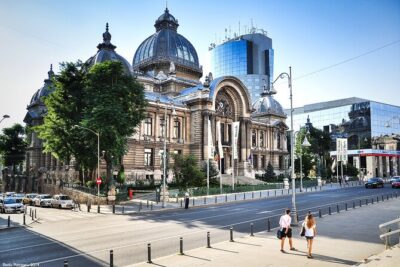
Stop 6: Palatul CEC and the architecture you might otherwise miss
You get a brief look at Palatul CEC for about 5 minutes. This building is described as having eclectic architecture.
This is one of those “blink and you’ll miss it” stops in many city tours, but here it plays a useful role. Eclectic buildings tell you that Bucharest was not frozen in one era of style. It kept borrowing, blending, and adapting.
Since it’s short, your best move is to slow down for a moment and notice details. Eclectic architecture rewards attention, especially after you’ve been staring at monumental communist-era scale.
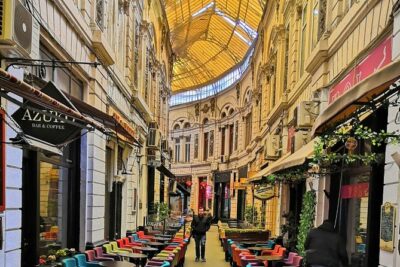
Stop 7: Lipscani, the historic merchant street feel
Then you arrive at Lipscani, the famous old merchant street. You spend about 15 minutes here, with the tour ending in Old Town territory.
Lipscani is where Bucharest starts to feel like a place you could live inside, not just visit. The street style, the shopfront energy, and the old-street layout give you a sense of what earlier urban life looked like.
This is also a practical advantage for you. Finishing here means you can keep going on your own: grab a drink, wander side streets, and choose whatever you want next without waiting for another guided schedule.
Stop 8: National Museum of Romanian History, seen on the way to Parliament Palace
There’s also a pass by the National Museum of Romanian History on Victoriei street, around 5 minutes.
This is not a ticketed stop on this route, but it still matters. It signals that Bucharest’s story is laid out in institutions, not just in monuments. When you see a museum façade in sequence with memorial and power buildings, you get a better feel for how public memory is organized.
If you want to go deeper later, this at least tells you what to seek.
Stop 9: Romanian Atheneum exterior, plus an optional inside visit if available
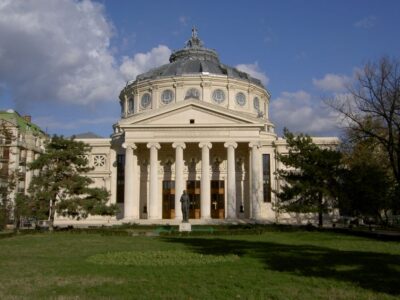
Finally, you reach Ateneul Roman (Romanian Atheneum). You get about 5 minutes for an exterior visit, and the tour includes a chance to see the entrance lobby and concert hall if access is available. Inside admission is not included.
Here’s how I’d approach this: treat the exterior as the guaranteed payoff. The optional interior is a bonus, like catching a concert rehearsal vibe or a quiet moment inside a famous venue when doors are open.
Either way, the Atheneum serves as a visual anchor. It helps tie together the whole route, because it is a symbol of cultural identity, sitting right near the more politicized layers of the city.
What you’ll learn from the guide, and what stands out about Marius
This tour includes a private tour with an experienced English/French/Italian speaking guide. Language is part of the value here, because the meaning of each stop is not obvious if you only read the stone.
In the strongest feedback, the guide Marius comes up repeatedly as a high point. People praised his historical knowledge and how he kept the walk moving with explanations that felt clear and engaging. Another theme is adaptability: he adjusted pace based on interests and walking speed, and he stayed patient with questions, including when people asked for clarification more than once.
There is also a practical side. One highlight was help navigating the metro back to a hotel. That’s not a guaranteed part of every tour, but it’s a good sign that this guide thinks beyond the monuments and helps you connect the experience to daily logistics.
One caution from a low rating: if you are traveling with an expectation of Italian, and Italian language support matters to you, I’d confirm in advance that the guide assigned to your group will meet your needs. A tour can be excellent in English and still disappoint in a specific language, so it is worth checking.
Price and value: is $54.07 per person a fair deal?
At $54.07 per person for about 2 to 3 hours, the value depends on what you want from Bucharest.
You get:
- a private experience for your group
- an experienced guide
- lots of free admission stops listed throughout the walk
- a route that hits big-picture themes, not just landmarks
That free admission detail matters. Several key segments are marked free, including University Square areas, Revolution Square landmarks, Palace of Parliament exterior time, and Stavropoleos Monastery. The Romanian Atheneum interior is the main possible paid extra, since inside admission is not included and depends on availability.
The tradeoff is that this is not a long museum day. You are getting an outside, context-rich walk with optional access at one cultural venue. If you want ticketed interiors across the board, you may want to pair this with later visits.
Still, for orientation plus meaningful storytelling, this price sits in a strong middle zone, especially because you are paying for an interpretation service, not just someone to point at buildings.
Who should book this walk (and who might want a different style)
This works best if you:
- want a first-time Bucharest overview that mixes politics, culture, and street life
- like walking tours where you ask questions and slow down at places that grab you
- enjoy architecture and also the people behind the buildings
- need a plan that ends in Old Town so you can keep exploring afterward
It is also described as good for families with teens and young kids in at least one high rating. The guide’s ability to keep people engaged and adapt pace seems to be a key strength.
If you hate walking or want a heavy schedule of indoor museum time, this may feel too outdoor and too stop-and-pass. But if you like city context, it is a solid match.
Quick practical tips before you go
- Wear comfortable shoes. This is a walking tour across central Bucharest landmarks.
- Bring a light layer for weather swings. The experience notes good weather matters.
- If you care about the Romanian Atheneum inside, keep expectations flexible. Interior access is optional and depends on availability.
- Plan to arrive at the start location (Ion Luca Caragiale National Theatre) with enough time to settle in. That reduces stress and helps you enjoy the first stop.
Should you book Bucharest Past and Present?
Yes, I think you should book it if you want to understand Bucharest beyond postcards. The route balances big institutions with street-level atmosphere, and the guide role is central, not optional. With a private format, you also get the advantage of asking questions and moving at a human pace.
Skip this if you mainly want paid museum interiors, or if you need a very specific language other than English. In that case, verify language fit ahead of time.
If you want a clear sense of how Bucharest moved through memory, dictatorship, and cultural identity, this walking tour gives you a focused path through the city’s most telling contrasts.
FAQ
How long is the Bucharest Past and Present walking tour?
It runs about 2 to 3 hours.
Where do I meet and where does the tour end?
You meet at the Ion Luca Caragiale National Theatre (Bulevardul Nicolae Bălcescu 2, București 010051) and the tour ends in Old Town, Bucharest.
Is this tour private or shared?
It is a private tour. Only your group will participate.
What language is the tour offered in?
The tour is offered in English, and the guide is described as English/French/Italian speaking.
Is admission included for every stop?
Many stops are free. The Romanian Atheneum inside option (entrance lobby and concert hall) is optional and not included, based on availability.
Does the tour include tickets or a mobile pass?
Yes, you get a mobile ticket.
Is the tour suitable for most people, and are service animals allowed?
Most travelers can participate, and service animals are allowed.
Is there anything I should know about weather and cancellation?
The experience requires good weather. Free cancellation is available up to 24 hours in advance for a full refund, and you may be offered a different date or a full refund if it is canceled due to poor weather.
Newest Bucharest write-ups
- Half Day Tour in Bucharest
★ 5.0 · 1 review - Private transfer to BRASOV
★ 5.0 · 1 review - Bucharest Private Custom Walking Tour with Guide (Private Tour)
★ 5.0 · 1 review - Bucharest: Capture the most Photogenic Spots with a Local
★ 5.0 · 1 review - Transfer Bucharest to Constanta / Mamaia
★ 5.0 · 1 review - Uncover Transylvania: Private 2-Day Tour Bears & Medieval Wonders
★ 5.0 · 1 review - 7-Days Grand Romania tour from Bucharest
★ 5.0 · 1 review
Walking Tours, compared.



Ghost Stories & Romanian Mythology Walking Tour
Read our review →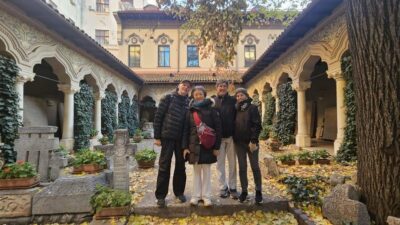
Browse the lists this tour appears in