
Reviewed · COMMUNIST-ERA TOURS
Bucharest: Tour of Old Town, Calea Victoriei & Communism
Communism history meets cobblestone streets. I love how this tour pairs Romanian Athenaeum grandeur with the hard reality of 20th-century rule, and I also love the smart contrast between royal-era and communist-era spaces. One drawback to consider: it is mostly on foot, so if you hate walking over uneven cobblestones, plan carefully and wear good shoes.
The route is a tight 2.5 hours at a very reasonable price, with a professional local guide and a map of Bucharest to help you keep the city straight after the tour. It is also built for real weather, because it runs rain or shine, so bring layers and expect an outdoor experience.
I especially liked how the guides bring the story to life, from interwar architecture on Calea Victoriei to the oppressive machinery of the communist party. Guides I met in past tours, like Stefan and John, seemed genuinely comfortable answering odd questions, not just giving a script. If you want the big picture without losing the human details, this is a strong pick.
In This Review
- Key moments that make this tour worth your time
- Meeting outside the Romanian Athenaeum, where Bucharest looks like royalty
- Revolution Square and the communist headquarters story you actually remember
- Calea Victoriei, where interwar glamour meets real political change
- The Old Town on cobblestones, medieval lanes and 19th-century merchant life
- Stavropoleos Church, an active monastery pause in the middle of it all
- Finishing near Manuc’s Inn and Unirii Square fountains
- Guides make the difference, and this tour has strong ones
- Practical value: $19 for 2.5 hours with a local guide
- Who should book this tour, and who might want to skip it
- Should you book Btrip Bucharest Tours, Old Town, Calea Victoriei & Communism?
- FAQ
- Where does the tour start?
- How long is the Bucharest Old Town, Calea Victoriei & Communism tour?
- What is the price?
- Is the tour guided in English?
- Is the tour wheelchair accessible?
- Does the tour run in bad weather?
- What should I bring?
- What is included in the tour price?
- What is not included?
Key moments that make this tour worth your time
- Start at the Romanian Athenaeum, then immediately shift into the city’s royal and French-inspired architectural mood.
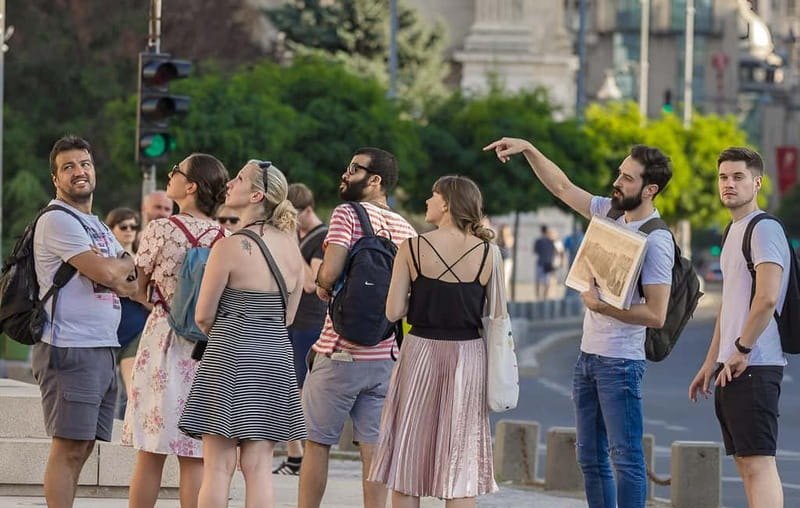
- Revolution Square for communism in Romania, including what happened between 1950 and 1989 and why Ceaușescu matters.
- Calea Victoriei street walk, seeing Belle Epoque hotel facades and Art Deco landmarks like the Telephone Palace.
- Old Town cobblestones, where medieval-style inns, 19th-century merchant houses, and palaces share the same walk.
- Stavropoleos Church in the center, a colorful, active monastery stop that gives you a breather.
- Finish near Manuc’s Inn, with the tour ending around the fountains area by Unirii Square.
More of communist-era Bucharest:
- Bucharest: Communism and History Guided City Walking Tour★ 4.9 · 918 reviews
- The Real tour of Communism★ 5.0 · 666 reviews
- Life under Communism★ 5.0 · 358 reviews
- 3-Hour Guided Tour of Communist Bucharest★ 4.9 · 303 reviews
Meeting outside the Romanian Athenaeum, where Bucharest looks like royalty
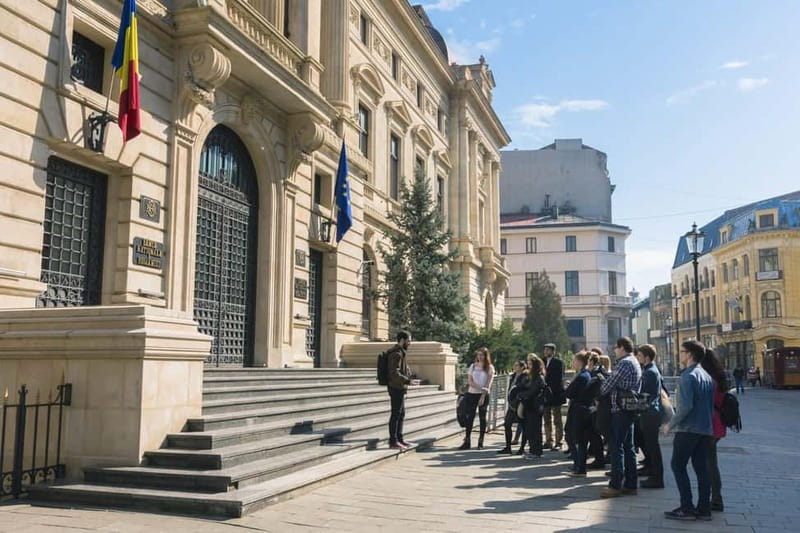
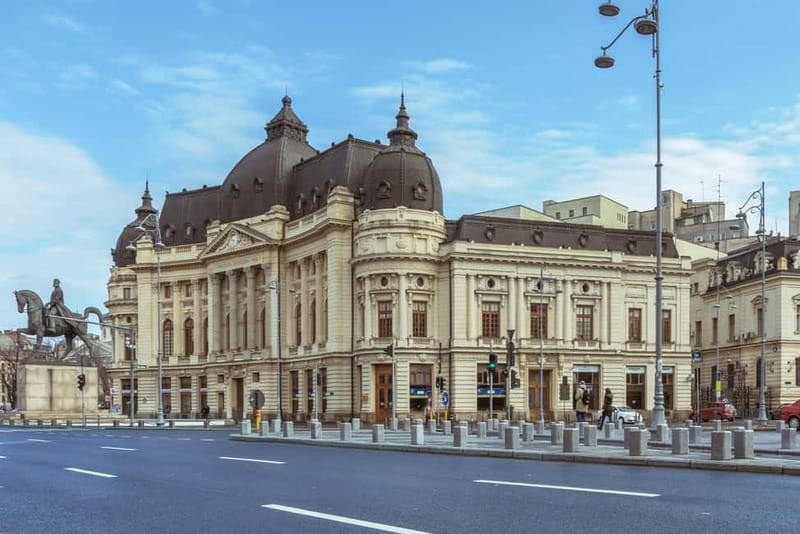
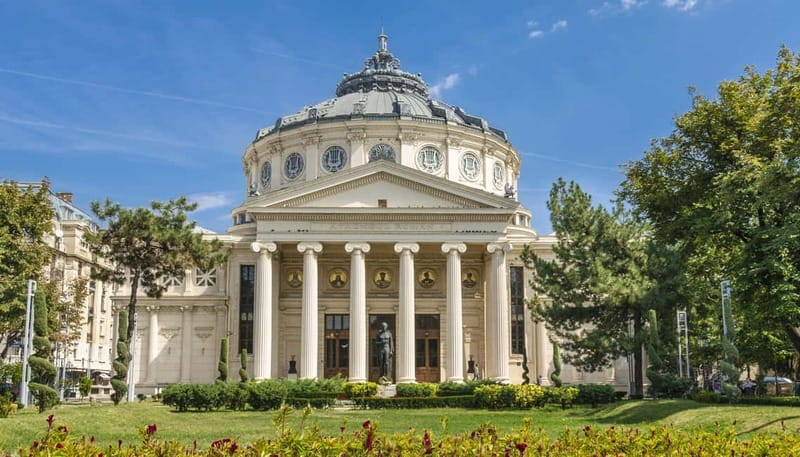
You meet right in front of the Romanian Athenaeum, the kind of landmark that makes you want to pause and look up. This neoclassical concert hall is the anchor for the first stage of the walk, surrounded by other impressive buildings influenced by French style.
From the start, you are shown how Bucharest has always been about style and power, even before the modern political storms. The guide points out the nearby Royal Palace, the University Library, and the Athenee Palace Hotel, so you get a visual sense of what the city wanted to project.
Then the tone shifts toward the royal era. You hear stories connected to kings and world wars, right near King Carol’s statue. It is a useful setup, because the tour later contrasts this period with the blunt, controlled look of the communist years.
Practical note: the meeting spot is on the steps by the columns, and the guide waits there wearing a name tag. Plan to arrive a few minutes early so you are not rushing while everyone else is already lining up.
Revolution Square and the communist headquarters story you actually remember
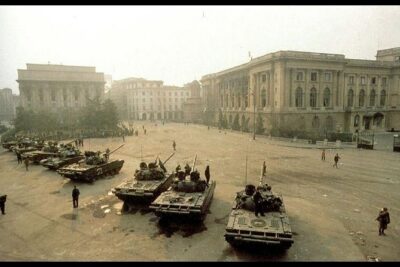
Revolution Square is where the tour stops being a pretty walk and becomes a history lesson you can point to on the map. The former Communist Party headquarters sits here, and this is where major decisions were made from 1950 to 1989.
You learn the story of Nicolae Ceaușescu as the core figure behind the regime, and you also get context on what oppression meant in daily life, not just the political headlines. The tour highlights how the communist system ended in bloodshed, which is heavy material. The guide frames it so you understand the timeline and why the square is more than a monument.
One detail that stood out in this part for me is the emphasis on media and scale. The guide explains that Romania’s first revolution was broadcast live on TV, turning the struggle into something visible far beyond the country. That helps you connect why these events still echo today, and why Revolution Square matters when you are trying to understand Bucharest as a modern city shaped by trauma.
If you prefer history that is anchored to specific places you can revisit, this stop is a win. You can come back later, stand in the same square, and make your own mental timeline.
Calea Victoriei, where interwar glamour meets real political change
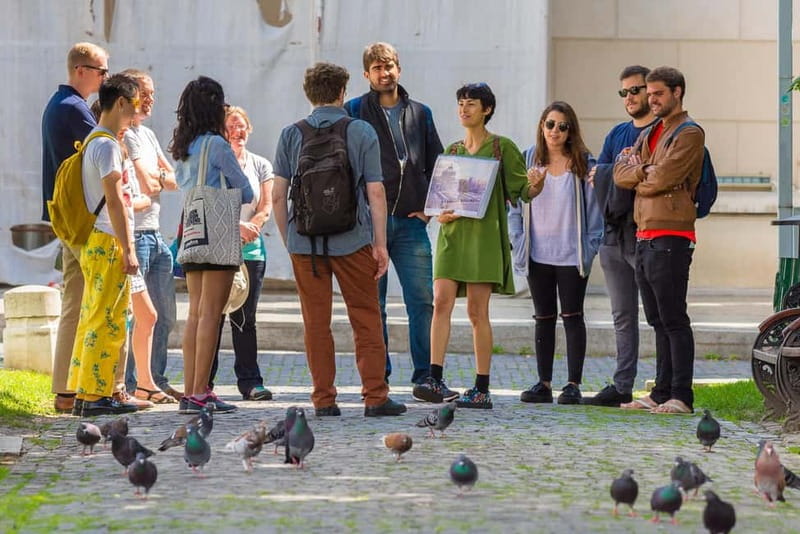
Next you walk along Calea Victoriei, Bucharest’s most famous and extravagant street. This is where the city shows its interwar confidence, with Belle Epoque hotels and Art Deco wonders lining the route.
The guide points out buildings like the Grand Hotel Continental, the Telephone Palace, and the Military Club. Even if you do not go inside, seeing these facades in sequence helps you understand how Bucharest marketed itself before later upheaval. It is like walking through a design history lesson, but with political context quietly under the surface.
I like this part because it keeps the tour balanced. You are not only hearing about power and fear. You are also seeing how people lived, how they wanted the city to look, and how different eras leave their fingerprints on the same streets.
Walking on Calea Victoriei is also a nice change of pace from the darker themes of Revolution Square. It feels more open and urban, and it gives you time to absorb details without feeling rushed.
Deeper into the old town of Bucharest:
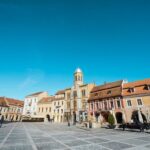
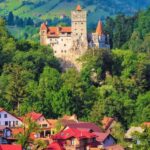
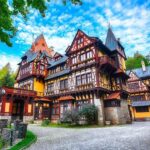
The Old Town on cobblestones, medieval lanes and 19th-century merchant life
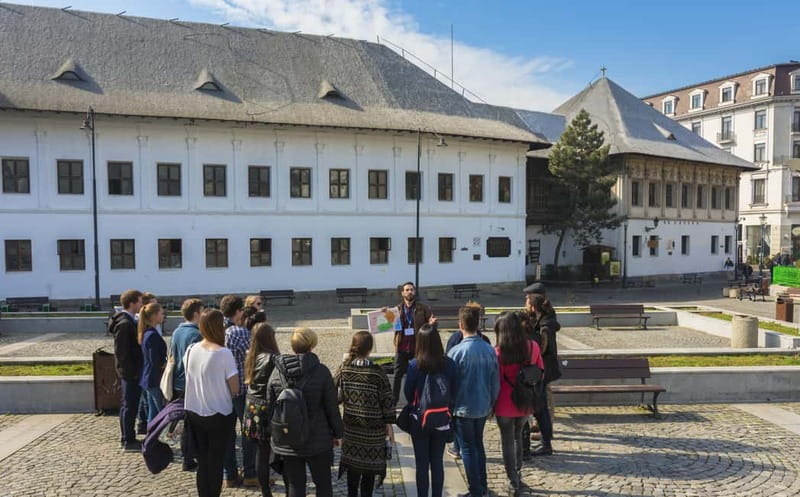
Then the tour eases you into the Old Town, where the ground changes under your feet. Cobblestone streets can slow you down, and that is part of the point. You move at walking speed, so you actually take in what surrounds you instead of treating it like a checklist.
As you go, you see a mix of styles: medieval Oriental inns, small 19th-century merchant houses, and imposing palaces. It is a reminder that Bucharest has long been a crossroads city, with layers of influence stacked in one compact area.
Along the way, you also pass key Old Town sites, including the History Museum, the CEC Palace, Manuc’s Inn, and Villacrosse Passage. The guide uses these stops to tell stories that connect streets to people, and it helps the area feel less like random architecture and more like an actual neighborhood with a living past.
One thing I recommend: when you reach the smaller lanes and passages, slow down for photos, but also look up. The details on doorways and windows can make the whole medieval-to-19th-century contrast click.
Stavropoleos Church, an active monastery pause in the middle of it all
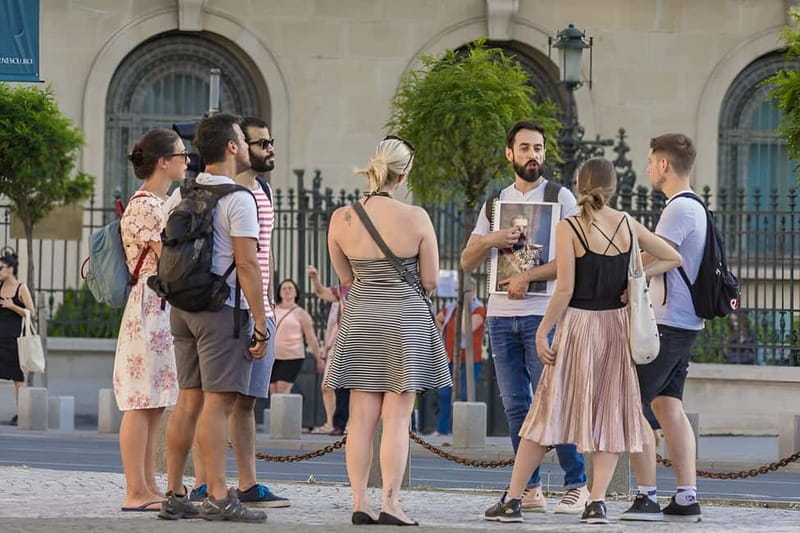
After the Old Town streets, you visit Stavropoleos Church, noted as the only active monastery in the center of Bucharest. This is one of those stops that changes the pace without changing the location.
The church is described as splendid and colorful, and the tone here is calm. For me, this feels like the tour giving you permission to absorb what you just learned, especially after the heavy communism material.
Even if you are not a religious traveler, this stop can be worthwhile just for the atmosphere. You get a breather in a city where the other highlights are tied to political power, war, and architecture built to impress.
Finishing near Manuc’s Inn and Unirii Square fountains
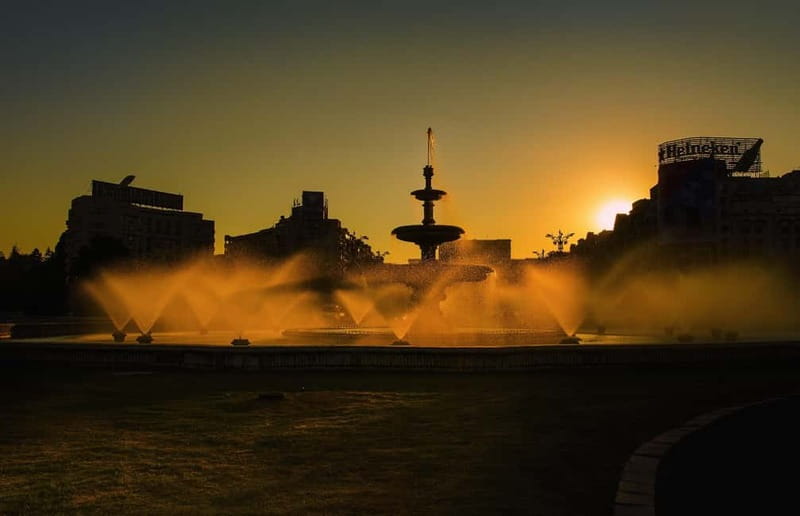
The tour wraps up around Manuc’s Inn, after spending time in the Old Town area. Depending on the flow of the walk, you also get the sense that the finish area is close to Unirii Square, with its imposing fountains mentioned as part of the concluding moment.
Manuc’s Inn is a strong visual ending because it sits at the intersection of story and place. You leave with something tangible to remember, not just concepts.
If you want to extend your evening, this finish location is also convenient for continuing on your own, using the map you are included to help you decide what to see next.
Guides make the difference, and this tour has strong ones
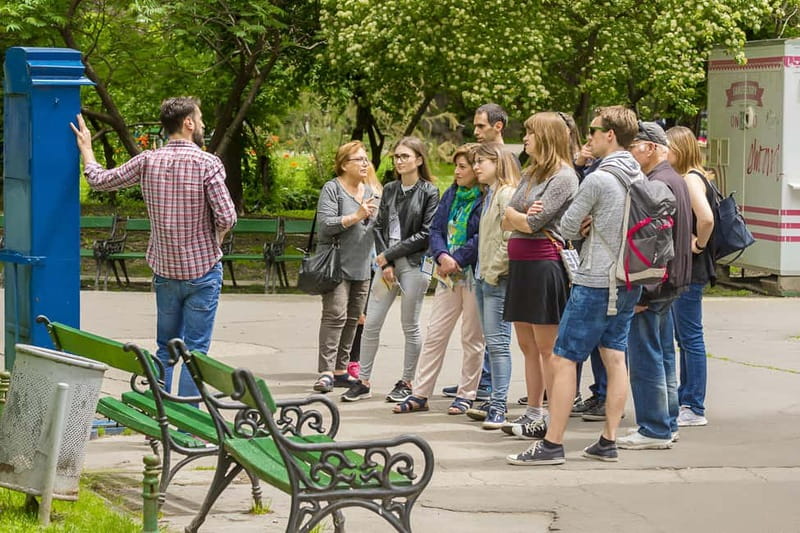
A big reason this tour earns top marks is the guide quality. In past runs, guides like Stefan, John, and Laura have stood out for being engaging and willing to answer questions, even the odd ones.
You can also expect a teaching style that connects architecture to events, not just dates and names. One guide approach I liked: the emphasis on how Romania’s story includes both dramatic change and everyday human adaptation. That balance is what makes the communism segment feel real instead of distant.
If your goal is understanding Bucharest as more than a set of photos, pick a time when you can actually focus. Two and a half hours is not long, but the guide squeezes a lot into it, and the payoff is a coherent story across very different neighborhoods.
Practical value: $19 for 2.5 hours with a local guide
At $19 per person for about 2.5 hours, this tour is priced like a smart add-on, not an expensive specialty experience. You are paying for a professional local guide plus a map of Bucharest, and you get a route that covers multiple districts and major themes in one go.
It also saves time. Bucharest is not huge, but getting context while you walk between downtown and the Old Town makes the architecture and memorials easier to understand. Instead of stopping at each site and guessing, you get a guided thread.
What you should budget for: the tour does not include hotel pickup or drop-off, and it does not include food or drinks. So plan to meet the guide at the Romanian Athenaeum and handle your own snack and water needs.
Who should book this tour, and who might want to skip it
You should book this tour if you want:
- A guided Bucharest overview that connects architecture to political history
- A balanced mix of royal-era stories, communism in Romania, and Old Town wandering
- A practical route you can follow without getting lost
You might think twice if:
- You dislike uneven surfaces, since cobblestones are part of the Old Town section
- You want deep museum time, because this is a walking and viewing tour with focused stops, not long indoor visits
This tour is a good fit for first-timers, and also for people who have already seen a few monuments but want to understand what happened underneath the surface.
Should you book Btrip Bucharest Tours, Old Town, Calea Victoriei & Communism?
Yes, if you want a fast, meaningful way to understand Bucharest’s contrasts. Starting at the Romanian Athenaeum and ending around Manuc’s Inn gives you a coherent loop through the city’s most important downtown highlights, with communism and Revolution Square as the emotional center.
I would book it if your ideal day includes good walking, clear explanations, and photo stops that make sense after the story is told. Just bring comfortable shoes and dress for rain or shine, because the city does not care about plans.
If you are ready to connect royal grandeur, interwar design, Old Town character, and Romania’s communist past into one 2.5-hour storyline, this tour delivers the kind of context that helps everything else you see afterward click into place.
FAQ
Where does the tour start?
The tour starts in front of the Romanian Athenaeum, with the guide waiting on the steps right in front of the columns.
How long is the Bucharest Old Town, Calea Victoriei & Communism tour?
It lasts 2.5 hours.
What is the price?
The price is $19 per person.
Is the tour guided in English?
Yes, the live tour guide speaks English.
Is the tour wheelchair accessible?
Yes, the tour is wheelchair accessible.
Does the tour run in bad weather?
Yes, it takes place rain or shine.
What should I bring?
Wear comfortable shoes, since you will be walking through parts of downtown and the Old Town.
What is included in the tour price?
A professional local guide and a map of Bucharest are included.
What is not included?
Hotel pickup and drop-off are not included, and food and drinks are not included.
Newest Bucharest write-ups
- Half Day Tour in Bucharest
★ 5.0 · 1 review - Private transfer to BRASOV
★ 5.0 · 1 review - Bucharest: Capture the most Photogenic Spots with a Local
★ 5.0 · 1 review - Bucharest Private Custom Walking Tour with Guide (Private Tour)
★ 5.0 · 1 review - Transfer Bucharest to Constanta / Mamaia
★ 5.0 · 1 review - Uncover Transylvania: Private 2-Day Tour Bears & Medieval Wonders
★ 5.0 · 1 review - Private Day Trip to Peles Palace, Dracula’s Castle and Brasov
★ 5.0 · 1 review
Communist-Era Tours, compared.


Parliament, Ceausescu House & Village Museum Tour
Read our review →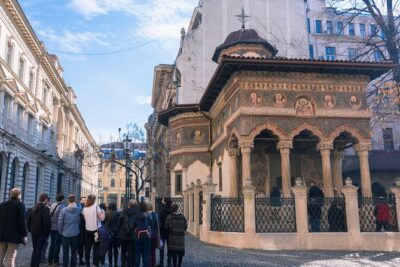
Bucharest Essential Tour: Old Town, Calea Victoriei & Communism
Read our review →
Communism in Bucharest – Landmarks, Museum & Communist Appetizers
Read our review →
Palace of Parliament, Ceausescu House & Village Museum
Read our review →Browse the lists this tour appears in