
Reviewed · COMMUNIST-ERA TOURS
Bucharest Under Communism: Life, Terror & Hope
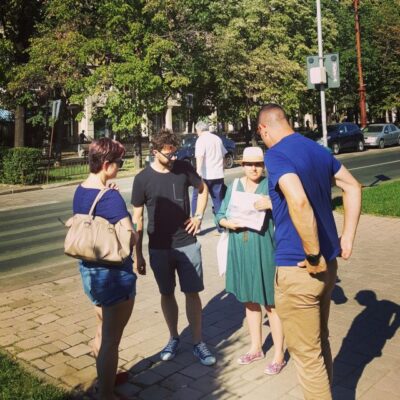
Bucharest tells its communist story in plain sight. I liked this tour because it turns the big, heavy topic of Ceaușescu-era rule into an easy walking route with major landmarks and clear links to the Revolution of 1989. I also love the way guides such as Laura (and Tamar) keep it lively, answering questions and using extra historical photos to make the timeline click.
You’ll get five stops tied to power, propaganda, and resistance, including the Palace of the Parliament and two key squares connected to the 1989 uprising. One possible drawback to plan for: the Palace of the Parliament ticket is not included, so you should expect a small extra cost and a bit of queue time there.
In This Review
- Key things I’d circle before you go
- Walking Bucharest’s communist story, step by step
- Unirii Square and Victory of Socialism Boulevard: propaganda you can walk
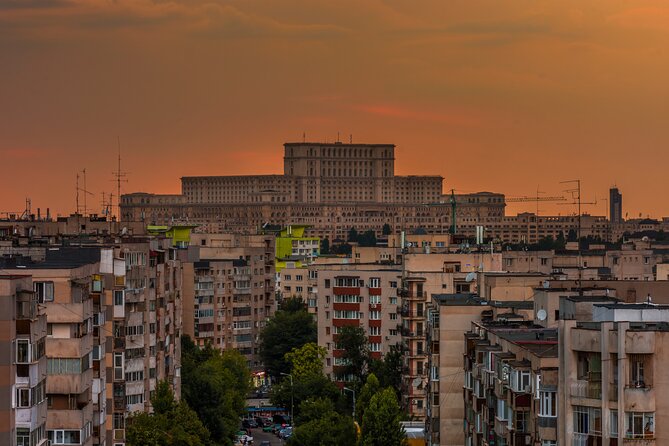
- Palace of the Parliament: the megastructure behind the shortages
- Mihai Voda Monastery: where communist pressure met survival
- Revolution Square: the regime begins, then collapses
- University Square: where protests turned deadly
- Private guide energy: how Laura and Tamar make it work
- Timing and walking comfort for a 4:00 pm start
- How much it costs, and what you really get for $23.22
- Who should book this tour
- Should you book Bucharest Under Communism: Life, Terror & Hope?
- FAQ
- How long is the Bucharest Under Communism walking tour?
- Where does the tour start and end?
- What’s the meeting point area like?
- Is admission included for all stops?
- How many people are in the group?
- Is the ticket mobile?
- What if the weather is bad?
Key things I’d circle before you go
- A 3.5-hour walking route that hits the main communist-era sights without feeling like a bus tour
- Private guiding with real backstory, shared in an engaging way (and yes, with humor)
- Unirii Square and Victory of Socialism Boulevard as the propaganda-stage you can actually stroll
- Revolution Square and the balcony finale, where the regime’s last days played out
- Mihai Voda Monastery tucked behind communist construction, a quiet contrast to the loud streets
- Maximum 15 people, which makes questions easier and the pace more human
More of communist-era Bucharest:
- Bucharest: Communism and History Guided City Walking Tour★ 4.9 · 918 reviews
- The Real tour of Communism★ 5.0 · 666 reviews
- Life under Communism★ 5.0 · 358 reviews
- 3-Hour Guided Tour of Communist Bucharest★ 4.9 · 303 reviews
Walking Bucharest’s communist story, step by step
This isn’t a vague lecture. It’s a focused walking tour through Bucharest’s communist-era DNA, built around one simple goal: show you how politics shaped everyday space and daily life.
You start in central Bucharest at Piaţa Sfântul Anton 64 and end at Revolution Square. The whole thing takes about 3 hours 30 minutes, with multiple stops timed so you can look, listen, and connect the dots. The tour also runs with a mobile ticket, and it stays small, with a maximum of 15 travelers, which helps a lot when you have questions.
The best part, in my view, is that the tour doesn’t just list places. It explains why each place exists and what it meant to the people living next to it. That approach matters in a city where some architecture is meant to overwhelm, and other buildings were meant to hide what the regime didn’t control.
Unirii Square and Victory of Socialism Boulevard: propaganda you can walk
Your first big moment is Unirii Square (Piaţa Unirii). This square was designed during the last phase of communism in Romania, and you can feel that design logic in the open layout. There are splendid fountains, and the space is crossed by what used to be called Victory of Socialism Boulevard.
I like this stop because it gives you a baseline for everything that comes later. You learn to read the city like a message: wide avenues for spectacle, large public squares for official gatherings, and carefully designed views meant to signal that the system is permanent.
Practical note: you’ll spend about 30 minutes here, and it’s more about seeing and understanding than rushing from point to point. If you’re the type who takes photos while learning, this is a good place to slow down for a moment and look across the boulevard lines.
Palace of the Parliament: the megastructure behind the shortages
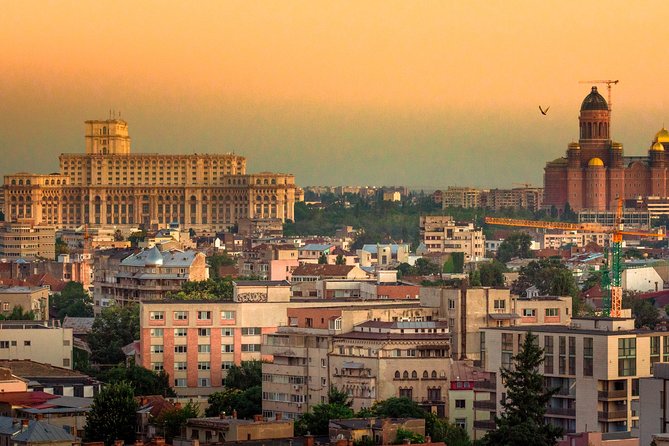
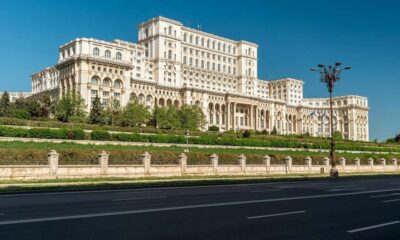
Next is the Palace of the Parliament, the kind of building that makes you do a double take even if you’ve seen photos before. The tour frames it with two key ideas: its sheer scale and the human cost behind that scale.
You’ll hear that it is the second largest building in the world after the Pentagon, and that it is also the most expensive administrative building. But the story the guide focuses on is not just numbers. It connects the building process to the reality of the 1980s, including shortages of all kinds forced onto Romanian people.
From a visitor perspective, that context changes how you read the palace. From the outside, it can look like pure architecture. With the political background, you start seeing it as a project of control, where labor and materials were pulled into a monument meant to dwarf everything around it.
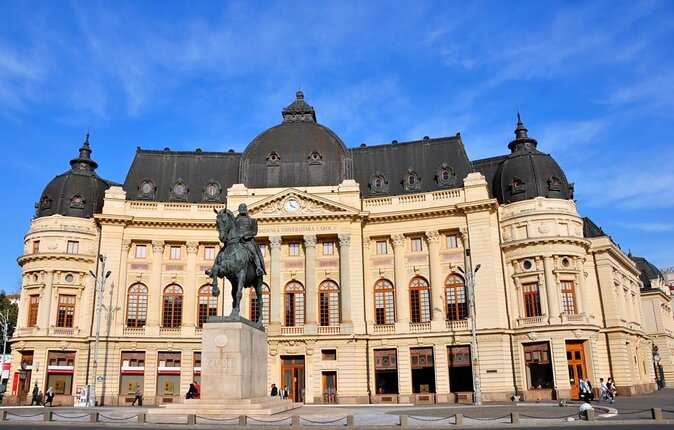
The tour also points out how the palace’s surroundings were shaped by the regime’s lifestyle fantasies. You’ll notice Academia Română, built in a similar style, and you’ll hear that it was intended for use by Elena Ceaușescu.
Time and cost reality check: this stop takes about 1 hour, and the admission ticket is not included. That doesn’t make the tour less valuable. It just means you should plan extra money and expect the palace visit to be the logistics-heavy part of your walk.
Other Bucharest days worth the drive
Mihai Voda Monastery: where communist pressure met survival
After the palace, the tour pivots to something quieter: Mihai Voda Monastery. This is where Bucharest’s communist story adds an uncomfortable contrast.
You’ll learn that the communist period brought a mix of destruction and saving when it came to churches. Some places of worship were demolished, while others survived in surprising ways. Mihai Voda Church is described as a medieval religious site, and it survived the demolition frenzy that hit parts of Bucharest.
I like this stop because it gives you a feel for how religion and public life collided under the system. You’ll also notice the way some churches sit hidden behind utilitarian buildings, which is a visual reminder of how the communist party treated religion, even when the doors stayed open.
This part is also light on money: the stop runs about 30 minutes, and admission ticket is free. It’s a good change of pace if your head is getting overloaded from the palace scale.
Revolution Square: the regime begins, then collapses
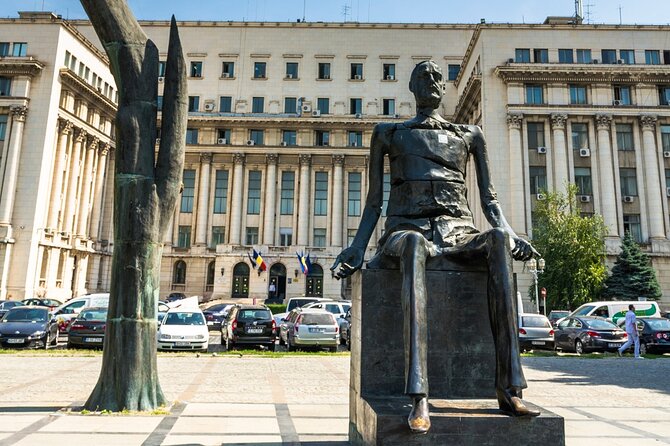
Then comes one of the most dramatic parts of the route, Revolution Square (Piaţa Revoluţiei). This is the spot where the communist regime is described as beginning, and where it later ends with people’s protests in 1989.
Here, you’re not just learning names and dates. You’re looking at locations connected to the turning points of the Romanian Revolution. The guide points you toward the building that housed Ceausescu’s office, the balcony where the dictator gave his last speech, and the places that saw the first mass demonstration in Bucharest.
What I found useful is that the tour connects those moments to what happened to demonstrators after the protests began. You learn about the monument dedicated to them and what followed after the revolution.
This stop lasts about 1 hour, and it’s free of admission. If you want a personal tip, it’s this: stand where the guide tells you to stand, then look at the surrounding buildings for the direction lines and sightlines. The square feels different when you understand it as a stage rather than just open space.
University Square: where protests turned deadly
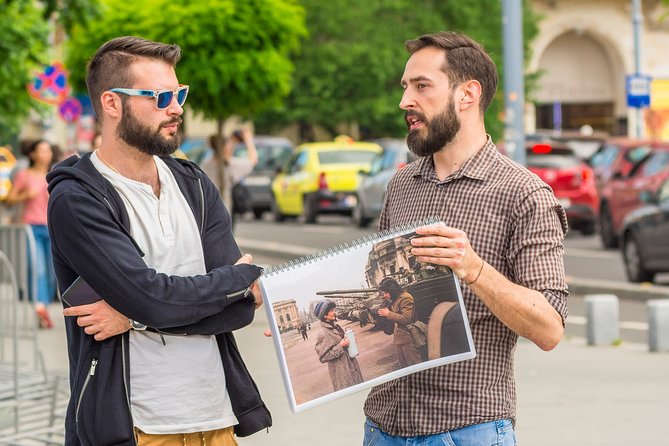
The final stop is University Square (Universităţii), where the tour describes the main protests against communism taking place in 1989. This is also where the guide explains the tragic outcome, including that hundreds were massacred for their belief in a free society.
This isn’t the kind of place where you need to force yourself to feel something. It’s more about letting the space carry the weight. Even if you come in skeptical about political tours, you’ll likely sense how these public squares become permanent memory boxes for a country.
Timing is about 30 minutes here, and the tour notes that admission is included for this stop. That’s helpful if you’d rather not keep track of extra tickets while you’re already in a dense area of major sites.
Private guide energy: how Laura and Tamar make it work
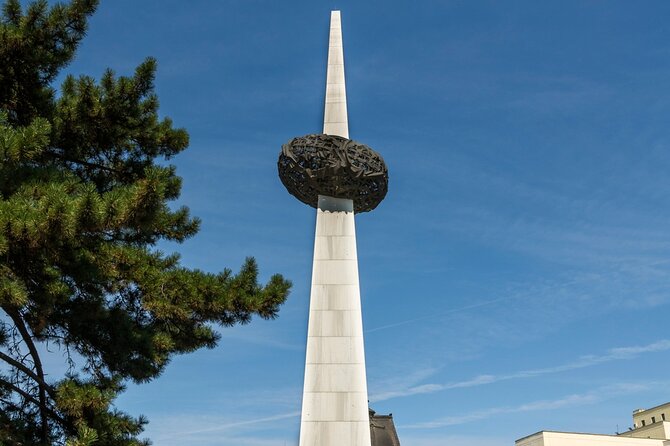
A history topic can go two ways on a tour like this: dry facts, or a story you can follow. The reason this one gets such strong ratings is how the guides handle the balance.
People point out that guides such as Laura and Tamar are energetic and strongly prepared. The common thread in the feedback is that the guide keeps you engaged while staying serious about the topic. They also answer questions, including follow-ups, without making you feel like you’re derailing the group.
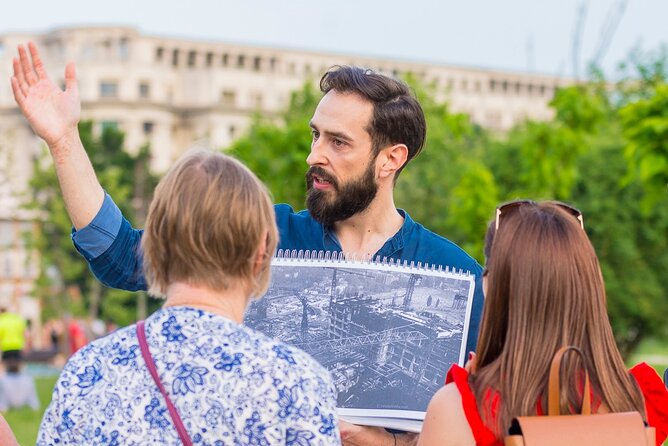
You’ll also see how photos are used. In the notes from prior participants, guides are described as sharing historical photos to help connect what you’re seeing now to what Bucharest looked like under communism.
That’s not just entertainment. It’s a practical learning tool. When you can compare then and now, you stop treating communist-era Bucharest as a museum and start seeing it as a living city where those choices still shape views, streets, and public space.
Timing and walking comfort for a 4:00 pm start
The tour starts at 4:00 pm. For many people, late afternoon is ideal for Bucharest because you get softer light for photos, and you’re not stuck in the heat of midday.
It’s also a walking tour with multiple landmark stops, so wear shoes you can trust for uneven sidewalks and time spent standing around squares. You’ll be on your feet for long enough that comfort matters.
One more reality check: the tour is described as requiring good weather. If it’s canceled due to poor weather, you’ll be offered a different date or a full refund. Since you end in the Revolution Square area, it’s also handy to know that it’s about 5 minutes away from the Old Town, so you can naturally keep exploring after the tour without feeling stranded.
How much it costs, and what you really get for $23.22
At $23.22 per person, this is priced like a solid guided introduction to Bucharest’s communist core rather than a premium museum day.
Here’s why that cost can feel fair:
- You get a guided route across five significant sites, including major public spaces and a major architectural landmark.
- The group limit (maximum of 15) and private guiding style make it feel more interactive than the big-coach approach.
- Several stops are free admission, so the main added cost risk is mainly the Palace of the Parliament, where admission is not included.
Your best value move is to treat the palace ticket as an expected extra, then mentally separate the tour fee from the palace entry. That way, you don’t feel surprised when you reach the one stop that costs more.
Also, because the tour is built around interpreting the city, you can save yourself time that you’d otherwise spend trying to understand what you’re looking at on your own. That time has value too.
Who should book this tour
This is a great fit if you want:
- A first-time visitor’s route through the most important communist-era landmarks in Bucharest
- A guide who explains the political story in clear, human terms, not just dates
- A walking pace that still gives you time to look closely at squares and architecture
It may not be your best choice if you strongly dislike political history. The tour is about dictatorship, propaganda, and the revolution that followed, so the mood is serious, even when the guide keeps it approachable.
If you like mixing architecture with context, you’ll probably enjoy it a lot. The palace stop is the big visual draw, but Mihai Voda Monastery and the squares are what help you understand what the regime changed, and what people fought to undo.
Should you book Bucharest Under Communism: Life, Terror & Hope?
I’d book this tour if you want a structured way to understand communism in Bucharest without getting lost in Wikipedia-style fragments. The highlights are well chosen, the route is manageable, and the guide quality seems to be the real differentiator, with Laura and Tamar repeatedly singled out for staying clear, answering questions, and sharing supportive visuals.
Just go in prepared for one thing: the Palace of the Parliament stop needs extra planning because admission is not included there. If you budget for that and wear comfortable shoes, you’ll come away with a far sharper sense of how Bucharest looks the way it does today, because of decisions made under communist rule.
If you’re spending only a short amount of time in the city, this is also an efficient way to cover the key sites tied to Ceaușescu’s era and the 1989 revolution in one evening.
FAQ
How long is the Bucharest Under Communism walking tour?
It lasts about 3 hours 30 minutes.
Where does the tour start and end?
It starts at Piaţa Sfântul Anton 64, București 030167, Romania, and it ends in Revolution Square (Piața Revoluției), București, Romania.
What’s the meeting point area like?
The start point is in central Bucharest, and it is near public transportation.
Is admission included for all stops?
Admission is free for some stops, and not included for the Palace of the Parliament. Admission is included for the University Square stop. Other stops are listed as free.
How many people are in the group?
The tour has a maximum of 15 travelers.
Is the ticket mobile?
Yes, it is described as having a mobile ticket.
What if the weather is bad?
This experience requires good weather. If it’s canceled due to poor weather, you’ll be offered a different date or a full refund. Free cancellation is available up to 24 hours in advance for a full refund.
Newest Bucharest write-ups
- Half Day Tour in Bucharest
★ 5.0 · 1 review - Private transfer to BRASOV
★ 5.0 · 1 review - Bucharest Private Custom Walking Tour with Guide (Private Tour)
★ 5.0 · 1 review - Bucharest: Capture the most Photogenic Spots with a Local
★ 5.0 · 1 review - Uncover Transylvania: Private 2-Day Tour Bears & Medieval Wonders
★ 5.0 · 1 review - Transfer Bucharest to Constanta / Mamaia
★ 5.0 · 1 review - 8 Days – Transylvanian Delights-Guaranteed departures
★ 5.0 · 1 review
Communist-Era Tours, compared.

Parliament, Ceausescu House & Village Museum Tour
Read our review →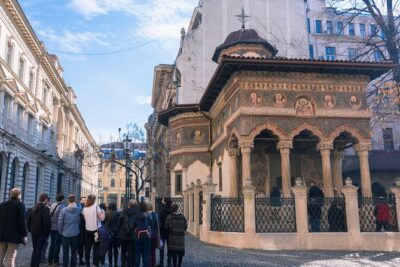
Bucharest Essential Tour: Old Town, Calea Victoriei & Communism
Read our review →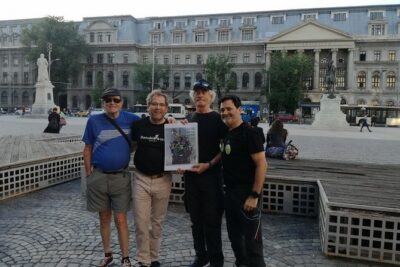
Communism in Bucharest – Landmarks, Museum & Communist Appetizers
Read our review →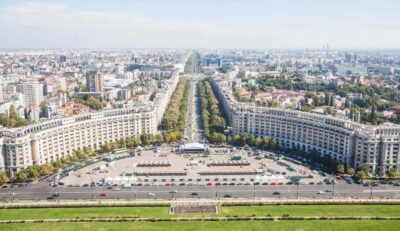
Palace of Parliament, Ceausescu House & Village Museum
Read our review →Browse the lists this tour appears in