
Reviewed · CITY TOURS
CJ01 – Explore Cluj-Napoca: A Vibrant City Tour in English
Cluj-Napoca feels like a shortcut to the past. I love the clear English guidance and how the walk hits both architecture and green space, including St. Michael’s Church and the botanical garden. The only drawback is time, you cover a lot in 2 hours, so you will not linger long inside every stop.
You start at the Carolina Obelisk, which makes it easy to picture where everything sits in the city. Then you move through the medieval core, square by square, and end with culture and nature in the same loop.
If you want a slow, deep museum day, this is not that. But if you want to get your bearings fast and leave with a mental map, this tour does exactly that.
In This Review
- Key takeaways before you go
- Why this 2-hour Cluj-Napoca walk is a smart first move
- Starting at Carolina Obelisk, then getting your bearings fast
- St. Michael’s Church and why Cluj’s religious architecture matters
- Union Square, Matthias Corvinus statues, and birth-house stories
- Central Park and Chios Park, the break that improves the whole day
- Piața Muzeului and Bánffy Palace’s Baroque drama
- The Cluj-Napoca Botanical Garden, one of Europe’s oldest collections
- Transylvanian Museum of Ethnography, objects that explain daily life
- English guide quality that you can feel in the details
- Price and value: is $88 for a 2-hour tour worth it?
- Practical notes that keep your walk comfortable
- Should you book Explore Cluj-Napoca in English?
- FAQ
- Where does the tour start and when is it scheduled?
- How long is Explore Cluj-Napoca?
- What language is the tour in?
- What are the main sights included?
- What should I bring for the walking tour?
- Is free cancellation available?
Key takeaways before you go
- English city guide you can actually follow, with practical context as you walk
- St. Michael’s Church and other religious landmarks to understand Cluj’s layered cultures
- Matthias Corvinus connection through Union Square and the birth-house area
- Parks included for a breather, not just stone monuments
- Botanical Garden stop with one of the city’s most satisfying slow moments
- Ethnography museum visit to ground the history in everyday life and objects
More City Sightseeing in Cluj-Napoca
- Cluj-Napoca Walking City Tour★ 4.5 · 16 reviews
- Corvin Castle and Sibiu Fortified City day tour from Cluj★ 5.0 · 7 reviews
- Cluj-Napoca Walking City Tour★ 5.0 · 5 reviews
- Cluj: Private City Walking Tour★ 4.4 · 4 reviews
Why this 2-hour Cluj-Napoca walk is a smart first move
A good city tour should do two things. First, it should show you where the big sights sit. Second, it should explain what you are looking at so you do not spend the rest of your trip guessing.
This one nails the second part because the guide keeps tying architecture, public squares, and local culture together as you move. You get a fast overview of what Cluj looks like now, and why it looks that way. And because the pace is built around a walk, you naturally learn the spacing between landmarks, which helps later when you return on your own.
You also get variety in a short window. Church, squares, parks, Baroque architecture, a botanical collection, and ethnography artifacts. That mix matters if your days are crowded and you want one outing that covers several interests without feeling like a marathon.
Starting at Carolina Obelisk, then getting your bearings fast
The meet point is the Obeliscul Carolina, near the center of Cluj-Napoca. Showing up here matters more than it sounds. When you start from a clear landmark, you are not relying on memory for direction while the city is still unfamiliar.
Right away, your guide sets the route into perspective. You walk out into the areas that define Cluj’s city center, then you slide from stone streets into parks and back again. By the time you reach the green spaces, you will already understand the “shape” of the walk, so you are not just collecting photos, you are collecting orientation.
If you like to map your day in your head, this start makes that easy. You can glance around at the buildings and street layout and connect it to the next stop.
St. Michael’s Church and why Cluj’s religious architecture matters
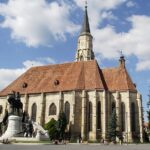
St. Michael’s Church is the kind of landmark that stops you even if you do not consider yourself a church person. It is Gothic, and it is also one of Romania’s largest churches. That scale changes how you experience it, inside and out, even if you only see it from street level as part of the walking flow.
More important than size is context. Your guide points out how this religious space fits into Cluj’s story, and it is not just about a building. It is about the cultures that shaped the city and what people prioritized. One guide on the tour, Attila, was especially praised for connecting church visits to the history of different cultures in Cluj. That approach helps you look beyond the walls.
Practical tip: bring your camera, but also pause your shooting. Look up, then look back at the façade details. Gothic churches often reward slow attention, and you do not want to miss the small structural cues while you are rushing for your next photo.
More City Sightseeing in Cluj Napoca:
Union Square, Matthias Corvinus statues, and birth-house stories
Once you reach Union Square, you get the medieval center feeling immediately. This is where Cluj’s public life concentrates, with major landmarks and museum energy around you.
At Union Square, you will see the Matthias Corvinus statue and the National History Museum area. It is a strong moment because it puts a face to the historical name. You are not reading about Matthias Corvinus in the abstract. You are standing in the city-space where memory is expressed in stone and bronze.
The tour also connects you to the birth houses of Mathias Corvinus. That detail is a gift for first-time visitors. It turns a famous historical figure into something local. Instead of treating the past as distant, you can trace it onto real addresses and real neighborhoods.
A small caution: because the time is compact, you will cover multiple points without long pauses at each. If you want to photograph and read every plaque, you will have to accept that the tour is giving you the big picture, not a museum-style crawl.
Central Park and Chios Park, the break that improves the whole day
Not every city tour includes parks. This one does, and that choice pays off.
Central Park gives you a short, relaxing stroll through one of the city’s most beautiful green spaces. Even if you do not plan to sit down, the walk through greenery helps reset your brain after church and squares. You will notice how the city feels different when you are surrounded by trees and open space, and you also get a better sense of pedestrian scale.
Then you continue to Chios Park, a quieter part of the city that many people do not hit on quick itineraries. Urban planning feels more visible here, because you see how the city makes room for calm inside the built environment. That contrast is useful. It makes your Cluj map feel three-dimensional, not flat.
If you get overheated easily or you just like shade, this park portion is a relief. Wear comfortable shoes and you will enjoy the pacing more.
Piața Muzeului and Bánffy Palace’s Baroque drama
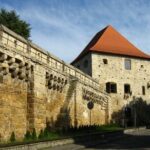
Piața Muzeului is where the architecture steps up. You get to see Bánffy Palace, a Baroque architectural gem. Baroque details often look like they are meant for close viewing, with curves, ornament, and dramatic shapes that feel almost theatrical.
This stop is valuable because it changes your eyes. After Gothic forms and the more civic feel of squares, Baroque architecture can feel like a different language. Your guide helps translate what you are seeing, so you can recognize the style cues rather than just admiring them casually.
If the sky is bright, afternoon light can help with façade textures. If it is overcast, you will still get a clear view because the palace design holds up without relying on sun glare.
The Cluj-Napoca Botanical Garden, one of Europe’s oldest collections
The Cluj-Napoca Botanical Garden is one of the tour highlights, and it is a satisfying shift from built landmarks to living collections. The garden is known as one of Europe’s oldest and most diverse. That matters, because you are not just walking through a park. You are stepping into a curated scientific and cultural space.
In the short time you have, you will likely focus more on atmosphere and standout plants than on reading every label. Still, even a brief visit can teach you something. Botanical gardens tend to show how a city thinks about care, research, and long-term cultivation. That theme mirrors the other stops on the tour, where Cluj’s identity shows up through institutions, not just buildings.
Practical tip: if you want photos, bring an extra moment for framing. Paths often create layered views, and the contrast between greenery and historic stone elements around the city can look especially good once you have context from earlier stops.
Transylvanian Museum of Ethnography, objects that explain daily life
The Transylvanian Museum of Ethnography adds grounding at the end of the story. Architecture and statues explain power and style. Ethnography explains people.
You will see traditional artifacts tied to Transylvanian cultural history. This is the point where the city tour stops being only about monuments and becomes about how culture lived. Even if you only get a limited look during a compact walking route, the museum visit helps you connect what you have learned to everyday traditions, materials, and regional identity.
This is also a good way to balance out your own travel pace. If your day has included mostly outdoor sights, museum time gives you a chance to slow down, sit with information, and absorb.
One caution to keep expectations right: because the overall tour is 2 hours, you should not plan on a thorough museum level visit. Think of it as a guided introduction that helps you decide if you want to return later for longer time.
English guide quality that you can feel in the details
One of the strongest signals from the guides’ performance is how smoothly the tour runs in English. In past tours, guides like Adrian and Attila were praised for clear explanations of history and architecture and for being friendly and approachable.
What that means for you is simple. You will not just see landmarks. You will understand why each one fits into the city’s larger story. And because you are on foot, the guide can point out features you might otherwise miss, like where styles shift across buildings or how public squares function as meeting points across eras.
You also receive a map with Romania. That is useful after the tour, when you are planning where to go next. Use it to mark what you liked most, then come back for deeper visits on your own time.
If you want to maximize the value, ask questions at natural pauses. Good moments are when you are standing still in front of major landmarks. The guide can answer in context, not in theory.
Price and value: is $88 for a 2-hour tour worth it?
At $88 per person for a 2-hour English walking tour, the price is not low. So you should ask what you are buying.
You are paying for a specialized English-speaking guide, a guided route that strings together multiple sights into a coherent story, and a map. You are also paying for reduced decision fatigue. Instead of spending time building an itinerary from scratch, you get a planned sequence that makes sense geographically and thematically.
Where the value really shows is if it is your first time in Cluj-Napoca or if you have limited time. In that case, the tour gives you the “what to see next” knowledge. That can save you money later, because you avoid backtracking across the city for the wrong places.
If you already know Cluj well and you are mostly interested in one or two specific stops, you might prefer to go independently. But for most first-time visitors, especially those who want a mix of architecture, culture, and one nature break, this pricing is easier to justify.
Practical notes that keep your walk comfortable
This is a walking city experience, so comfortable clothes and shoes matter. Bring your passport or ID card, and bring a camera if you want to capture church details, palace façades, park paths, and garden views.
The tour is available daily, and the start time is 09:30 AM, with the meeting at Obeliscul Carolina. Because it is only 2 hours, you should plan your day around this timing. Do not schedule a tight connection right after, and give yourself some buffer.
A couple rules are listed too. Alcohol and drugs are not allowed. Also, the tour is not suitable for people over 95 years, so if that affects you, look for a more flexible option.
If you get cold easily, consider a light layer. City parks and morning shade can feel cooler than you expect, especially in the early start.
Should you book Explore Cluj-Napoca in English?
I think you should book it if you want a fast, guided introduction to Cluj-Napoca that covers the center, key historical touchpoints, and a nature break without eating your whole day. It is especially good for first-timers who want to understand what they are looking at, not just collect photos.
You might skip it if you want extended time inside major sites, or if you prefer planning your own route without guide explanations. This tour is designed to move. It gives you the framework, then you decide what to revisit later.
If you do book, go in with one mindset: let the guide help you connect the dots. When you do, the tour becomes more than a list of stops. It becomes a clear way to understand Cluj’s past, present, and cultural identity in a single, manageable afternoon.
FAQ
Where does the tour start and when is it scheduled?
The meeting point is Obeliscul Carolina at 09:30 AM.
How long is Explore Cluj-Napoca?
The duration is 2 hours.
What language is the tour in?
The tour is guided in English.
What are the main sights included?
You’ll visit St. Michael’s Church, Union Square and Matthias Corvinus-related birth houses, Cluj-Napoca Botanical Garden, plus stops such as Central Park, Chios Park, Piața Muzeului with Bánffy Palace, and the Transylvanian Museum of Ethnography.
What should I bring for the walking tour?
Bring your passport or ID card, comfortable shoes, a camera, and comfortable clothes.
Is free cancellation available?
Yes, you can cancel up to 24 hours in advance for a full refund.
Newest Cluj Napoca write-ups
- Transylvania’s Trail: Sibiu, Bran Castle, Brasov and Sighisoara
★ 5.0 · 1 review - Via Ferrata Transylvania
★ 5.0 · 1 review - Sibiu and wine tasting, day tour from Cluj
★ 5.0 · 2 reviews - Cluj Insight: Walking tour with a travel writer & historian
★ 5.0 · 2 reviews - 3-Day Halloween Tour in Transylvania from Cluj-Napoca
★ 5.0 · 2 reviews - Private city tour in Cluj-Napoca
★ 5.0 · 2 reviews - Discover Corvin Castle in Hunedoara and Deva Fortress
★ 5.0 · 2 reviews
City Tours, compared.
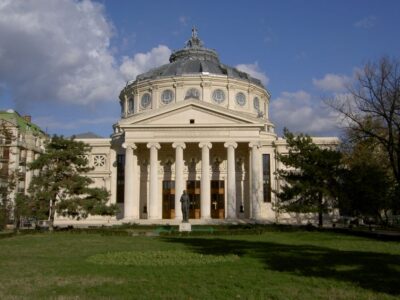


Bucharest Panoramic Sightseeing – Private City Tour
Read our review →
SB01 – City Tour Sibiu: Exploring the Heart of Transylvania
Read our review →Browse the lists this tour appears in