
Reviewed · WALKING TOURS
Cluj – walking city tour
Cluj’s streets make more sense after a guided loop through the Old Town. This 2-hour walking city tour focuses on classic central landmarks and the stories behind them, with a licensed English/French-speaking guide who can answer questions as you go. I like that it’s small group sized up to 15, so you can actually hear details and ask follow-ups.
You start at Piața Muzeului and work through a smart mix of medieval churches, civic history, and defensive-era remnants. The route is built for orientation too, so you leave knowing where key sights sit and how the city developed. A big perk is that many stops are free to view, which keeps your time and budget under control.
One thing to consider: this is a short tour built around exterior viewing and free entry points, and interior ticketed sights are not part of the preview. If your dream day is long museum time or lots of paid interiors, you may find the schedule a bit tight.
In This Review
- Key highlights worth showing up for
- Cluj-Napoca Old Town, explained at walking speed
- Price, 28.94 per person, and what it covers
- Meeting at Piața Muzeului, then letting the guide lead
- Stop by stop: what you’ll see and why it matters
- Museum Square (Piața Muzeului): the oldest stage in town
- Matia Corvin House: the oldest civilian building
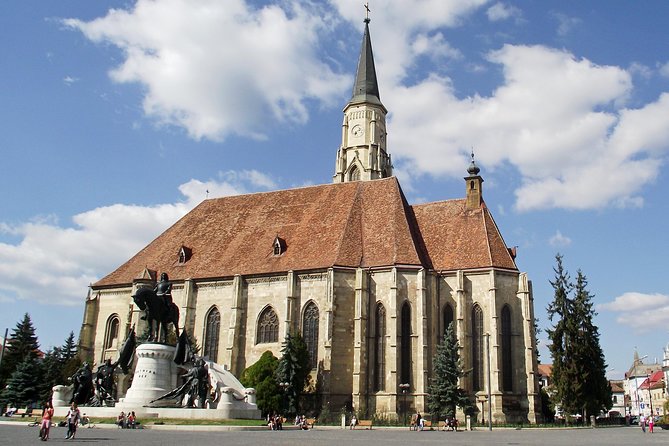
- St Michael’s Catholic Church: big medieval scale
- The first Baroque in modern Romania: Piaristă Treime
- City Walls and hidden streets: 15th-century defenses
- Babeș-Bolyai University area: learning institutions as city anchors
- Reformed Church: organ concerts and coat of arms history
- Turnul Croitorilor: a rare guild-linked defense tower
- Avram Iancu Square: where late-19th-century Cluj flexed
- Finish at the Dormition Orthodox Cathedral
- What I think works best for different travelers
- A practical checklist before you book
- Should you book the Cluj walking tour?
Key highlights worth showing up for
- Carolina Obelisk start at Piața Muzeului, the oldest city square
- St Michael’s Catholic Church and the City Walls for medieval-scale Cluj
- Piaristă Treime church, noted as the first Baroque church built in what is now Romania
- Turnul Croitorilor, a rare preserved defense tower linked to guild life
- Reformed Church stop, tied to organ concerts and an impressive coat of arms collection
- Flexible ending at the Orthodox Metropolitan Cathedral, so you can adjust the finish
More City Sightseeing in Cluj-Napoca
- Cluj-Napoca Walking City Tour★ 4.5 · 16 reviews
- Corvin Castle and Sibiu Fortified City day tour from Cluj★ 5.0 · 7 reviews
- Cluj-Napoca Walking City Tour★ 5.0 · 5 reviews
- CJ01 – Explore Cluj-Napoca: A Vibrant City Tour in English★ 5.0 · 4 reviews
Cluj-Napoca Old Town, explained at walking speed
Cluj-Napoca can feel like a normal Central European university city until someone connects the dots for you. This tour does that fast. You walk the core streets and squares, then the guide fills in what each place meant in its moment, from medieval power to later city growth.
For me, the best walking tours are the ones that help you stop guessing. Here, the pacing makes sense for first-time visitors: you hit major landmarks without feeling like you’re sprinting, and the group size stays small enough to keep the conversation going.
The tour runs about 2 hours, starting at 10:00 am. If you’re the type who likes to keep your afternoon open for coffee, photos, or a museum you pick yourself, this format fits well.
Price, 28.94 per person, and what it covers
The price is $28.94 per person, typically booked about 10 days in advance. That matters because it’s not a last-minute-only deal, so planning ahead can give you more date options.
What you get for the money is straightforward: a professional English/French-speaking guide plus the experience brokerage fee. You also get a mobile ticket, which makes check-in simple if you prefer everything on your phone.
Here’s the value angle: many of the stops are free to see, so you are not paying again every 10 minutes. The one notable exception in the itinerary is the Memorial Matia Corvin House, which is listed as not included. If you’re happy to treat this tour as an orientation and storytelling route, the cost feels fair.
Meeting at Piața Muzeului, then letting the guide lead
You meet at Carolina Obelisk, Piața Muzeului 2. It’s an easy anchor point because you’re starting right in the oldest-squares zone, with room to gather before you begin walking.
Because the tour ends at the Orthodox Cathedral in Avram Iancu Square by default but can be adjusted, you can match your finish to your next plan. Want to keep exploring the area? You can. Prefer to stop earlier and get lunch somewhere near your hotel? You can.
Also, the tour requires good weather. If it’s a wet day, expect the operator to shift to another date or offer a refund. In other words, don’t plan this as the one activity you refuse to reschedule.
More Guided Walks in Cluj-Napoca
Stop by stop: what you’ll see and why it matters
Museum Square (Piața Muzeului): the oldest stage in town
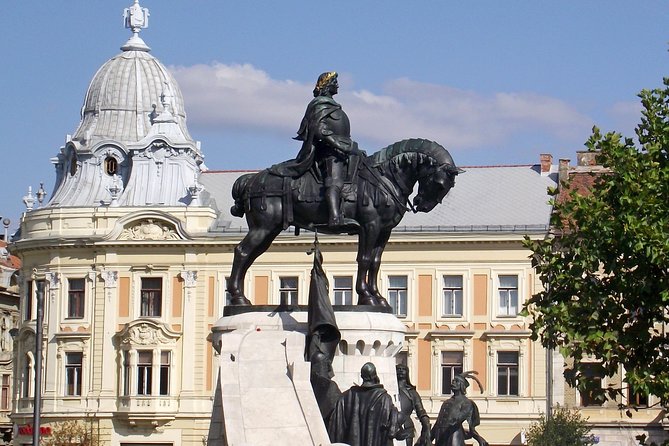
The tour begins at Museum Square, where you’ll see the Franciscan church and the Carolina Obelisk. This is the kind of start that works because squares are where cities show their priorities, and this one sets the tone for the rest of the walk.
You’ll have around 20 minutes here. That’s enough time to look up at the church details and get a feel for the square’s layout, without dragging on like a museum visit.
Practical note: because it’s a square, this is a good spot to take wide photos before you move into narrower streets.
Matia Corvin House: the oldest civilian building
Next comes the Memorial Matia Corvin House, about 15 minutes. This stop is about civic history, not just religion. You’ll learn about one of the greatest kings Hungary ever had, and the focus is the building itself as the oldest civilian structure in Cluj.
The catch is cost: admission is not included for this specific stop. If you don’t want to pay extra, you can still use the guide’s context to understand what you’re looking at from outside. If you do want the interior, check on ticketing details so you’re not surprised later.
This is a great example of the tour’s style: it doesn’t just point at famous names, it explains why they mattered in daily city life.
St Michael’s Catholic Church: big medieval scale
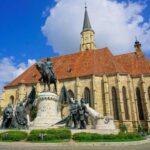
From there, you head to Catedrala Sfantul Mihail for about 20 minutes, with free admission listed. The church is described as one of the biggest medieval churches in Transylvania, and that size shows. Even if you’re not a church-detail fanatic, the scale helps you understand why Cluj was important enough to support impressive architecture.
This is a good stop for questions. Ask how the architecture reflects the period, or what the guide thinks people usually miss when they only glance at the façade.
If you’re short on time in Cluj later, this church alone can give you a lot of “aha” moments about the region.
The first Baroque in modern Romania: Piaristă Treime
Then it’s the Biserica Romano-Catolică Sfânta Treime Cluj-Napoca (Piaristă) for around 10 minutes. This is listed as the first Baroque church to be built in what is now Romania.
That label is useful. It tells you this is not just another church stop. Baroque buildings often signal changing tastes and changing power, so it’s worth paying attention to how the style feels different from the medieval church you just saw.
Because time is shorter here, plan to do quick visual comparisons: materials, shapes, ornament style, and how the space is meant to feel.
City Walls and hidden streets: 15th-century defenses
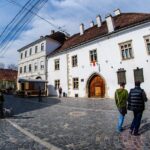
After the church circuit, you move into a more street-level, medieval-defense zone: the City Walls of Cluj. You’ll walk along narrow streets and view the 15th-century walls for about 15 minutes.
This section is one of the tour’s best “walk-and-look” stretches. You’re not just standing at one monument. You’re getting a sense of how fortifications shaped the city’s layout and why some streets feel tucked away.
If you enjoy street texture and “how did people move here” thinking, this is where the tour starts feeling more personal and less like a checklist.
Babeș-Bolyai University area: learning institutions as city anchors
Next is a brief stop by Universitatea Babeș-Bolyai din Cluj-Napoca, around 5 minutes. The tour frames it as the headquarters of the second most important university in Romania and notes it dates back more than 100 years.
Even in a short time, the value is the context. Universities often act like permanent landmarks: they influence neighborhoods, architecture, and daily traffic. You’ll leave with a better sense for why the city’s center has this mix of historic and academic energy.
Reformed Church: organ concerts and coat of arms history
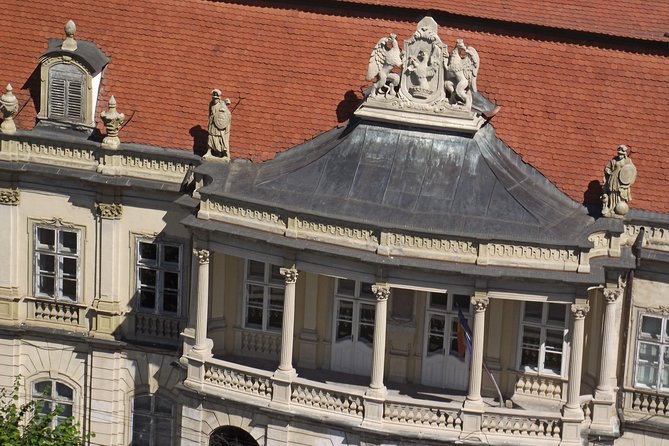
The tour then visits the Reformed Church for about 10 minutes. This 15th-century church is associated with organ concerts, and you’ll also see one of the biggest coat of arms collections in this part of Europe.
This is a neat pairing, because it links culture to identity. Coats of arms are basically visual records of belonging, family, and civic pride. If you’re into symbols, this stop can be surprisingly satisfying.
Time is limited here, so if you want to focus on the organ-concert angle or on the coat of arms details, tell your guide so the viewing order fits your interests.
Turnul Croitorilor: a rare guild-linked defense tower
Next is Turnul Croitorilor, the defense tower preserved from medieval fortifications, with a 5-minute stop. The big story here is the importance of guilds in the development of the city.
This is one of those moments where the guide’s voice matters. A tower can be a tower if you only look at stone. But if you understand it in a guild economy and a defense system, it becomes much more meaningful.
It’s quick, but memorable for the way it connects “who built and maintained the city” to “how the city protected itself.”
Avram Iancu Square: where late-19th-century Cluj flexed
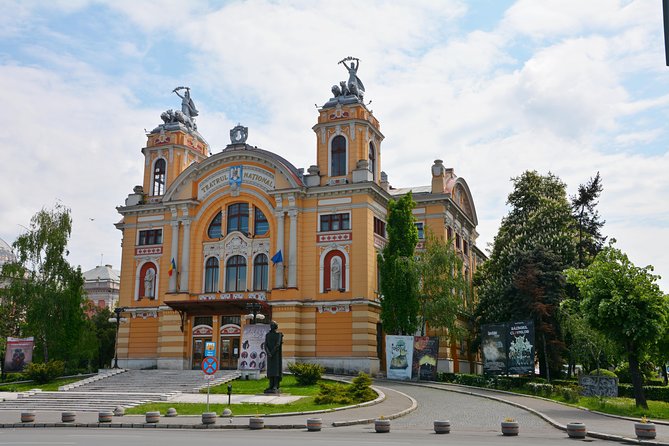
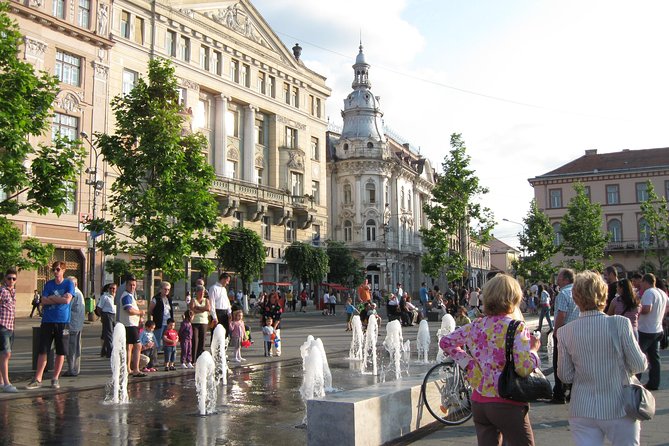
The itinerary includes a visit to Avram Iancu Square, where many buildings, including the National Theatre, were built starting at the end of the 19th century.
This stop adds a later historical layer. You shift from medieval and Baroque-era landmarks to the city’s modernization phase, when Cluj’s image and public buildings took on a more monumental feel.
If you like architecture transitions, pay attention to how this area reads compared to the earlier stops: shapes, proportions, and what the streets were built to project.
Finish at the Dormition Orthodox Cathedral
Your tour ends at the Metropolitan Cathedral, Dormition of the Mother of God for about 15 minutes, with free admission listed. The focus is the interior decoration of an Orthodox church.
Even with a short time, this finish works because it changes the religious and artistic “color” of your walk. It also gives you a strong visual payoff after all the church exteriors earlier.
The tour notes that the endpoint is flexible. Normally you finish here, but you can decide together with the guide where to end based on your plans.
What I think works best for different travelers
If you’re visiting Cluj for the first time, this tour is an efficient way to learn the city’s main structure. You’ll get a coherent arc: old square, key buildings, defensive walls, institutional landmarks, then later civic growth.
It also suits you if you like guided context over solo wandering. The itinerary is tight, and the guide can answer questions in real time, which helps you remember more than you would from photos alone.
If you’re traveling with someone who gets bored by long museum time, the walking format is a relief. At the same time, it’s not designed to be a long hike, just a central-city stroll with stops.
And if you care about personal tailoring, pay attention to the customization angle. One guide named Joseph is mentioned as rerouting based on group background, including when he learned the group was of Jewish descent. That’s the kind of flexibility that can make the tour feel less scripted.
A practical checklist before you book
Here’s what you should plan for, based on how the tour is structured.
- Expect mostly short stops, generally 5 to 20 minutes, so bring curiosity, not a need for long sit-down time.
- Wear comfortable shoes, because you’re walking through narrow streets around historic walls.
- If you want to step inside places, remember that only free admission is listed for most stops, and at least one listed stop is not included.
- Bring a phone for your mobile ticket and maps as a backup.
As for group size, with a maximum of 15, you should still be able to ask questions without shouting, even if you’re not a talkative person.
Should you book the Cluj walking tour?
I’d book this tour if you want an organized first view of Cluj-Napoca, especially the Old Town and its religious and medieval-era landmarks. The combination of short stops, small group size, and a guide who can tailor the route makes it a strong “get your bearings fast” option.
Skip it if your top priority is paid museum interiors or a deep, hours-long visit to ticket-only spaces. This tour is more about understanding the city’s layout and meaning than maximizing indoor time.
If you’re unsure, treat it like a smart start: take the tour, then use what you learned to choose which sights deserve extra time later.
More City Sightseeing in Cluj Napoca
- Private city tour in Cluj-Napoca
★ 5.0 · 2 reviews - Bucharest: City Highlights Guided Walking Tour
★ 4.9 · 1,482 reviews - Bucharest: Communism and History Guided City Walking Tour
★ 4.9 · 918 reviews - Bucharest: 2-Hour City Highlights Bike Tour
★ 4.8 · 269 reviews
More Guided Walks in Cluj Napoca
- Cluj : Private Walking Tour with A Guide ( Private Tour )
★ 5.0 · 7 reviews - From Cluj: Winter Walking Trip on the Great Mountain
★ 5.0 · 5 reviews - Cluj-Napoca: Communist Era Walking Tour
★ 5.0 · 4 reviews - Cluj: Private City Walking Tour
★ 4.4 · 4 reviews
Newest Cluj Napoca write-ups
- Transylvania’s Trail: Sibiu, Bran Castle, Brasov and Sighisoara
★ 5.0 · 1 review - Via Ferrata Transylvania
★ 5.0 · 1 review - Sibiu and wine tasting, day tour from Cluj
★ 5.0 · 2 reviews - Cluj Insight: Walking tour with a travel writer & historian
★ 5.0 · 2 reviews - 3-Day Halloween Tour in Transylvania from Cluj-Napoca
★ 5.0 · 2 reviews - Private city tour in Cluj-Napoca
★ 5.0 · 2 reviews - Discover Corvin Castle in Hunedoara and Deva Fortress
★ 5.0 · 2 reviews
Walking Tours, compared.

Ghost Stories & Romanian Mythology Walking Tour
Read our review →
Browse the lists this tour appears in