
Reviewed · WALKING TOURS
Cluj Insight: Walking tour with a travel writer & historian
Cluj history gets real fast. This 150-minute walk in Cluj-Napoca uses a licensed historian guide and an award-winning former journalist to connect centuries of change to what you see on the street today. I especially like how the stories jump from the Stone Age to the Tech Age, then stay practical so you understand why the city looks the way it does. I also love the way the route is anchored by major landmarks, so you get context with every turn.
One thing to consider: it is not aimed at the faint of attention. If you want a quiet stroll with zero thinking required, this probably will feel too sharp, too story-heavy.
In This Review
- Key things I’d watch for on this Cluj walk
- Firefighters’ Tower start: a lively kickoff with purpose
- The tour’s big promise: empires, faiths, and everyday Cluj
- From Stone Age to Tech Age: how the timeline stays understandable
- Parcul I.L. Caragiale: a park stop that sets the mood
- Piața Muzeului: where the city starts to feel like a storybook
- Matthias Corvinus House: the king story that helps you picture late medieval Cluj
- Unitarian Church: religion as a force, not just a footnote
- Strada Iuliu Maniu: photo stop energy with political undertones
- Piața Unirii and Bulevardul Eroilor: two big squares, a clear city center feel
- Local café break: a smart reset at the halfway mark
- Piața Avram Iancu: resistance and memory in public space
- Turnul Croitorilor: a viewpoint stop with storytelling leverage
- Reformed Church and Strada Mihail Kogălniceanu: ideas that travel
- Finish on Strada Universității: putting the pieces together
- Price and value: what $35 buys in a 150-minute expert story
- Languages, walking pace, and who will enjoy it most
- Should you book Cluj Insight’s walking tour?
- FAQ
- Where does the walking tour start?
- How long is the tour?
- What languages are offered?
- How much does the tour cost?
- Is this walking tour wheelchair accessible?
- Is it suitable for children?
Key things I’d watch for on this Cluj walk
- PhD-led storytelling with real street context: you learn the bigger forces, then you see how they show up in the city.
- Stone Age to Tech Age framing: the timeline moves, so nothing feels like random facts.
- A former journalist’s take on the present: you do not only look backward, you learn what shapes Cluj now.
- Landmarks that map to specific stories: king, religion, math, political trials, and resistance all get tied to places.
- Comfort reset built into the route: a local café break gives you a breather halfway through.
- English and Romanian options: C1-level English is part of why this tour is easy to follow.
More Guided Walks in Cluj-Napoca
- Cluj-Napoca: 2.5-Hour Guided Walking Tour★ 4.8 · 104 reviews
- Cluj-Napoca: 2.5-Hour Guided Walking Tour★ 4.5 · 29 reviews
- Cluj-Napoca Walking City Tour★ 4.5 · 16 reviews
- Cluj : Must-See Attractions Walking Tour★ 4.8 · 8 reviews
Firefighters’ Tower start: a lively kickoff with purpose
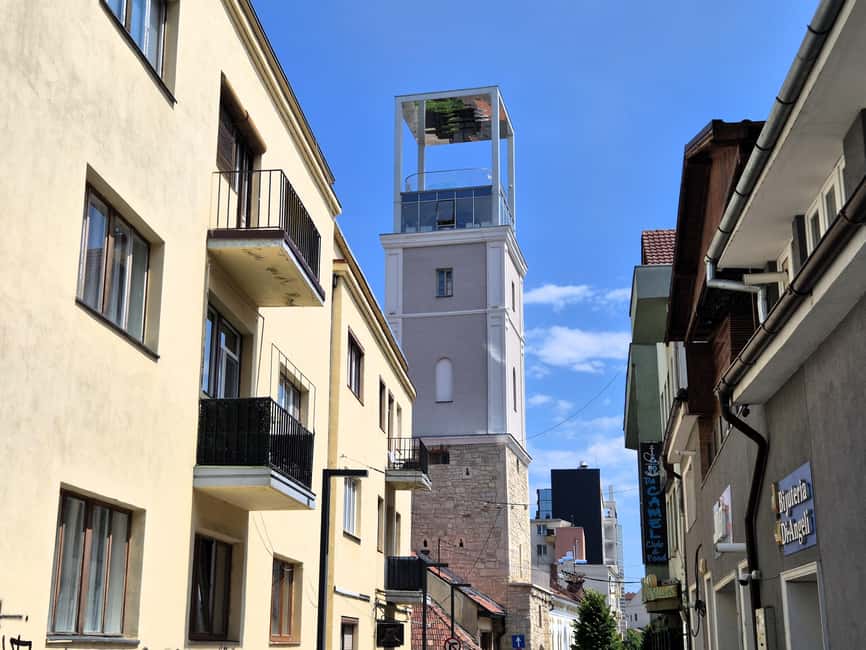
You meet at the Firefighters’ Tower, right where the city feels most like a working place. Expect a photo pause and a quick orientation, not a lecture delivered from a single spot.
This starting moment matters. It sets the pace for the whole walk, you are moving early, you get your bearings, and you can start placing the history in a real, walkable geography. You will also learn fast that the guide is not just repeating dates. The tone is more like story plus explanation, the kind that helps you remember.
The tour’s big promise: empires, faiths, and everyday Cluj
The core theme is simple and useful: empires, cultures, and faiths have shaped Cluj-Napoca, and the city is still shaped by choices people make today. The guide, who is licensed and holds a PhD in History, organizes the day around turning points.
That is the difference between a walking tour you enjoy and one that actually sticks. Here, you do not just collect trivia. You start to recognize patterns, like how power changes what gets built, who gets protected, which languages matter, and which ideas survive.
You also get a second viewpoint. The guide brings the lens of an award-winning travel writer and former journalist. That matters because the tour does not stop at ruins and old names. You are guided toward the present too, so you leave knowing what Cluj feels like now, not just what it used to be.
From Stone Age to Tech Age: how the timeline stays understandable
You will hear stories that run all the way from the Stone Age to the Tech Age. The guide uses these eras to explain how the city’s identity formed, and why it still evolves.
I like this approach because it keeps you from thinking history is a museum behind glass. When the tour is structured this way, it becomes a chain of cause and effect. You see how older layers influence later ones, even when the buildings have changed.
The best part is that the stories are tied to real city landmarks you can point to. Even if you do not catch every detail, you should still come away with a map in your head of themes, not just one-off anecdotes.
More Guided Walks in Cluj Napoca:
Parcul I.L. Caragiale: a park stop that sets the mood
Next up is Parcul I.L. Caragiale, a sightseeing stop built into the flow. Parks in cities like Cluj are not just green space, they are also social space, a place where people gather and a place where the city displays what it values.
At this stage, the tour is still finding its rhythm. If you like to take photos and glance around at street life, this is a good early moment. It is also a useful reset point, so you are not overwhelmed before the bigger landmark stops kick in.
If you are sensitive to pace, wear your comfortable shoes here too. Even on a 2.5-hour itinerary, the walk adds up quickly when you are stopping for context.
Piața Muzeului: where the city starts to feel like a storybook
Piața Muzeului is another sightseeing stop, and it helps you shift from general orientation into place-based history. Museum squares often sit at crossroads of culture and civic identity, so the guide can use the location to connect broader themes to the look and layout of Cluj.
This is also a moment where you can train your eyes. Notice how the open square shape organizes movement. Notice how streets channel people toward important buildings. On this tour, you learn to see design choices as clues.
Matthias Corvinus House: the king story that helps you picture late medieval Cluj
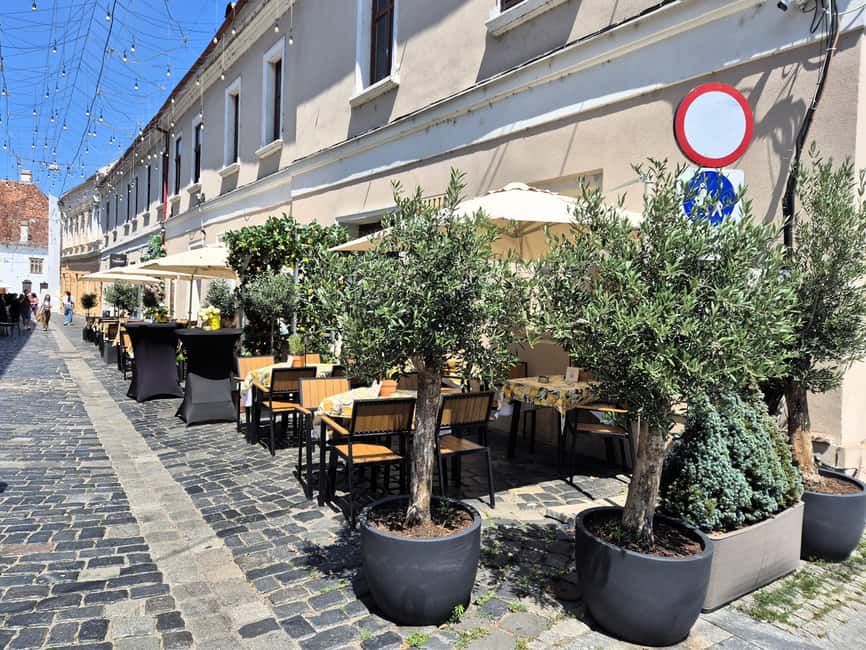
At Matthias Corvinus House, the tour goes after a late Middle Ages storyline, including where one of the great kings of Central Europe was born. This is one of the highlights that gives the city a sharp, recognizable anchor.
What I like here is that the guide does not treat it like a single myth to memorize. The point is bigger: rulers influence which ideas and institutions are supported, and that influence leaves physical traces over time. You end up with a clearer mental timeline.
If you enjoy historical figures but hate long, stiff storytelling, this stop is still manageable. It is connected to a place, and the guide can keep you oriented by constantly linking back to why it matters.
Unitarian Church: religion as a force, not just a footnote
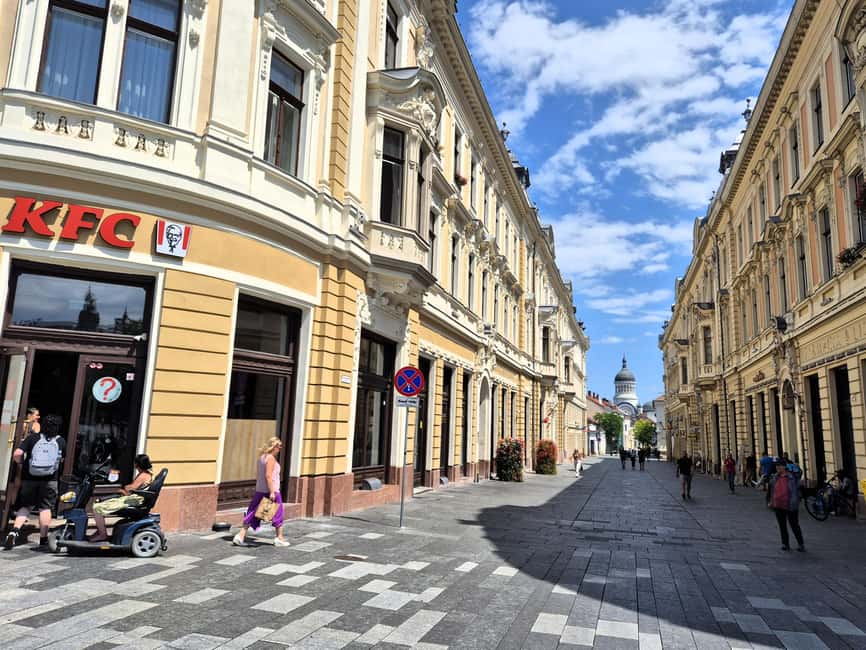
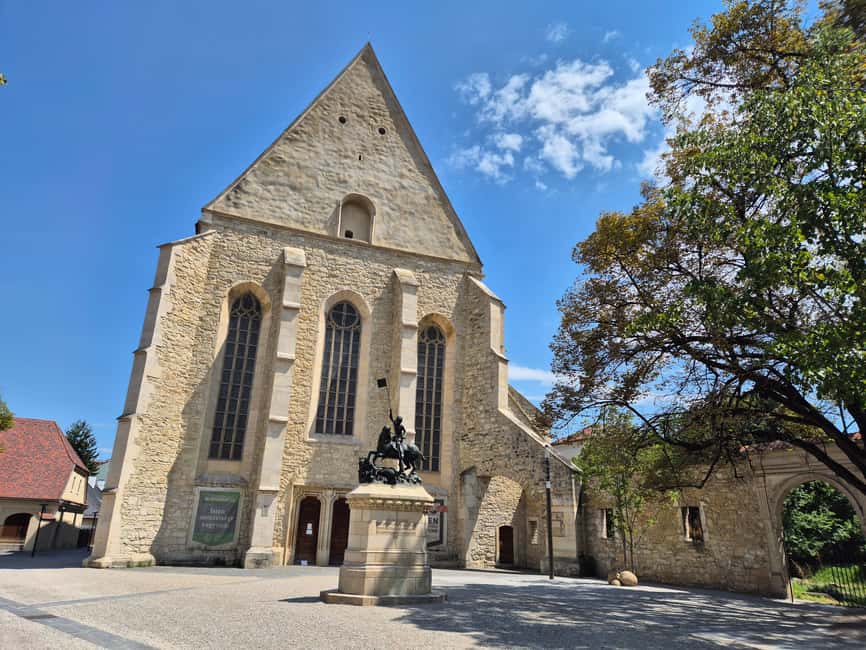
Next is the Unitarian Church, another sightseeing stop tied to a major religion-related highlight. You will learn about the birthplace of a confession that spread all over the globe.
This matters because religion in Cluj is not only about worship. It intersects with language, education, civil rights, and who gets to belong in public life. Hearing it framed this way helps you understand why certain buildings and communities show up as landmarks.
One caution: if you are the type who gets lost when someone explains theology, do not worry. The guide is moving history into politics and daily life. You should get enough context to follow even if you are not studying religious history back home.
Strada Iuliu Maniu: photo stop energy with political undertones
Strada Iuliu Maniu is listed as a photo stop and sightseeing point. Streets named for major figures often compress a lot of meaning into one line on a map.
Here, the guide can connect the city’s past struggles and civic aspirations to what is honored in public space. Even during a short photo stop, you get to see how political memory becomes geography.
Take a couple of photos, but also look up from your phone. The value on this stop is the sense of direction. You are preparing for the larger squares and viewpoints ahead.
Piața Unirii and Bulevardul Eroilor: two big squares, a clear city center feel
The walk brings you to Piața Unirii, followed by Bulevardul Eroilor. These stops are sightseeing and walk segments that help you feel Cluj-Napoca’s center as a living layout, not just a collection of sights.
This is where the historian and journalist storytelling style really pays off. When you hear about empires, cultural change, and faith, you need a physical reference. Big central spaces provide that. You can stand in the open area and imagine how power once gathered, how crowds moved, and how the city evolved around these hubs.
Also, by now you have likely accumulated several story threads. The guide’s job is to keep them connected. I like tours that do this well, and this one aims for that kind of organization.
Local café break: a smart reset at the halfway mark
Halfway through the walk, you get a break at a local café. This is practical, and it keeps the tour from turning into one long information dump.
In a 150-minute experience, a reset makes your learning stick. You can refresh, rehydrate, and ask your own questions while your brain is not overloaded.
If you are prone to tiring legs, this is also where you’ll notice the value of comfortable shoes. The walking is not extreme, but you will appreciate a pause.
Piața Avram Iancu: resistance and memory in public space
Next is Piața Avram Iancu, another sightseeing stop. This is tied into major storyline elements the tour highlights, including a group of rebels who died for freedom, with their fate connected to the bullets of a most oppressive totalitarian dictatorship.
Even without turning the tour into a political lecture, the stop uses place to make the memory real. Squares can feel abstract, but when a guide connects them to human choices and consequences, the space becomes a reminder rather than scenery.
If you are moved by civic history, you will likely feel this stop the most. If you are more neutral, it still provides context for how Cluj remembers its own struggles.
Turnul Croitorilor: a viewpoint stop with storytelling leverage
At Turnul Croitorilor (the Croitorilor Tower), you get a visit stop. This is a landmark moment, and towers often do two things for a walking tour. They give you a visual anchor, and they give the guide a natural place to talk about how the city protected, organized, or symbolized itself.
Here, the guide’s storytelling style helps you look at the city as a system, not random attractions. Towers sit in the geography for a reason, and the tour uses that logic.
If you like architecture just because it helps you understand history, this stop should land well. If you are not into viewpoints, you can still enjoy it as a narrative checkpoint.
Reformed Church and Strada Mihail Kogălniceanu: ideas that travel
Then you reach the Reformed Church, Cluj-Napoca, followed by walking time on Strada Mihail Kogălniceanu. These stops add more texture to the tour’s big theme of faith, culture, and political thought.
One highlight you will hear about is a mathematician who revolutionised Euclid’s geometry. Another includes a league of extraordinary gentlemen put on trial for claiming equality for their nation. You will not get those stories as classroom lectures. You get them framed as human achievements and human risk.
That is one of my favorite ways to experience history. It connects the mind and the street. A scholar and a freedom fighter can belong to the same story if the guide explains how ideas and power collide.
On Strada Mihail Kogălniceanu, the walking segment also helps you observe the city’s rhythm. You move past storefronts, facades, and street activity, so the stories stay grounded in what you can actually see.
Finish on Strada Universității: putting the pieces together
The tour finishes at Strada Universității. Ending on a street like this is smart because it gives a final reminder that cities like Cluj are built not only by rulers, but by institutions, education, and the people who push ideas forward.
By the time you reach the end, you should have more than names. You should have a sense of why certain landmarks exist, why certain communities mattered, and why the city’s identity did not follow one simple route.
If you want to keep the momentum, use the finish point as your cue to explore nearby on your own. You will likely feel more confident because the guide has given you a framework.
Price and value: what $35 buys in a 150-minute expert story
At $35 per person for 150 minutes, you are paying for two things most “cheap” walking tours skip: structure and expertise. A historian with a PhD in History is a big deal, and the former journalist angle adds a present-day lens that helps you interpret what you see after the walk.
This tour is not just saying, Look at this building. It is explaining the forces that shaped Cluj-Napoca, then connecting those forces to specific kinds of landmark stories, including kingly birth stories, religious influence, science, political trial narratives, and resistance under dictatorship.
Also, the time length is about right. Two and a half hours is enough to feel like you went somewhere, but short enough that you do not lose the thread. If you want a single “orientation plus history” experience in Cluj, this is one of the cleaner value choices you will find.
Languages, walking pace, and who will enjoy it most
The tour runs in English or Romanian, and the guide speaks English at a C1 Cambridge Advanced English level. That matters because you will actually understand the nuance, not just basic summaries.
It is wheelchair accessible, which is a big plus if mobility is a concern. You still should wear comfortable shoes, because it is a walking route and you will be on your feet for most of the 150 minutes.
This tour is not suitable for children under 10. The content leans historical and political, and the overall tone is clearly aimed at adults and older teens.
If you like learning by moving, and you enjoy asking yourself, Why does this place feel the way it does, you will probably love this format.
Should you book Cluj Insight’s walking tour?
Book it if you want a walk that turns Cluj-Napoca into a connected story, not a list of stops. I think the strongest reasons to go are the PhD-led historical framing, the journalist-style look at the present, and the way the route uses recognizable landmarks to make heavy topics feel understandable.
Skip it if you only want light sightseeing, or if long-form storytelling bores you quickly. This is for people who like history with edges, and who want their city walk to mean something.
FAQ
Where does the walking tour start?
The guide meets you in front of the Firefighters’ Tower.
How long is the tour?
The tour lasts about 150 minutes (2.5 hours).
What languages are offered?
The tour is conducted in English or Romanian.
How much does the tour cost?
It costs $35 per person.
Is this walking tour wheelchair accessible?
Yes, it is wheelchair accessible.
Is it suitable for children?
It is not suitable for children under 10.
Newest Cluj Napoca write-ups
- Transylvania’s Trail: Sibiu, Bran Castle, Brasov and Sighisoara
★ 5.0 · 1 review - Via Ferrata Transylvania
★ 5.0 · 1 review - Sibiu and wine tasting, day tour from Cluj
★ 5.0 · 2 reviews - 3-Day Halloween Tour in Transylvania from Cluj-Napoca
★ 5.0 · 2 reviews - Private city tour in Cluj-Napoca
★ 5.0 · 2 reviews - Discover Corvin Castle in Hunedoara and Deva Fortress
★ 5.0 · 2 reviews - F 850 GS motorcycle rental Romania
★ 5.0 · 2 reviews
Walking Tours, compared.
Ghost Stories & Romanian Mythology Walking Tour
Read our review →
Browse the lists this tour appears in