
Reviewed · COMMUNIST-ERA TOURS
Communist Era Bucharest Tour
Communist Bucharest hits different when you walk it. This private tour is a smart way to understand life under the Eastern Bloc, because you stop at major sites tied to Ceaușescu-era power and the 1989 revolution. I like the personal, on-the-ground context from your guide (often with firsthand perspective), and I also love the free, easy photo stops around the central boulevards. One thing to consider is the pace is still a proper city walk, so you will want comfortable walking shoes.
I also appreciate that this is built for real schedules, with an optional morning or afternoon time. You get a focused, about-3-hour loop with pickup options near Old Town, plus a mobile ticket for smoother entry. If you prefer a purely “facts on a board” museum vibe, this is more street level, with stories tied to what you are seeing right then.
In This Review
- Key highlights worth aiming for
- A 3-hour private walk through Bucharest’s Communist power map
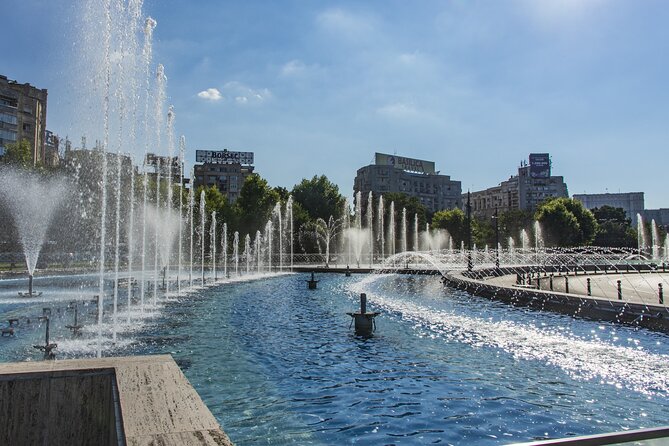
- Piața Unirii and Unirii fountains, where planning turns into people-watching
- Bulevardul Unirii, Bucharest’s Socialist Victory boulevard and its 4-season symbolism
- Casa Poporului (Parliament Palace): why this building changes the whole conversation
- What you will love here
- What to consider
- Victoria Avenue and the “people of the street” view of Communist-era Bucharest
- Banks with political weight: CEC Bank and the National Bank area
- University Square, the Intercontinental Hotel, and the National Theatre changes
- Revolution Square and 1989: where the tour turns from buildings to moments
- Why I think this stop is worth the whole trip
- Iuliu Maniu statue and the Memorial of Rebirth: the aftermath made visible
- What the guide brings to the street, not just the facts
- Price and value: what $30.72 buys you in central Bucharest
- Who should book this Communist Era Bucharest Tour
- Before you go: shoes, pace, and how to get the most out of it
- Should you book it?
- FAQ
- How long is the Communist Era Bucharest Tour?
- Is this tour private or shared with other groups?
- Do I get pickup, and where does the tour start?
- What major sights are included?
- Are there admission tickets for the stops?
- Can I cancel for a full refund?
Key highlights worth aiming for
- Piața Unirii and Unirii fountains: a centerpiece of Communist-era planning that today feels like a regenerated city hub
- Bulevardul Unirii, the Socialist Victory boulevard: see the 4-season fountain theme that turns politics into public art
- Casa Poporului (Parliament Palace): one of the world’s most imposing statements of state power, explained in plain language
- Revolution Square’s key moments: the balcony for Ceaușescu’s final speech plus major memorial landmarks
- Real Bucharest “institutions”: stops around banks, university areas, and the National Theatre zone
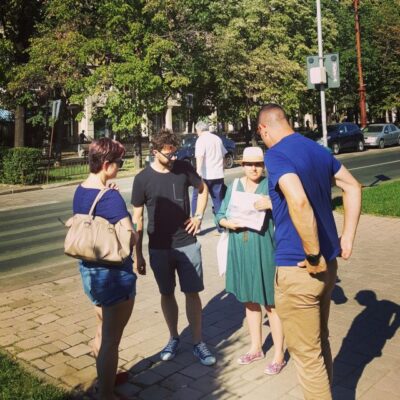
- Private-group feel with room for questions: guides are willing to adjust to what you care about
More of communist-era Bucharest:
- Bucharest: Communism and History Guided City Walking Tour★ 4.9 · 918 reviews
- The Real tour of Communism★ 5.0 · 666 reviews
- Life under Communism★ 5.0 · 358 reviews
- 3-Hour Guided Tour of Communist Bucharest★ 4.9 · 303 reviews
A 3-hour private walk through Bucharest’s Communist power map
This tour is about 3 hours, give or take a bit, and it stays in central Bucharest. That time matters because it is long enough to connect the dots between different eras, but not so long that you end up rushed at each site. It is also private, meaning it is just your group, not a big cattle-car style walk.
You can usually choose a morning or afternoon slot. That flexibility is useful here, because Bucharest weather can change how the city feels fast. Even if you visit other sights the same day, this tour is designed to fit without turning into a full-day slog.
Most stops are free to view, which helps the value. The main “cost” is your legs and your attention. The reward is that you will leave with a clearer picture of how planning, propaganda, and ordinary daily life collided.
Piața Unirii and Unirii fountains, where planning turns into people-watching
Your walk starts near Hanul lui Manuc (Manuc’s Inn), in the Old Town area. From there, you head toward Piața Unirii, which was shaped as part of Communist modernization plans. Today, it is much more than a bleak square. The big draw is the newly restored Unirii fountains, which give the location a modern, lively rhythm.
This is a great opening stop because it shows you something key about this era: the system did not just build for control, it built for presence. A giant square and an impressive fountain are both messaging. Your guide’s job is to explain what it meant at the time, and how the same space reads differently now.
If you like “walk, look, then understand,” you will enjoy this segment. It is also a comfortable early anchor before you start moving along bigger boulevards.
Bulevardul Unirii, Bucharest’s Socialist Victory boulevard and its 4-season symbolism
From Piața Unirii you move onto Bulevardul Unirii, described as the former Boulevard of Socialist Victory. Think of it as Bucharest’s version of a grand ceremonial street, where the state wanted scale and spectacle to feel normal.
One of the standout features here is that there are 17 artesian fountains, decorated to represent the 4 seasons. That sounds like sightseeing trivia, but it actually helps you understand how ideology can hide inside design. Your guide connects the fountains to the idea of a planned public life, where even “seasons” feel organized by the state.
This is a shorter stop, more of a pass-through with commentary, around 5 minutes. Still, it is the kind of detail that stays with you because it shows the difference between what a statue says and what a fountain quietly suggests.
Other Bucharest days worth the drive
Casa Poporului (Parliament Palace): why this building changes the whole conversation
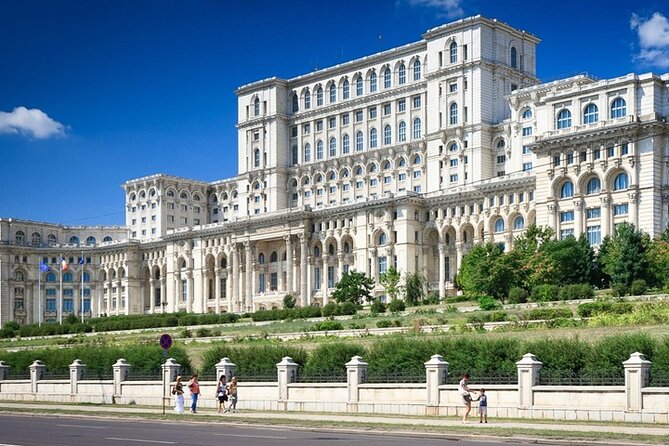
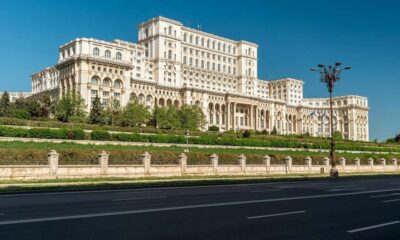
At the heart of the tour is the massive Casa Poporului, Nicolae Ceaușescu’s parliamentary building, also known as the Parliament Palace. It looms over central Bucharest, and that physical fact is part of the story. Even if you have seen photos, seeing it at walking distance makes it harder to treat the era as abstract.
Your guide frames why it matters. The key point is not just size, it is what the building signaled: the state as a machine, the people as a concept, and power as something you could measure in concrete and scale. The tour also ties it to the idea that this was meant as the house of the people, so you get a chance to compare the slogan with how things worked in reality.
What you will love here
- You get a history lesson that is tied to what your eyes are doing
- The guide keeps the discussion grounded in everyday meaning, not just dates
What to consider
- If you already know a lot of Romanian 20th-century history, you may still enjoy the tour, but you will need to actively ask questions to keep it fresh. The best guides make this easy to do.
Victoria Avenue and the “people of the street” view of Communist-era Bucharest
Next you take part of Victoria Avenue, a corridor lined with shops. This stop is less about one single monument and more about how your city life might have looked during Communist years. Your guide explains what it was like in that era, and how the built environment shaped daily routines.
This is where the tour becomes more human. Architecture tells one story, but streets tell another. Watching shopfronts and imagining how they used to function helps you build a mental model of what people could access, what felt public, and what felt controlled.
If you like tours that use place to explain behavior, this is a strong section.
Banks with political weight: CEC Bank and the National Bank area
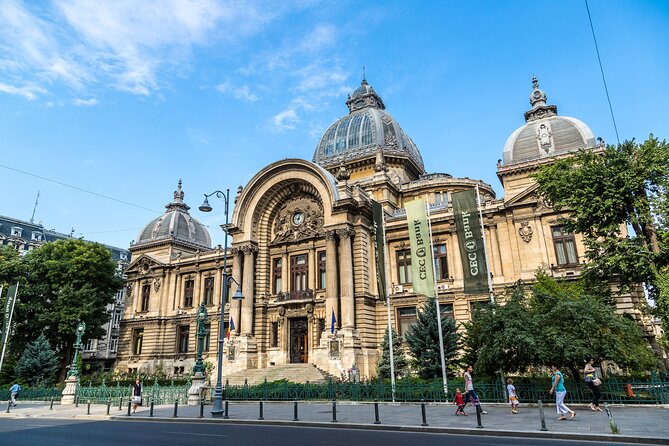
You also pass by the CEC Bank, described as the bank of the people during the Communist years. The idea is simple but powerful: institutions can carry ideology the same way monuments do.
Your guide also points out the Romania National Bank and shares its history. The value of bank stops is that they often reveal what a system rewards and protects. Even if you are not into economics, hearing how the institutions worked gives context for what ordinary people experienced.
In short, this section shifts you from “power as spectacle” to “power as routine.”
University Square, the Intercontinental Hotel, and the National Theatre changes
The tour continues around University Square, where you can see the oldest and largest university in Bucharest. Your guide also talks about the Intercontinental Hotel Bucharest, completed and opened in 1971. That date is useful, because it places you firmly in the Communist timeline and shows how the state-era city tried to look modern.
Then you pass by the National Theatre of Bucharest, an iconic building with changes to its design across a short and complicated history. This is another “architecture as argument” moment. The theatre is cultural, but in Bucharest it is also a symbol of how politics and priorities can reshape public life.
If you enjoy seeing how culture gets remade, this segment will land.
Revolution Square and 1989: where the tour turns from buildings to moments
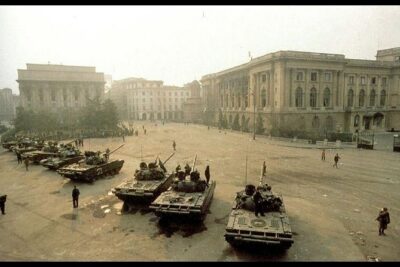
Then comes Piața Revoluției (Revolution Square), and this is arguably the most emotionally charged part of the route. You are in the area where the famous 1989 revolution started, and the tour points you to memorials tied to the events.
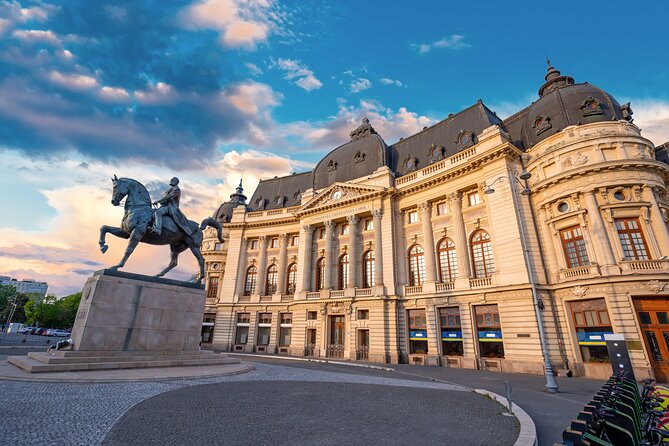
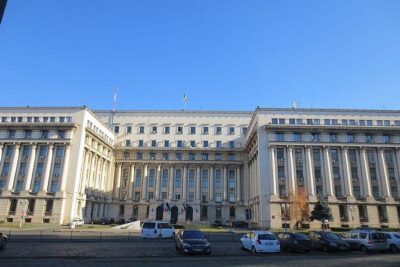
Your photo opportunities are a big part of this stop. The tour highlights the balcony where Nicolae Ceaușescu made his final speech, the former headquarters of the Communist party, and the Monument of National Rebirth. You also see the equestrian statue of King Carol I, plus the University library and other surrounding landmarks.
Even if you are not a “history documentary” person, you will feel the difference here. The square functions like a timeline in stone and metal. Your guide helps you connect that timeline to how the city has remembered the turning point.
Why I think this stop is worth the whole trip
Because it makes the earlier architectural commentary matter. You start to see that buildings were not just background. They were part of a lived system, and the revolution was a rupture strong enough to change the story of the entire city.
Iuliu Maniu statue and the Memorial of Rebirth: the aftermath made visible
After Revolution Square, the tour adds two more remembrance stops.
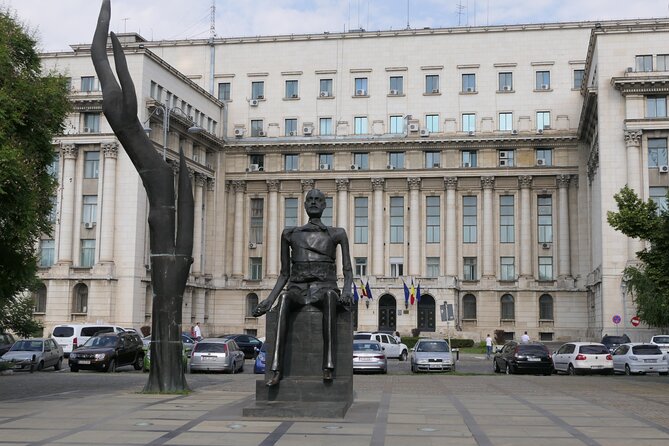
First is the Iuliu Maniu statue, tied to a three-time prime minister. Your guide shares his struggle in the early years of Communism, helping frame resistance and pressure before the big 1989 moment.
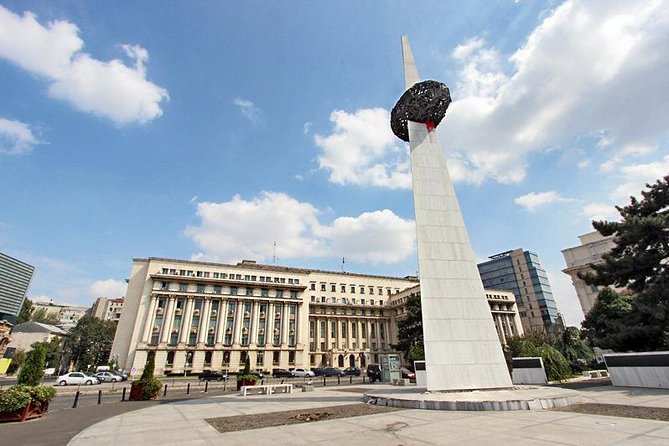
Then you visit the Memorial of Rebirth, a 25-meter-high structure that commemorates struggles and victims of the Romanian Revolution in Christmas 1989. It is a powerful visual anchor. The height makes it hard to ignore, and that is exactly what memorials do when they have a job beyond aesthetics.
This section gives you a sense of what happens after a political system collapses. People do not only celebrate. They also remember, mourn, and try to pin meaning to what changed.
What the guide brings to the street, not just the facts
The biggest praise for this tour is about the guides and how they connect personal and national history. You may meet guides such as Alina or Claire. The consistent theme in their approach is clarity with context, and a willingness to handle questions.
One review-style theme that matters for you is the balance. Guides do not treat Communist history as one-note propaganda. They explain the positive and negative parts, and they often encourage curiosity, including more personal questions if you have them. That is rare on tours that deal with heavy topics.
You also get lots of discussion, not just a scripted lecture. Several people describe the tour running a bit longer than the planned 3 hours because the conversation kept going naturally. That tells you the guides are paying attention to what your group actually wants to understand.
If you want to learn without feeling lectured, this is a good fit.
Price and value: what $30.72 buys you in central Bucharest
At $30.72 per person, this is a budget-friendly way to get a guided narrative across several of Bucharest’s most meaningful Communist-era locations.
Here is the practical value math:
- It is a private tour, so you are paying for time and expertise, not sharing it with a big crowd
- It runs about 3 hours, long enough to see multiple zones without feeling like you are sprinting
- Many stops are free to view, so you are not paying extra admission fees at each site
- Pickup options are available, either at your centrally located hotel area or at the meeting point near Old Town
It is not trying to be “every square and every statue.” It is targeted. That makes it feel efficient, especially if you only have a day or two in Bucharest.
Who should book this Communist Era Bucharest Tour
This is a strong choice if you:
- Want a guided walk focused specifically on the Communist era and the transition after 1989
- Like seeing how politics shows up in everyday city design
- Want a smaller-group experience where questions are welcome
It may not be the best choice if you:
- Prefer long museum-style interiors over street-level viewing
- Want a tour that avoids difficult questions entirely
- Have very limited mobility and cannot handle a moderate walking pace
Before you go: shoes, pace, and how to get the most out of it
The tour advises comfortable walking shoes and says you should have moderate physical fitness. It also notes it is near public transportation, and service animals are allowed.
My practical suggestion: treat this like a walking seminar. Bring curiosity, not just a camera. If you care about one topic, like how daily life worked, ask early. Good guides adapt when you show what you want to understand.
Also, because this is a mobile-ticket experience, keep your phone ready for a smooth start.
Should you book it?
Yes, if you want a guided “how Bucharest got shaped” experience tied directly to Communist-era power and the 1989 revolution. The combination of major landmarks like Casa Poporului and Revolution Square, plus the lighter but meaningful details like Unirii fountains and the CEC Bank context, makes it feel like you are learning the city’s logic instead of memorizing a list.
Book it especially if you value a private, English guide who can explain things with both context and clarity, and who seems comfortable handling questions as you walk.
If you want, tell me your travel dates and whether you prefer morning or afternoon. I can help you plan what to pair this with on the same day in central Bucharest.
FAQ
How long is the Communist Era Bucharest Tour?
It is about 3 hours.
Is this tour private or shared with other groups?
It is a private tour/activity, so only your group participates.
Do I get pickup, and where does the tour start?
Pickup is offered from a centrally located hotel or you can meet at the outside main entrance of Manuc’s Inn (Hanul lui Manuc), Str. Franceză 62.
What major sights are included?
The route includes stops around Piața Unirii, Bulevardul Unirii, Casa Poporului (Parliament Palace), part of Victoria Avenue, CEC Bank, University Square, the National Theatre area, and Piața Revoluției (Revolution Square), plus memorial stops.
Are there admission tickets for the stops?
The tour information lists Admission Ticket Free for the included stops where that detail is specified.
Can I cancel for a full refund?
Yes. You can cancel up to 24 hours in advance for a full refund.
Newest Bucharest write-ups
- Half Day Tour in Bucharest
★ 5.0 · 1 review - Private transfer to BRASOV
★ 5.0 · 1 review - Bucharest: Capture the most Photogenic Spots with a Local
★ 5.0 · 1 review - Bucharest Private Custom Walking Tour with Guide (Private Tour)
★ 5.0 · 1 review - Transfer Bucharest to Constanta / Mamaia
★ 5.0 · 1 review - Uncover Transylvania: Private 2-Day Tour Bears & Medieval Wonders
★ 5.0 · 1 review - Private Day Trip to Peles Palace, Dracula’s Castle and Brasov
★ 5.0 · 1 review
Communist-Era Tours, compared.

Parliament, Ceausescu House & Village Museum Tour
Read our review →
Bucharest Essential Tour: Old Town, Calea Victoriei & Communism
Read our review →
Communism in Bucharest – Landmarks, Museum & Communist Appetizers
Read our review →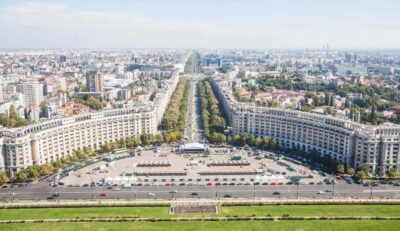
Palace of Parliament, Ceausescu House & Village Museum
Read our review →Browse the lists this tour appears in