

Reviewed · COMMUNIST-ERA TOURS
Life in Communism
Communist Bucharest hits hard, fast on foot. This 3-hour walk links major landmarks to how Romania and Bucharest changed under communism, and how you still see the results on the streets. You’ll cover big themes like nationalization, the Secret Police, and demolitions, with a guide translating what the buildings and neighborhoods are trying to tell you. Bucharest becomes easier to read when you know the storyline.
I especially liked the small-group feel. With a maximum of 15 people and English commentary, the guide can keep explanations clear and interactive, not just lecture mode. I also like that you get both structure and comfort, a rough tour arc through about 15 objectives, plus communist-type snacks and a short break in the middle.
One consideration: you’ll be doing a true walking tour with moderate fitness needs. You also need to plan for drinks at the mid-tour stop, since alcohol is not included and refreshments are self supported with cash.
In This Review
- Key takeaways before you go
- Why a communist-era walking tour makes Bucharest make sense
- Start at the Patriarchal Cathedral, then get your bearings fast
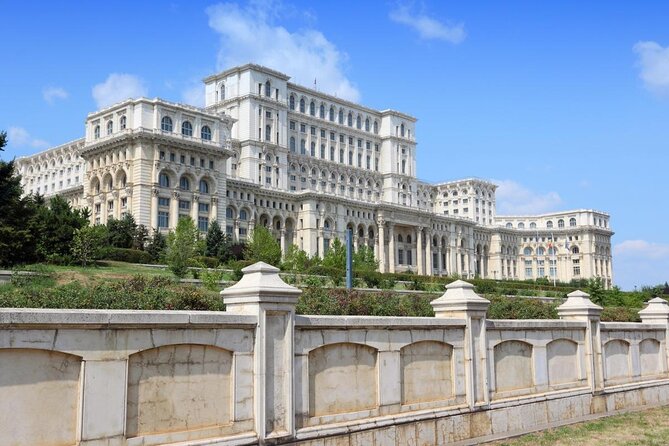
- Palace of Parliament: your opening anchor on the communist timeline
- Calea Victoriei: where city streets reflect big political shifts
- Piaka Revolukiei (Piata Revoluției): reading history in public space
- The around-15 stop structure, and what you’ll actually learn
- Guides are the real engine of this tour
- A mid-tour break, plus snacks that keep you steady
- English narration and a mobile ticket, so logistics stay simple
- Price and value: what $31.24 gets you in 3 hours
- Who this tour suits best, and who may want another option
- Should you book Life in Communism in Bucharest?
- FAQ
- How long is the Bucharest Life in Communism walking tour?
- What is the price per person?
- How many stops will we see during the tour?
- What language is the tour offered in?
- Is alcohol included?
- What is included in the tour?
- Where does the tour start and end?
- Is the tour suitable for mobility needs, and are service animals allowed?
Key takeaways before you go
- About 15 communist-era stops in 3 hours makes this a strong orientation for first-timers
- English small-group tour (max 15) helps you ask questions and stay engaged
- Themes are tied to real change like nationalization, the Secret Police, and demolitions, not random facts
- Snacks are included and you’ll get a mid-tour break to reset
- Your guide names matter here, with guides like Daniela, Andreea, and Augustin showing up in standout feedback
More of communist-era Bucharest:
- Bucharest: Communism and History Guided City Walking Tour★ 4.9 · 918 reviews
- The Real tour of Communism★ 5.0 · 666 reviews
- Life under Communism★ 5.0 · 358 reviews
- 3-Hour Guided Tour of Communist Bucharest★ 4.9 · 303 reviews
Why a communist-era walking tour makes Bucharest make sense
Bucharest can feel like a mix of eras, and that is the point. This tour helps you connect the dots between what you see, how the city got shaped, and why daily life looked the way it did under the Communist regime.
What makes the approach useful is that it is not just about monuments. You’re walking through changes in architecture, the people, and the present, with the timeline built around turning points the guide explains as you go. That kind of framing helps you later when you are on your own, because you start noticing clues fast instead of guessing.
And yes, it can be emotionally heavy. The tour keeps it grounded by staying focused on how state power and policies showed up in real spaces, and how that legacy is still visible in the city’s layout and buildings.
Start at the Patriarchal Cathedral, then get your bearings fast

You meet at the Patriarchal Cathedral on Aleea Dealul Mitropoliei 25, and the tour ends back at the meeting point. Starting and finishing at one location is a small detail that matters, because it reduces the stress of navigating while you’re learning the city.
This is also convenient for getting there. The tour is listed as near public transportation, so you can arrive without turning the morning into a logistics project. Confirmation is received at booking, which takes away the last-minute guessing.
Expect a paced walk with a moderate fitness level. You’re not doing a marathon, but this is also not a sit-down museum day. Wear shoes you are willing to sweat in, and treat the mid-tour break as part of the plan, not an afterthought.
Palace of Parliament: your opening anchor on the communist timeline
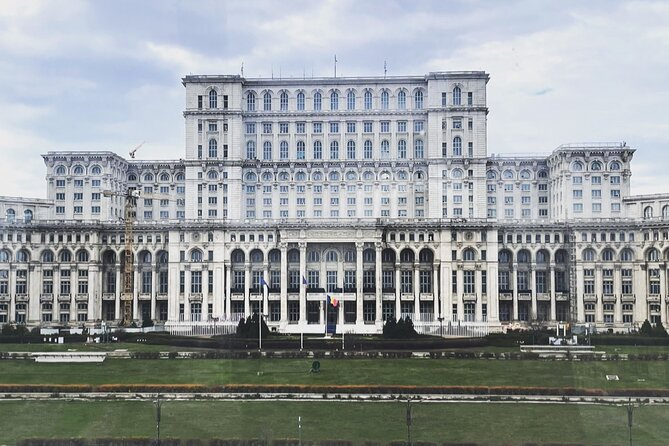
The tour starts with the Palace of Parliament, and that makes sense. Starting at a major landmark gives you a reference point right away, so the rest of the day has a backbone.
Here’s how to use the stop best: don’t just look at the building as an object. Listen for how your guide frames it inside the Communist-era timeline, then notice how the tour themes start to connect to other areas of Bucharest. If the guide mentions forces like nationalization or demolitions in the context of the city, keep that lens on as you walk.
A potential drawback of picking up steam from a landmark like this is weather. If it’s cold or windy, the exterior time can feel long. The good news is the tour includes a short break in the middle, so you get at least one built-in chance to warm up before the later stops.
Other Bucharest days worth the drive
Calea Victoriei: where city streets reflect big political shifts

Stop two is Calea Victoriei, which is a smart choice because it is street-level Bucharest. You’re going from a huge landmark to a thoroughfare where you can more easily imagine movement, daily life, and the rhythm of a city.
Use this part of the tour to think about how policy changes land in everyday spaces. The tour themes are built around how communism altered architecture and people’s lives, so your guide’s stories here should help you understand why the city feels the way it does now.
If you tend to get bored with pure “see this, then that” tours, this stop can be a lifesaver. A street stop gives your brain something familiar to map onto the timeline. It is easier to remember Calea Victoriei once you associate it with the guide’s explanation of what changed and why.
Piaka Revolukiei (Piata Revoluției): reading history in public space
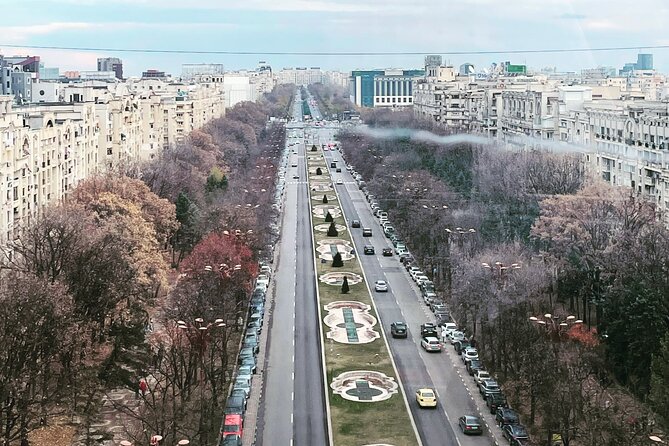
The third named stop is Piaka Revolukiei, a public-square style area on the tour route. This kind of stop works because it is a transition point where history tends to feel more visible, more collective, and less tied to a single building.
What to listen for here is the guide’s way of moving through the regime timeline. You’re not only learning what existed during communism, you’re learning how the present grew out of it. That’s why the tour is positioned as a way to understand Bucharest before exploring on your own.
Also, because this is a walking tour, squares and open areas give your legs a slight change of pace. Just remember that open spaces can be exposed, so layer up and bring something for wind if your travel dates are chilly.
The around-15 stop structure, and what you’ll actually learn

Even though only three stops are named in the schedule details, the experience is described as visiting roughly 15 objectives across the city. The value is in how those stops are used to mark a specific moment or change during the Communist regime.
The biggest themes called out are nationalization, Secret Police, and demolitions. Those are not just buzzwords in the tour description. They are anchors that guide your attention while you walk, so you can connect architecture and urban change to how the state ran people’s lives.
Here’s what I think you should expect to feel by the end. You’ll have a clearer sense of how communism shaped:
- the look and feel of buildings and streets
- the way institutions controlled public life
- the physical reshaping of neighborhoods, including demolition-related change
That mindset is what turns this into more than a checklist tour. Afterward, you are better at spotting what’s old, what’s been altered, and what the city is trying to preserve or overwrite.
Guides are the real engine of this tour
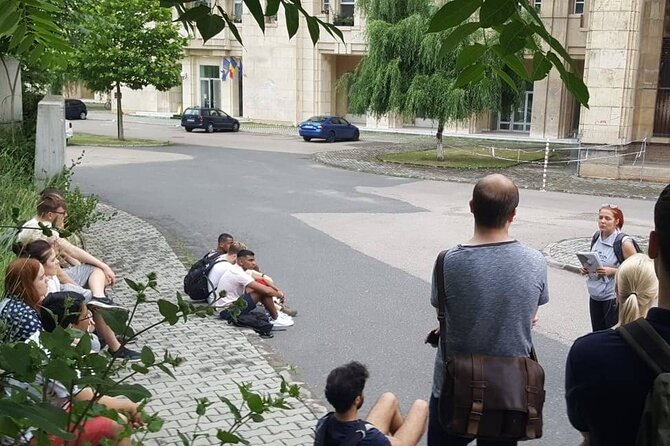
The strongest pattern in the feedback is the storytelling quality. Guides like Daniela and Andreea are described as knowledgeable and friendly, with clear explanations at each stop. Augustin is praised for giving a nuanced view of a complex history, with careful research and engrossing narration.
What I like about this for your experience is that it raises the ceiling on comprehension. When a guide keeps explanations detailed and easy to follow in English, you get context instead of confusion. And when the guide adds personal stories, the history starts to feel less like a textbook and more like a lived system.
If you want a practical tip, pay attention to how your guide connects each stop to the theme of the day. The tour is designed around that, so if you track the theme as you walk, you’ll remember more than you expect.
Also, since the tour is capped at 15 people, it’s easier for the guide to keep the room calm and focused. You’re not shouting over a crowd, and that helps when the topic is serious.
A mid-tour break, plus snacks that keep you steady
Included in the experience are communist type snacks, and there’s a short break in the middle. This is one of those “small, smart details” that helps you stay alert during a topic that can weigh on your mind.
Drinks are self supported at the break, and ideally you’ll have cash. Alcohol is explicitly not included, so plan on non-alcoholic drinks if you need a coffee or tea fix.
If it’s cold when you go, the break is more than comfort. It’s a reset for your concentration, so you can stay present for the later stops without getting foggy-eyed.
English narration and a mobile ticket, so logistics stay simple
This tour is offered in English and includes a mobile ticket, which is exactly what you want for a walk where you’ll be stopping often. Less paper in your bag means fewer hassles while you’re trying to follow the route and listen.
The tour also lists group discounts, which can make the per-person value better if you travel with friends or family. At $31.24 per person, that matters because you are paying for guided storytelling plus time spent covering around 15 objectives in 3 hours.
One more practical point: confirmation is received at booking. That removes uncertainty, and you can show up ready instead of checking your email repeatedly that morning.
Price and value: what $31.24 gets you in 3 hours
At $31.24 per person for about 3 hours, the value comes from concentration. You’re not paying for a long, stretched day. You’re paying for a guided orientation through a dense part of Bucharest’s communist-era story.
A few things justify the cost:
- the small-group size (max 15), which keeps the experience interactive
- English narration tied to a structured timeline
- about 15 stops, which means you cover more than a typical “just a few landmarks” walk
- included snacks and a break, so you can stay comfortable enough to absorb the content
Also, the tour is commonly booked about 22 days in advance on average, which tells me it’s not a last-minute-only option. If you’re traveling during a busy season, booking ahead is wise so you get the guide slot that fits your schedule.
The only true financial catch to note is that drinks at the break are not included. If you like to budget carefully, bring enough cash for your mid-tour beverage.
Who this tour suits best, and who may want another option
This is a good fit if you:
- want a guided way to understand how communism shaped Bucharest’s architecture and public life
- like city walking tours where history is connected to real streets and buildings
- appreciate small-group formats with easy-to-follow English explanations
It may be less ideal if you:
- do not do well with walking for around 3 hours
- prefer light, purely sightseeing tours with minimal heavy historical themes
- need a lot of amenities during the walk, since drinks beyond the included snacks are self supported
Because the tour focuses on serious political history, it works best when you’re ready to slow down and listen. If you’re the type who likes quick photos with no context, you’ll likely feel under-stimulated.
Should you book Life in Communism in Bucharest?
If you want your Bucharest visit to feel anchored in meaning, I’d say book it. The mix of about 15 stops, English storytelling, and a guide-driven timeline gives you a framework you can use all week while wandering on your own.
I’d especially recommend it if you are curious about how the communist era changed everyday life and why certain features of the city look the way they do now. With guides like Daniela, Augustin, and Andreea showing up in the feedback with praise for clarity and nuance, you’re not just paying for route coverage. You’re paying for interpretation.
If your priorities are purely romantic architecture and scenic wandering with no history weight, you might choose a different style of tour. But if you want to understand the city behind the buildings, this walk is one of the best ways to get there in a short time.
FAQ
How long is the Bucharest Life in Communism walking tour?
It lasts about 3 hours.
What is the price per person?
The price is $31.24 per person.
How many stops will we see during the tour?
The tour includes roughly 15 stops around the city, tied to the communist-era timeline.
What language is the tour offered in?
The tour is offered in English.
Is alcohol included?
No. Alcoholic beverages are not included, and drinks at the short break are self supported, ideally with cash.
What is included in the tour?
Snacks of a communist type are included, and the tour includes a short break in the middle.
Where does the tour start and end?
It starts at the Patriarchal Cathedral on Aleea Dealul Mitropoliei 25, and it ends back at the same meeting point.
Is the tour suitable for mobility needs, and are service animals allowed?
The tour requires moderate physical fitness level. Service animals are allowed.
Newest Bucharest write-ups
- Half Day Tour in Bucharest
★ 5.0 · 1 review - Private transfer to BRASOV
★ 5.0 · 1 review - Bucharest Private Custom Walking Tour with Guide (Private Tour)
★ 5.0 · 1 review - Bucharest: Capture the most Photogenic Spots with a Local
★ 5.0 · 1 review - Uncover Transylvania: Private 2-Day Tour Bears & Medieval Wonders
★ 5.0 · 1 review - Transfer Bucharest to Constanta / Mamaia
★ 5.0 · 1 review - 8 Days – Transylvanian Delights-Guaranteed departures
★ 5.0 · 1 review
Communist-Era Tours, compared.



Parliament, Ceausescu House & Village Museum Tour
Read our review →
Bucharest Essential Tour: Old Town, Calea Victoriei & Communism
Read our review →
Communism in Bucharest – Landmarks, Museum & Communist Appetizers
Read our review →
Palace of Parliament, Ceausescu House & Village Museum
Read our review →Browse the lists this tour appears in