
Reviewed · COMMUNIST-ERA TOURS
Private Tour: Story of Communism in Bucharest
Communism here feels close to the pavement. This private Bucharest tour links Nicolae Ceausescu, the 1989 Revolution, and the places tied to victims and resistance, all in one day. You get a structured route from downtown to the former military sites outside town, with an English-speaking guide and hotel pickup.
I like the way it mixes the big-ticket landmarks with the human cost. You’ll spend real time at the Targoviste military base museum and then move through key sites in Bucharest, including Revolution Square and the Palace of the Parliament, also known as the People’s House. I also love that the guides (I saw examples like Diana, Christian, and Claudio) are strong at explaining what you’re seeing, not just reciting dates.
One drawback to plan for: entrance and photo fees are not included, so your final spend can creep up. Also, do a quick check on your contact details before the morning, because there was at least one communication hiccup tied to an incorrect phone number that left a guide unable to reach the group.
In This Review
- Key things to know before you go
- A Private 8-hour Bucharest Communist Story, Without the Museum-Only Feeling
- Morning Logistics: 7:30am Pickup, Air-conditioned Transport, and the 1.5-hour Drive
- Targoviste Military Base Museum: Where the 1989 Executions Became History
- Back in Bucharest: Entering the Palace of the Parliament, the People’s House
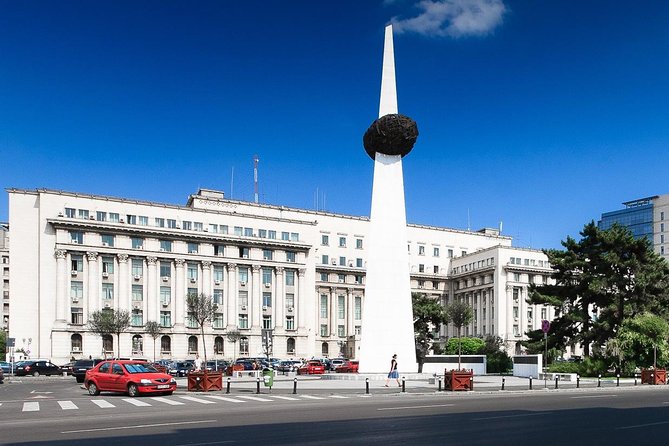
- Revolution Square: The 1989 Turning Point You Can Actually Point To
- Communist Neighborhoods: The Apartment Buildings That Still Shape the City
- Memorial to the Victims of Communism and Resistance: A Moment to Catch Your Breath
- Guides Make the Difference: Diana, Christian, Claudio, and Cristian
- Price and Value: Does $111.32 for an 8-hour Private Tour Make Sense?
- Should You Book This Tour? My Decision Rules
- FAQ
- FAQ
- What time does the Private Tour: Story of Communism in Bucharest start?
- How long is the tour?
- Is this tour private or shared?
- Do you get hotel pickup and drop-off?
- What cities and main stops are part of the tour?
- What kind of transportation is provided?
- Is the guide English-speaking?
- What’s included in the price?
- What costs extra?
- What is the cancellation policy?
Key things to know before you go
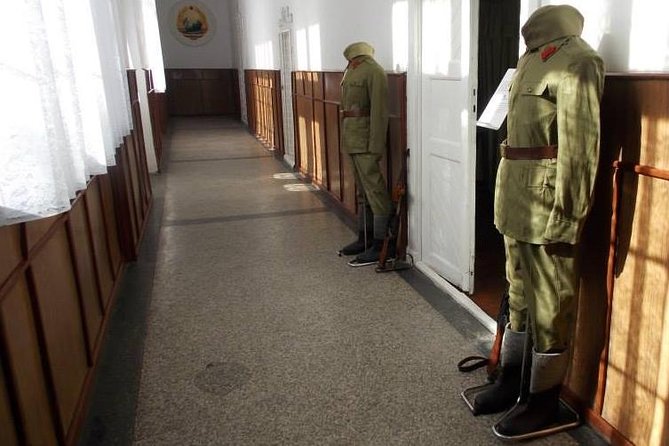
Targoviste execution site museum in former barracks, tied directly to Ceausescu and Elena’s 1989 executions
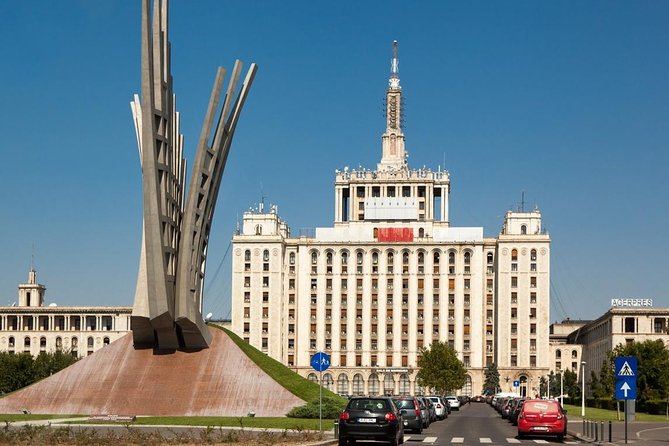
Inside the Palace of the Parliament, the People’s House project connected to Ceausescu’s regime
Revolution Square focus, including the former offices and the spot where the 1989 Revolution began
Communist-era apartment neighborhoods you see from the car, giving context beyond the plaques
English-speaking guidance backed by examples of well-prepared guides like Diana and Christian
Hotel pickup and drop-off, plus an air-conditioned car or minibus for a full 8-hour day
More of communist-era Bucharest:
- Bucharest: Communism and History Guided City Walking Tour★ 4.9 · 918 reviews
- The Real tour of Communism★ 5.0 · 666 reviews
- Life under Communism★ 5.0 · 358 reviews
- 3-Hour Guided Tour of Communist Bucharest★ 4.9 · 303 reviews
A Private 8-hour Bucharest Communist Story, Without the Museum-Only Feeling
If you only look at buildings, communism can feel like a theory. This tour does the opposite. It uses places tied to power, protest, punishment, and daily life, so the story lands in your lap instead of staying in a textbook.
You get a private format, which matters here. You’re not sharing your day with strangers who want selfies every 12 seconds. Your guide can pace the explanations, answer questions, and adjust when something hits harder than expected. The tour is designed as a full, connected narrative: from Ceausescu’s shadow to the 1989 turning point, then into what survived in the city’s look and feel.
You also get something practical for a topic that can get heavy fast. The day is broken into sensible blocks: travel out to Targoviste, then back to Bucharest for the big political landmarks and the neighborhood context. It’s a crash course, but it’s built to be digestible. And because pickup starts at 7:30am, you avoid half a day wasted hunting down buses and timetables.
Morning Logistics: 7:30am Pickup, Air-conditioned Transport, and the 1.5-hour Drive
The day starts early, with pickup at your central Bucharest hotel. Start time is 7:30am, and the whole experience runs about 8 hours. That schedule is not accidental. It gives you enough time to reach Targoviste, then still return to Bucharest for the Parliament Palace interior and the Revolution Square area.
Transport is provided by an air-conditioned car or minibus. In summer heat, that can turn a long day from stressful to tolerable. I also like that you’re not stuck driving yourself between distant points. The tour includes assistance for the entire trip, which is a fancy way of saying you are not left guessing once you’re on the road.
Here’s the one logistics move I recommend: double-check the operator’s contact info tied to your booking before the day starts. There was an instance where a wrong phone number led to missed messages and confusion. You do not want your entire morning to hinge on a single mis-typed digit. A quick confirmation the day before saves real grief.
Targoviste Military Base Museum: Where the 1989 Executions Became History
The first major stop is the military base in Targoviste, a town in south-eastern Romania. You’ll drive for about 1.5 hours from Bucharest. Targoviste is famous because Ceausescu and his wife Elena were executed there in 1989.
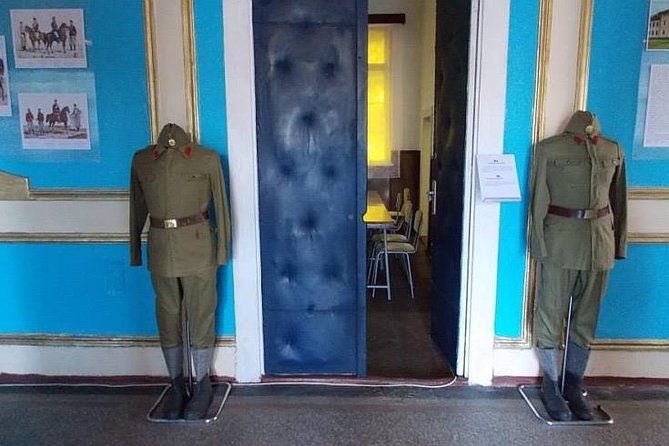
What makes this stop powerful is the setting. The tour visits former military barracks that were turned into a museum and opened to the public. You’re not just looking at a display case. You’re standing in a place linked to the violent end of a dictator’s rule, explained in the context of the 1989 Christmas Eve executions.
If you tend to get emotional at sites like this, you’ll probably appreciate the guide’s framing. An informative guide can keep the visit from feeling like random tragedy. It also helps you understand why this town, which is otherwise just a stop on the map, became a key chapter in Romania’s modern story.
Practical note: entrance and photo fees are not included. So if you want to take photos everywhere, plan for extra spending. Bring cash or a card, whichever you prefer, but treat it as a likely add-on rather than an optional surprise.
Other Bucharest days worth the drive
Back in Bucharest: Entering the Palace of the Parliament, the People’s House
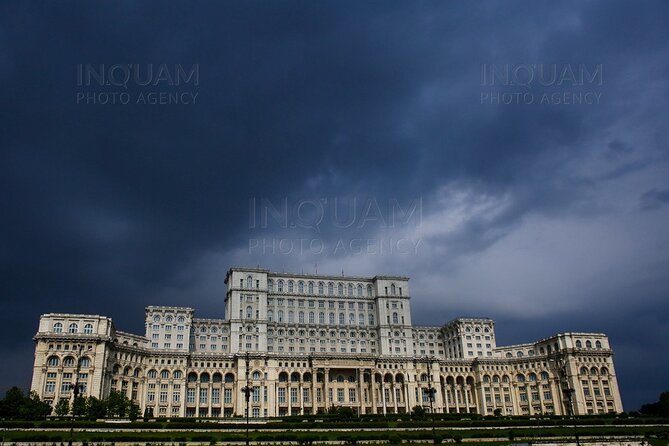
After returning to Bucharest, you’ll tour inside the Palace of the Parliament. This building is described as the second largest in the world after the Pentagon, which gives you a sense of scale before you even step in.
The palace was designed and nearly completed by the Ceausescu regime as the seat of political and administrative power. The regime called it the House of the Republic, but many Romanians call it the People’s House. That name matters, because you can’t help thinking about who the building served. Standing inside, you get that uncomfortable contrast between monumental architecture and the political reality behind it.
This is one of those stops where a guide earns their fee. Without explanation, you might just see grand halls and symmetry. With a good guide, you connect the design effort to the regime’s priorities, and you start noticing the kinds of messages big state projects send.
Again, entrance and photo fees are not included. If you care about photos, ask your guide early what the rules are once inside. It helps you avoid that annoying moment of discovering you paid for a tour that didn’t cover your camera time.
Revolution Square: The 1989 Turning Point You Can Actually Point To
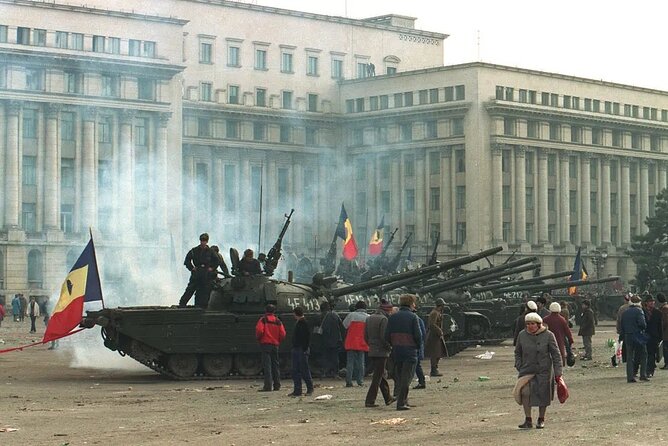
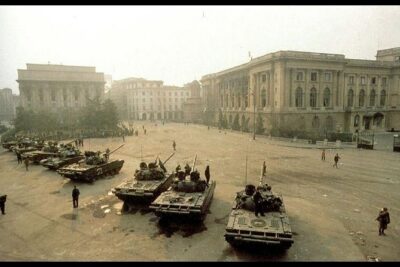
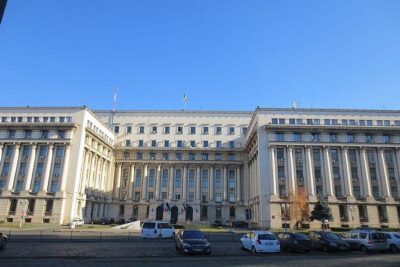
Revolution Square is where the day’s story clicks from political theory to real-world change. This stop includes the former communist offices of Ceausescu and the site where the 1989 Revolution started in Bucharest.
You’ll also see a memorial plaque with the names of people who died fighting for freedom, plus a monument connected to their memory. It’s the kind of stop where details matter, and the guide’s job is to help you read the place.
Here’s a practical way to get more out of this stop: slow down. Spend a minute just orienting yourself around the square before you rush to photos. The names on memorials can be brief, but the meaning builds when you connect it to what happened in 1989 and why Revolution Square became the public stage for the shift away from the regime.
If your group includes people who are new to Eastern European modern history, Revolution Square often becomes the anchor. After this, the rest of the day feels less like random sightseeing and more like a continuous timeline.
Communist Neighborhoods: The Apartment Buildings That Still Shape the City
After the central landmarks, the tour drives through communist-era neighborhoods. You’ll get a glimpse of socialist Bucharest, particularly through the look of older apartment buildings.
This is not about checking boxes. It’s about learning to see. State ideology affects everyday design, and these neighborhoods are the visual proof. When you move from Revolution Square to the surrounding residential fabric, you start connecting political power to housing patterns, street layout, and how people live when the state shapes the city.
One caution: because this part happens from the car, you won’t control the exact vantage points. It’s more observational than hands-on. Still, the driving route can be a huge advantage, because it prevents you from spending time getting lost in back streets you might not navigate well on your own.
If you like urban reading, this section is worth your attention. Look at building blocks, massing, and how the city’s public space feels around those apartments. It’s a different lens than the official monuments, and it gives your guide a chance to explain how communism showed up in the ordinary day.
Memorial to the Victims of Communism and Resistance: A Moment to Catch Your Breath
The tour includes a photo gallery linked to the Memorial to the Victims of Communism and Resistance. This is the stop where the tour’s tone shifts toward remembering and aftermath, not just politics and architecture.
A photo gallery can sound like just another room. In this context, it works better. After you’ve seen Ceausescu’s rise and the revolution’s beginning, the gallery gives the other side of the story: the people who suffered and the resistance that pushed back.
If you’re sensitive to difficult content, this is a good time to take it slowly. Keep an eye on how your group is doing, and if you need a break, step aside for a minute. It’s the kind of stop that benefits from breathing room, because the information is meant to stay with you.
Also, photo rules can vary in memorial spaces. Since photo fees are not included, double-check camera policies with your guide before you start shooting.
Guides Make the Difference: Diana, Christian, Claudio, and Cristian
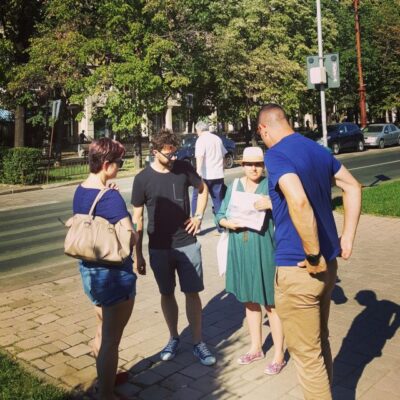
This is the part of the tour that seems to matter most. When the guide is strong, the whole day turns from information to meaning. The tour is led by an English-speaking guide, and the examples of guide quality you’ll hear about line up with what you want in a day like this.
I noticed that guides such as Diana are described as exceptionally well prepared. Others like Christian are praised for being both knowledgeable and entertaining. And one guide named Claudio was described as excellent, even though an unrelated communication problem caused trouble for a group.
You might also meet a driver named Cristian, and that matters because the day includes longer drives and multiple stops. A good driver keeps everything smooth so the guide can focus on storytelling rather than firefighting directions.
My practical advice: ask your guide one question at the beginning that you care about, like how the revolution story connects to what you’ll see at Revolution Square. Good guides love that, and it can turn the tour into a tailored conversation.
Price and Value: Does $111.32 for an 8-hour Private Tour Make Sense?
The price is $111.32 per person. On paper, that can feel high for one day. In reality, you’re paying for a private, guided format plus real driving time out to Targoviste and back.
Here’s what you get for the money: hotel pickup and drop-off, transportation in an air-conditioned car or minibus, an English-speaking guide, and assistance throughout the trip. That combo is especially valuable when sites are spread out and you want someone to manage the route.
What’s not included changes the math a bit. Entrance and photo fees are extra, and lunch is not included. If you want a camera-friendly day, you should budget for photo-related fees. If you skip lunch planning, you can end up paying more just for convenience.
So who is this best value for? Couples, small groups, and anyone who wants a guided storyline rather than piecing together sites with taxis. If you’re the kind of traveler who likes learning as you go, this price starts to look fair. If you’re traveling solo and already plan to visit only one or two major sites, you might compare costs with individual tickets and transit.
One more point: the experience is commonly booked about 32 days in advance, so if your dates are fixed, it’s smart to lock it in early.
Should You Book This Tour? My Decision Rules
Book it if you want a guided, connected explanation of Romanian communism in Bucharest and you’re okay with a full day that includes a difficult theme. I’d also book it if you care about seeing both the official story, like the Palace of the Parliament and Revolution Square, and the everyday backdrop through the communist neighborhoods.
Pass or reconsider if you hate early starts or if you want lunch handled for you, because lunch is not included. Also, if you’re extremely budget-sensitive once you add entrances and photo fees, do the quick extra-cost check before you commit.
And one last decision rule that’s worth your time: confirm your pickup and contact details carefully before the 7:30am start. When it works, the day is smooth. When contact fails, it can turn an educational tour into a stressful morning.
FAQ
FAQ
What time does the Private Tour: Story of Communism in Bucharest start?
The tour start time is 7:30am.
How long is the tour?
The duration is about 8 hours.
Is this tour private or shared?
This is a private tour/activity, and only your group participates.
Do you get hotel pickup and drop-off?
Yes, hotel pickup and drop-off are included.
What cities and main stops are part of the tour?
The route includes Bucharest and Targoviste, with stops such as the Targoviste Military Base museum, the Palace of the Parliament, Revolution Square, and communist-era neighborhoods, plus a memorial photo gallery.
What kind of transportation is provided?
Transportation is provided by a comfortable air-conditioned car or minibus.
Is the guide English-speaking?
Yes, the tour includes an English-speaking guide.
What’s included in the price?
Included items are hotel pick-up and drop-off, transportation, an English-speaking guide, and assistance during the entire trip.
What costs extra?
Entrance and photo fees are not included, and lunch is not included.
What is the cancellation policy?
This experience is non-refundable and cannot be changed for any reason.
Newest Bucharest write-ups
- Half Day Tour in Bucharest
★ 5.0 · 1 review - Private transfer to BRASOV
★ 5.0 · 1 review - Bucharest Private Custom Walking Tour with Guide (Private Tour)
★ 5.0 · 1 review - Bucharest: Capture the most Photogenic Spots with a Local
★ 5.0 · 1 review - Transfer Bucharest to Constanta / Mamaia
★ 5.0 · 1 review - Uncover Transylvania: Private 2-Day Tour Bears & Medieval Wonders
★ 5.0 · 1 review - 7-Days Grand Romania tour from Bucharest
★ 5.0 · 1 review
Communist-Era Tours, compared.

Parliament, Ceausescu House & Village Museum Tour
Read our review →
Bucharest Essential Tour: Old Town, Calea Victoriei & Communism
Read our review →
Communism in Bucharest – Landmarks, Museum & Communist Appetizers
Read our review →
Palace of Parliament, Ceausescu House & Village Museum
Read our review →Browse the lists this tour appears in