
Reviewed · NORTHERN MARAMURES TRIPS
3 Day Tour of Maramures
Wood towns can still surprise you. Maramures does that fast, with wooden churches, community storytelling, and artisan work that feels daily, not staged. You also get two big memory stops in Sighet, which add weight beyond the postcard stuff.
What I love most is the way the schedule connects big sights to real people. Day 1 brings the Săpânța blue cemetery and then moves into the Memorial of the Victims of Communism, and Day 2 and 3 focus on workshops, weaving, pottery, and water-powered tools where you can watch skills still used. I especially liked how the guide experience can matter here, and one name that stands out for this route is Teo, a local who helps you understand what you are seeing and talk with confidence.
The only drawback to plan for is emotional range and timing. You will go from playful carved epitaphs to Holocaust and communist-era history, and the drive times between villages mean you will spend long chunks on the road with a moderate fitness expectation.
In This Review
- Key highlights at a glance
- From Cluj-Napoca to Maramures, how this 3-day plan actually feels
- Day 1: Merry Cemetery, wooden churches, and the Sighet memory trail
- Merry Cemetery, where epitaphs tell local life
- Sapânța Peri Monastery, a wooden church built to be seen
- Memorial of the Victims of Communism and of the Resistance in Sighet
- The Elie Wiesel Memorial House, Jewish culture and Holocaust memory
- Day 2: Barsana Monastery and artisan work that is still part of daily life
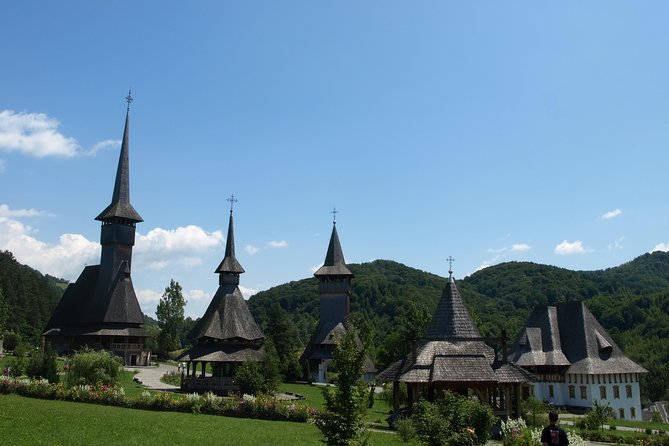
- Barsana Monastery, the Northern Transylvania wooden masterpiece
- Botiza, plant-dyed wool rugs and intangible craft
- Sacel, unglazed Dacian-style pottery and ritual masks
- Day 3: Breb, Sarbi’s water-powered machines, and Budesti’s optical illusion
- Breb, locals and a village poet
- Sarbi, farm machines pulled by water
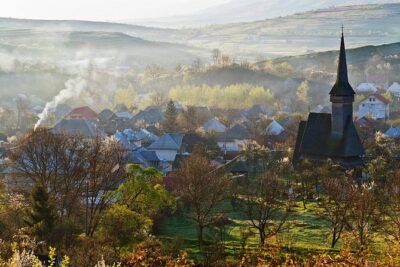
- Budesti, optical illusion plus a medieval wooden church
- Price and value: what you get for about $763
- The guide factor: why Teo’s local perspective changes the day
- Practical advice, what to expect and how to pace it
- Who should book this Maramures tour
- Should you book the 3-Day Maramures plan?
- FAQ
- What is the tour duration?
- Where does the tour start and end?
- What time does the tour start?
- Is this a private tour?
- Is the tour offered in English?
- What is included in the price?
- Are meals included?
- Are admission tickets included?
- What stops are on Day 2?
- What is the cancellation cutoff for a full refund?
Key highlights at a glance
- Săpânța’s Merry Cemetery: brightly painted wooden crosses with epitaphs in verse, some of them funny, all of them personal.
- 75-meter Sapânța Peri wooden church: a tall, visible symbol of how far timber building tradition can go.
- Sighet’s prison-turned memorial: cells and exhibits that cover 1945 through 1989, Romania’s late communist era to the fall of the Berlin Wall.
- Living crafts in Botiza, Sacel, and Breb: plant-dyed wool rugs, Dacian-style unglazed pottery, and other skills still practiced.
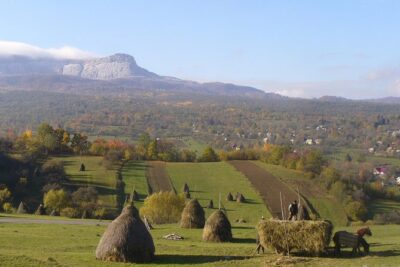
- Sarbi’s water-powered farm machines: fulling mill, carding mill, whirlpool, and an alcohol distillery still used for community needs.
- Budesti’s optical illusion plus a medieval wooden church: a lighter ending on Day 3 before you head back to Cluj-Napoca.
More of Maramures, up north:
- Maramures best, full day tour from Cluj★ 5.0 · 33 reviews
- From Cluj-Napoca: Maramures Day Tour★ 5.0 · 19 reviews
- Two days tour to Maramures: local experiences and culture★ 5.0 · 9 reviews
- Maramures Activ Tour★ 5.0 · 6 reviews
From Cluj-Napoca to Maramures, how this 3-day plan actually feels
The tour starts at Piața Unirii 15, Cluj-Napoca at 9:30 am, and you end back at the same meeting point. It runs about 3 days, with 2 nights in a 3-star property and breakfast included both mornings you stay over.
Because it is a private tour, you are not sharing the day with random groups that can change the pace. The itinerary is built in a way that mixes long stops with shorter ones, so you get real time at the key places without feeling like every hour is an airport-style line-up.
Still, plan mentally for travel time. Maramures villages spread out, and the route takes you through multiple towns across two full days plus a final circuit on Day 3. That is part of the value: you are not just ticking off monuments, you are watching how culture changes from village to village.
The tour is offered in English, and you travel with private transportation. A big practical bonus is that all fees and taxes are handled, and you get a mobile ticket.
Day 1: Merry Cemetery, wooden churches, and the Sighet memory trail
Day 1 has a powerful arc. It starts with something visually joyful and community-focused, then shifts into memorials that ask you to sit with the past.
Merry Cemetery, where epitaphs tell local life
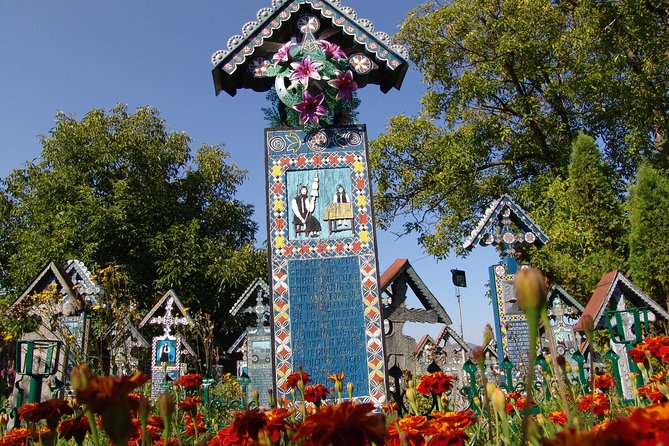
The Merry Cemetery is world-famous for a reason. Instead of plain headstones, you get lively wooden crosses, carved with epitaphs and images, painted in vivid colors dominated by Săpânța blue. The verses do double duty: they mark the deceased and also read like a community chronicle, including virtues and vices with a dose of humor.
This is the kind of stop where you should slow down. If you just glance, you miss the point. Take time with the carvings and colors, then read the epitaphs. The comedy is part of how the community processes loss, not a distraction from it.
Time on site: about 1 hour 30 minutes, with admission included.
Other Cluj Napoca days worth the drive

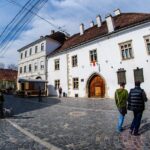
Sapânța Peri Monastery, a wooden church built to be seen
Next is Sapânta-Peri Monastery, described as the tallest wooden church in the world at 75 meters. The height is not just a stat, it shapes how you experience it. You see the structure as a landmark, then you get the visual payoff when you look up and realize how much work and craftsmanship goes into timber at that scale.
You also get the benefit of a shorter stop, so you do not feel rushed.
Time on site: about 30 minutes, with admission included.
Memorial of the Victims of Communism and of the Resistance in Sighet
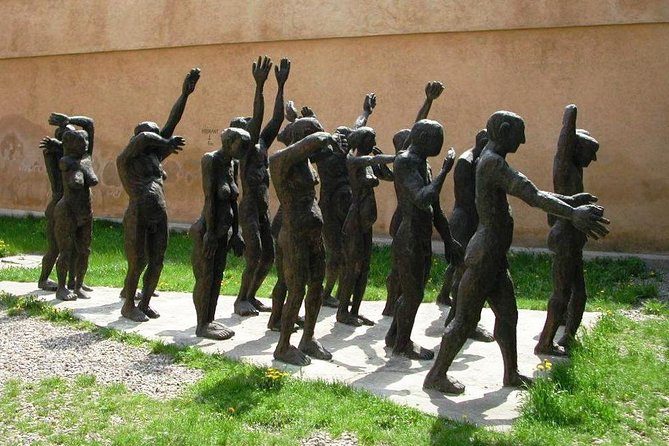
Then comes the emotional pivot. The Memorial in Sighet is an old prison turned into a museum. Cells are now exhibits, and you learn the recent history of Romania from 1945 to 1989. The museum also focuses on how totalitarian systems work, what communism looked like in practice, and the mechanics of resistance.
This is one of those places where the facts can hit hard. If you tend to get overwhelmed by heavy history, give yourself permission to take breaks inside the museum flow. You do not need to absorb everything in one pass to understand what it represents.
Time on site: about 1 hour 30 minutes, with admission included.
The Elie Wiesel Memorial House, Jewish culture and Holocaust memory
Rounding out Day 1 is the Elie Wiesel Memorial House, also called the Museum of Jewish Culture in Maramureș. It is the house where Elie Wiesel was born, and it hosts the Jewish Museum of Sighet, with displays largely focused on the Holocaust.
You may also have optional ways to deepen the experience if you want, such as visiting the Sephardic Synagogue, the Jewish Cemetery, and the Holocaust Monument. Because those options are not guaranteed in the schedule details, I suggest you treat this as a choose-your-own-depth moment while you are there.
Time on site: about 30 minutes, with admission included.
Day 2: Barsana Monastery and artisan work that is still part of daily life
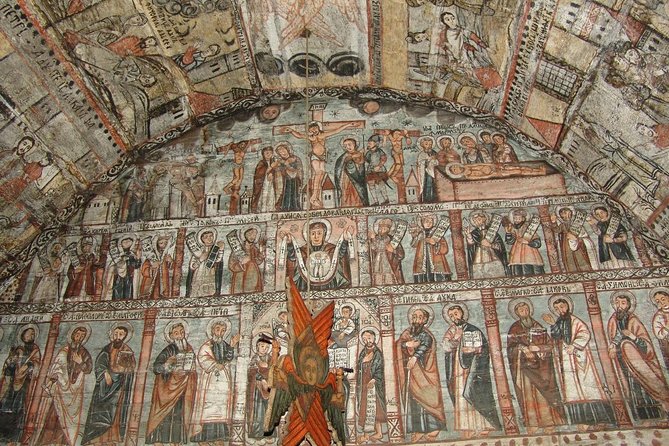
Day 2 is about scale and hands-on craft. You start with a big wooden monastery complex, then shift to village-level skills where people dye, weave, shape, and carve.
Barsana Monastery, the Northern Transylvania wooden masterpiece
Barsana Monastery is described as the most impressive monastery of Northern Transylvania, a huge complex built in wood, plus flowers and an eye-catching setting. Even if you know little about monastic life, the building itself makes an impression: this is architecture as living tradition, not an isolated artifact.
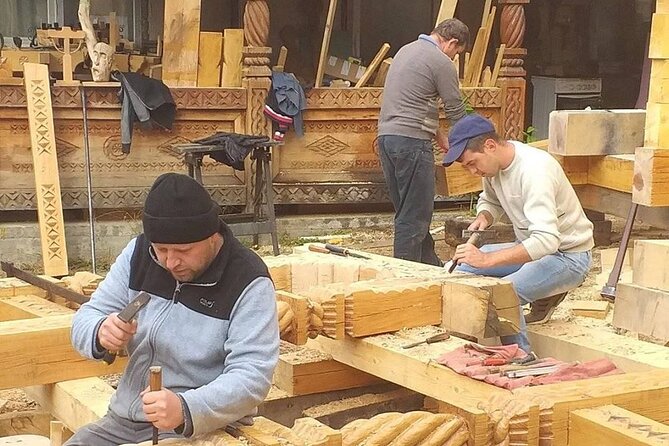
In the same area, you also have time connected to wood carving work. That matters because it connects worship, design, and craft through the same material.
Time on site: about 1 hour 30 minutes, with admission included.
Botiza, plant-dyed wool rugs and intangible craft
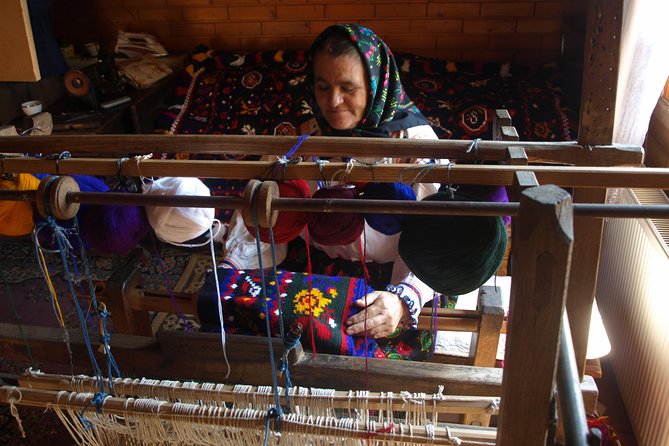
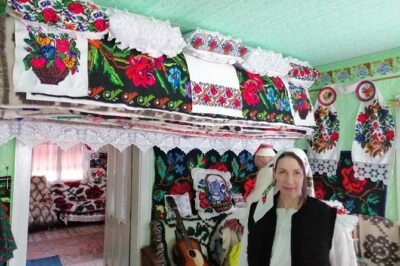
In Botiza, you visit a woman who weaves woollen rugs colored using dyes produced from plants. The rugs feature antique-style motifs, and the craft is recognized internationally as inscribed on the Representative List of the Intangible Cultural Heritage of Humanity in 2016.
What makes this stop valuable is that it is not just watching a product. You are seeing the process and the sourcing logic behind it. If you are the type who buys souvenirs you actually care about, this is where you learn why handmade items cost more, and why the design language still matters.
You also get a chance to see people working in fields and visit a mineral spring in the same village area.
Time on site: about 1 hour, and it is listed as admission free.
Sacel, unglazed Dacian-style pottery and ritual masks
In Sacel, you meet the only ceramist still making Dacian style unglazed pottery. That is a specific claim, and it tells you the tour is focused on people keeping older techniques alive, not just repeating what tourists expect.
You may also meet another artisan who makes wool and sheepskin ritual masks if available. The village is also home to a wood carver and a lady living in her 100-year-old wooden house.
This combination is a big reason to choose a guided format here. Without a guide, it is easy to see crafts as random curiosities. With interpretation, it becomes a map of how knowledge passes down, why certain materials are used, and how tradition adapts while staying recognizable.
Time on site: about 1 hour 30 minutes, listed as admission free.
Day 3: Breb, Sarbi’s water-powered machines, and Budesti’s optical illusion
Day 3 keeps the momentum but adds variety. You start with friendly locals and a craft workshop, then shift to working water-powered tools, and finish with a wooden church plus a visual puzzle.
Breb, locals and a village poet
In Breb, you meet friendly locals, including a village poet, and you visit a crafts workshop. This is the side of Maramures that can feel like a living conversation. It is not a set piece. You are watching culture happen in front of you.
If you like creative writing, folk expression, or just learning how a place talks about itself, this stop is a strong use of your time.
Time on site: about 1 hour 10 minutes, listed as admission free.
Sarbi, farm machines pulled by water
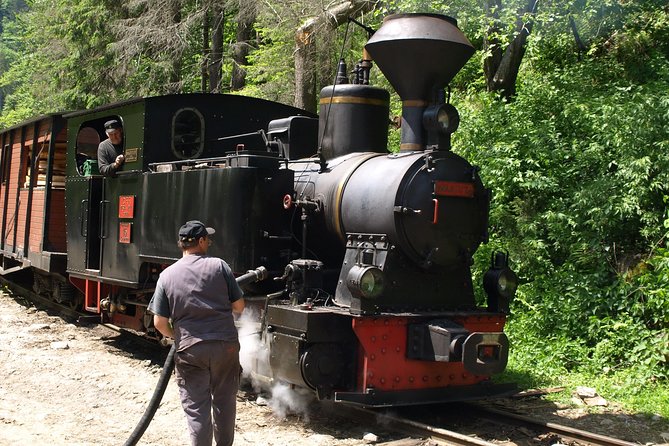
Sarbi is all about old technology still doing real work. You see the best farm machines pulled by water, operating for community needs, including a fulling mill, carding mill, whirlpool, and an alcohol distillery.
Even if you are not a machinery person, this is fascinating because it shows how communities engineered efficiency with local power. Water power is not romantic in the abstract here. It is functional, and you get the satisfaction of seeing how something practical can also be beautifully built.
Time on site: about 1 hour, admission listed as free.
Budesti, optical illusion plus a medieval wooden church
Finally, Budesti gives you two different pleasures. First is the Romania’s most weird optical illusion, then you visit a medieval wooden church.
This is a clever landing spot because it lightens the mood after the heavier memorial stops from Day 1, while still staying in the same theme of place-based tradition. The optics stop is also a good reminder to stay present. Look, react, and then look again.
Time on site: about 1 hour, admission listed as free.
After Budesti, you return to Cluj-Napoca, where the tour ends back at the meeting point.
Price and value: what you get for about $763
At $763.34 per person for roughly 3 days, this is not a budget day trip. But it does have several value anchors that matter:
- Private transportation for the whole route, not shared transfers.
- Professional local guide, in English.
- 3-star accommodation for 2 nights.
- Breakfast included (2 days).
- All fees and taxes handled.
- Admission included on several major Day 1 and Day 2 highlights, with other village craft stops listed as free.
In other words, you are paying for the full package: guidance, movement, and access. That matters in Maramures because you are moving between villages and meeting specific people whose crafts you cannot replicate on your own without time and local planning.
If you are a solo traveler, the per-person cost can feel high compared to group-lump sightseeing. But because it is private for your group, you are more likely to get a smoother flow and a better guide explanation during the handmade and memorial moments.
The guide factor: why Teo’s local perspective changes the day
One theme that stands out strongly with this tour style is that the guide is not just interpreting signs. A local guide helps you understand what you are seeing and why it matters.
For this route, Teo is mentioned as a standout guide. His impact is described as more than translation, it is about building trust so conversations feel natural. That can make village craft visits feel less like a staged stop and more like a real exchange, especially when you meet people in the spaces where they work, including moments like meeting a lady living in a 100-year-old wooden house.
If you want your photos to tell a story, a guide who understands the community helps you notice details you would otherwise skip.
Practical advice, what to expect and how to pace it
Here are the practical points I’d keep in mind before you go.
First, the emotional range is real. Day 1 includes the Memorial of the Victims of Communism and of the Resistance, plus the Jewish Museum of Sighet focused heavily on Holocaust memory. You will also start with humor and color at the Merry Cemetery. Plan for your mood to shift during the day, and do not force yourself to keep up a constant pace.
Second, your best tool is curiosity. These craft stops work best if you ask simple questions and accept that you may not get every detail. The tour structure already supports short, focused visits, about an hour to an hour and a half at most craft or monastery stops.
Third, pack for village visits. The tour includes workshops and meeting locals, which usually means you are in and around work areas. Comfortable shoes help, and bring a light layer. Even if the day feels mild, timing and village microclimates can surprise you.
Finally, follow the guide on timing. Several stops are short by design. The day is structured to keep flow, not to turn each place into a half-day lecture.
Who should book this Maramures tour
This tour is ideal if you:
- Want wooden church culture plus village crafts, not just one kind of sight
- Enjoy meeting artisans and seeing skills practiced in real settings
- Can handle thoughtful history days with museums tied to difficult chapters of the 20th century
- Prefer a private group pace with English guidance
It might be less ideal if you dislike memorial history or if you want only light, photo-only sightseeing with zero emotional heaviness. There is also a moderate physical fitness requirement, so plan around walking inside museums and around village sites.
Should you book the 3-Day Maramures plan?
I think you should book it if you want Maramures to feel like a real place with real people, not a theme park of wood churches. The strongest reason is the balance: you get the famous visual icons like the Săpânța blue cemetery and the 75-meter wooden church, then you get deeper context in Sighet, then you finish with working craft traditions and water-powered machines that are still doing their job.
If you are drawn to both beauty and meaning, this route fits. If you only want quick, cheerful sightseeing, you may find Day 1 intense.
FAQ
What is the tour duration?
The tour lasts about 3 days.
Where does the tour start and end?
It starts at Piața Unirii 15, Cluj-Napoca 400394, Romania, and it ends back at the same meeting point.
What time does the tour start?
Start time is 9:30 am.
Is this a private tour?
Yes. It is private, with only your group participating.
Is the tour offered in English?
Yes, it is offered in English.
What is included in the price?
Included are private transportation, all fees and taxes, 3-star accommodation for 2 nights, a professional local guide, and breakfast for 2 days.
Are meals included?
No. Meals, drinks, and snacks are not included.
Are admission tickets included?
Admission tickets are included for several stops (like Merry Cemetery, Sapanta-Peri Monastery, the Sighet memorial, and the Elie Wiesel Memorial House, plus Barsana Monastery). Other stops are listed as admission free.
What stops are on Day 2?
Day 2 includes Barsana Monastery, Botiza, and Sacel.
What is the cancellation cutoff for a full refund?
You can cancel up to 3 days in advance for a full refund.
Newest Cluj Napoca write-ups
- Transylvania’s Trail: Sibiu, Bran Castle, Brasov and Sighisoara
★ 5.0 · 1 review - Via Ferrata Transylvania
★ 5.0 · 1 review - Sibiu and wine tasting, day tour from Cluj
★ 5.0 · 2 reviews - Cluj Insight: Walking tour with a travel writer & historian
★ 5.0 · 2 reviews - 3-Day Halloween Tour in Transylvania from Cluj-Napoca
★ 5.0 · 2 reviews - Private city tour in Cluj-Napoca
★ 5.0 · 2 reviews - Discover Corvin Castle in Hunedoara and Deva Fortress
★ 5.0 · 2 reviews
Northern Maramures Trips, compared.
Classic Romania Tour – small group in 8 days: Transylvania and Maramures
Read our review →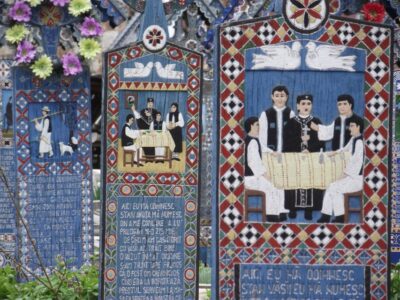
Two days tour to Maramures: local experiences and culture
Read our review →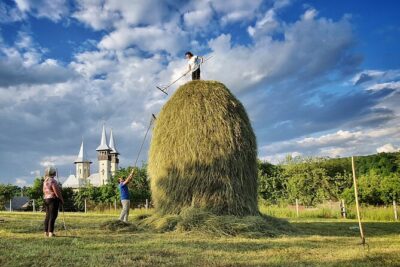
A Journey Back in Time: Countryside from Transylvania and Maramures – 15 Days
Read our review →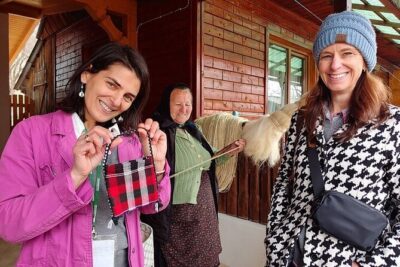
Your rendez-vous with Europe’s past: time-travel to Maramures, Transylvania
Read our review →Browse the lists this tour appears in