
Reviewed · NORTHERN MARAMURES TRIPS
Your rendez-vous with Europe’s past: time-travel to Maramures, Transylvania
Time travel hits fast in Romania. This private week threads UNESCO wooden churches and Transylvania legends into a single, low-stress trip, guided by Gelu with driver Vlad doing the heavy driving. Expect at least a couple of long car stretches, especially on the move between Maramures and Saxon Transylvania.
I like that the hard work is handled for you, with admissions organized and breakfast included for 7 nights, plus lunch and dinner on two days. The possible drawback is that because it is private and packed with major sights, you will want a calm pace mindset and comfortable shoes for the stairs and old-city walks.
In This Review
- Key highlights to know before you go
- Maramures to Transylvania in one private 7-day rhythm
- Gelu and Vlad keep the week smooth, and that matters
- Day 1: Cozia Monastery through the Olt Valley to Sibiu’s medieval stairs
- Day 2: Alba Iulia’s fortress power and Cluj-Napoca’s Hungarian roots
- Days 3 and 4: Maramures wooden churches, Breb village life, and a slow, human pace
- Day 5: Ieud Valley wooden churches to Biertan’s fortified defense walls and Sighișoara
- Day 6: Viscri, Saschiz, and Brasov’s Black Church, Rope Street, and bastions
- Day 7: Bran Pass to Peles Castle, then Bucharest’s Stavropoleos Church
- Price and value: $2,185.67 per person for 7 days of private touring
- Should you book this Maramures and Transylvania tour?
- FAQ
- Where does this tour start in Romania?
- How long is the tour?
- What is included in the price per person?
- Are entrance tickets included?
- Does the tour include pickup?
- Is this a private tour?
- How much does it cost?
- Is it refundable if you cancel?
- What are the available meeting hours?
Key highlights to know before you go
- UNESCO wooden churches in Maramures, from Surdesti to Ieud and Desesti
- Sighișoara at late afternoon, in the medieval citadel plus Vlad the Impaler ties
- Fortified Saxon churches in UNESCO country, especially Biertan and fortified stops near Viscri
- Sighet prison memorial in northern Romania, built from real scars of dictatorship and resistance
- Bran Castle and Bran Pass scenery, plus Peles Castle’s royal contrast
- Private guide and driver setup, which makes questions, timing, and route tweaks easier
More of Maramures, up north:
- Classic Romania Tour – small group in 8 days: Transylvania and Maramures★ 5.0 · 22 reviews
- A Journey Back in Time: Countryside from Transylvania and Maramures – 15 Days★ 5.0 · 7 reviews
- 6-Days Transylvania & Wooden Churches of Maramures from Bucharest★ 5.0 · 5 reviews
- Private 7-Day Tour in Transylvania, Maramures and Bucovina from Bucharest★ 5.0 · 2 reviews
Maramures to Transylvania in one private 7-day rhythm
If you are trying to see Romania’s north without juggling buses, maps, and ticket lines all week, this is built for you. The biggest advantage is not the checklist of famous names, it is the flow: you wake up, get picked up, and spend your daylight on places that matter. It also helps that this is private, so you are not stuck with the slowest pace in a large group.
The trip’s DNA is simple. In northern Maramures, you get peasant culture that feels stubbornly real, with wooden churches that look like they grew out of the landscape. Then the mood shifts to Saxon Transylvania, where fortified churches and medieval towns show a different kind of power, one shaped by defense, guilds, and prosperity.
Just know what you are signing up for. This is not a “one village per day” style vacation. Some days are longer and more drive-heavy than you might expect, including a long route from Maramures toward the Saxon heartland and then down toward Brasov and Bucharest.
Gelu and Vlad keep the week smooth, and that matters
A big part of the value here is the human setup. Gelu, the guide, brings the kind of travel energy that keeps history from turning into a slideshow. In the way he talks about places, you get context fast, and you are not left wondering what you are looking at.
Driver Vlad also plays a role you will feel on tired days. A comfortable, air-conditioned vehicle plus a driver who knows the roads means you spend less time “figuring out logistics” and more time looking out the window. That matters in Romania, where distances can add up quickly even when the sights are not that far apart on a map.
If you like asking questions, taking photos, and having the schedule flex a bit, a private guide setup is one of the best ways to get it. This kind of tour works best when you see it as a guided conversation through time, not a rigid bus route.
Day 1: Cozia Monastery through the Olt Valley to Sibiu’s medieval stairs
You start from Bucharest, either at your hotel or at the airport, and head out by car through the Olt River valley. That early drive is not just a transfer. It sets the tone with countryside views before the history starts talking.
Cozia Monastery is where the medieval story kicks off. Founded in 1388 by Mircea the Elder, it is tied to the Wallachian power network that runs through Romanian legend. If you have heard Vlad the Impaler name before, Mircea the Elder is the kind of ancestor figure that helps the legend feel less like a standalone horror movie and more like a real family and political era.
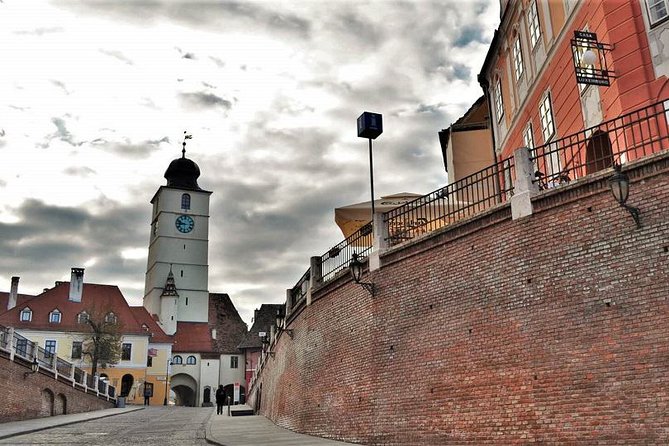
From there, you reach Sibiu, an old city that rewards walking. The stop includes a guided stroll of the Grand Square, Small Square, and Albert Huet Square, plus visits to the Orthodox Cathedral and the Evangelical Church. I like this combination because Sibiu shows how different communities built different identities in the same city. And yes, you will be climbing up to viewpoints, including the Council Tower, so plan for real stairs.
A consideration: Sibiu is a walking city and the day is front-loaded with travel. If you are not a morning person, it helps to pack water and snacks for yourself, since you are doing multiple stops in a row.
Other Bucharest days worth the drive
Day 2: Alba Iulia’s fortress power and Cluj-Napoca’s Hungarian roots
Day two steps into a more political, medieval chapter. First comes Cetatea Alba Iulia, the Alba Carolina fortress, connected to John Hunyadi (Corvin) and his son, King Matthias Corvinus. Even if the Hungarian names feel heavy at first, the layout makes the story easier to grasp. You visit the fortress area and important religious sites, including Saint Michael Cathedral, where construction began in 1004, plus the Orthodox Coronation Cathedral. You also see the ruins connected to the Roman castrum of the 13th Gemina Roman Legion.
This is one of those stops where the “iconic” part is also quietly educational. You are looking at layers: Roman military presence, medieval dynastic ambition, and religious architecture all in one place. It is a strong day for anyone who likes history that feels lived-in rather than staged.
Then you move on to Cluj-Napoca for a shorter city tour. The key point here is not a single building, it is atmosphere. The tour wraps up near places connected to Matthias Rex, the son of John Hunyadi. Even with less time in the city than other destinations, Cluj gives you a sense of Romania as a living modern hub, not only a museum.
Days 3 and 4: Maramures wooden churches, Breb village life, and a slow, human pace
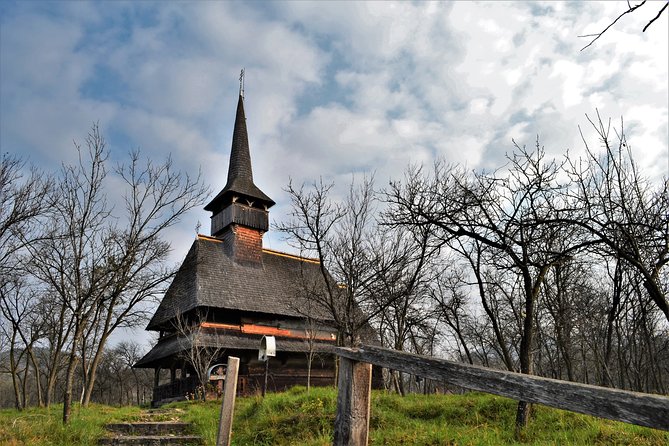
The Maramures shift starts right away. From Cluj-Napoca you head north toward one of the last regions where traditional peasant culture still feels strong.
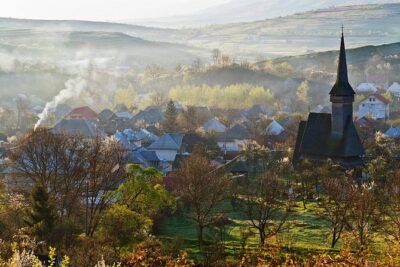
In Surdesti, you stop at the UNESCO-listed wooden church, a Greek-Catholic church built in 1766. The standout detail is that it was until recently the tallest wooden church in the world. That kind of fact changes how you look at the building, because you stop thinking of it as a quaint wooden chapel and start thinking of it as an engineering achievement made from local materials and local skill.
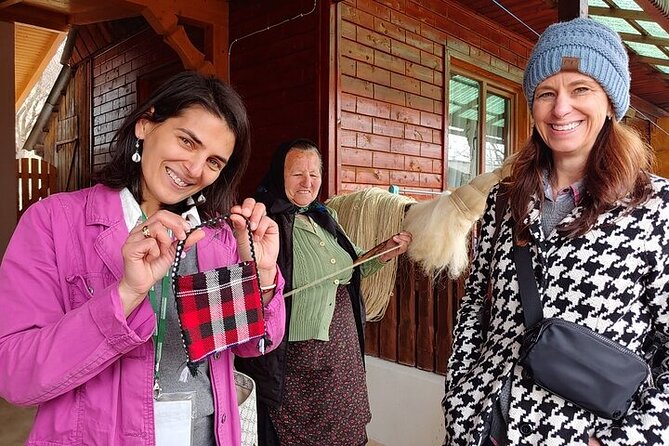
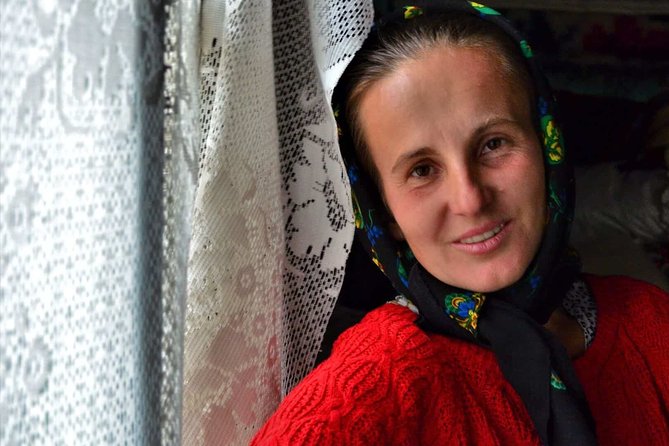
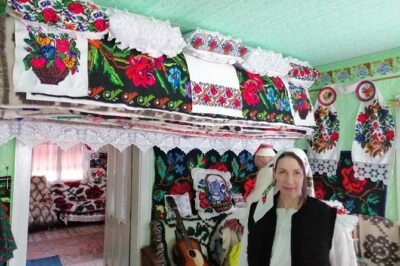
Then comes Breb, where you check in for the next couple of days at a traditional cottage in the village. This is where I think the tour’s value really shows. You are not only visiting monuments, you are staying in a place that reflects the culture. The afternoon in Breb is described as unhurried, with traditional food hosted by locals. That is the time to breathe between the major stops.
Day 4 keeps the culture going, but adds variety. Barsana Monastery is described as an early 1990s Orthodox monastic complex, modern in construction but rooted in local tradition. That is a good reminder: tradition is not only old stone and medieval timber. It can also be alive in new buildings.
Next is Sapânta Merry Cemetery, where the tone flips from solemn to playful. A local artist started carving and painting wooden crosses, adding vivid, ironic epitaphs that talk about daily life and death with humor. You do not need to be a humor person to enjoy it, because it still shows how people process loss through art.
Finally, you visit the Memorial of the Victims of Communism and of the Resistance in Sighet, created from the former Communist prison. The tour notes that from 1950 to 1955, 211 important Romanian figures were imprisoned there in dreadful conditions, including political leaders, respected intellectuals, academy members, bishops and many priests, and army generals, many of them old or already sick. This stop is heavy, but it is also specific and grounded, and it helps you understand why Romania’s 20th-century story is never only political, it is deeply personal.
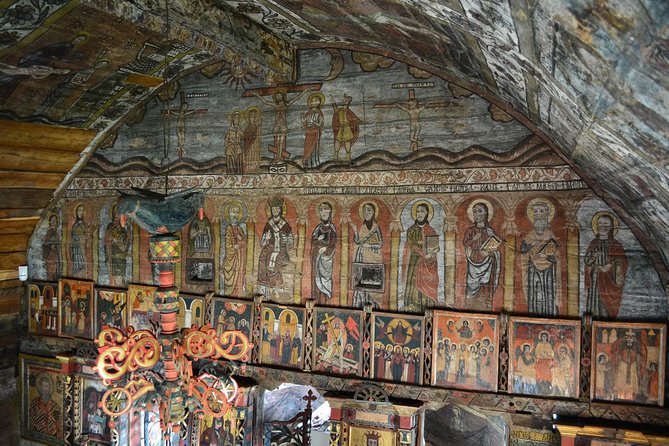
You also include Desesti, another UNESCO wooden church, known for its naive, well-preserved old pictures. This is a great way to close the Maramures rhythm, with yet another style of storytelling in wood.
Day 5: Ieud Valley wooden churches to Biertan’s fortified defense walls and Sighișoara
On day 5 you go from Maramures core landscapes into Saxon Transylvania. The drive is long, but the stops break it up so you do not feel trapped in the car.
First is Ieud village, with two traditional wooden churches. The church on the hill is Orthodox and from the 17th century, and it is also UNESCO-listed. The church in the valley is Greek-Catholic, called the Wooden Cathedral for its slender proportions and balanced form. It was erected in 1718 after Tartars invaded and were defeated in 1717 by local Romanian peasants led by a priest. The church’s art angle is also concrete: it hosts a rich collection of glass icons and, importantly, it was never painted.
Then you reach Biertan Fortified Church, UNESCO-listed and built from 1486 to 1524. Here the story turns from wooden worship to fortified survival. You see defense walls and a nave ceiling, plus a collection of tombstones of bishops and notable people. Even if you do not love defensive architecture, it helps you understand why these communities were built to last.
You end the day in Sighișoara, walking the medieval citadel in late afternoon and evening. It is UNESCO, and it ties to Vlad the Impaler through the claim of his birthplace. The timing is intentional, because the citadel feels more atmospheric when you are not fighting harsh daylight.
A consideration: Sighișoara evenings can be cooler, and you will likely do cobblestone walking. I would pack layers even in warmer months, because weather changes in this region.
Day 6: Viscri, Saschiz, and Brasov’s Black Church, Rope Street, and bastions
Day 6 is where rural Saxon Transylvania and city highlights get stitched together.
You visit Viscri Fortified Church, another UNESCO stop. The tour also builds in the story of Prince Charles, who fell in love with the area after buying an old Saxon household in Viscri, no. 163, a blue house built in 1753. The itinerary notes that he returned every few years to ride horses and travel. Whether you care about royal celebrity or not, it gives you a lens for why fortified Saxon villages became internationally known.
On the way you also see Saschiz fortified church and the nearby Rupea fortress sightline. Saschiz is described as built at the end of the 15th century with a tower reminiscent of Sighișoara’s clock tower. Rupea fortress is called one of Romania’s oldest fortifications, built over preexisting Roman and Dacian fortresses. Even from a viewpoint stop, this helps you connect earlier empires to medieval defense planning.
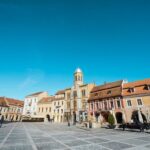
Then you check into Brasov Historical Center, including a visit to the Black Church, fortifications with bastions and towers, and Rope Street, one of the narrowest streets in Europe. Brasov’s origin is explained through the fortress established in 1211 by the Teutonic Knights, then later shaped by German settlers after a quarrel between knights and the king. The result is a city with layers you can actually feel in the streets.
This is a strong day for food and photos, but the best advice is simple: do not try to rush. Brasov feels best when you pause and look up at towers, then slow down through the old lanes.
Day 7: Bran Pass to Peles Castle, then Bucharest’s Stavropoleos Church
Your last sightseeing day leans into the most famous postcard names, but the way it is scheduled makes it more than a one-note Dracula stop.
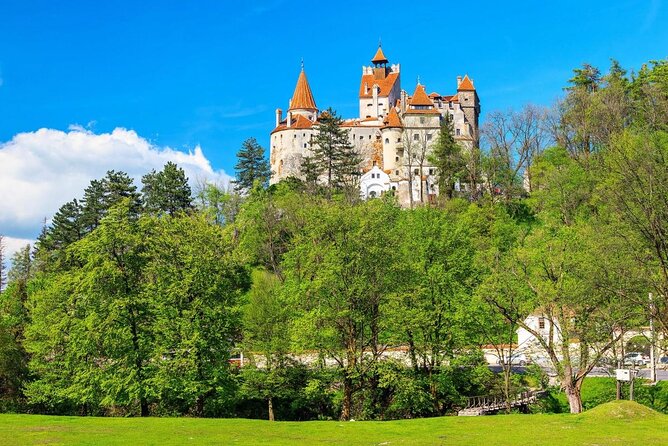
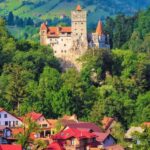
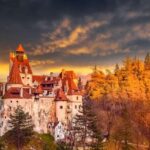
First is Bran Castle, linked to the Dracula legend. You also get the scenic experience at Bran Pass over the Piatra Craiului and Bucegi mountains. Even if you know the legend, the views are what land. This is a moment where you can look beyond the myth and enjoy why the area became story fuel.
Next comes Peles Castle in Sinaia, visited early afternoon. It is a late 19th-century flamboyant royal castle, and it contrasts with the founder, Carol I of Hohenzollern-Sigmaringen, described here as sober. That contrast matters, because it changes how you interpret the building. It is not only ornate, it is political taste and royal ambition made stone and wood.
After that, you head back to Bucharest, check in, and have time to visit Stavropoleos Church in the city. This is built in 1724, in the heart of Bucharest, and it gives you a clean ending to the week’s time-travel feel. You go from medieval fortifications and mountain passes to a city church that anchors the story back where you started.
Price and value: $2,185.67 per person for 7 days of private touring
This price is not cheap, and it does not pretend to be. What you are paying for is the privacy and the “done for you” structure: a private driver and guide for the full week, air-conditioned transport, and all fees and taxes included.
More importantly, you are paying for time. When entrance tickets and routing are handled, you do not burn half-days on logistics. You also get 7 nights accommodation in 3-star superior hotels and guesthouses, with breakfast included, plus lunch on two days and dinner on two days.
So where does the value land for you? It tends to make sense if:
- you want a guided, narrative-driven tour rather than self-planning
- you care about UNESCO sites, not only the headline castles
- you prefer comfort and a private pace, especially after long drives
Where it might not be worth it is if you love independent travel so much that you would rather drive yourself, book your own tickets, and choose a slower “one city at a time” schedule.
Should you book this Maramures and Transylvania tour?
I would book it if your dream Romania trip is mostly about seeing UNESCO sites, understanding history with a real guide, and letting someone else handle the driving. The standout strength is the range, from Maramures wooden churches and village stays to fortified Saxon churches, Sighișoara’s medieval citadel, and then the mountain scenery around Bran and Peles.
I would skip or swap if you get cranky with long car days or if you want totally free evenings every night. This tour is built to keep moving, and you should enjoy the “day after day” momentum.
FAQ
Where does this tour start in Romania?
It starts in Bucharest. You meet your guide at your hotel in Bucharest or at the airport.
How long is the tour?
The tour runs for 7 days (approximately).
What is included in the price per person?
The price includes a private, air-conditioned vehicle, private transportation, all fees and taxes, 7 nights of accommodation in double room occupancy with breakfast included, plus lunch (2) and dinner (2).
Are entrance tickets included?
Admissions are already organized during the trip. Some stops list admission ticket included, and others are noted as free.
Does the tour include pickup?
Yes, pickup is offered in Bucharest.
Is this a private tour?
Yes. It is a private tour/activity, and only your group will participate.
How much does it cost?
The price is $2,185.67 per person.
Is it refundable if you cancel?
No. It is non-refundable and cannot be changed for any reason.
What are the available meeting hours?
The operating hours are Monday through Sunday, 8:00 AM to 8:00 PM.
Newest Bucharest write-ups
- Half Day Tour in Bucharest
★ 5.0 · 1 review - Private transfer to BRASOV
★ 5.0 · 1 review - Bucharest Private Custom Walking Tour with Guide (Private Tour)
★ 5.0 · 1 review - Bucharest: Capture the most Photogenic Spots with a Local
★ 5.0 · 1 review - Transfer Bucharest to Constanta / Mamaia
★ 5.0 · 1 review - Uncover Transylvania: Private 2-Day Tour Bears & Medieval Wonders
★ 5.0 · 1 review - 7-Days Grand Romania tour from Bucharest
★ 5.0 · 1 review
Northern Maramures Trips, compared.
Classic Romania Tour – small group in 8 days: Transylvania and Maramures
Read our review →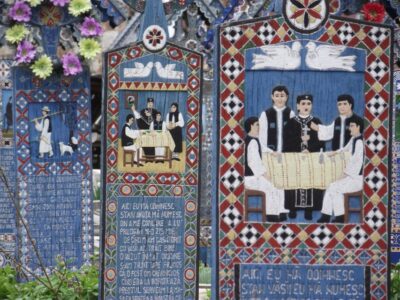
Two days tour to Maramures: local experiences and culture
Read our review →
A Journey Back in Time: Countryside from Transylvania and Maramures – 15 Days
Read our review →
Browse the lists this tour appears in