
Reviewed · MONASTERIES & PAINTED CHURCHES
Private 7-Day Tour in Transylvania, Maramures and Bucovina from Bucharest
Romania in a week feels surprisingly possible. This private 7-day plan connects Bucharest to Transylvania and Bucovina’s UNESCO sites, guided by Bogdan who keeps the days flowing. You get line-skip planning plus air-conditioned driving, so you spend less time wrangling transit and more time at the real places.
I love how this trip stacks UNESCO landmarks with stops that feel hands-on, like the wooden churches of Maramures and the black ceramic workshop at Marginea. The big consideration is that entrance fees are not included, and they total around 50 Euro per person, plus a couple of castles can be outside-only on specific weekdays.
In This Review
- Key highlights at a glance
- Bucharest to the Palace of the “Other Romania”
- Cozia Monastery and Sibiu’s medieval calm
- Alba Iulia’s star-shaped fortress, then Turda’s underground playground
- Maramures: Surdești church heights, the Merry Cemetery, and Barsana
- Bucovina’s painted monasteries: Moldovița, Sucevița, and Voroneț blue
- Humor Monastery and Neamț Fortress: faith plus defense
- Bicaz Gorge and Red Lake: the day trip that feels like a highlight reel
- Sighișoara’s pastel towers, then Bran Castle’s famous cliffside setting
- Bears in the forest and Peles Castle’s royal polish
- Price and logistics: what you’re really paying for
- When this tour is a great fit
- Should you book this UNESCO Romania private tour?
- FAQ
- How long is the tour?
- Is pickup included?
- Are entrance fees included in the price?
- What meals are included?
- Is the tour private?
- Who guides the tour?
- What happens if my schedule includes Peles Castle on a Monday?
- Is there any physical fitness requirement?
- What is the cancellation policy?
Key highlights at a glance
- Bogdan’s guiding style: clear explanations and practical context that helps you make sense of what you’re seeing
- UNESCO across regions: Transylvania, Maramures, and Bucovina in one tight route
- Weather-proof indoor moments: Turda Salt Mine keeps the “wow” going even when conditions are iffy
- Craft and culture stops: Marginea ceramics and local monastery traditions add texture beyond the famous monuments
- Nature with drama: Bicaz Gorge and Red Lake deliver big scenery without a complicated itinerary
- Comfort-focused pacing: air-conditioned transport and overnight stays described as comfortable
More of Maramures, up north:
- Classic Romania Tour – small group in 8 days: Transylvania and Maramures★ 5.0 · 22 reviews
- A Journey Back in Time: Countryside from Transylvania and Maramures – 15 Days★ 5.0 · 7 reviews
- Your rendez-vous with Europe’s past: time-travel to Maramures, Transylvania★ 5.0 · 6 reviews
- 6-Days Transylvania & Wooden Churches of Maramures from Bucharest★ 5.0 · 5 reviews
Bucharest to the Palace of the “Other Romania”
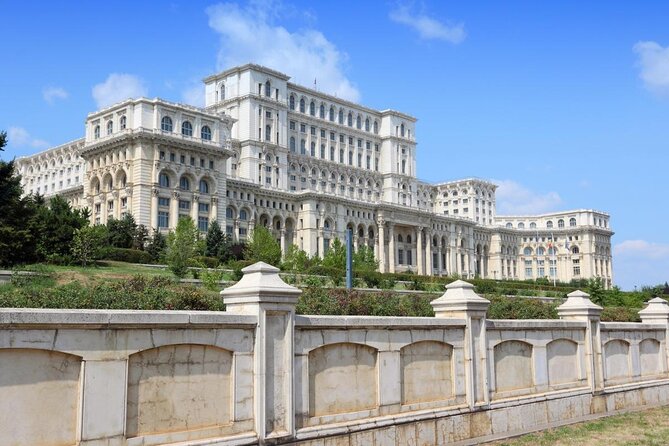
Most people start Romania dreaming of medieval towers and carved stone. This tour corrects that early with a hard left turn: you begin with Ceaușescu’s Palace, the huge communist-era build ordered by Nicolae Ceaușescu, constructed between 1984 and 1997. It’s famous for being the largest building in Europe and the 2nd largest building in the world, and it helps explain the scale of the era that shaped modern Romania.
What I like here is not the size alone, but the way your guide frames it: the palace was ordered during the darkest period of communist Romania, and the story connects politics, power, and the built environment. Even if you’ve heard of the palace before, you’ll usually come away with a sharper sense of why it looms so much in Romania’s memory.
Practical note: this is a long-route style tour, so the day matters. You want to start fresh, not rushed, because after this first stop you’ll still work your way west toward Sibiu.
Cozia Monastery and Sibiu’s medieval calm
After the palace, you pivot to something quieter and older: Cozia Monastery. The highlight is a story that feels almost too strange to be true. Ceaușescu’s stained glass windows, representing him and his wife, were demolished and hidden in the monastery attic, after being brought there in 1986. The monastery also keeps older portraits tied to rulers who once contributed to the fortress.
It’s the kind of detail that changes how you look at a site. Instead of seeing it as only religious architecture, you start noticing how places get reused, repurposed, and reinterpreted as regimes change.
Then comes Sibiu, a medieval city where Romanians and Saxons coexisted for centuries, and where different religious monuments still show up close together. The three squares, Big Square, Small Square, and Huet Square, help you “read” the town fast. You’ll also see the famous houses with the eyes, plus towers and 15th-century bastions that make the city feel lived-in, not staged.
If you’re the kind of traveler who likes to wander and then connect the dots with a guide, Sibiu is a strong match. And if you’re tired of constant castle photos, the slow medieval walk gives your eyes a break.
Alba Iulia’s star-shaped fortress, then Turda’s underground playground
Day 2 shifts from town strolling to fortress geometry at Cetatea Alba Iulia. Alba Iulia’s citadel is a preserved star-shaped defense site and, as noted on the tour plan, it’s the largest in Romania. Inside, you get museums and churches clustered within the walls, which makes it easier to picture how control and community were packed into one space.
From there, you go underground to Salina Turda, the Turda Salt Mine. This isn’t just a “walk through a cave” stop. It’s a converted mine with an underground amusement park feel, including features like a ferry wheel. You can even hire a rowboat, and there’s a bowling option mentioned as part of the fun.
Why this is worth it: it breaks the monastery and fortress cycle with something unusual that still feels very local. Salt mining is part of the region’s identity, and the museum adds the “how did people live with this resource” context.
Sizing up the time: plan for a relaxed 1.5 hours. You’ll want time to look around without feeling like you’re sprinting through.
More painted monasteries:
Maramures: Surdești church heights, the Merry Cemetery, and Barsana
Day 3 is where the tour really earns the “authentic Romania” reputation. Maramures is known for traditions that feel like they’re frozen in time, and for folklore that still lives through music, costumes, festivals, and superstition. The best part is that the villages feel distinct. Each one has its own hat style and clothing details, so you’re not repeating the same scene every hour.
First stop: Surdești Wooden Church, a UNESCO-listed site. The big detail is scale. It was described as the tallest wooden church in Europe, with a 54-meter-tall tower and a total height of 72 meters at the time, until a newer church reached higher. It also includes a double-eaved roof detail and a distinctive porch arch design.
Then you go to Sapânța for the Merry Cemetery. This is not your usual graveyard. Instead of plain stone markers, you’ll see colorful wooden crosses with life stories displayed in poems and limericks, plus small pictures showing how people died. The work was carried out for decades by Stan Ioan Patraș until 1977, and then continued by an apprentice.
If you’re worried about “too dark for me,” this cemetery may surprise you. The tone is more human and story-based than gloomy. It also helps you understand how communities treat memory as something you talk about, not something you hide.
Finally, Barsana Monastery is listed as a newly built complex, described as a convent with sixteen nuns. It’s another wooden-architecture anchor for the region, and it reinforces the theme of faith expressed through craft and design.
Bucovina’s painted monasteries: Moldovița, Sucevița, and Voroneț blue
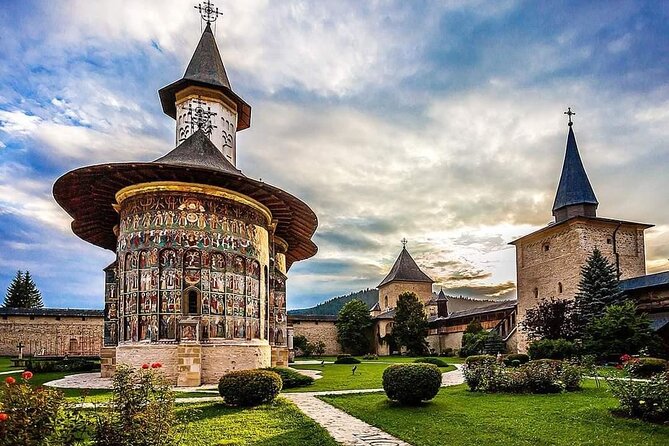
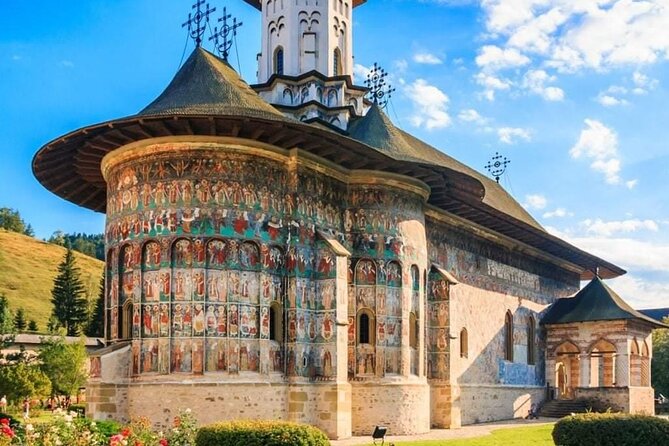
Day 4 is the painted church day, and it’s built around eight UNESCO World Heritage painted churches in Bucovina. Moldovița Monastery comes first, founded in the 16th century by Petru Rares. The main attraction is the frescoes. They cover both exterior and interior surfaces, built around Byzantine artistic influence from the 15th and 16th centuries.
A useful way to look at these churches is to treat the frescoes as visual storytelling. The tour plan emphasizes that the external walls can show complete religious cycles, so you’re not only seeing decoration. You’re seeing a system of ideas made visible in paint.
Sucevița Monastery follows, founded in the 17th century by the Movila brothers, mixing Gothic and Byzantine elements. One of the practical reasons you’ll be glad for this order is that the tour keeps moving through the different fresco styles and preservation details, so you don’t just get one look and move on.
Then comes Ceramica neagra at Marginea. If monasteries are the headlines, this is the sidebar that makes your day feel real. You can enter a workshop to see phases of black ceramic pot making, and you can buy Bucovina-specific items. You’ll also find references to decorated eggs using a traditional Romanian technique.
After Marginea, you hit Voroneț, often compared to the Sistine Chapel of the East due to its frescoes. The name and the famous detail are worth remembering: the tour plan highlights Voroneț blue, a unique color described as almost impossible to replicate. Even if your eyes are tired from looking at art all day, color like that is hard to ignore.
Tip: bring a small camera habit. Look at the whole facade first, then zoom in with your eyes second. These paintings work best when you see them as both architecture and artwork.
Humor Monastery and Neamț Fortress: faith plus defense
Day 5 starts with Humor Monastery in Manastirea Humorului village, built in 1530 by Toader Bubuioga and his wife Anastasia. The tour description also notes it sits on a hill with trees and meadows around it. The key idea is layers: the current holy place rises around 300 meters from ruins of an older monastery church that goes back to the reign of Alexandru cel Bun.
From there, you shift to defense at Neamț Fortress, described as a major medieval monument and a symbol of Moldavia under Stephen the Great. The fortress history is tied to constant enemy attacks, and the tour plan specifically mentions survival of harsh sieges like the Ottoman attack in 1476 and the Polish attack in 1691.
Why this pairing works: monasteries give you the spiritual language of the region, and fortresses give you the practical need for survival. Together, the day explains how people built both belief and protection.
Bicaz Gorge and Red Lake: the day trip that feels like a highlight reel
The last part of Day 5 is nature-focused, with Bicaz Gorges and Hasmas Mountain National Park. The tour notes that the gorge is breathtaking and that the best experience comes from walking trails, including getting off the crowded path.
You’ll also see named points like Red Lake, Ghilgos Massif, Altar’s Stone, and Hasmasu Mare. Since the details included mention a dam lake called Red Lake, and that the trunks of trees remain present in the water, this is one of those places where a quick look can feel symbolic. The tour plan also adds that legends spread about the lake’s name, so your guide should be able to give you the story thread while you’re there.
Then you visit Red Lake itself. It’s described as a natural barrier lake formed by a landslide, with tree trunks still present, which gives it an evocative atmosphere. If you’re traveling in season when it gets busy, plan on slowing down on purpose. This stop rewards a slower pace more than it rewards photo speed.
Sighișoara’s pastel towers, then Bran Castle’s famous cliffside setting
Day 6 is old-town magic plus Dracula-adjacent folklore, and it’s organized to reduce stress.
Sighișoara is a UNESCO World Heritage medieval town. You’ll take a walking tour inside the citadel, and the tour plan lists stops like the Clock Tower and the Church on the Hill, plus the house where Vlad the Impaler was born. The town is known for pastel-colored buildings, stony lanes, and medieval towers packed inside fortified walls that now hold cafes, hotels, and craft shops.
The reason I like this day order is simple: Sighișoara is best enjoyed on foot with time to wander. You get that, then you transition to Bran Castle as the more “big structure” payoff.
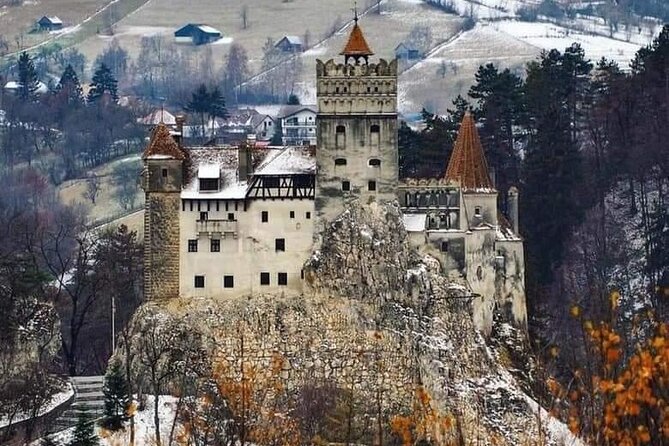
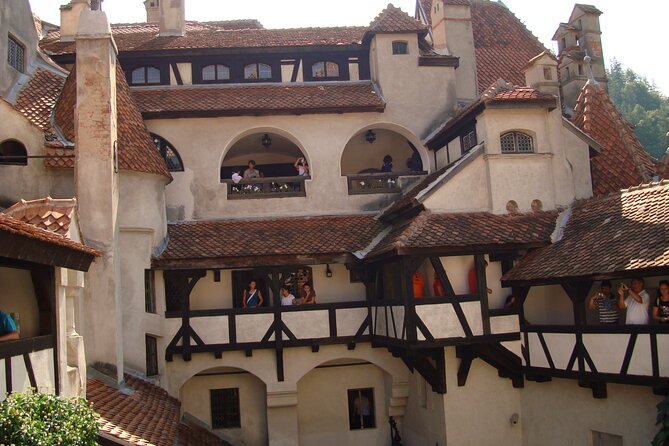
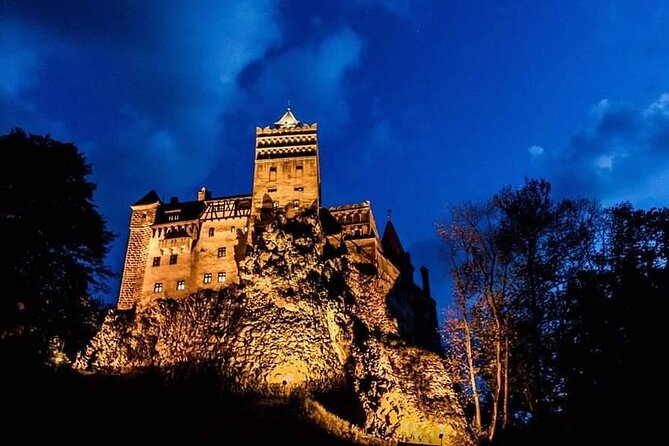
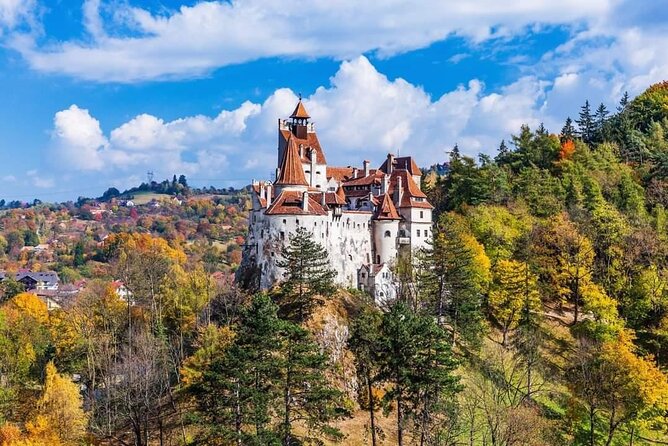
Bran Castle is the Dracula’s Castle site, built between 1377 and 1382 on a rock about 60 meters. The tour plan is honest about timing realities too: it notes Bran Castle is open on Monday at 12:00. After that, lunch is arranged at a local restaurant, with regional foods like salads, traditional soups, sarmales, and meat, with drinks and meals at your own expense.
Practical advice: if you hate crowds, go into Sighișoara ready to walk quietly and look for details, not just landmarks. The lanes and towers are the story.
Bears in the forest and Peles Castle’s royal polish
Your final day balances animals and royalty.
First is Libearty Bear Sanctuary Zărnești. The sanctuary is described as set in a forest 2 km from Piatra Craiului National Park, covering 69 hectares. It’s presented as the biggest bear sanctuary of its kind in the world and hosts around 100 rescued brown bears living with streams and ponds.
Two practical things stand out from the tour plan: taking pictures is allowed, and the facility is described as a 5-star all-inclusive resort for bears, meaning the care focus is central to the experience. Since this is a sanctuary in nature, wear comfortable shoes and expect an outdoor walk.
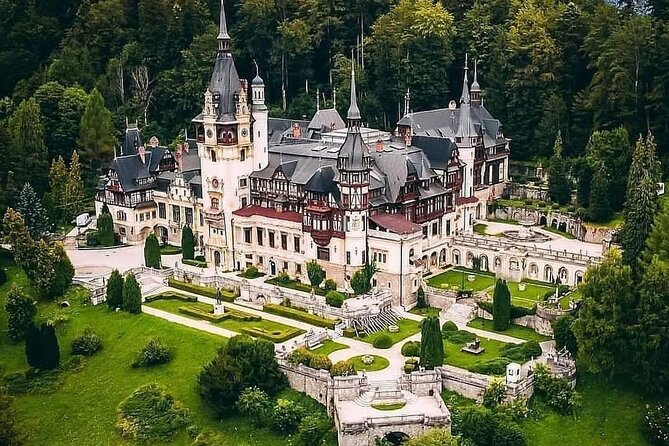
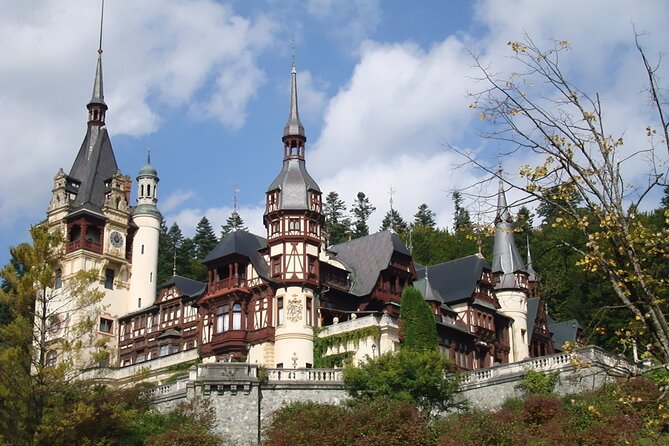
Then you finish with Peles Castle, Romania’s famous royal summer residence for King Charles I. The tour plan highlights that it’s famous for being one of Europe’s most modern castles at the time of its construction in the late 19th and early 20th centuries, with rooms in distinct styles. It also mentions a Florentine room.
Important timing note from the tour info: Peles Castle is closed on Mondays, so you can only see it from outside if your schedule lands there. Your guide should manage expectations and timing so you still get a satisfying finish.
Price and logistics: what you’re really paying for
At about $1,614.86 per person for a 7-day private tour, this is not a budget trip. But it’s also not just paying for tickets. You’re paying for the machine that makes this kind of route possible: air-conditioned transport in a private vehicle, an English-speaking guide, live commentary, and day-by-day handling of the heavy itinerary.
The inclusion list also points to real value: you get breakfasts (6) and dinners (3), plus a line-skip guarantee. For a week that includes multiple castles, citadels, and UNESCO sites in separate regions, fewer hours spent negotiating logistics can be worth real money.
Entrance fees are not included, and the estimate provided is around 50 Euro per person for all of them. Plan on that. Also plan on meals not listed as included. If you want to eat well, budget lunches and any extras.
One more practical consideration: there’s a note about moderate physical fitness and comfortable footwear. This tour is doable for many people, but it includes walking in historic areas, and some stops require standing and moving around to see details.
When this tour is a great fit
This works best if you want a guided route that hits major UNESCO sites in Transylvania, Maramures, and Bucovina without you planning each transfer. It’s ideal for first-time Romania visitors who want the major monuments plus the cultural texture, like wooden church architecture, painted frescoes, and regional crafts.
It also suits couples or small groups who prefer private pacing over squeezing into a large bus. The route is packed, but it’s organized, with a guide like Bogdan who can connect what you see to why it matters.
Should you book this UNESCO Romania private tour?
If your goal is to see Romania’s biggest UNESCO hits in one week, and you want the comfort of a guide plus private transport, I think this is a smart booking. The combination of line-skip planning, a full UNESCO route, and the mix of monasteries, citadels, nature, and craft stops is the core value.
However, if you’re trying to keep costs tightly controlled or you’re sensitive to extra walking, you’ll need to budget entrance fees and be honest about your comfort with historic-site movement. Also, check the weekday situation for Peles Castle if your start date lands on a Monday.
FAQ
How long is the tour?
The tour runs for 7 days (approx.) starting and ending in Bucharest.
Is pickup included?
Pickup is offered, and the tour includes transport by air-conditioned car or minivan.
Are entrance fees included in the price?
No. Entrance fees are not included. The tour information estimates around 50 Euro per person for all of them.
What meals are included?
Breakfast is included for 6 days, and dinner is included for 3 days. Meals are not listed as included beyond that.
Is the tour private?
Yes. It’s a private tour, and only your group participates.
Who guides the tour?
You’ll travel with a driver/English-speaking qualified guide with live commentary during the journey.
What happens if my schedule includes Peles Castle on a Monday?
Peles Castle is closed on Monday, so you can only see it from outside. Bran Castle is noted as open on Monday at 12:00.
Is there any physical fitness requirement?
The tour notes that travelers should have a moderate physical fitness level and recommends comfortable footwear.
What is the cancellation policy?
The experience is non-refundable and cannot be changed for any reason. If you cancel or ask for an amendment, the amount you paid will not be refunded.
Newest Bucharest write-ups
- Private transfer to BRASOV
★ 5.0 · 1 review - Half Day Tour in Bucharest
★ 5.0 · 1 review - Bucharest: Capture the most Photogenic Spots with a Local
★ 5.0 · 1 review - Bucharest Private Custom Walking Tour with Guide (Private Tour)
★ 5.0 · 1 review - Uncover Transylvania: Private 2-Day Tour Bears & Medieval Wonders
★ 5.0 · 1 review - Transfer Bucharest to Constanta / Mamaia
★ 5.0 · 1 review - Private Day Trip to Peles Palace, Dracula’s Castle and Brasov
★ 5.0 · 1 review
Monasteries & Painted Churches, compared.
3-Castle: Peles,Bran,Rasnov,Sinaia Monastery from Brasov w pickup
Read our review →
Peles Castle, Bran Castle, Rasnov Fortress and Sinaia Monastery Tour from Brasov
Read our review →
Princely Court of Târgoviște and Curtea de Argeș Monastery
Read our review →
Small Group Tour to Mogosoaia Palace & Snagov Monastery
Read our review →
1-Day Bucovina Painted Monasteries tour from Suceava – English
Read our review →
Sacred Monasteries Private Tour: Snagov, Țigănești & Căldărușani
Read our review →
Transfagarasan Highway, Balea Lake & Carta Monastery
Read our review →Browse the lists this tour appears in