
Reviewed · NORTHERN MARAMURES TRIPS
6-Days Transylvania & Wooden Churches of Maramures from Bucharest
Romania can feel huge at first, then this route makes it click. You get two nights in Maramures, a real taste of village life, and an English-speaking guide who keeps the day moving with practical context. I also like the mix of UNESCO fortified churches plus the wooden churches circuit, so you see different sides of the same faith and culture. One drawback to plan for: it is a lot of driving for a short time, and several major stops have extra entrance fees.
The best part is that the trip is built around places you actually walk through, not just pass by. Expect minivan travel with live commentary, short guided walks, and hands-on culture stops where you can ask questions. The pace is doable for most people with moderate stamina, but if you hate time on the road, you may feel it by day three or four.
In This Review
- Key highlights worth planning for
- Entering Romania the smart way: Curtea de Arges and the Transfagarasan route plan
- Sibiu Old Town in a short walk: Big Square, Small Square, and getting oriented
- Alba Iulia’s layered past, then Corvin Castle’s big presence
- Breb and Maramures: wooden-house time, homemade dinners, and church wood carving
- Sighisoara’s medieval streets and the Vlad Dracula connection
- UNESCO fortified churches: Biertan to Viscri, then Brasov’s Black Church
- Bran Castle for the real story, then Peles Palace in Sinaia
- Transport, group size, meals, and what you actually pay for
- Who this tour suits, and who should skip it
- Should you book this 6-day Transylvania and Maramures tour?
- FAQ
- What is included in the tour price?
- Are entrance fees included?
- How many nights of accommodation are included?
- What language is the tour offered in?
- How big is the group?
- Is there an option for vegetarian meals?
- What happens if Transfagarasan Road is closed?
- Is the trip suitable for everyone physically?
- Where does the tour start and end?
- What is the cancellation deadline for a full refund?
Key highlights worth planning for
- English-speaking guide in a small group (max 8): more room for questions and a smoother itinerary.
- Maramures stays in a traditional wooden house setting: two nights are included, with two homemade dinners and daily breakfasts listed in the schedule.
- UNESCO fortified churches plus the wooden churches circuit: you see both major church styles of the region.
- Smart route planning around Transfagarasan season: Transfagarasan works June to October, with an Olt Valley backup when needed.
- Castles that pair legend with on-the-ground details: Bran Castle and Peles Castle get real explanation, not just Dracula lore.
More of Maramures, up north:
- Classic Romania Tour – small group in 8 days: Transylvania and Maramures★ 5.0 · 22 reviews
- A Journey Back in Time: Countryside from Transylvania and Maramures – 15 Days★ 5.0 · 7 reviews
- Your rendez-vous with Europe’s past: time-travel to Maramures, Transylvania★ 5.0 · 6 reviews
- Private 7-Day Tour in Transylvania, Maramures and Bucovina from Bucharest★ 5.0 · 2 reviews
Entering Romania the smart way: Curtea de Arges and the Transfagarasan route plan
Day 1 starts early from the Hilton Garden Inn in Bucharest at 8:00 am. From there, you head out toward Transylvania, with the day split between a quick cultural stop and then a scenic drive toward Sibiu. The first big reset is Curtea de Arges Monastery. This is a Moorish-style Orthodox church, and it is often described as a Romanian faith center for Orthodoxism. Even in a short visit, you get a sense of how architecture and religion shaped identity here.
After that comes the main travel corridor, the Transfagarasan Highway, if conditions allow. The tour is very clear that Transfagarasan is open only from June to October. That matters because you are not gambling with your time. If it is closed, the route changes to the Olt Valley River Road. Either way, you are headed to Sibiu in the afternoon, and the point is to make sure you still get the scenery without losing the trip’s structure.
For many people, Day 1 is also the moment you decide how to manage energy. Bring layers for the road, and plan to keep a little patience for weather delays. This is a road trip through a large country, not a city weekend.
Sibiu Old Town in a short walk: Big Square, Small Square, and getting oriented
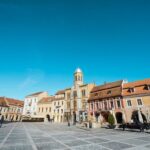
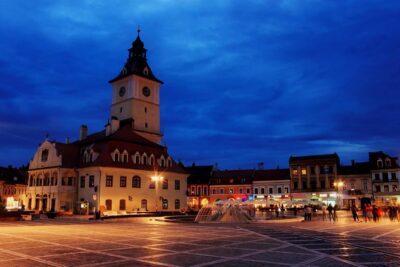
Sibiu is not tiny, but this itinerary uses it well. You only get about a half hour for the walking tour, so the guide focuses on getting you oriented quickly. You will pass through the Old Town highlights, including the Big Square and the Small Square.
Why this works: Sibiu is one of those places where once you see the center, the streets make more sense. You can then come back later on your own, if you have extra days, and explore deeper without feeling lost. Since lodging in Sibiu is not included, this guided stop is a fast way to make sure your evening does not start with map confusion.
If you are sensitive to tight timing, keep your expectations realistic. This is not a full-day Sibiu deep dive. It is a taste that sets up the next days and helps you understand the region’s layout.
Alba Iulia’s layered past, then Corvin Castle’s big presence
Day 2 starts after breakfast with a trip to Alba Iulia, a place that combines Roman and medieval narratives in one compact area. Alba Iulia is a former Roman city built to protect gold mines after the Romans conquered the region. Then, in the 20th century, it became the site where Romania’s unification was signed in 1918. You also get to see key areas inside the citadel, plus the Orthodox Monastery and main gates.
What I like here for your planning: Alba Iulia gives you historical anchors. When the rest of the trip talks about empire, religion, and identity, you have a reference point. It helps you connect why castles and churches mattered beyond postcard beauty.
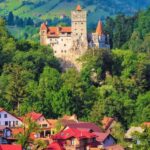
After Alba Iulia, you head to Corvin Castle, a medieval castle that is one of the emblematic stops for this region. You do not get a long list of micro-stops here, so the castle is allowed to do what it does best: provide a strong visual and a sense of medieval power.
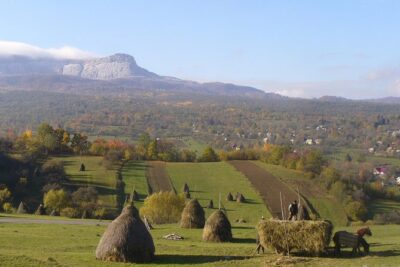
The day ends by traveling to Maramures, with the accommodation set in Breb Village in a traditional wooden house style. That swing from stone fortifications to wooden architecture is exactly what makes this itinerary feel like a “change of world,” not just sightseeing.
Other Bucharest days worth the drive
Breb and Maramures: wooden-house time, homemade dinners, and church wood carving
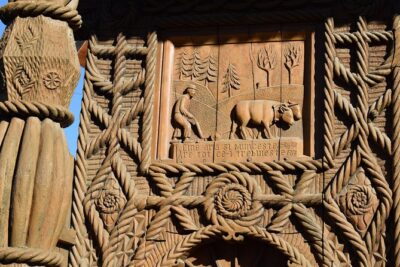
Day 3 is where the wooden-church theme stops being theoretical and becomes practical. You start with Barsana Monastery, one of the most important monasteries in the area, and the stop is paired with wood carving. This is not just about seeing carved details. You also visit the wood carver, one of the few craftsmen known for doing this work, which helps you understand the process behind the artistry.
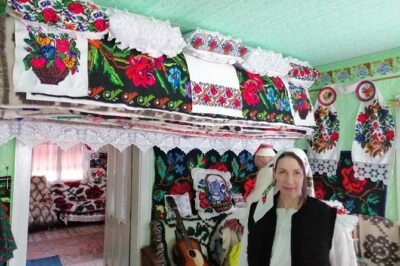
Then the schedule moves to Muzeul Tarancii Romane at Dragomiresti. You will learn more about Maramures culture through a traditional house setting with traditional belongings. This type of stop is most valuable when you treat it like a conversation starter. Ask what the objects were for and how daily life differed from what you know.
Next comes an unusual, very “real life” stop: a local whirlpool where people used to wash clothes and rugs. It is not a big museum moment, but it gives you context. You see how geography and household work shaped routine.
Finally, you end the day at Merry Cemetery. The name is not just a gimmick. Your guide shares funny stories of people buried there, and the cemetery was built in 1947. The idea is that the afterlife is treated with humor rather than sadness. It is a cultural contrast that sticks with you because it breaks the usual cemetery mood.
Two nights in Maramures are included, and you also have two homemade dinners in a Maramures house. These meals are often the part you remember most, because you eat like you are part of the day, not just visiting for a photo.
Sighisoara’s medieval streets and the Vlad Dracula connection
Day 4 pulls you away from Maramures and back toward central Transylvania with Sighisoara as the focus. The town is known for being the birthplace of Vlad Dracula. It also has that fairytale look many people associate with Transylvania.
You get a guided walking tour of the historic center, about three hours. That is a good amount of time for a place like this because you can follow the streets in a way that feels chronological. The guide helps you understand how the medieval town functioned and why its appearance looks the way it does today.
One thing to keep in mind: this is still a tour schedule, so you will likely spend your time on the most important parts rather than getting lost in side alleys for hours. If you love wandering, you will want to build in extra time on your own day in Sighisoara since overnight there is not included.
If Dracula myths are your doorway into Romania, you will enjoy this day. If you prefer history without myth, stick with the architecture and the town layout, and you will still get value.
UNESCO fortified churches: Biertan to Viscri, then Brasov’s Black Church
Day 5 begins with Biertan Fortified Church, a UNESCO site. The setting is dramatic: it sits on top of a hill with views over the village. Inside, your guide explains the history and why the site is so well known. Even if you are not a church person, a fortified church makes sense fast because you can see how defense and worship were linked.
After Biertan, you head to Viscri Village for another UNESCO fortified church. Viscri is known for being one of the best preserved Transylvanian villages. The itinerary also notes Prince Charles bought several houses in the village, which is why Viscri has received attention and care.
This is also the day where optional choices matter. Your schedule is designed for a guided stroll and then you have the suggestion of a local traditional lunch at your own expense if you want it. Since entrances are not included, you might want to budget for the on-site costs here too.
Then the pace moves you to Brasov in the afternoon. Before check-in, you do a short guided walking tour. You pass the Black Church, see Council Square, and visit the main former gates. Again, the time is brief, but it is enough to orient you. Brasov overnight is not included, so you can use this as a primer, then explore in the evening when the streets feel more like a lived city.
Bran Castle for the real story, then Peles Palace in Sinaia
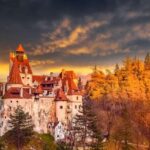
Day 6 is a double hit of major landmarks, starting with Bran Castle, often called Dracula’s Castle. The tour frames Bran historically as a 14th century customs point between Transylvania and Wallachia. That context is key. It turns the castle from a theme park into a border story. You also join your guide inside the castle, with the tour focusing on the real story behind Vlad Dracula and Bran Castle, not just the legend.
After Bran, you can check out the market in front of the castle for souvenirs. It is useful because you can handle your last-minute shopping while you are already there, instead of hunting for items once you are back in Bucharest.
Then you drive through the Carpathian Mountains, passing ski resorts until Sinaia. There you reach Peles Castle, described as the pearl of the Carpathians. This is a well preserved palace built in the 19th century by the first king of the country. Your guide leads you through the interiors with explanations of the rooms and hallways. If you think castles are only for exteriors, Peles changes that. You get detail and craft in a different way than the hilltop churches and fortifications.
Finally, you return to Bucharest and the service ends back at the meeting point.
Transport, group size, meals, and what you actually pay for
This tour costs $2,247.56 per person and includes several real value items: a professional English-speaking guide, transport by minivan with live commentary, local taxes, and the two nights in the Maramures region in a traditional wooden house style. You also get breakfast (listed as 2) and two homemade dinners (also listed as 2). You’ll likely appreciate the inclusion of dinners because it anchors you in local cooking rather than leaving meals totally up to chance.
The big extra cost to plan for is entrances. Entrance fees are listed as about 50 euros per person, and photo fees may apply. Also, overnight accommodation in Sibiu, Sighisoara, and Brasov is not included. That is a major line item in your planning even if the itinerary runs like a smooth whole.
So is it good value? It can be, if you want guided time in many must-sees without the hassle of planning transfers and hunting down tickets. You are paying for the guide, the small-group logistics, and the fact that two dinners and Maramures lodging are handled for you. If you are comfortable planning all your own transport and hotels, then you might compare this price against the cost of independent travel plus a guide for only the most complex days.
One more practical detail: the tour notes that it is suitable for moderate physical fitness. That means you should be fine with walking tours and time on your feet, but you should not expect a fully sedentary experience.
Who this tour suits, and who should skip it
This itinerary is built for people who like variety: castles, fortress churches, wooden church culture, and historic towns, all in one short window. You’ll likely enjoy it most if you care about understanding why these sites exist, not just clicking photos.
It also fits well if you want small-group attention. The maximum group size is listed as 8 travelers, and the trip is described as private and flexible. In practice, that usually means less crowding and more chances to ask questions about daily life, village culture, and local traditions.
You might want to choose a different format if you hate driving or if you want deep time in just one base, like only Maramures or only Brasov. This route is an efficient sampler, not a slow travel style.
Also, note the vegetarian option is available if you ask at booking. Single supplement applies only for Maramures accommodations, listed at 100 euros per room.
Should you book this 6-day Transylvania and Maramures tour?
I’d book it if you want a guided, small-group way to connect Romania’s big themes: border history, church culture, and regional identity. The Maramures component, with wooden-house lodging and homemade dinners, is the core reason this tour feels more authentic than a straight castle loop.
I would pause and do a quick budget check if you do not want to handle extra costs. Entrances are not included, and hotels in Sibiu, Sighisoara, and Brasov are not included either. If you plan those extra expenses early, the itinerary makes sense as a value-packed way to see a lot without juggling logistics.
FAQ
What is included in the tour price?
The tour includes two homemade dinners in a Maramures house, a professional English-speaking guide, local taxes, transport by minivan, live commentary on board, fuel surcharge, two nights of accommodation in the Maramures region, and breakfast (2) and dinner (2).
Are entrance fees included?
No. Entrance fees are listed as 50 euros per person, and photo fees are not included.
How many nights of accommodation are included?
Two nights are included in the Maramures region. Overnight accommodation in Sibiu, Sighisoara, and Brasov is not included.
What language is the tour offered in?
The tour is offered in English.
How big is the group?
This tour has a maximum of 8 travelers.
Is there an option for vegetarian meals?
Yes. A vegetarian option is available if you advise the operator at the time of booking.
What happens if Transfagarasan Road is closed?
Transfagarasan Road is open only between June and October. If it is closed, the alternative route of Olt Valley River Road will be used.
Is the trip suitable for everyone physically?
The tour is described as suitable for travelers with a moderate physical fitness level.
Where does the tour start and end?
It starts at Hilton Garden Inn, Strada Doamnei 12, Bucharest 030055, Romania at 8:00 am and ends back at the meeting point.
What is the cancellation deadline for a full refund?
You can cancel up to 3 days in advance for a full refund, based on local time.
If you want, tell me your travel month and whether you prefer fewer castle stops and more village time. I can suggest how to time hotel bookings in Sibiu, Sighisoara, and Brasov around this exact route.
Newest Bucharest write-ups
- Private transfer to BRASOV
★ 5.0 · 1 review - Half Day Tour in Bucharest
★ 5.0 · 1 review - Bucharest: Capture the most Photogenic Spots with a Local
★ 5.0 · 1 review - Bucharest Private Custom Walking Tour with Guide (Private Tour)
★ 5.0 · 1 review - Transfer Bucharest to Constanta / Mamaia
★ 5.0 · 1 review - Uncover Transylvania: Private 2-Day Tour Bears & Medieval Wonders
★ 5.0 · 1 review - Private Day Trip to Peles Palace, Dracula’s Castle and Brasov
★ 5.0 · 1 review
Northern Maramures Trips, compared.
Classic Romania Tour – small group in 8 days: Transylvania and Maramures
Read our review →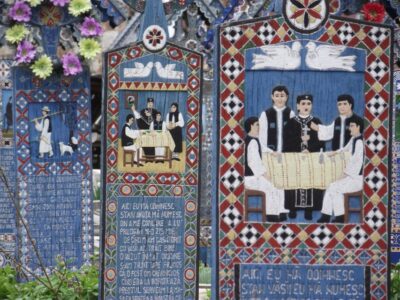
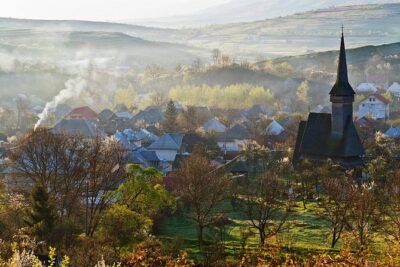
Two days tour to Maramures: local experiences and culture
Read our review →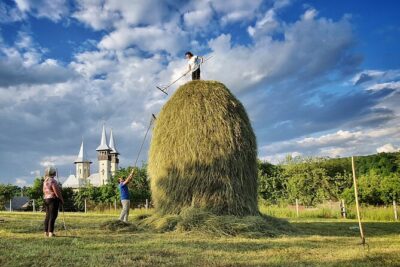
A Journey Back in Time: Countryside from Transylvania and Maramures – 15 Days
Read our review →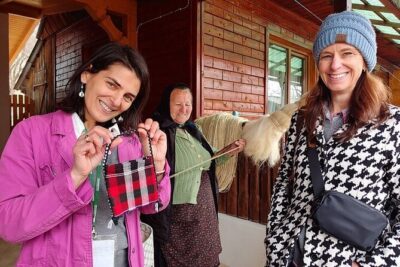
Your rendez-vous with Europe’s past: time-travel to Maramures, Transylvania
Read our review →Browse the lists this tour appears in