
Reviewed · HISTORIC OLD TOWN WALKS
Bucharest: Old Town & Historical Landmark Guided Tour
Bucharest history moves at walking speed. This 2.5-hour guided route threads together the Romanian Athenaeum and the 1989-era Revolution Square, so you get big-picture context without spending half a day in transit between sites. I like that the stops are close enough to feel like one story, not a checklist.
Two things I really like: you get brief, smart explanations at each major landmark, and the pacing includes quick photo moments plus a slower pause at places like Stavropoleos Monastery. One consideration: it is still a moderate walk on city sidewalks and cobblestones, so if your legs tire easily, bring the comfiest shoes you own and plan for a steady tempo.
In This Review
- Key moments that make this Bucharest walk work
- A 2.5-hour route that hits the core without feeling rushed
- Starting point near University, then straight into the sights
- The Romanian Athenaeum: architecture you can feel in your photos
- Royal Palace of Bucharest and Revolution Square, one historical arc
- CEC Palace stop: a quick architectural breather
- Stavropoleos Monastery: the quiet pause you’ll appreciate later
- Old Town wandering and the Old Court remains of Vlad legend
- Macca-Vilacrosse Passage: the quick coffee stop that feels like a detour to Paris
- How the stops are timed, and why that pacing matters
- What you actually get for $57, and where the value comes from
- Guide quality: Dana gets praised for clear, patient storytelling
- Who this tour suits best, and who should choose differently
- Final thoughts: should you book this Bucharest Old Town and landmarks tour?
- FAQ
- How long is the Bucharest Old Town & Historical Landmark guided tour?
- Where does the tour start and where does it end?
- What landmarks are included on the walking route?
- Is admission included for any sites?
- What should I bring for the tour?
- What languages is the live tour guide available in?
- Is the tour wheelchair accessible?
- Can I cancel and get a full refund?
Key moments that make this Bucharest walk work

- Romanian Athenaeum photo stop plus guided look inside the landmark’s role in national culture
- Revolution Square context that connects what you see to what changed in 1989
- Stavropoleos Monastery entry with time for frescoes and a calmer atmosphere
- Old Town lanes and the Old Court remains, where Vlad the Impaler lore lingers
- Macca-Vilacrosse Passage for a quick, shaded coffee break under glass
- Pass-by stops like the National Theatre and I.L. Caragiale statue for art and comedy in one glance
More History Tours in Bucharest
- Bucharest: Communism and History Guided City Walking Tour★ 4.9 · 918 reviews
- Bucharest: 3-Hour Dark History Tour with a Local★ 4.9 · 301 reviews
- Bucharest: Small Group History, Art & Secrets Tour★ 4.7 · 152 reviews
- Guided Walking Tour of Historical Bucharest★ 5.0 · 84 reviews
A 2.5-hour route that hits the core without feeling rushed
If you’re short on time, this tour’s format is smart: you start in the central historic zone, then move mostly on foot between major landmarks that you would otherwise scatter across different neighborhoods. The whole walk is designed so you get enough time to look around, not just point and move on.
You’ll also notice the tour is built around contrast. You go from monumental buildings like the Romanian Athenaeum and the Royal Palace, to the political weight of Revolution Square, then into a quieter pocket at Stavropoleos Monastery and the Old Town’s cafe streets. That rhythm helps the city click into place fast.
Starting point near University, then straight into the sights
You meet near an artesian fountain close to the University of Bucharest. From there, you head toward the Romanian Athenaeum area first, which is a good move because it sets the tone early. Big architecture first means you can orient your eyes to Bucharest’s style before you start picking up smaller details in side streets.
You’ll also pass the National Theatre Bucharest and the I.L. Caragiale statue along the way. Since these are stop-by moments, they’re useful for orientation, not deep study. Think of them like a visual preface to the rest of the walk.
The Romanian Athenaeum: architecture you can feel in your photos

The Romanian Athenaeum is one of those places where the building tells you what the country values in culture and public life. On this tour, you’ll have a photo stop and a guided explanation focused on why it’s considered a national symbol and a masterpiece of design.
Practical tip: arrive with your phone camera ready. The lighting around historic facades can be excellent, and the tour schedule gives you a focused window for photos instead of making you chase the best angle while the group keeps moving.
The key value here is how the guide links the building to meaning. It’s not just, look at the curves. It’s also, why this building matters to Romanians as a cultural icon.
Deeper into the old town of Bucharest:

Royal Palace of Bucharest and Revolution Square, one historical arc
After the Athenaeum, the tour moves to the Royal Palace of Bucharest. You get another photo stop plus a guided bit on what you’re looking at. Even if you don’t go inside (this tour includes guided time at major exteriors), the explanation helps you read the place correctly, and that’s where the walking tour format really earns its keep.
Then comes Revolution Square, one of the emotional centers of modern Bucharest. You’ll stop for photos and a guided discussion about 1989, when history changed in a way that still shapes how people talk about the city.
What I like about this pairing is the timeline feeling. You’re not just seeing pretty monuments. You’re watching the city shift from royal era imagery to a public, political turning point. That context makes later stops, especially the Old Town legends, feel less random.
CEC Palace stop: a quick architectural breather
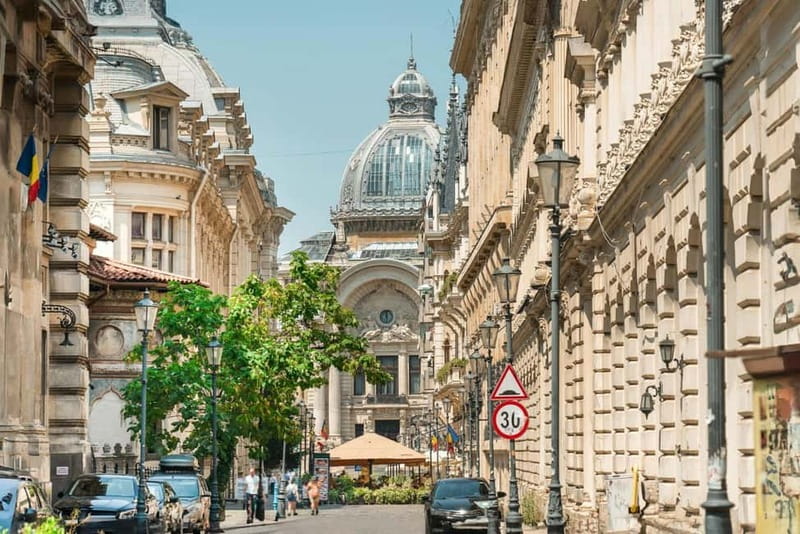
You’ll also pass by CEC Palace, with a photo stop and guided time. This is one of those stops that can be easy to miss on a self-guided walk because you might be focused on the biggest headline sites.
The tour gives it just enough time to make the building recognizable, and that’s helpful. You end up with more than one “main character” in your Bucharest photos, instead of only the obvious highlights.
Stavropoleos Monastery: the quiet pause you’ll appreciate later
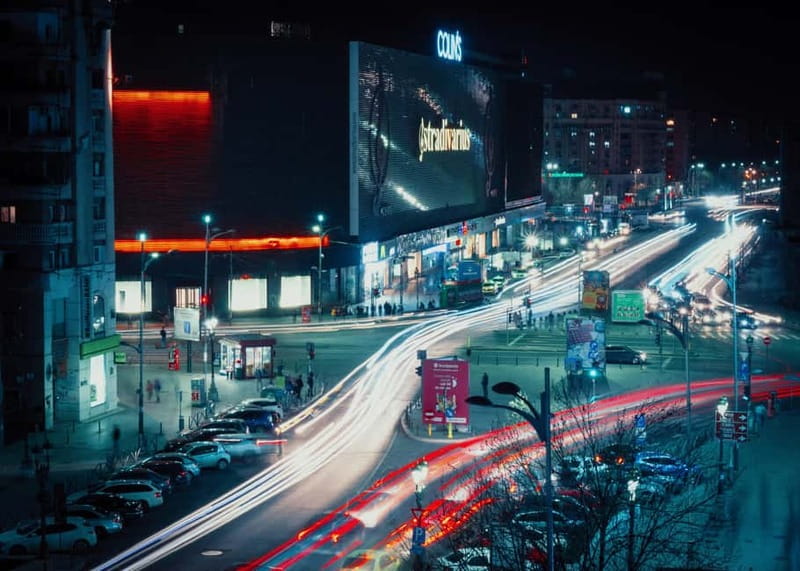
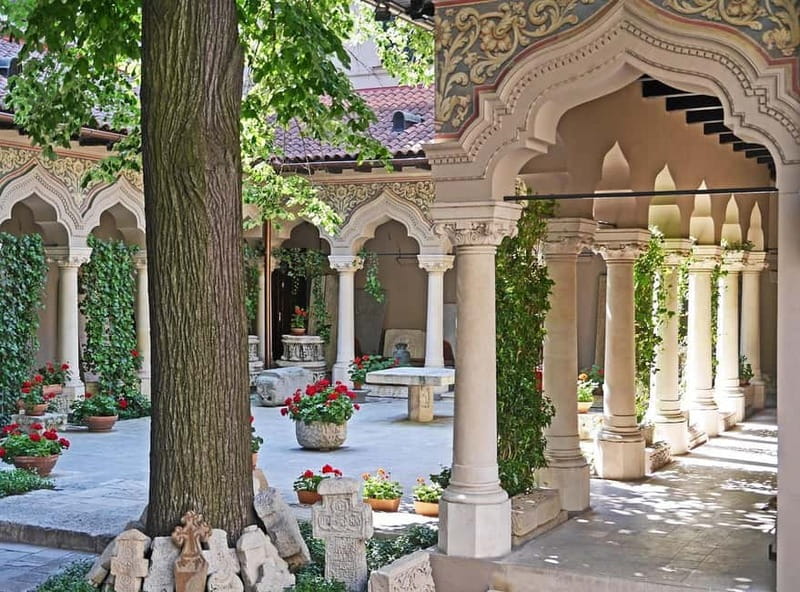
One of the best parts of this tour is the shift in atmosphere when you reach Stavropoleos Monastery. This stop includes both entry and guided time, which matters because monasteries are the kind of place where you get more out of it when someone explains what you’re seeing.
You’ll spend time on frescoes and feel the contrast between the monastery’s calmer vibe and the busier streets outside. Even within a short visit, guided framing helps you notice things your eye might otherwise skip, like how decoration supports the overall mood of the space.
If you’re the type who likes moments of stillness during sightseeing, this is a strong reason to book the tour instead of wandering alone.
Old Town wandering and the Old Court remains of Vlad legend
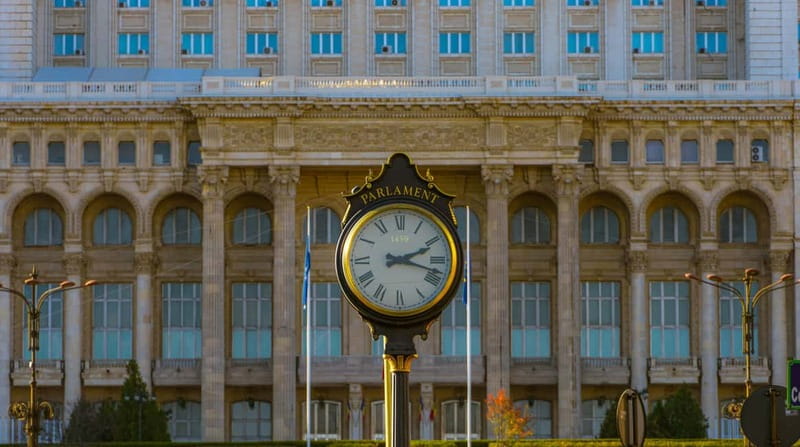
The Old Town part of the tour keeps things practical and fun. You’ll spend guided time looking around, with photo stops along cobblestone streets and historic buildings, plus time to enjoy the area’s cafe energy.
Then there’s the darker thread: you’ll see the remains of Vlad the Impaler’s former palace at the Old Court. The guide ties in legends and the kind of darker stories that stick to Bucharest even when you step into a sunny street.
This stop works best if you like history with atmosphere. Not everything here will be tidy in a textbook way, but the tour treats it as part of how Bucharest thinks and remembers.
Macca-Vilacrosse Passage: the quick coffee stop that feels like a detour to Paris
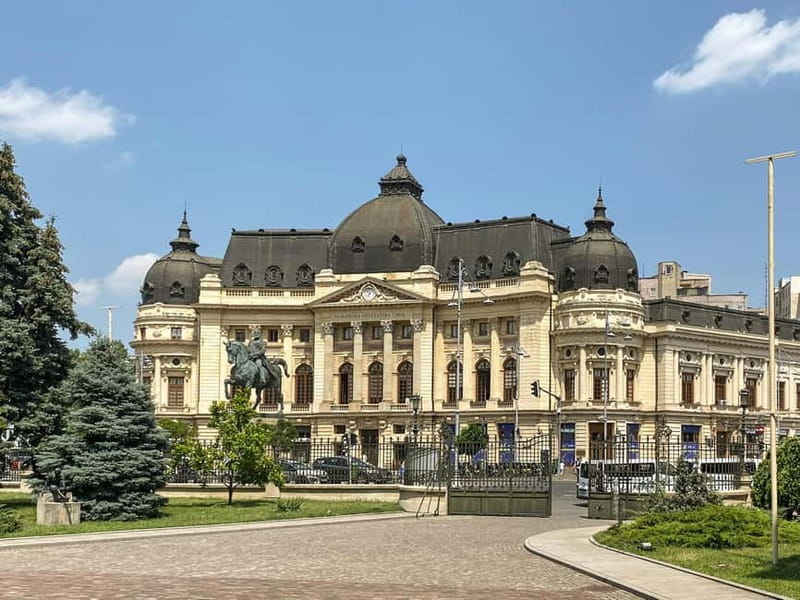
By the time you reach Macca-Vilacrosse Passage, you’ve already seen enough outdoor streets to make a shaded, glass-covered arcade feel like a reward. You’ll have a photo stop and guided time here, and it’s designed to be a short break.
This is a great moment if you want a breather without losing momentum. Grab a coffee if you’re doing that kind of travel, but even if you don’t, it’s still a useful stop because the architecture changes the pace of the walk.
It also gives your photos variety. Bucharest isn’t only wide squares and big monuments. Passages like this add detail and texture to your day.
How the stops are timed, and why that pacing matters
The route is structured with frequent short segments. You’ll see a lot of stops with around 5 to 15 minutes each, plus walking between them. That rhythm has a real advantage: you get to keep your energy while still covering multiple iconic landmarks in a single afternoon.
The drawback is that each location is necessarily brief. If you’re the type who wants long, slow time inside buildings or to linger for extra photos, you might want to plan a follow-up self-guided walk later. The tour is best as an orientation and context builder, not as your only chance to explore.
What you actually get for $57, and where the value comes from
At $57 per person for about 2.5 hours, the value comes from three things that are harder to replicate on your own:
First, the guided explanations compress a lot of context into one walk. It’s not just seeing famous buildings, it’s understanding how people connect them to culture and political change.
Second, you’re visiting multiple major landmarks close together. That saves your time and reduces decision fatigue.
Third, the tour includes admission to Stavropoleos Monastery and the Old Court. If you were planning those stops independently, you’d pay entry costs on top of your time spent figuring it out. Here, it’s bundled into one route.
Is it a bargain? For a guided historic walk through central Bucharest with included admissions, it’s priced fairly for what you get. If you hate guided tours and prefer total freedom, you might feel limited. If you enjoy a clear route and smart context, it’s a solid deal.
Guide quality: Dana gets praised for clear, patient storytelling
The reviews highlight one name in particular: Dana. Guests describe Dana as professional, patient, and able to explain local history in a way that connects to social development and the difficulties people faced in the period being discussed. That kind of storytelling is what turns a walking tour from sightseeing into understanding.
You’ll likely notice this quality at the stops with guided time, especially around the Athenaeum, Royal Palace, Revolution Square, and Stavropoleos. The tour’s success depends on that skill, and the feedback suggests the guide delivers.
Who this tour suits best, and who should choose differently
This is a strong fit if you want a guided overview of Bucharest’s central landmarks without spending a whole day planning routes. It’s also good for first-time visitors who want the city’s major themes in one afternoon: culture, political change, and the Old Town’s legends.
It may be less ideal if you:
- want long interior visits rather than mostly exterior landmarks and short guided stops
- dislike moderate walking, especially on uneven sidewalks and cobblestones
- prefer silence and self-paced wandering with no guided narrative
If you do book it, do yourself a favor and pair it with a lighter second day. You’ll understand where you want to return, and where you’re happy letting the tour be your first pass.
Final thoughts: should you book this Bucharest Old Town and landmarks tour?
I’d book this tour if your goal is to get your bearings fast and understand what you’re looking at. The route is tight, the landmarks are the right mix of iconic and meaningful, and the inclusions like Stavropoleos Monastery and Old Court admission make it more than a photo walk.
If you have limited time and you want one guided thread through the city, this is a smart way to spend it. Just be honest with yourself about walking comfort and your patience for short stops. If those are fine, you’ll come away with a much clearer sense of Bucharest.
FAQ
How long is the Bucharest Old Town & Historical Landmark guided tour?
It lasts 2.5 hours.
Where does the tour start and where does it end?
It starts at Piața 21 Decembrie 1989 and finishes at Piața Constituției.
What landmarks are included on the walking route?
You’ll visit or stop at the Romanian Athenaeum, the Royal Palace of Bucharest, Revolution Square, Stavropoleos Monastery, the Old Town, and you’ll pass by places like the National Theatre Bucharest and the I.L. Caragiale statue. You’ll also walk through Macca-Vilacrosse Passage and see CEC Palace.
Is admission included for any sites?
Yes. Admission to Stavropoleos Monastery and the Old Court is included.
What should I bring for the tour?
You should bring comfortable shoes and it’s recommended to have a camera or smartphone for photos. A water bottle is also suggested.
What languages is the live tour guide available in?
The live guide is available in Italian and English.
Is the tour wheelchair accessible?
Yes, it is wheelchair accessible.
Can I cancel and get a full refund?
Yes. You can cancel up to 24 hours in advance for a full refund.
Newest Bucharest write-ups
- Private transfer to BRASOV
★ 5.0 · 1 review - Half Day Tour in Bucharest
★ 5.0 · 1 review - Bucharest: Capture the most Photogenic Spots with a Local
★ 5.0 · 1 review - Bucharest Private Custom Walking Tour with Guide (Private Tour)
★ 5.0 · 1 review - Transfer Bucharest to Constanta / Mamaia
★ 5.0 · 1 review - Uncover Transylvania: Private 2-Day Tour Bears & Medieval Wonders
★ 5.0 · 1 review - Private Day Trip to Peles Palace, Dracula’s Castle and Brasov
★ 5.0 · 1 review
Historic Old Town Walks, compared.
Dracula’s Castle, Peles Castle, & Brasov Old Town
Read our review →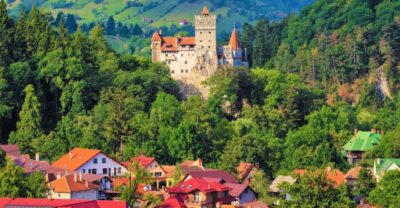
Dracula Castle, Peles Castle & Brasov Old Town
Read our review →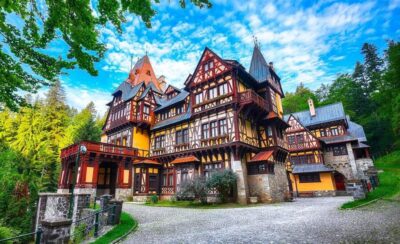
Peles Castle, Bran Castle, & Brasov Old Town Tour
Read our review →
Dracula’s Castle, Peles Castle, & Brasov Old Town
Read our review →Dracula’s Castle, Peles Castle & Brasov Old Town
Read our review →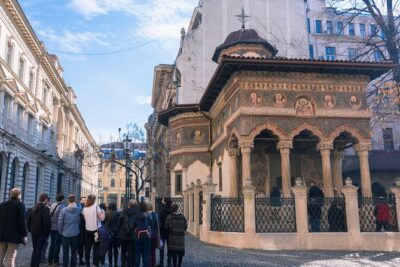
Bucharest Essential Tour: Old Town, Calea Victoriei & Communism
Read our review →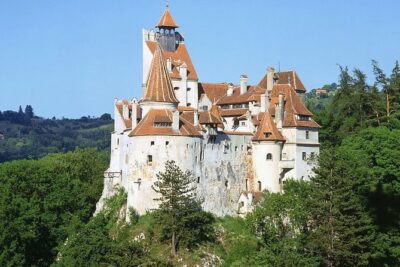
Dracula’s Castle, Peles Castle and old town Brasov from Bucharest
Read our review →Browse the lists this tour appears in