
Reviewed · HISTORICAL TOURS
Bucharest: Small Group History, Art & Secrets Tour
Bucharest has a way of surprising you fast. This 3-hour small-group history and art walk kicks off at the Romanian Athenaeum, then moves through squares, theaters, monasteries, and photo stops that explain how the city got so complicated. I especially like the way the guides use specific buildings to tell the story, not just random facts.
Two things I really like: first, the architecture focus at the Romanian Athenaeum, plus stops like Odeon Theatre and the National Bank building that help you read the city like a map. Second, the Palace of the Parliament context, including why it is both impressive and controversial, tied into 20th-century politics the way guides like Elena and Stefan are known for doing. One possible consideration: you will do a lot of walking in a tight time window, and luggage or large bags are not allowed.
If you want a quick, high-impact first taste of Bucharest with real local storytelling, this is a good bet. Just plan for comfortable shoes, water, and your camera, since many stops are quick photo moments rather than long indoor visits.
In This Review
- Key highlights worth your attention
- First steps at the Romanian Athenaeum (and why it sets the tone)
- Royal Palace to Revolution Square: from power to upheaval
- Kretzulescu Church: old faith in a city of new faces
- Pasajul Englez and the Umbrellas Street detour: Bucharest’s playful side
- Odeon Theatre and the National Military Circle: culture and authority
- National Bank of Romania: why the city’s money building matters
- Café break at the right moment: energy for the old-town stretch
- Macca – Vilacrosse Passage and more “Bucharest in-between”
- Stavropoleos Monastery: the kind of calm you can photograph
- Caru’ cu bere and CEC Palace: old meets grand commercial vibes
- National Museum of Romanian History and Manuc’s Inn pause
- Antim Monastery: a quieter ending before the big finale
- Palace of the Parliament finale: impressive, controversial, and very Bucharest
- Small-group size and guide style: why it feels personal
- Price and value: $22 for 3 hours of city framing
- Who should book this, and who should skip it
- Practical tips so your day goes smoothly
- Should you book this Bucharest Small Group History, Art & Secrets Tour?
- FAQ
- How long is the Bucharest Small Group History, Art & Secrets Tour?
- How much does the tour cost?
- Where do I meet the guide?
- What languages are available for the live tour guide?
- Is the tour a small group?
- Are entrance fees included?
- Are meals and drinks included?
- Does the tour include break time?
- Is the tour wheelchair accessible?
- What should I bring, and what is not allowed?
- What is the cancellation policy?
Key highlights worth your attention
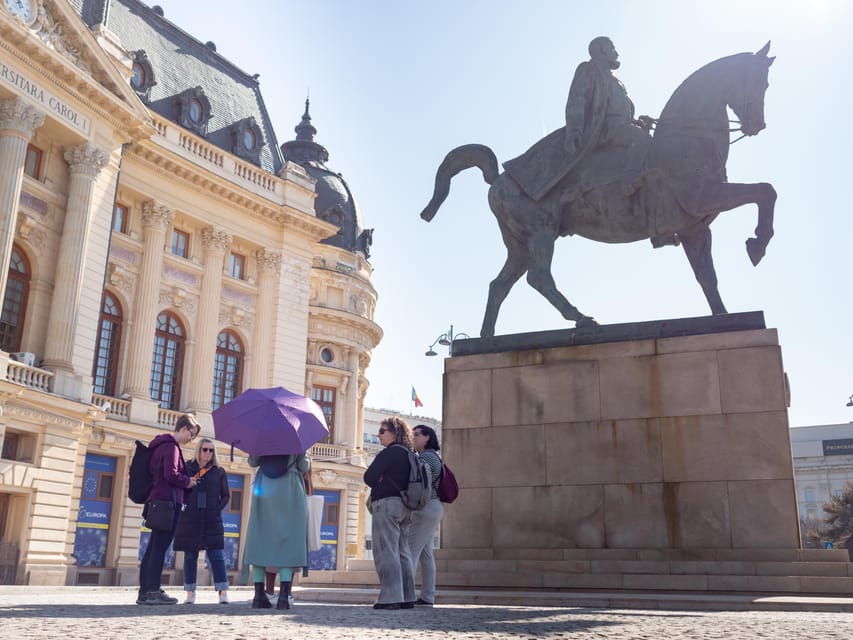
- Romanian Athenaeum exterior experience at the start, with its neoclassical look and big cultural connections
- Palace of the Parliament explained with controversy and Cold War-era political context
- A string of classic Bucharest stops including Revolution Square, Kretzulescu Church, and Odeon Theatre
- Passages and street scenes like Pasajul Englez, Macca – Vilacrosse Passage, and Umbrellas Street
- Monasteries and old-town flavor at Stavropoleos Monastery and Antim Monastery, plus Caru’ cu bere and Manuc’s Inn
More History Tours in Bucharest
- Bucharest: Communism and History Guided City Walking Tour★ 4.9 · 918 reviews
- Bucharest: 3-Hour Dark History Tour with a Local★ 4.9 · 301 reviews
- Guided Walking Tour of Historical Bucharest★ 5.0 · 84 reviews
- Roma Culture, Realities and Slavery History, Walking tour★ 4.9 · 52 reviews
First steps at the Romanian Athenaeum (and why it sets the tone)
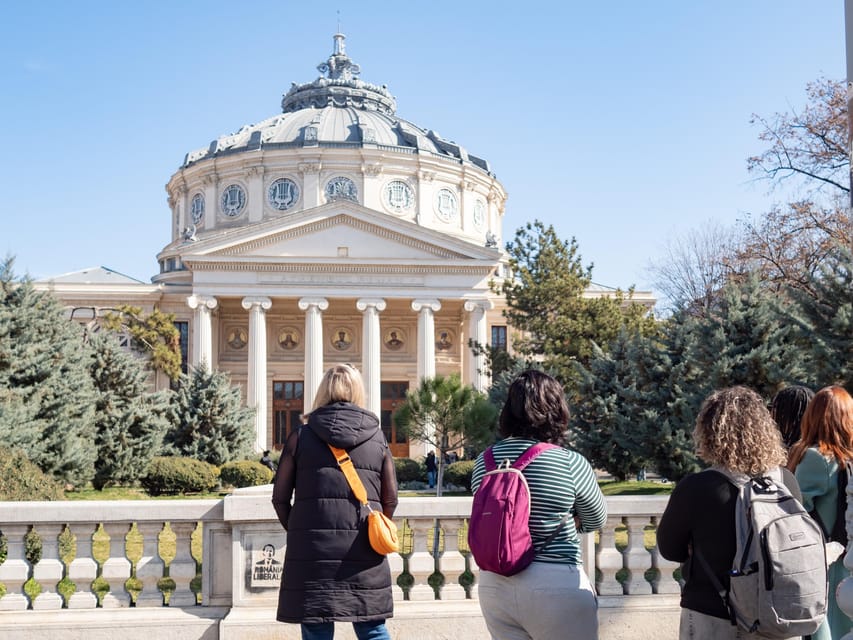
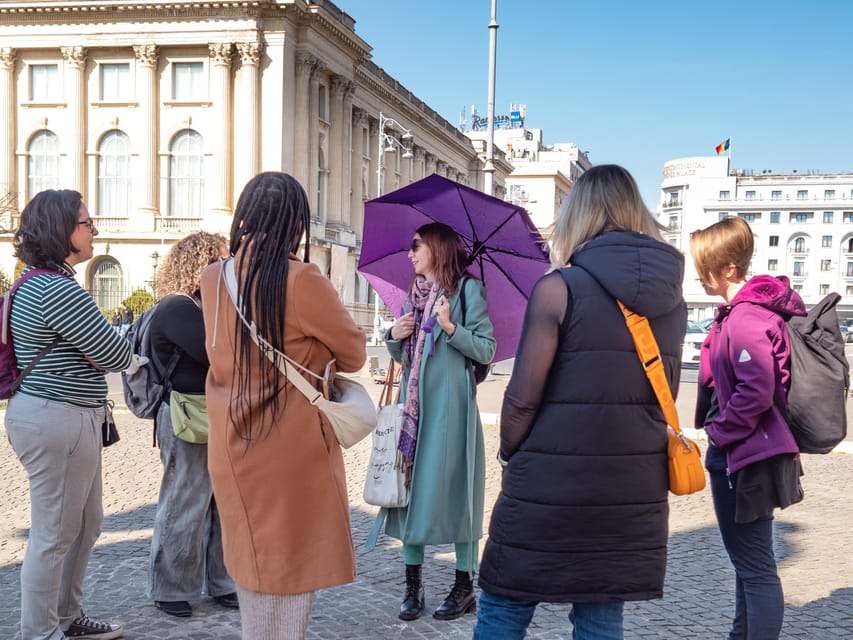
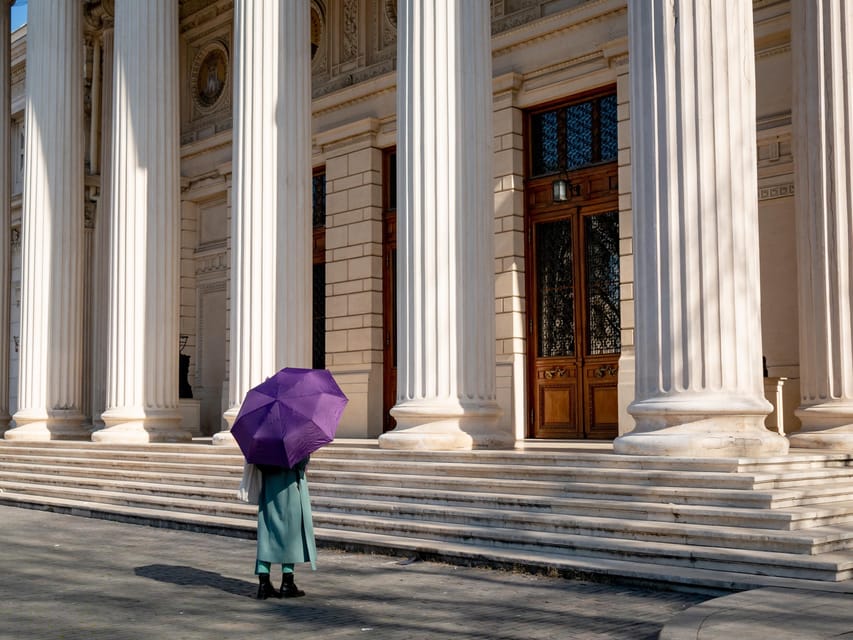
You meet at the Romanian Athenaeum, standing in front of the columns with a purple umbrella. From the start, you are in the right mood for the tour: grand, formal, and very Bucharest. The guide frames the Athenaeum as more than a pretty façade. It is a cultural landmark tied to the George Enescu Philharmonic Orchestra, which gives you a useful starting point for the city’s arts scene.
This is also where the group pacing begins to make sense. You are not just being marched along. You get a story cue for each area, so when you later see theaters, banks, and churches, you understand why they belong in the same walking route.
Practical note: if you are taking a cab, do not assume it drops you perfectly at the entrance. Several guides and guests call out that finding the meeting spot can be tricky, so aim for the Athenaeum columns and the purple umbrella.
Royal Palace to Revolution Square: from power to upheaval
After the Athenaeum photo start, the route moves to the Royal Palace of Bucharest. You get a short guided look and a quick photo window. The value here is not going inside, it is learning how Bucharest’s public spaces connect to shifting eras of rule and identity. Even in brief stops, the guide usually gives you a few anchor facts you can remember later when you wander on your own.
Next comes Revolution Square. This stop is similarly timed, but it hits a different theme: the city’s moments of tension and change. You get just enough context to connect the dots between the monumental architecture you see and the political currents that shaped the city during the 20th century, including Cold War-era themes that show up in guide storytelling.
If you like history that feels human, Revolution Square is the kind of place where a good guide turns a wide public space into an explanation you can picture.
Kretzulescu Church: old faith in a city of new faces
Then you walk to Kretzulescu Church for another photo stop and guided context. This is where the tour adds texture. Bucharest can feel “grand” on the surface, but churches like this remind you it was also a lived-in city long before big government buildings and wide boulevards took over the skyline.
This stop is also useful for photography. You will likely have more than one chance to frame the church within its streetscape, and the guide can point out details that make your pictures better than just a generic skyline shot.
The drawback is time. It is short, so come with a mindset of “see it, understand it, move on,” not “stand here for 30 minutes and analyze every stone.”
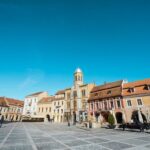
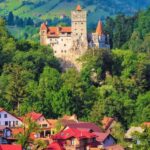
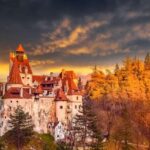
Different day out, same corner of Romania:
Pasajul Englez and the Umbrellas Street detour: Bucharest’s playful side
Midway through the walk, you hit Pasajul Englez, a classic Bucharest passage. Passages like this matter because they show how the city traded in commerce, passageways, and everyday life, not only ceremonies and monuments. You get a guided look and photo time, which is perfect if you want the feel without needing an extended visit.
After that, you reach Umbrellas Street. This is one of those stops that helps the tour breathe. The theme shifts from official buildings and sacred spaces to something more modern and visual. The guide ties it into how Bucharest layers tradition with contemporary street art.
Even if you do not usually care about street art, you will probably appreciate Umbrellas Street as a “Bucharest feels real here” moment. It keeps the day from turning into a march of only marble and monuments.
Odeon Theatre and the National Military Circle: culture and authority
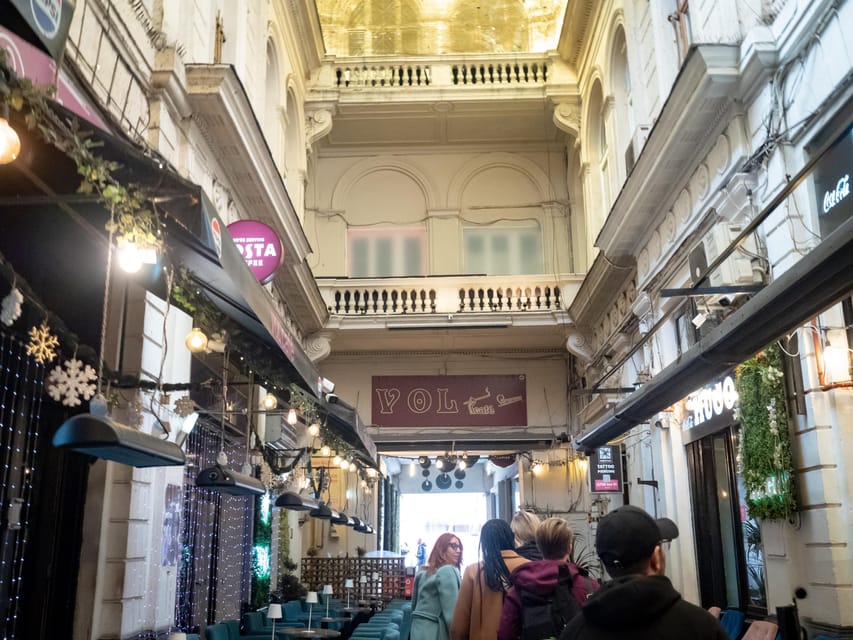
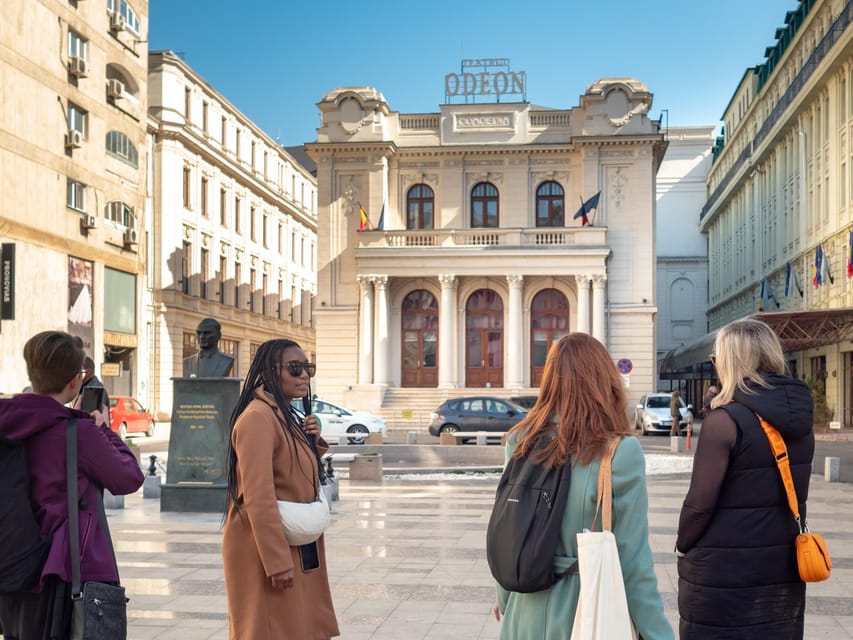
Odeon Theatre comes next. The tour uses it as a cultural signal. You have the Athenaeum to start, then a theater to continue. Together, they make Bucharest’s performing arts vibe easier to grasp quickly.
Then you move to the National Military Circle. This stop adds the authority side of the story. You are not getting an encyclopedia lesson, but you are getting framing: who the buildings served and why those institutions left such a strong architectural footprint.
A good part of this tour is that it rarely treats landmarks as isolated objects. The guide tends to connect your stops into a chain, so you can feel how Bucharest’s identity developed.
National Bank of Romania: why the city’s money building matters
Another timed stop brings you to the National Bank of Romania. It sounds like a random detour, but it works because financial institutions are power structures in stone form. The guide’s job is to make you notice design and placement as messages. You get photo time and guided sightseeing, so you end up leaving with a better instinct for how Bucharest’s impressive buildings communicate status and control.
This is also a helpful stop if you want to understand the city beyond what most people photograph. Banks, theaters, and palaces are all part of the same story, just at different angles.
Café break at the right moment: energy for the old-town stretch
You get a coffee and tea break at a local café for about 25 minutes. This is one of the smartest timing choices of the whole tour. By then, your legs have warmed up, your head is full of dates and architecture themes, and you need a reset.
If it is rainy, this break can be even more welcome. Guides like Elena are known for keeping the vibe friendly and keeping the pacing comfortable, so the break often feels like a breather rather than a forced stop.
Tip: use the break to refill your water bottle too. The tour asks you to bring water, and for good reason.
Macca – Vilacrosse Passage and more “Bucharest in-between”
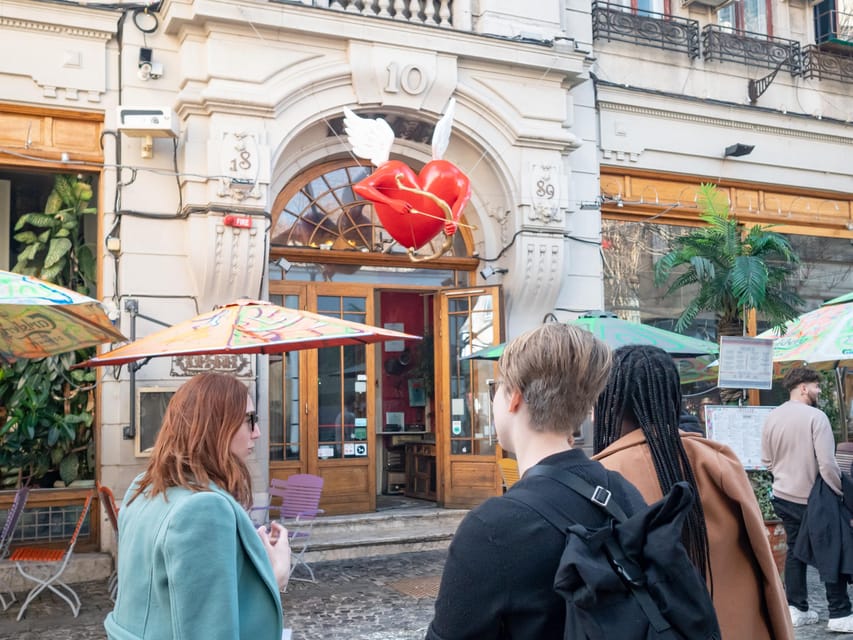
Macca – Vilacrosse Passage is another timed photo and guided sightseeing stop. Again, it is about the city’s in-between spaces, the connectors that make Bucharest feel like a network rather than a set of isolated sights.
It is also a great place to slow down just a touch with your camera. Passages often have their own light and perspective tricks. Even if your visit is brief, you can still get a few standout frames if you pause where the guide recommends.
Stavropoleos Monastery: the kind of calm you can photograph
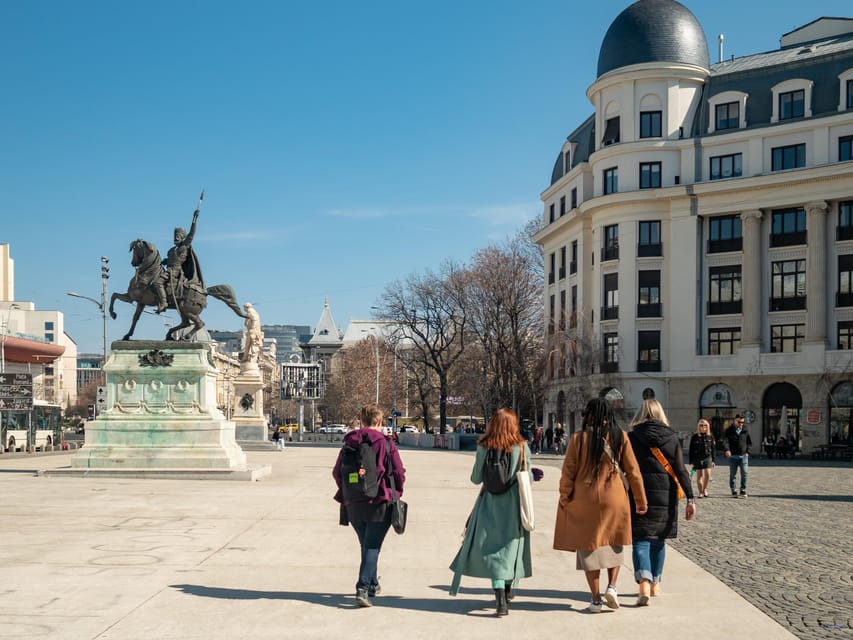
You then arrive at Stavropoleos Monastery. This is one of the tour’s more grounded stops, and it changes your pace for the better. Monasteries tend to make you look up and notice proportions, doorways, and the way religious spaces sit within the surrounding streets.
You get photo time plus guided context. That short format is ideal because it keeps you moving while still giving you enough to remember why it matters.
Caru’ cu bere and CEC Palace: old meets grand commercial vibes
Caru’ cu bere is next, followed by CEC Palace. These are strong “city personality” stops. Caru’ cu bere carries the feel of an old favorite gathering place, while CEC Palace adds a different architectural flavor, again tying back to how Bucharest used buildings to express ambition.
Even without going inside, you can absorb a lot because the guide typically explains what to look for at street level. You leave with a sense of why the streets look the way they do, not just what they look like.
National Museum of Romanian History and Manuc’s Inn pause
The National Museum of Romanian History is another photo stop and guided sightseeing moment. Even if entrance fees are not included, the outdoor context helps you understand the museum as part of a larger story you have been walking through all afternoon.
Then comes Manuc’s Inn, where you get another short break, about 10 minutes, plus photo time and guided sightseeing. Manuc’s Inn works well as a “pause and absorb” stop. By this point, you have been moving through churches, passages, theaters, and palaces. The inn gives you a sense of Bucharest’s hospitality side, the practical life that runs alongside political and cultural landmarks.
Antim Monastery: a quieter ending before the big finale
Next is Antim Monastery. It continues the spiritual, historic tone with a calmer feel. The guided portion here helps you notice how these sites create continuity across time, even when Bucharest’s politics and architecture swing wildly from era to era.
This stop also prepares you for the final stretch. When the tour ends at the Palace of Parliament, you will be ready for something massive, intense, and hard to forget.
Palace of the Parliament finale: impressive, controversial, and very Bucharest
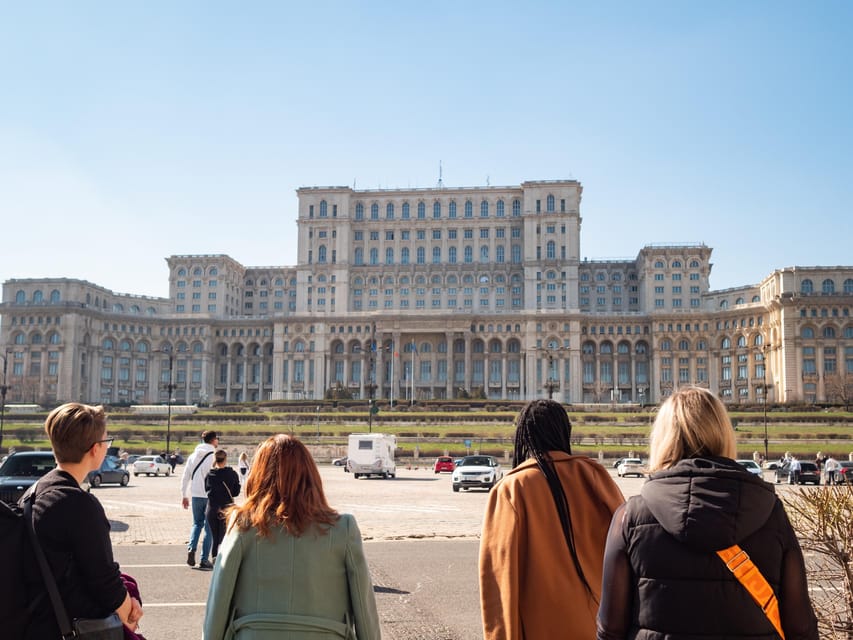
The last stop is the Palace of the Parliament, with about 15 minutes for photo time and sightseeing, plus a break. This is the anchor of the whole route, and the guide’s storytelling matters most here.
You learn about the palace’s fascinating and controversial past, and the way it has shaped the city’s landscape. Guides commonly frame it with Cold War-era political context, which helps the structure feel less like a random giant building and more like a symbol of choices and power.
This is also where you get the best “finale photos” because you have already built a mental map of the city’s themes. By the time you reach the palace, it is not just size. It is meaning.
Small-group size and guide style: why it feels personal
The tour runs as a small group, and that affects the experience. You get more back-and-forth moments, and the guide can pace the story to the group.
The guide field is international, with languages including Italian, Spanish, French, and English. In real bookings, I’ve seen names like Elvis, Stefan, Helen (Elena), Elena, Alessandro, and Alexandra credited for strong presentation and strong city connection.
That shows up in practical ways:
- The tour tends to be well paced over the 3 hours, so it does not feel like nonstop walking.
- The storytelling often keeps a balance between what you can see and what you need to understand.
- The tea or coffee break is treated as part of the experience, not an afterthought.
Price and value: $22 for 3 hours of city framing
At about $22 per person for a 3-hour walking tour, this is priced like a “first-day orientation with depth.” You are not paying for museum entries, since entrance fees are not included. You are paying for a guided plan that strings together major landmarks, lesser-known streets, and architecture you would miss if you just wing it.
For value, ask yourself one question: do you want to spend your limited Bucharest time hunting for context, or do you want someone to build the connections for you? This tour is built for the second option.
If you are the type who enjoys learning while walking and you want to come away with a better feel for the city’s architecture and politics, the price-to-time ratio makes sense.
Who should book this, and who should skip it
This tour is a good match if you:
- Want a structured, art-and-history introduction to Bucharest in 3 hours
- Like photo stops with guided explanations, not long museum marathons
- Appreciate guides who tell stories with Cold War-era political context
You might want to skip or rethink if you:
- Do not handle a lot of walking comfortably
- Need long indoor visits with full ticketed entries (this tour does not include entrance fees)
Also, note the tour is listed as wheelchair accessible, but it also says it is not suitable for people with mobility impairments. If that applies to you, check the specifics with the provider before booking.
Practical tips so your day goes smoothly
- Wear comfortable shoes. This is a lot of walking in a short time.
- Bring water. The tour explicitly asks for it.
- Bring a camera. Most stops are designed for photos.
- Leave luggage or large bags behind. They are not allowed.
- For the start, find the Romanian Athenaeum columns with the purple umbrella. It matters.
Should you book this Bucharest Small Group History, Art & Secrets Tour?
If you want a fast, guided way to understand why Bucharest looks the way it does, I think this is worth booking. The route gives you a smart mix of monumental architecture, churches and monasteries, commercial passages, and street art, with a guide who can connect the palace finale to the larger political story.
If you hate walking, hate photo-stop pacing, or want only indoor ticketed attractions, then look for something different. Otherwise, this is a solid, good-value way to get your bearings and take home a real sense of the city before you wander on your own.
FAQ
How long is the Bucharest Small Group History, Art & Secrets Tour?
It lasts 3 hours.
How much does the tour cost?
The price is $22 per person.
Where do I meet the guide?
You meet in front of the Romanian Athenaeum by the columns with a purple umbrella.
What languages are available for the live tour guide?
The tour offers live guidance in Italian, Spanish, French, and English.
Is the tour a small group?
Yes, it is listed as a small group available.
Are entrance fees included?
No. Entrance fees to attractions are not included.
Are meals and drinks included?
No. Meals and drinks are not included, though there are breaks where you can have coffee or tea.
Does the tour include break time?
Yes. There is a 25-minute coffee or tea break at a local café, plus a short break at Manuc’s Inn, and photo time at the Palace of the Parliament.
Is the tour wheelchair accessible?
It is listed as wheelchair accessible, but it also states it is not suitable for people with mobility impairments. You may want to confirm details before booking.
What should I bring, and what is not allowed?
Bring comfortable shoes and water, and a camera is recommended. Luggage or large bags are not allowed.
What is the cancellation policy?
Free cancellation is available up to 24 hours in advance for a full refund.
Newest Bucharest write-ups
- Half Day Tour in Bucharest
★ 5.0 · 1 review - Private transfer to BRASOV
★ 5.0 · 1 review - Bucharest Private Custom Walking Tour with Guide (Private Tour)
★ 5.0 · 1 review - Bucharest: Capture the most Photogenic Spots with a Local
★ 5.0 · 1 review - Uncover Transylvania: Private 2-Day Tour Bears & Medieval Wonders
★ 5.0 · 1 review - Transfer Bucharest to Constanta / Mamaia
★ 5.0 · 1 review - Private Day Trip to Peles Palace, Dracula’s Castle and Brasov
★ 5.0 · 1 review
Historical Tours, compared.

Roma Culture, Realities and Slavery History, Walking tour
Read our review →
Bucharest Jewish Heritage | Holocaust Memorial | Private Car Tour
Read our review →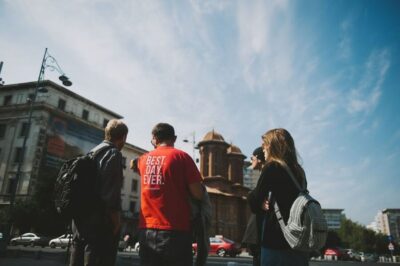
Private Bucharest: History & Food with Traditional Meal
Read our review →Historic Gems Sighișoara, Rupea and Viscri Day Tour
Read our review →
Browse the lists this tour appears in