
Reviewed · COMMUNIST-ERA TOURS
Bucharest’s scars of Communism-half day private walking tour
Communism still haunts Bucharest streets. This half-day private walk uses local witness Razvan Trancu to explain how the system took hold and how it eventually collapsed. I like that it covers the major downtown sites with a clear timeline, and I also like the flexibility to tailor the pace and focus to your interests in real time. One thing to consider, especially in summer, is that you are walking outdoors for a few hours, with only a short subway break.
You also get practical help, not just facts. Along the way, you see how the geography of Bucharest connects to power, protest, and propaganda, and you finish with enough guidance to explore on your own afterward. It is priced as a private group (up to 7 people), so it can be a great value if you have enough people to share the cost, but it is less of a bargain if you are traveling solo.
In This Review
- Key Points You Will Care About
- Why This Half-Day Communism Walk Makes Sense in Bucharest
- From Starbucks University to a City Map in Your Head
- University Square: Where Power Starts to Make Sense
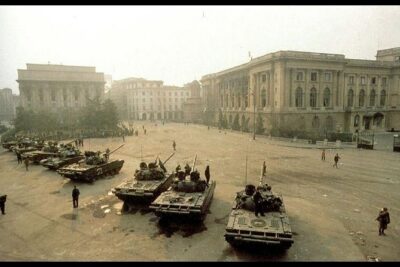
- Revolution Square: Graffiti, Protest Energy, and the Turn Toward Revolt
- Sala Palatului and the Parliament Corridor: Learning from the Outside Views
- Casa Radio and the Short Subway Break That Saves Your Feet
- Ending at Piața Constituției: A Clear Finish and an Easy Next Step
- Price and Value: What $165 Gets You (and When It’s a Smart Deal)
- Who This Tour Suits Best
- Practical Tips to Get the Most Out of Your Half-Day
- Should You Book This Bucharest Communism Walking Tour?
- FAQ
- How long is the Bucharest scars of Communism half-day private walking tour?
- How much does the tour cost?
- Where does the tour start?
- What stops do you visit during the tour?
- Is public transportation included?
- What languages is the guide available in?
- Is this a private tour?
- What’s included in the price, and what is not?
- Do you need to bring snacks?
Key Points You Will Care About
- A local witness guiding you through communist Bucharest, with real cause and effect, not just dates
- Revolution Square to the Central Committee area, where the political story turns sharply toward revolt
- A short subway ride to reach the ruins of the unfinished communist history museum
- Outside views that still teach, including major landmarks like the Parliament Palace
- Customizable pacing and focus, so you can lean more into WW2, protest, or daily life under the regime
More Guided Walks in Bucharest
- Bucharest: City Highlights Guided Walking Tour★ 4.9 · 1,482 reviews
- Bucharest: Communism and History Guided City Walking Tour★ 4.9 · 918 reviews
- Bucharest Highlights Walking Tour★ 5.0 · 469 reviews
- Bucharest: Hidden Markets Walking Tour with Tastings★ 4.9 · 329 reviews
Why This Half-Day Communism Walk Makes Sense in Bucharest
Bucharest is the kind of city where the political past is not locked behind museum glass. It’s written onto streets, squares, and oversized government buildings. A good communist-era tour needs to do two things: connect what you’re seeing with what happened, and keep you oriented so you can keep exploring after.
This tour does that with a tight, 4-hour route through downtown and beyond, built around the most important sites tied to Romania’s communist story. I like that the guiding is designed for understanding, not just sightseeing. You’re not only told what to look at, you’re taught how to read the city.
It also respects your time. You move between major areas efficiently, including a quick subway ride, so you spend more time learning outside and less time figuring out logistics. For a first visit, it’s a fast way to get your bearings.
From Starbucks University to a City Map in Your Head
The meeting point is at Starbucks University, main door. It’s an easy, recognizable start, which matters when you’re arriving in Bucharest and trying to get your day on track quickly.
From there, the tour begins in the downtown area that connects to the start of the communist party story and its Soviet connections. What I like about starting this way is that it sets up the rest of the walk. You’re not just jumping between famous buildings; you’re building a timeline you can actually remember.
Even if you only take away a mental framework, it helps. Bucharest’s “power geography” can feel confusing at first. This tour gives you a sequence, so later you will spot patterns on your own, like how certain squares become stages for political statements.
University Square: Where Power Starts to Make Sense
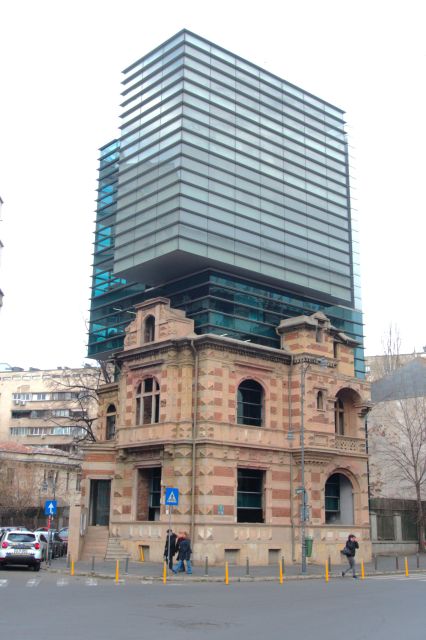
University Square is one of the first anchor points, and it’s the place where the story begins to turn concrete. You’ll spend about an hour here with guided explanations tied to how the communist party got its start and how Soviet influence shaped what came next.
This is a smart opening stop for anyone who wants context before looking at monuments. The communist era in Romania is often described in big moments, but big moments don’t come from nowhere. Getting the “how it started” piece early makes later events, including the violence and the geopolitical shift, feel logical instead of random.
Practical tip: wear comfortable walking shoes. You’re in an urban center and you’ll be moving and standing around long enough to feel it by the end of the day. This is not a museum sit-down experience, so plan for real walking and real air.
More of communist-era Bucharest:
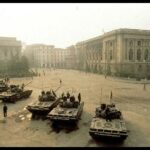

Revolution Square: Graffiti, Protest Energy, and the Turn Toward Revolt
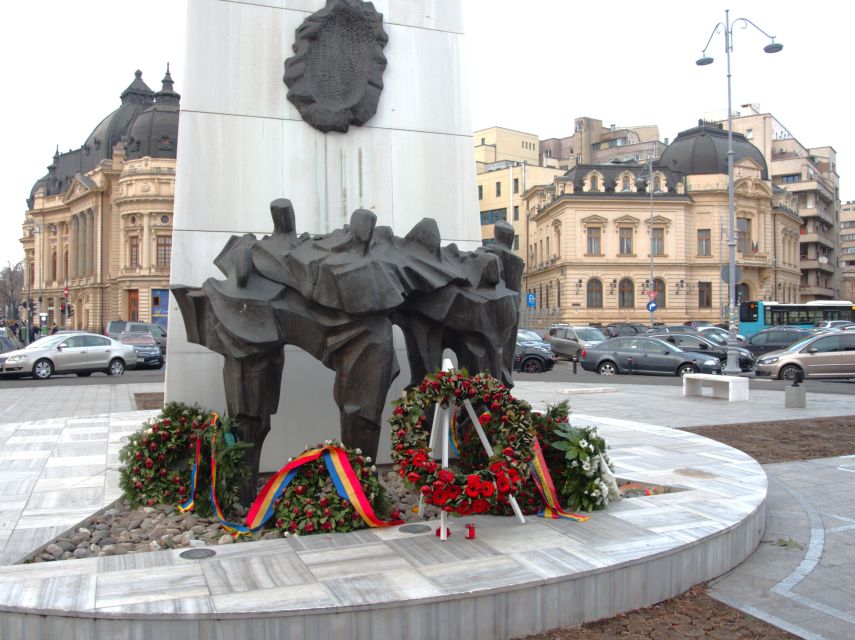
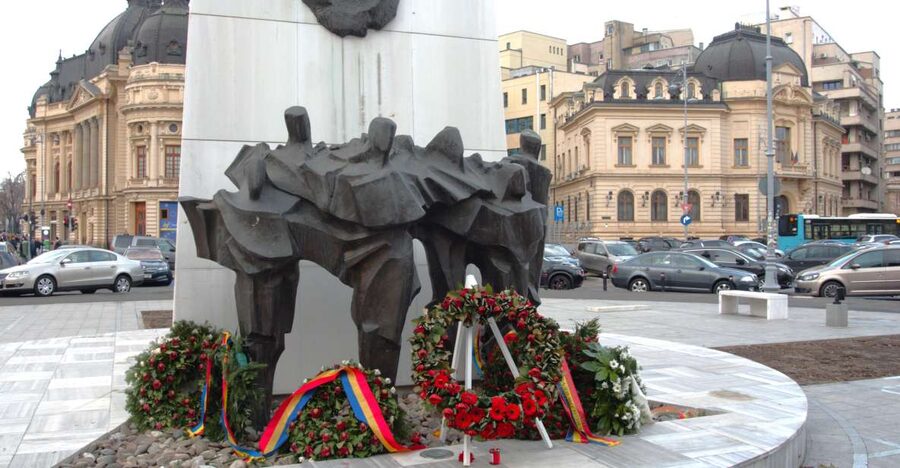
Revolution Square is where the tone of the tour changes. You’ll spend another hour here, and the focus is on the violent night that changed Romania’s recent history and geopolitical destiny.
One detail I appreciate is that you’ll actually be looking for the marks people left behind, including graffiti. It’s a small visual cue, but it helps you understand how resistance and public feeling survive even when regimes change. The tour frames those physical traces so they don’t feel random. Instead, they become evidence of the street-level reality behind the official story.
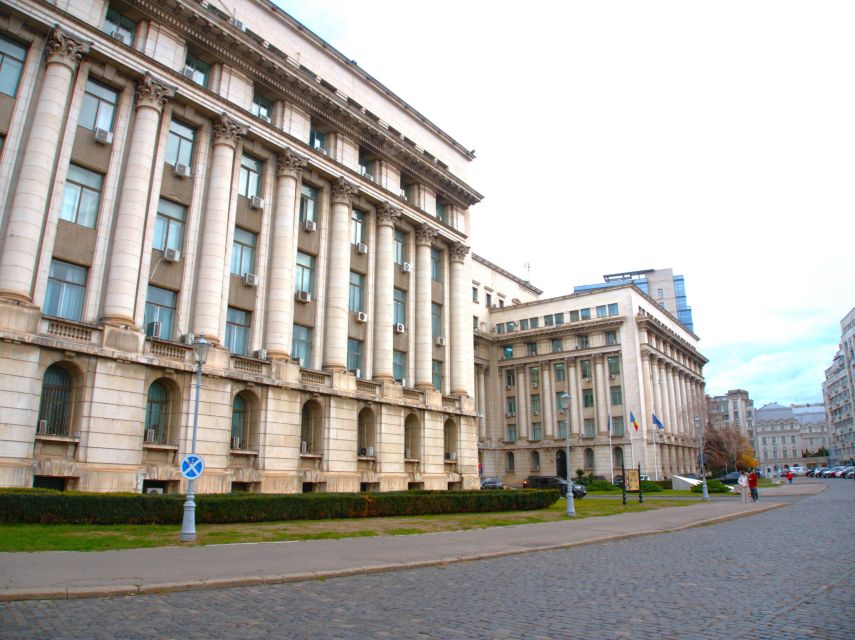
From this area, you also reach key viewpoints tied to the dictatorship years. You get an outside view of the Central Committee of the Romanian Communist Party and learn about the years of dictatorship, from Soviet occupation to the disaster that ended it. You’ll also see the outside view of the Congress hall.
This part is especially valuable if you want the “why did people finally snap” question answered clearly. The tour connects main characters, the reasons for revolt, and the broader geopolitical pressures, so you’re not just hearing a dramatic narrative. You’re learning how politics, timing, and conflict converged.
A consideration: Revolution Square is a major public area, and your experience can depend on how crowded it is that day. Still, the guided time here is structured, so you should get meaningful discussion even if you’re sharing space with the city.
Sala Palatului and the Parliament Corridor: Learning from the Outside Views
After Revolution Square, the route shifts into a pass-by mode for a few major landmarks. You’ll stop briefly at Sala Palatului for about 10 minutes. It is not the longest segment, but quick stops can be useful when you’ve already built the framework of the story. At this stage, you’re not starting from scratch. You’re placing new landmarks into what you learned earlier.
Then comes the outside view of the Palace of the Parliament, with about 30 minutes in the broader area. This is the “utopian administrative center of the 1980s” part of the tour, and it’s one of the most memorable ways to understand how the regime tried to project power and future visions through architecture.
The Palace of the Parliament is often photographed from a distance, and that can make it feel like just another big building. Here, the tour helps you read it as a political message. You’ll also get the outside view of the Parliament Palace as the tour concludes, which gives your last moments a strong, visual summary of the era.
Casa Radio and the Short Subway Break That Saves Your Feet
You’ll also pass by Casa Radio for about 20 minutes. Again, it’s not a long museum-style stop. But when a guide is focused on the political story, even shorter pauses help you connect buildings to roles they played in the era.
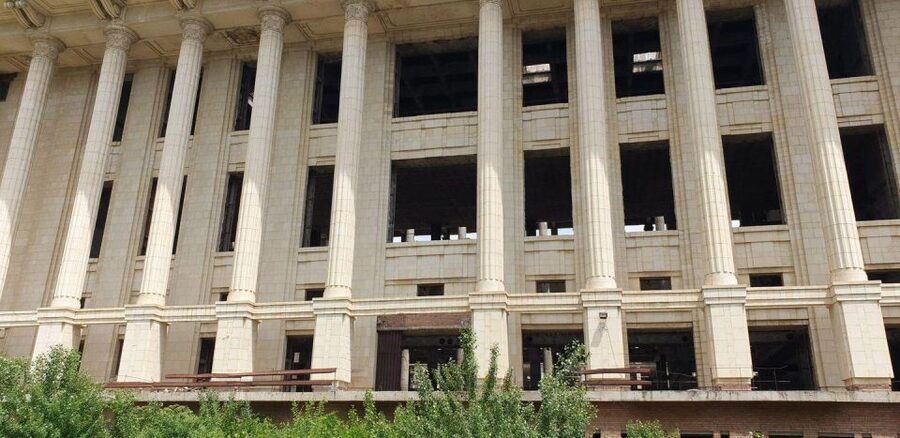
Then you take a quick subway ride to reach the ruins of the unfinished Communist history museum in the west-central part of the city. I love that this is built into the route, because it gives you a breather while also adding a very specific kind of “after” to the communist story.
The unfinished museum ruins are interesting because they symbolize what happens when grand plans stop moving forward. This is a different kind of evidence than monuments or speeches. It’s the physical trace of interruption, and the guide uses that to talk about the collapse of the system’s promises.
This is also a practical moment. After walking through squares and open public spaces, a short transit step makes the rest of the half-day more comfortable.
Ending at Piața Constituției: A Clear Finish and an Easy Next Step
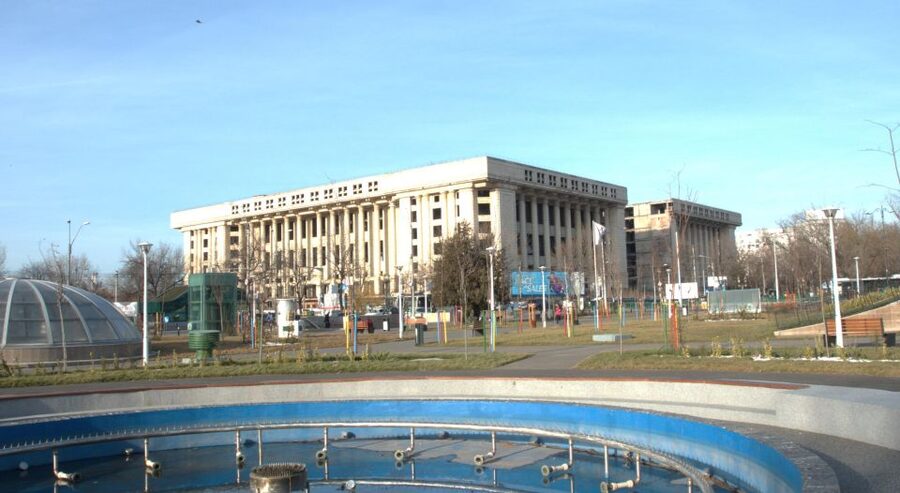
Your tour ends at Piața Constituției. Ending there is helpful because it feels like a transition point back into the wider city, not a dead-end return to the starting Starbucks.
If you like to keep learning after a tour, this kind of ending works well. The guide includes suggestions for how to spend your time in Bucharest afterward, and you’ll be in a better position to pick your next neighborhood with confidence. In a city where political history is layered into everyday streets, that matters.
Also, the tour is adjustable to your preferences. That means you can often steer slightly toward the parts you care about most, like WW2 connections or more time on the revolt narrative. Based on the way the tour was described by people who booked it, customization is not just a slogan. It’s part of how the experience is delivered.
Price and Value: What $165 Gets You (and When It’s a Smart Deal)
The price is $165 per group up to 7 people, lasting about 4 hours. That pricing structure is important. When it’s split across a small group, the cost per person drops fast, especially compared to tours that charge per individual.
This tour’s value isn’t just the route length. You are getting:
- a licensed local guide
- public transportation tickets
- a guided flow that connects communist origins, dictatorship, revolt, and aftermath through recognizable places
- guidance on what to do next in Bucharest
If you can fill the group, you’re paying for a focused lesson by a real local guide rather than renting a generic walk leader. If you are traveling as a solo traveler, the value depends more on whether private guiding is your preferred style and whether you want someone to customize your focus.
Either way, the key is clarity. This is built to make the city legible. If that is what you want, the price starts to make sense.
Who This Tour Suits Best
This is a strong fit for you if:
- You want the communist era explained through Bucharest’s actual landmarks
- You like political history that includes cause and effect, not only major dates
- You appreciate a guide who can adjust the route focus to your interests
It’s also a good option if you are short on time. Four hours is enough to see multiple major squares and government-era sites without burning an entire day.
If you are the type who prefers very quiet, slow strolls with minimal discussion, you might still enjoy it, but you should know the tour is history-forward and conversation-forward. This is designed to teach, not to simply wander.
Practical Tips to Get the Most Out of Your Half-Day
First, plan your clothing for comfort. You will be outdoors for much of the tour, and you may stand around during explanations at major public spaces.
Second, come with one or two themes you care about. For example, if WW2 connections are your priority, say so early. The route starts with communist origins and Soviet connections, so you can steer your questions right away.
Third, use the end of the tour to extend the story yourself. The guide provides suggestions for self exploration of Bucharest. If you ask for a simple plan, like where to go next and what to look for, you’ll feel like you stretched a half-day into a full learning arc.
Finally, consider the pace. The tour includes a quick subway ride, which helps. Still, it’s a walking tour, not a bus tour.
Should You Book This Bucharest Communism Walking Tour?
I’d book this tour if you want Bucharest’s communist era explained through the places where it happened and where its ideas still show up. The biggest reason is the combination of local guidance and a route built around key downtown stops, including University Square and Revolution Square, plus the architectural “message buildings” connected to the dictatorship years.
It’s also worth it if you like tours that adapt to you. The guide, Razvan Trancu, is described as customizing the experience around what the group wants, and that kind of flexibility is especially useful for history tours where people can latch onto different interests.
The one reason to hesitate is if you hate walking outdoors for a few hours. If that’s you, you might be happier with a more transit-heavy option. But if you can handle a compact urban walk, this is a very solid way to understand the city fast and then explore with better instincts.
FAQ
How long is the Bucharest scars of Communism half-day private walking tour?
It lasts 4 hours.
How much does the tour cost?
The price is $165 per group, up to 7 people.
Where does the tour start?
The meeting point is at Starbucks University, main door.
What stops do you visit during the tour?
You visit University Square, Revolution Square, you pass by Sala Palatului, the Palace of the Parliament, Casa Radio, and you finish at Piața Constituției. The tour also includes a quick subway ride to see the ruins of the unfinished Communist history museum.
Is public transportation included?
Yes. Public transportation tickets are included, and there is a quick subway ride during the tour.
What languages is the guide available in?
The live tour guide speaks Italian and English.
Is this a private tour?
Yes, it is a private group tour.
What’s included in the price, and what is not?
Included are guiding services with a licensed local guide, public transportation tickets, and suggestions for time spending in Bucharest. Snacks and souvenirs are not included.
Do you need to bring snacks?
Snacks are not included, so you may want to bring something small if you think you’ll get hungry during the 4 hours.
Newest Bucharest write-ups
- Half Day Tour in Bucharest
★ 5.0 · 1 review - Private transfer to BRASOV
★ 5.0 · 1 review - Bucharest: Capture the most Photogenic Spots with a Local
★ 5.0 · 1 review - Bucharest Private Custom Walking Tour with Guide (Private Tour)
★ 5.0 · 1 review - Transfer Bucharest to Constanta / Mamaia
★ 5.0 · 1 review - Uncover Transylvania: Private 2-Day Tour Bears & Medieval Wonders
★ 5.0 · 1 review - Private Day Trip to Peles Palace, Dracula’s Castle and Brasov
★ 5.0 · 1 review
Communist-Era Tours, compared.



Parliament, Ceausescu House & Village Museum Tour
Read our review →
Bucharest Essential Tour: Old Town, Calea Victoriei & Communism
Read our review →
Communism in Bucharest – Landmarks, Museum & Communist Appetizers
Read our review →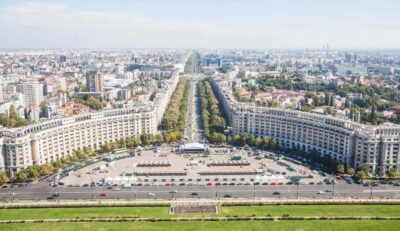
Palace of Parliament, Ceausescu House & Village Museum
Read our review →Browse the lists this tour appears in