
Reviewed · COMMUNIST-ERA TOURS
Contrasts of Communism – Small Group Walking Tour in Bucharest
Bucharest has a memory you can walk. This small-group tour traces the 1989 turn in Romanian history across major squares and lesser-known streets, led in English by local guide Elena. You cover key sites on foot, with public-transport segments that help you see more of real neighborhoods than you would on your own.
I also like the way Elena uses old photographs and personal, human stories, so the communist era feels grounded, not like a lecture. One possible drawback: it is a moderate-fitness 3-hour outing with quite a bit of walking, so good shoes and a solid breakfast matter.
In This Review
- Key highlights at a glance
- A 3-hour Bucharest walk with a small group and smart transit
- Meet your guide: Elena’s photo-led, question-friendly style
- Revolution Square: where Ceausescu’s last speech ends, and a new chapter begins
- Consideration for this stop
- University Square and the KM0 of free speech
- Eroii Revolutiei: working-class blocks, street art, and buses that change the scene
- What can be tricky
- Cimit. Eroilor Revolutiei: the quiet cemetery where personal stories matter
- Parcul Carol I: a high viewpoint and a monument built for party leaders
- Palace of Parliament outside: the second-largest administrative building and Ceausescu’s last whim
- Bulevardul Unirii and the dancing fountains: ending near Parliament and old town
- Price and value: $42.05 for context-heavy, small-group storytelling
- Who this tour suits best (and who should pick another plan)
- Should you book Contrasts of Communism in Bucharest?
- FAQ
- How long is the Contrasts of Communism walking tour in Bucharest?
- What does the tour cost?
- Is the tour offered in English?
- How big is the group?
- Where do the tour starts and end?
- Is the Palace of Parliament included inside?
- Do I get a ticket on my phone?
- What if the weather is bad?
Key highlights at a glance
- Small group size (max 8) for questions and a relaxed pace
- Elena’s storytelling, grounded in lived experience and backed by photos
- Public transport included, so you get beyond the usual “postcard stops”
- Free admission at most places, with Palace of Parliament entry not included
- Stop-by-stop context from Revolution Square to the dancing fountains on Unirii Boulevard
More Guided Walks in Bucharest
- Bucharest: City Highlights Guided Walking Tour★ 4.9 · 1,482 reviews
- Bucharest: Communism and History Guided City Walking Tour★ 4.9 · 918 reviews
- Bucharest Highlights Walking Tour★ 5.0 · 469 reviews
- Bucharest: Hidden Markets Walking Tour with Tastings★ 4.9 · 329 reviews
A 3-hour Bucharest walk with a small group and smart transit
This is a tight, 3-hour schedule built for people who want more than a quick hit of sights. You start at Strada Boteanu 3 and end near Bulevardul Unirii 25, in the area that also ties into old town plans. The group stays small, up to 8 travelers, which means you are not stuck in a line staring at your guide’s shoulder.
What makes the timing work is that the route mixes walking with public transport. Bucharest is a city where neighborhoods can feel different block to block, and the tour uses that fact rather than fighting it. If you like your history tours with movement and real streets, this format tends to click.
For practicality, the tour runs in English, and you get a mobile ticket. Confirmation typically comes within 48 hours after booking, subject to availability, so it is smart to lock it in soon rather than hoping for a last-minute slot. The tour also needs good weather, so plan for flexibility if your dates are tight.
Meet your guide: Elena’s photo-led, question-friendly style
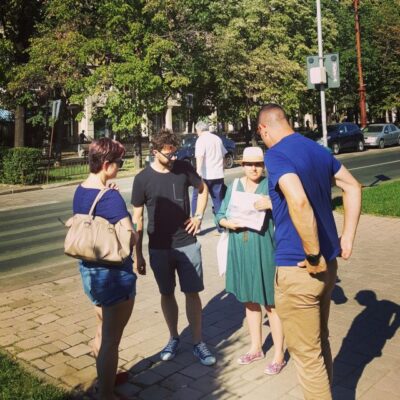
The biggest quality here is not just the topic. It is how Elena teaches it. You can feel that she is sharing more than a script. In conversations, she brings in behind-the-scenes context, and she answers questions without making you feel rushed.
A standout detail is the use of old photographs during the walk. That matters in Bucharest, because so much of the communist-era city is visible right in front of you. Photos help your brain connect what you see now with what lived there then. It turns the tour into a kind of “before and after” on the street.
Also, this is not a headphones-only experience. Because the group is small, you can ask follow-ups and get actual replies. If you want to understand what communism did to daily life, not just how regimes rose and fell, Elena’s style supports that.
Revolution Square: where Ceausescu’s last speech ends, and a new chapter begins
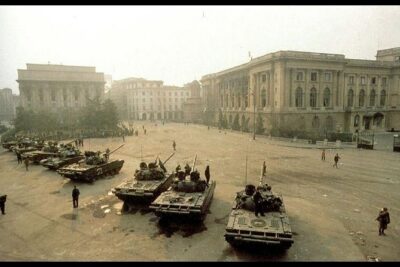
You begin at Revolution Square, and you stand where Nicolae Ceausescu held his last speech in 1989. This is where a lot of people’s Bucharest story starts, because it is a loud turning point in a quiet, everyday city. Your guide connects the dots from the communist dictatorship’s rise to its collapse, with the revolution presented as a sequence of decisions, fear, courage, and confusion.
Expect this stop to feel more reflective than scenic. The value is the location, yes, but also the context you get while standing there. You learn how quickly a political system can fracture and how people react when it does. Even if you do not know Romanian history yet, the framing makes the events easier to hold in your head.
More of communist-era Bucharest:

Consideration for this stop
If you prefer purely visual city-walks with minimal emotional weight, this one may feel heavy. The tour topic is political and personal, so brace for more “human stakes” than “quick photo op.”
University Square and the KM0 of free speech
Next is University Square, described as KM0 of Romanian freedom of speech. You are not just looking at a plaza. You are standing at a symbolic starting point tied to the first heroes who died for liberty in Bucharest on 21 December 1989.
This part works best if you are paying attention to small details, because the meaning here lives in the story, not in grand monuments. Your guide unpacks the current political climate in Romania too, tying past events to what people deal with now. That connection is where the tour stops feeling like “history class” and starts feeling like understanding a living country.
This is also a great stop for questions. If you want to ask why certain ideas take hold, or how public speech becomes risky under dictatorship, this is the kind of moment where your questions get better answers.
Eroii Revolutiei: working-class blocks, street art, and buses that change the scene
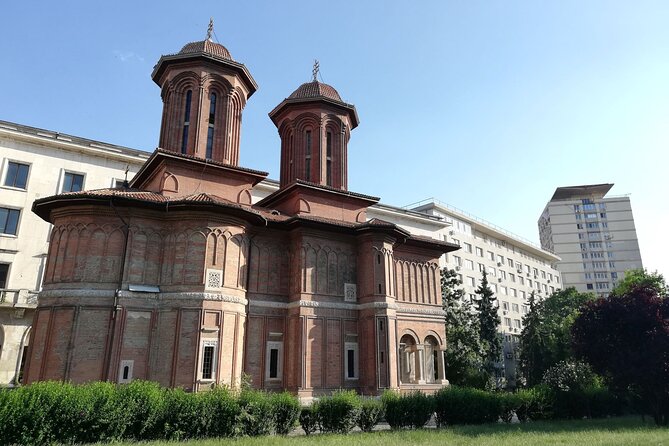
Then you travel off the most obvious tourist path using public transportation, heading to Eroii Revolutiei. This is a working-class neighborhood where you can see 1970s grey communist blocks and also how the area is changing through colorful street art.
This stop is shorter, around 15 minutes, but it punches above its weight. It gives you a contrast: the communist city is not only something in old photos, it is something still lived in. And the neighborhood is not frozen in time. People adapt, repaint, repurpose, and add color.
If you have only seen Bucharest as a collection of restored old facades, this stop is your reality check. You learn what “after communism” looks like at street level, not just in government buildings.
What can be tricky
Street art and neighborhood streets can be hit-or-miss depending on what is newly painted and what has faded. The main point is understanding the transformation, not catching a specific mural.
Cimit. Eroilor Revolutiei: the quiet cemetery where personal stories matter
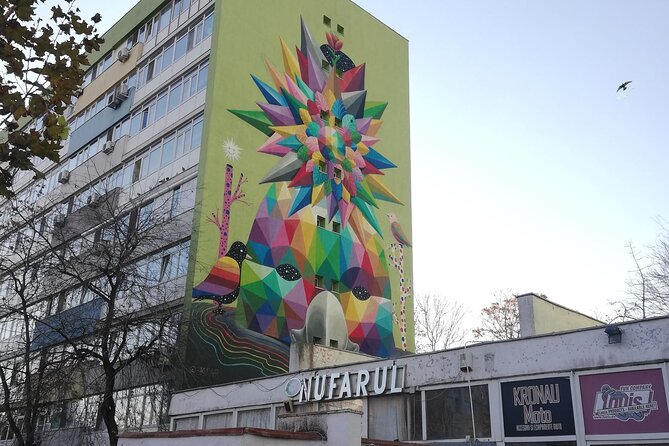
After the busier energy of the city squares, you shift to Cimit. Eroilor Revolutiei, the Memorial Cemetery dedicated to the Heroes killed in the revolution of 1989. This is one of the calmer stops, with a walk through quiet paths and a focus on individual stories rather than big slogans.
This is where the tour slows down in a good way. When you hear personal accounts connected to the cemetery, the revolution stops being abstract. You start to understand how people are remembered and why commemoration looks different from country to country.
If you like tours that make room for silence and reflection, this cemetery stop is likely to be a highlight. It is also a useful counterbalance after seeing the grand symbolism of monuments and squares.
Parcul Carol I: a high viewpoint and a monument built for party leaders
Next comes Parcul Carol I, one of the higher points in Bucharest. You get a unique view from the hill, and your guide points out the Monument of the Heroes for the Freedom of the Motherland, built in honor of communist party leaders.
This stop gives you the city in one glance, and then the politics behind what you are looking at. It is easier to understand the communist obsession with symbolism when you can see the city’s layout from above. You learn how monuments were used to tell people what mattered, whose sacrifice mattered, and who deserved legitimacy.
From a photo angle, the viewpoint is a plus. But the real payoff is how the guide frames the monument’s purpose and how it fits the era’s propaganda style.
Palace of Parliament outside: the second-largest administrative building and Ceausescu’s last whim
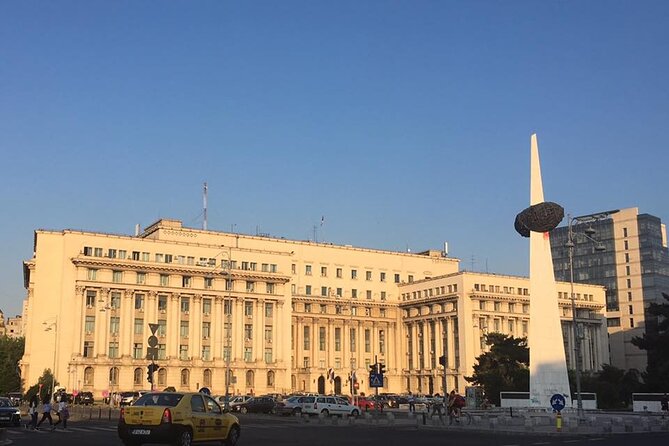
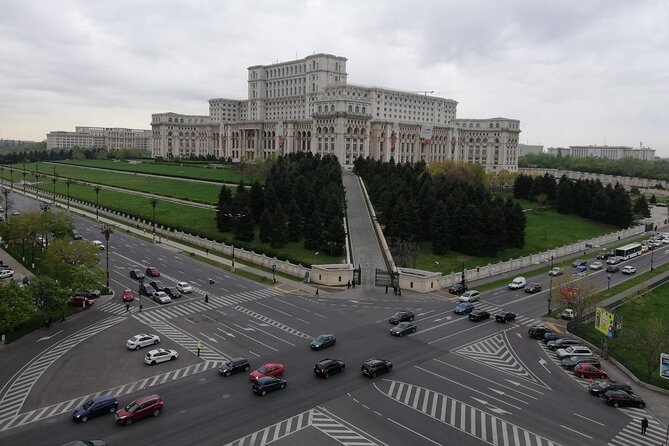
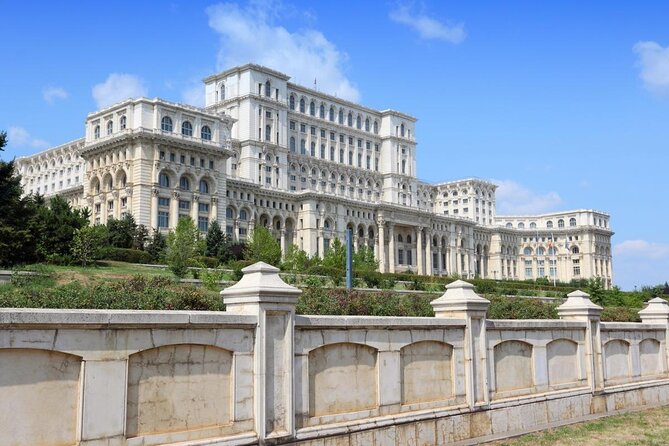
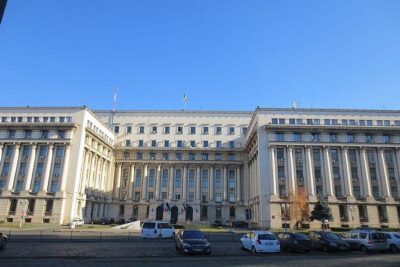
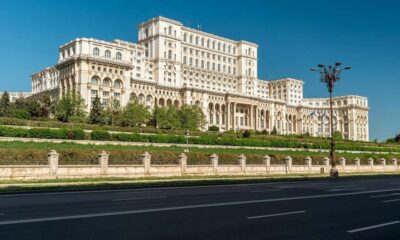
You circle back toward the city center to stand in front of the Palace of Parliament, described as the second-largest administrative building in the world and linked to Ceausescu’s final major ambitions. This is the stop where the scale of communist-era power becomes undeniable.
Important practical note: admission to the Palace of Parliament is not included. That means you will experience it from the outside as part of the tour, not as a guided interior visit. If you want the inside, you would need to plan that separately.
Still, the exterior stop can be worth it. The tour helps you understand why this building became a lasting symbol, not just a big structure. When you pair that explanation with the earlier stops, you start to see a pattern: power tries to make itself permanent.
Bulevardul Unirii and the dancing fountains: ending near Parliament and old town
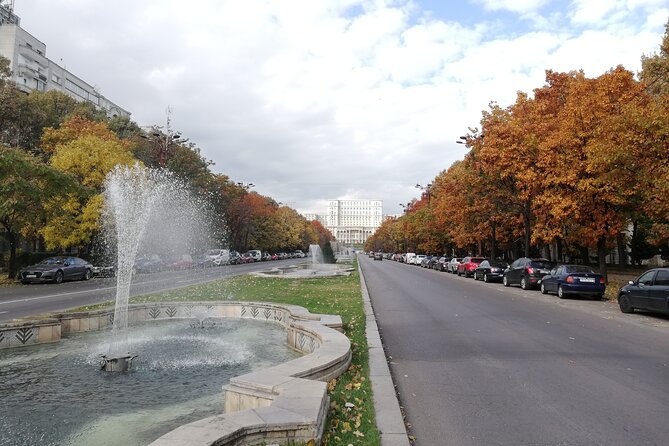
To close, you end near Bulevardul Unirii, around the dancing fountains. These fountains are designed as a kind of showpiece meant to give visiting world leaders a less-than-comfortable sense of being outplayed, a local “home-court advantage” idea.
This final stop works because it shifts from heavy political memory to something more playful, even slightly theatrical. You get a sense of how Bucharest stages itself now, in contrast to the monumental staging of the communist era. It also leaves you in a practical spot for continuing your day into old town.
If you want an easy transition to dinner afterward, this is a smart ending location.
Price and value: $42.05 for context-heavy, small-group storytelling
At $42.05 per person for about 3 hours, this is not the cheapest way to tour Bucharest, but it also is not overpriced for what you get. The tour runs in a small group, uses public transit for parts of the route, and includes guidance that focuses on how communism shaped daily life and memory, not just dates.
Also, many key stops have free admission, which stretches your budget. The one clear exception is the Palace of Parliament, where entry is not included. In other words, the tour is built to give you a meaningful experience without requiring extra paid add-ons at every step.
If you are traveling with limited time, this tour tends to make sense because it gives you a framework. Once you have that framework, the rest of your Bucharest sightseeing clicks faster.
Who this tour suits best (and who should pick another plan)
This fits best if you like history that has a pulse. You want to see how a dictatorship shaped streets, buildings, and how people tell the story of the revolution today. You also care about a local perspective that feels like a real narrative, not a memorized script.
You should also consider it if you enjoy walking with breaks and asking lots of questions. The pace is structured, but the small group format makes it feel more like a guided conversation with stops than a forced march.
Choose a different option if you want only relaxed, pretty scenery with minimal political content. This one deals with 1989 events and the communist period’s impact in a direct way. If that is not your style, you may find it emotionally intense.
Should you book Contrasts of Communism in Bucharest?
If you want a Bucharest tour that connects the big events of 1989 to what you can still see today, book it. The small group size, Elena’s photo-led storytelling, and the mix of squares plus working-neighborhood streets make it practical and memorable.
Do book it soon if your dates are firm. The average booking window is about 17 days in advance, and the group limit means spots can go.
I would particularly recommend it for first-time visitors who want context before they start clicking photos. Once you understand the city through this lens, everything else in Bucharest becomes easier to read.
FAQ
How long is the Contrasts of Communism walking tour in Bucharest?
It runs for about 3 hours.
What does the tour cost?
The price is $42.05 per person.
Is the tour offered in English?
Yes, it is offered in English.
How big is the group?
This experience has a maximum of 8 travelers.
Where do the tour starts and end?
It starts at Strada Boteanu 3, București 010027, Romania and ends near Bulevardul Unirii 25, București.
Is the Palace of Parliament included inside?
Admission to the Palace of Parliament is not included, so you should plan for the exterior stop as part of the tour.
Do I get a ticket on my phone?
Yes, you receive a mobile ticket.
What if the weather is bad?
The tour requires good weather. If it is canceled due to poor weather, you will be offered a different date or a full refund.
Newest Bucharest write-ups
- Private transfer to BRASOV
★ 5.0 · 1 review - Half Day Tour in Bucharest
★ 5.0 · 1 review - Bucharest: Capture the most Photogenic Spots with a Local
★ 5.0 · 1 review - Bucharest Private Custom Walking Tour with Guide (Private Tour)
★ 5.0 · 1 review - Transfer Bucharest to Constanta / Mamaia
★ 5.0 · 1 review - Uncover Transylvania: Private 2-Day Tour Bears & Medieval Wonders
★ 5.0 · 1 review - Private Day Trip to Peles Palace, Dracula’s Castle and Brasov
★ 5.0 · 1 review
Communist-Era Tours, compared.

Parliament, Ceausescu House & Village Museum Tour
Read our review →
Bucharest Essential Tour: Old Town, Calea Victoriei & Communism
Read our review →
Communism in Bucharest – Landmarks, Museum & Communist Appetizers
Read our review →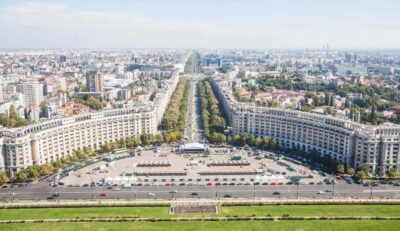
Palace of Parliament, Ceausescu House & Village Museum
Read our review →Browse the lists this tour appears in