
Reviewed · MONASTERIES & PAINTED CHURCHES
Snagov Monastery, Ceaușescu Mansion, & Village Museum – 6h
A day with Dracula lore is a great idea. This private 6-hour route mixes Romanian village life, a Ceaușescu-era residence, and a quick sweep through central Bucharest landmarks, so you get big contrasts in one sitting. I especially like how the plan uses short, guided stops instead of long, tiring museum marathons.
You also spend real time outside the city with Snagov Monastery on an island, about 40 minutes from Bucharest, which feels like a mini escape. The only real drawback to consider is that you are moving on a tight schedule, and entrance fees are extra, about 17 euro per person, with food and drinks not included.
In This Review
- Key highlights worth your attention
- Half-day contrasts that actually make sense
- Dimitrie Gusti National Village Museum: tradition you can walk through
- Snagov Monastery: a lake detour with Dracula lore
- Ceaușescu Mansion, the Spring Palace: power in a private home
- Victory Avenue: the street where Romania wears two faces
- Revolution Square: where the story turns in real space
- Romanian Athenaeum and the Parliament Palace: fast views of big statements
- Price and logistics for a private 6-hour tour
- Who this tour fits best
- Should you book the Snagov Monastery, Ceaușescu Mansion, and Village Museum tour?
- FAQ
- How long is the tour?
- Where does the tour start, and is pickup included?
- Is this tour private or shared?
- What sights are included besides the two big palace stops?
- Are entrance fees included in the price?
- Does the tour include food and drinks?
- Which languages are available for the guide?
Key highlights worth your attention
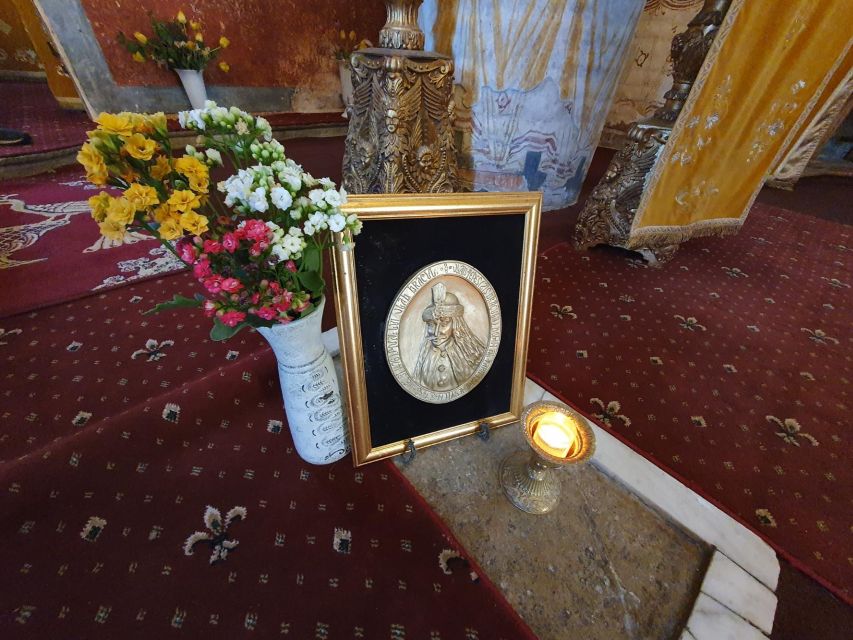
- Snagov Monastery on an island, about 40 minutes from Bucharest, with the tomb of Dracula story attached to the site
- Dimitrie Gusti National Village Museum, where Romanian traditional houses and symbols show up in one place
- Ceaușescu Mansion details, including its Spring Palace name, plus the architects and designers linked to the home and grounds plan
- Victory Avenue walking time, balanced with free time for shopping and quick photos
- Revolution Square timing, designed around the moment the dictator was ousted, with viewpoints of the places tied to December 1989
More painted monasteries:
- Princely Court of Târgoviște and Curtea de Argeș Monastery★ 4.5 · 50 reviews
- Small Group Tour to Mogosoaia Palace & Snagov Monastery★ 4.4 · 48 reviews
- Sacred Monasteries Private Tour: Snagov, Țigănești & Căldărușani★ 5.0 · 32 reviews
- Private Half Day Trip to Snagov Monastery & Mogosoaia★ 4.1 · 29 reviews
Half-day contrasts that actually make sense
This is one of those Bucharest tours where the route feels purposeful. You start with everyday Romanian tradition at the National Village Museum, then shift to power and propaganda through the Ceaușescu residence, and then swing back to the city to see how history sits side by side.
What makes the experience work is the rhythm. Each stop gets around an hour for the main sights, then you get shorter guided windows in the city center. That means you see a lot without turning every hour into a full museum slog.
And it is private. That matters in a city like Bucharest where distances are deceptive. A private car, picked up in Bucharest, lets you move fast while your licensed guide explains what you are looking at.
Dimitrie Gusti National Village Museum: tradition you can walk through
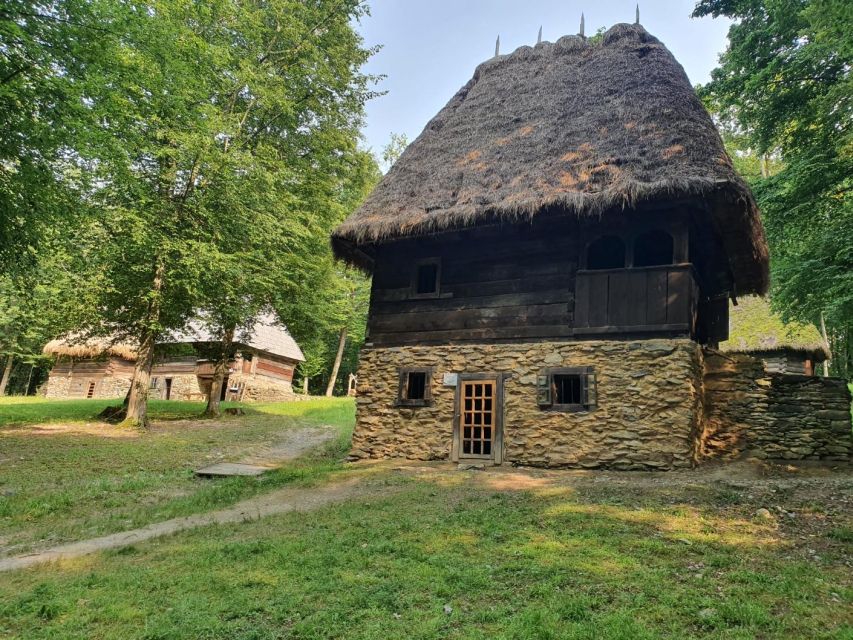
Your first stop is the Dimitrie Gusti National Village Museum, typically about an hour with a guided visit. If you care about how people lived, not just what rulers built, this is where the tour earns its keep.
You will see traditional Romanian houses from different regions, made with the materials and styles locals used, such as wood and adobe, plus stone and other materials where relevant. Instead of reading about Romanian rural culture in an abstract way, you get to walk past the homes and absorb the layout as if you were moving through a living village.
This stop also highlights symbolism and daily life objects, including a mill and a wooden church. Those kinds of details are the fastest way to understand what villagers valued, spiritually and socially. The museum framing focuses on harmony with the environment, so it is not just architecture. It is also the idea of building a sustainable life in your own backyard.
A small practical note: because your guide is with you the whole time, you can ask quick questions as you go. That helps you get more out of the museum than you would if you treated it like a one-time photo stop.
Snagov Monastery: a lake detour with Dracula lore
Then you head out of the city to Snagov Monastery, about 40 minutes outside Bucharest. The timing is short enough that the trip stays fun, not exhausting, and it changes the mood from urban to calm.
The monastery sits on an island, so you get that sense of separation right away. Even if you are not chasing spooky stories, the setting gives you a different kind of atmosphere. Your visit includes a guided tour plus time for photos and sightseeing.
This stop is marketed around one big point: it is the place where the tomb of Dracula is associated. That alone pulls people in, but I also like that the visit sits within the broader tour theme of contrasts. You go from village spirituality, to dictatorship-era power buildings, and now to Romanian folklore tied to a single site.
One consideration: because this is a smaller, specific destination, expect more time spent on guided explanation and viewpoints than on endless exploration. If you love free roaming, plan on leaning into what the guide points out rather than expecting a lot of independent wandering.
More of communist-era Bucharest:



Ceaușescu Mansion, the Spring Palace: power in a private home
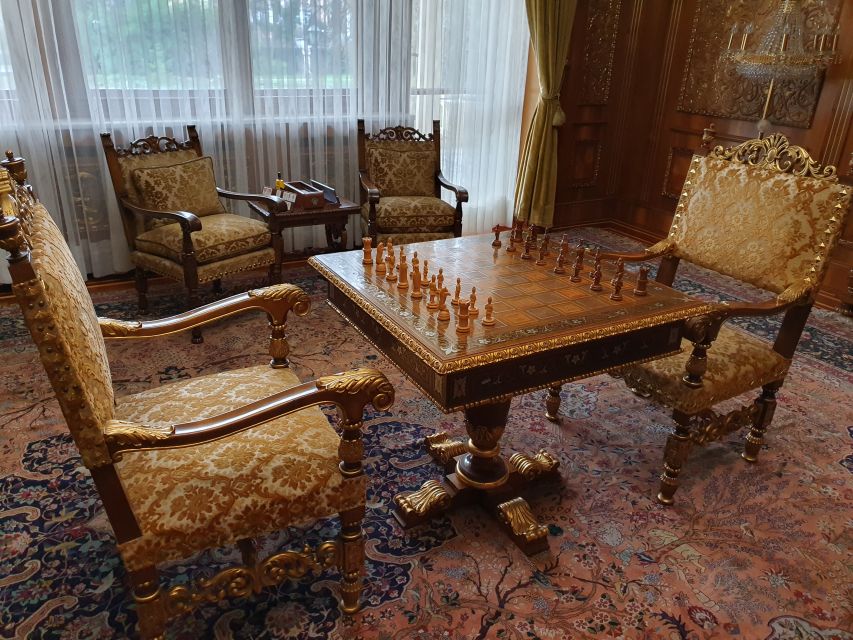
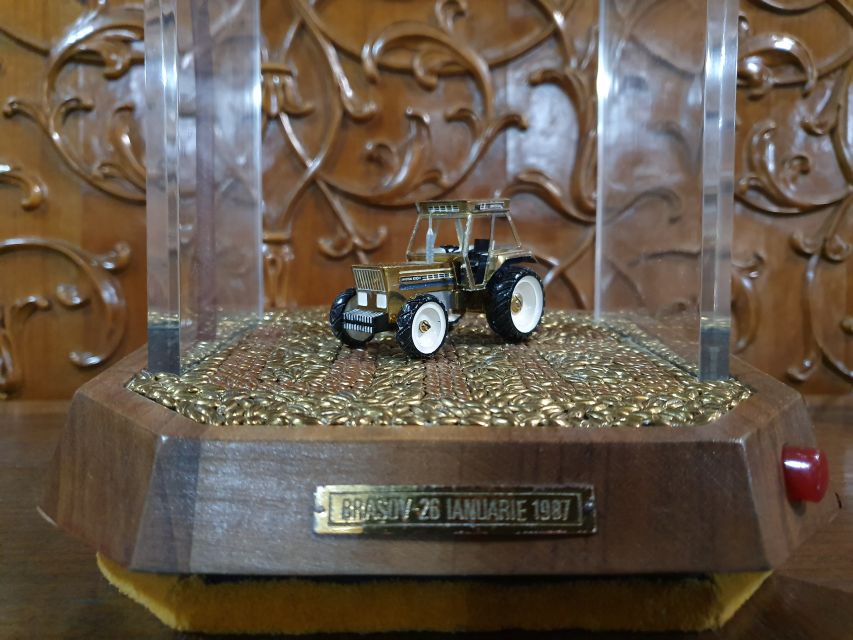
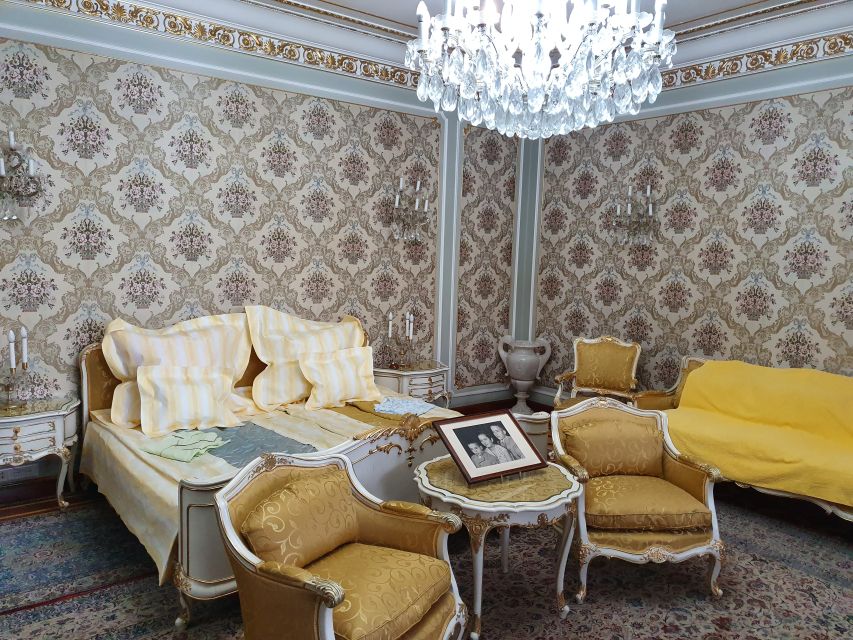
Next comes the Ceaușescu Mansion, also known as the Spring Palace. You visit with a guided tour and time to walk and take in the surroundings, roughly an hour.
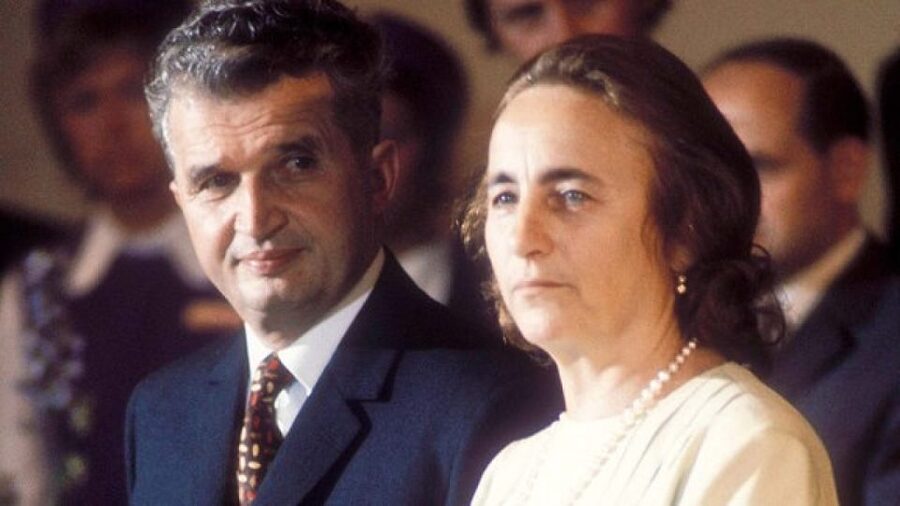
This is not presented as a museum of random rooms. It is framed as the private residence of Nicolae and Elena Ceaușescu and their children, Nicu, Zoia, and Valentin, for about a quarter of a century from 1965 to 1989. That specific timeline matters because it helps you see how personal space can become part of public history.
You will hear about the origin of the mansion name. Built in the mid-1960s as the Spring Palace, then enlarged between 1970 and 1972. Those dates give you a way to connect it to the era’s politics and aesthetics.
The creative credits are part of what makes this stop interesting: Aron Grimberg-Solari is named as the preferred choice for the residence design. Robert Woll is credited with complementing the architecture and also serving as the main furniture designer for the house. Teodosiu is mentioned as the landscape engineer behind the grounds planning.
Why I think this is valuable, even if you already know the basics about Ceaușescu, is that it reframes the story. You are not only looking for oppression. You are looking at how a family lived day to day, then how that private life became entwined with state power.
Practical thought: because the day is paced tightly, use your time here to focus on what your guide points out most. The mansion is one of the stops where it really pays off to listen, then ask follow-up questions while you still have the guide right there.
Victory Avenue: the street where Romania wears two faces

After the residence, you shift back into Bucharest. The tour includes time along Calea Victoriei, Victory Avenue, about 1.5 hours total, mixing guided sightseeing and free time.
This is where the contrasts become visual. On one side you see the Royal Palace. On the other you see major buildings tied to the Romanian Communist Party and the revolutionary events linked to 1989. Your guide sets it up as a street that holds contradictions in plain sight.
You also get to see old Orthodox churches and then a mix of everyday city energy, with stops that can include music stores, museums, theaters, tea shops, retail stores, and gift shops. You even have free time built in, which is useful because it lets you pick your own pace for shopping or grabbing a snack nearby.
Even if you are the type who dislikes shopping detours, that free time still helps you refresh. After the heavier political sites, a little personal time makes the rest of the walk feel less rushed.
Revolution Square: where the story turns in real space
The tour continues with Revolution Square, with a shorter guided component and sightseeing time, about 30 minutes. This part is built around December 1989, when Nicolae Ceaușescu was ousted.
The key value here is location-based context. Instead of reading about a dramatic moment in the abstract, you are standing where the revolution started, tied to the buildings you are seeing during the drive and on foot.
The explanation includes that Ceaușescu fled the country by helicopter. It also notes the surrounding controversies related to state security and offshore accounts. Even if those details are not new to you, hearing them placed next to the physical setting gives the story a sharper edge.
One more thing your guide seems to emphasize is how power structures were housed in recognizable state architecture. When you connect the buildings to the events, Bucharest stops feeling like a collection of monuments and starts feeling like a place where history happened in real time.
Romanian Athenaeum and the Parliament Palace: fast views of big statements
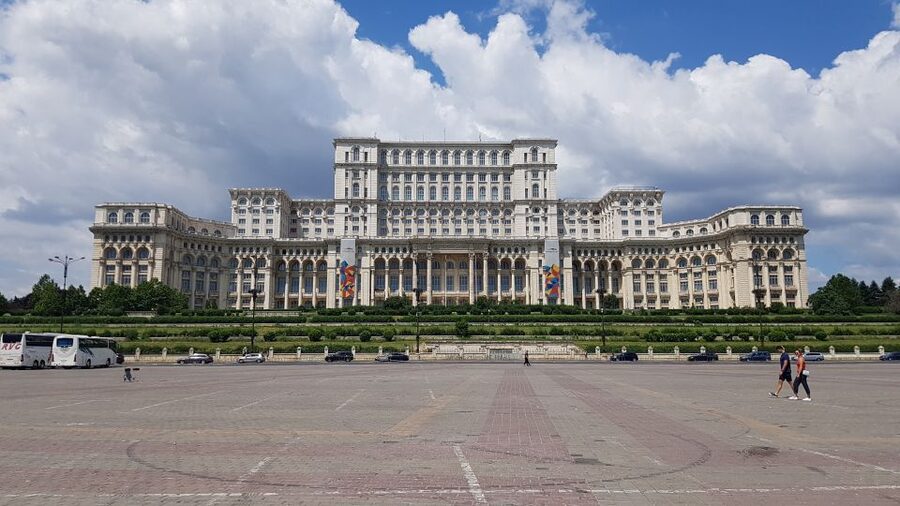
You also get stops tied to major architecture icons, including the Romanian Athenaeum, plus the Senate-related area and the Palace of the Parliament area.
The itinerary includes guided sightseeing and walk time, with short photo stops. The time windows are compact, around 30 minutes for the Athenaeum and about 30 minutes for the Parliament area. There is also a CEC Palace quick stop with some photo time and a short guided visit.
Because these are time-limited segments, your best strategy is to treat them like orientation plus photos, not as a deep study. If a building catches your eye, ask your guide what to look for in the exterior details. That way you get a guided “decoder ring” even when you are not going inside.
Also, because entrance fees are not included (about 17 euro per person), you might find that not every interior space is an automatic stop. Your guide can help you figure out what is worth paying for versus what you can learn from the exterior and nearby viewpoints.
Price and logistics for a private 6-hour tour
This tour costs $254 per person for about 6 hours, and it is private with your own car and licensed guide/driver. You also get pickup in Bucharest, with the driver holding a sign with your last name.
From a value perspective, the price makes sense for two reasons. First, you are paying for the convenience of a dedicated vehicle throughout, including car expenses like gasoline, parking, and road tolls. Second, you are packing together multiple high-impact stops that would be hard to coordinate on your own, especially the trip out to Snagov Monastery.
Two costs to keep in mind. Food and drinks are not included. Entrance fees are extra, about 17 euro per person. If you want to control your total budget, bring water and plan for one meal on your own time before or after.
Group size also changes the experience. Since it is private, you get the flexibility to change the day’s flow after starting the tour. That is helpful if traffic, weather, or your interest level nudges you to slow down at the village museum or spend a little more time around Revolution Square.
Finally, this tour includes skip-the-ticket-line, which is a real time saver on popular sites. When you are on a tight half-day schedule, those minutes matter.
Who this tour fits best
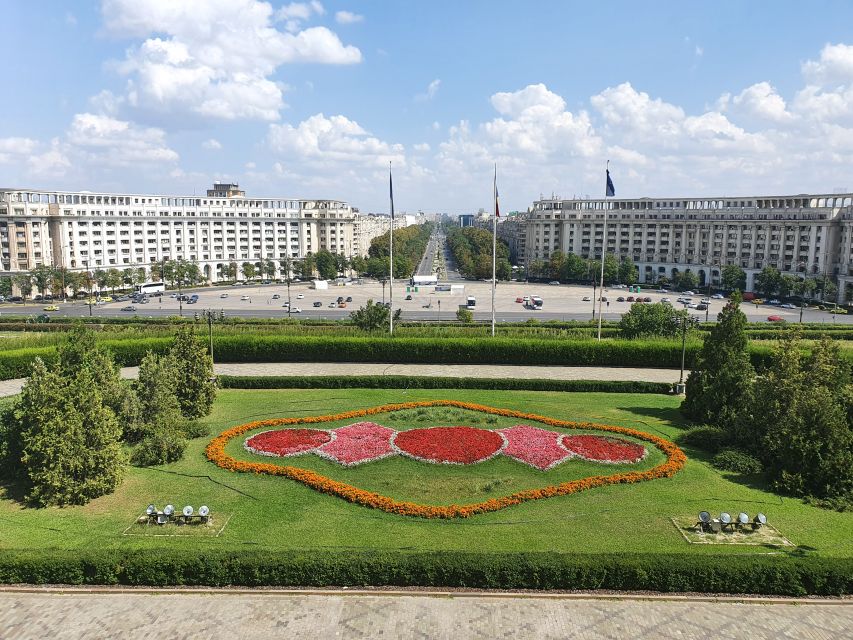
This is a good match if you want a single day that explains Bucharest through multiple lenses. You get Romanian rural culture, Ceaușescu-era architecture and interiors, Dracula lore on an island, and city center history tied to 1989.
It also works well for couples or small groups who prefer a driver and guide rather than hopping between buses and trains. And because your guide is available in multiple languages (including Romanian, English, Italian, French, Spanish, and German), it is an easy choice for mixed-language groups too.
If you are the type who loves long museum sessions, you might feel the day is paced tightly. The stops are substantial, but the structure assumes you want variety more than one single site studied for hours.
Should you book the Snagov Monastery, Ceaușescu Mansion, and Village Museum tour?
I would book it if you want a compact, guided route that mixes villages, dictators, and city landmarks without turning into a full-day marathon. The strongest reasons are the island setting at Snagov, the focused look at the Ceaușescu Mansion with named designers and time periods, and the way the National Village Museum makes tradition tangible.
I would think twice if your top priority is deep, unhurried time in one place. The value here comes from seeing several major themes in one organized plan, with a private car and a guide keeping the story coherent.
If you want Bucharest with meaning, not just photos, this itinerary is a smart way to do it in 6 hours.
FAQ
How long is the tour?
The tour runs for 6 hours.
Where does the tour start, and is pickup included?
Pickup is included in Bucharest. The driver meets you holding a sign with your last name.
Is this tour private or shared?
It is a private group tour, with a private car for you and your friends or family.
What sights are included besides the two big palace stops?
You visit the Dimitrie Gusti National Village Museum, Snagov Monastery, Calea Victoriei (Victory Avenue), Revolution Square, the Romanian Athenaeum, and the CEC Palace and Palace of the Parliament areas.
Are entrance fees included in the price?
No. Entrance fees are not included and are listed as about 17 euro per person.
Does the tour include food and drinks?
Food and drinks are not included.
Which languages are available for the guide?
The guide is available in Romanian, English, Italian, French, Spanish, and German.
Museums Worth an Hour in Bucharest
- Bucharest: Museum of Senses Entry Ticket
★ 4.2 · 364 reviews - Bucharest: Parliament, Ceausescu House & Village Museum Tour
★ 5.0 · 208 reviews - Communism in Bucharest – Landmarks, Museum & Communist Appetizers
★ 5.0 · 111 reviews - Bucharest: Entry ticket at the Museum of Communism
★ 4.6 · 57 reviews
Newest Bucharest write-ups
- Half Day Tour in Bucharest
★ 5.0 · 1 review - Private transfer to BRASOV
★ 5.0 · 1 review - Bucharest Private Custom Walking Tour with Guide (Private Tour)
★ 5.0 · 1 review - Bucharest: Capture the most Photogenic Spots with a Local
★ 5.0 · 1 review - Transfer Bucharest to Constanta / Mamaia
★ 5.0 · 1 review - Uncover Transylvania: Private 2-Day Tour Bears & Medieval Wonders
★ 5.0 · 1 review - 7-Days Grand Romania tour from Bucharest
★ 5.0 · 1 review
Monasteries & Painted Churches, compared.
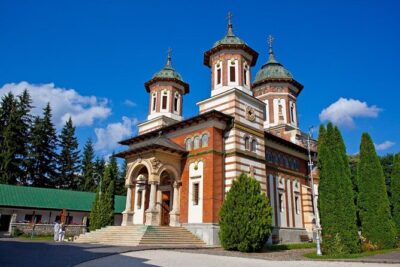
3-Castle: Peles,Bran,Rasnov,Sinaia Monastery from Brasov w pickup
Read our review →
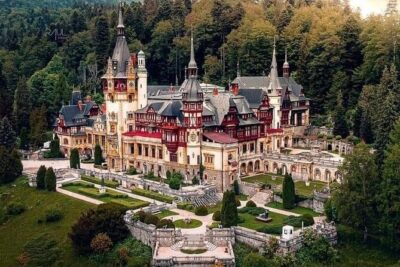
Peles Castle, Bran Castle, Rasnov Fortress and Sinaia Monastery Tour from Brasov
Read our review →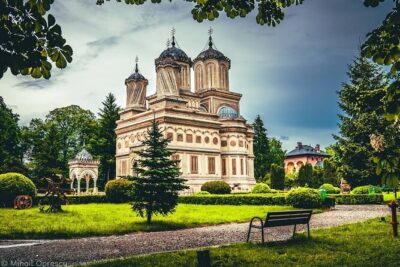
Princely Court of Târgoviște and Curtea de Argeș Monastery
Read our review →
Small Group Tour to Mogosoaia Palace & Snagov Monastery
Read our review →
1-Day Bucovina Painted Monasteries tour from Suceava – English
Read our review →
Sacred Monasteries Private Tour: Snagov, Țigănești & Căldărușani
Read our review →
Transfagarasan Highway, Balea Lake & Carta Monastery
Read our review →Browse the lists this tour appears in