
Reviewed · COMMUNIST-ERA TOURS
Bucharest: Relics of Communism 3-Hour Walking Tour
Concrete power leaves fingerprints. On this Bucharest communism walking tour, the story starts at Revolution Square, where Ceausescu delivered his last speech balcony moment, and it keeps pulling you back to why places still matter.
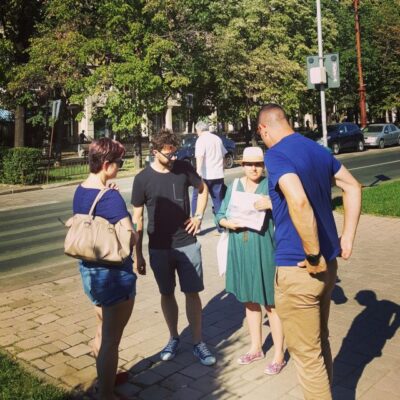
I love the way the tour translates big, heavy events into street-level details, from ration cards and propaganda to the tools of the secret police. And you also get a small group format, capped at 10, which makes it easier to ask questions without shouting over the city noise.
One thing to consider: it is a 3-hour walking route through major squares and monumental government space, so wear solid shoes and plan for a steady pace.
In This Review
- Key Points Worth Knowing
- Why Bucharest’s Communist Relics Still Feel Personal
- Meeting at Memorial of Rebirth, Then Getting Oriented Fast
- Revolution Square and 21 Decembrie 1989: The Street-Level Meaning of 1989
- The Big Power Buildings: Socialist Realism and the City Built for Control
- Palace of the Parliament Area: Why This Place Became the Center of Gravity
- Piața Unirii and the Walk Between Two Bucharests
- Hidden Churches the Regime Tried to Forget, Starting with Michael the Voivode
- What You Learn Beyond Landmarks: Ration Cards, Propaganda, Secret Police
- Guide Power: Elena, Stefan, Tudor, and Why Small Groups Matter
- Finishing at Piața Constituției: A Closing Note That Makes Sense
- Price and Value: Is $44 Fair for a 3-Hour Walk?
- Who This Tour Fits Best, and Who Might Want to Skip
- Should You Book This Bucharest Relics of Communism Tour?
- FAQ
- How long is the Bucharest Relics of Communism walking tour?
- How much does the tour cost?
- Where do I meet the guide?
- What stops are included on the route?
- Is the tour guided in English?
- What is included in the price?
- Does the tour provide hotel pickup?
Key Points Worth Knowing
- Revolution Square focus: Ceausescu’s last speech balcony sets the tone before the 1989 story
- Socialist realism architecture: you’ll recognize the cold geometry of power in concrete blocks
- Hidden-feeling church stop: the Michael the Voivode Church connects faith to public memory
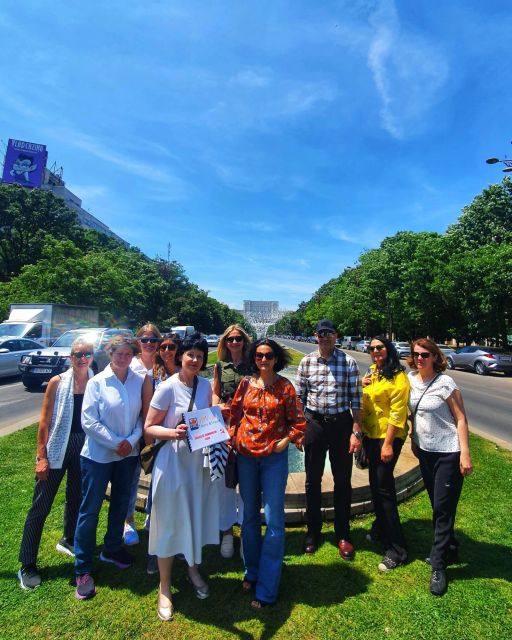
- Palace of the Parliament area: you see why the regime built Bucharest around authority
- English guide interaction: Q and A works well in a group of up to 10
- Hands-on learning moments: some guides use props like period school materials and photos
More Guided Walks in Bucharest
- Bucharest: City Highlights Guided Walking Tour★ 4.9 · 1,482 reviews
- Bucharest: Communism and History Guided City Walking Tour★ 4.9 · 918 reviews
- Bucharest Highlights Walking Tour★ 5.0 · 469 reviews
- Bucharest: Hidden Markets Walking Tour with Tastings★ 4.9 · 329 reviews
Why Bucharest’s Communist Relics Still Feel Personal
Bucharest can look elegant, but under the surface it holds a second city made of policy, fear, and ambition. This tour is built to help you read that second city without turning it into a lecture marathon.
What makes it work is the mix of places and everyday life. You’ll connect the visuals, like stark Socialist realism buildings and regime-scale plazas, to the human side: propaganda, the secret police, ration cards, and the black market coping strategies people used just to get through the week.
And because it is a walking tour, you keep moving. That matters when the subject is emotional. Instead of spending hours staring at a museum wall, you’re walking from the scene of a turning point into the neighborhoods and landmarks the regime used to shape daily routines.
Meeting at Memorial of Rebirth, Then Getting Oriented Fast
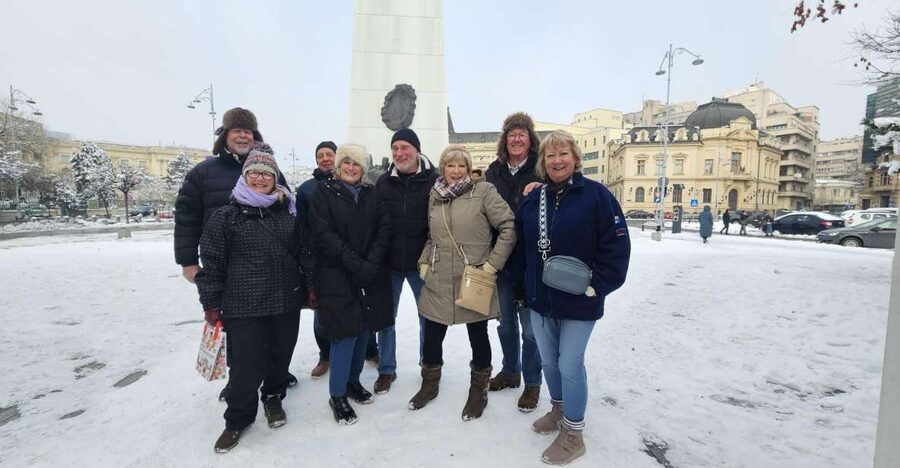
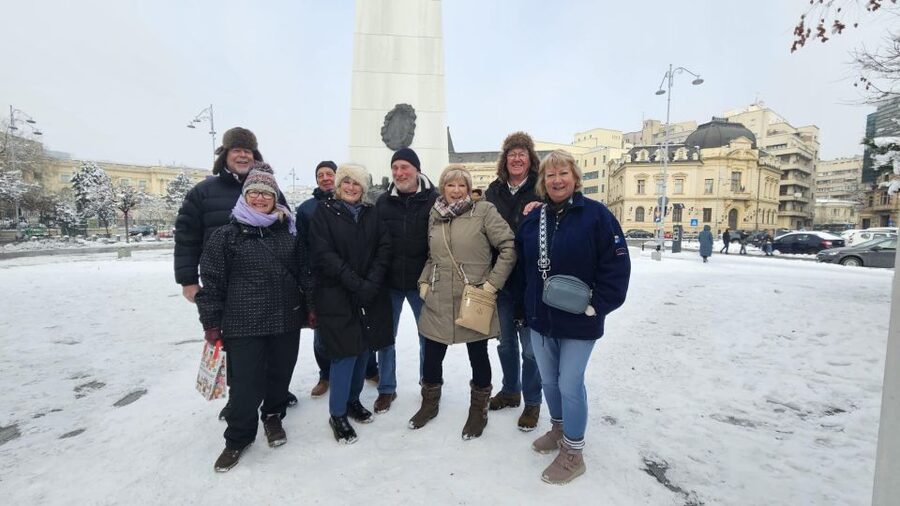
You meet at the Memorial of Rebirth in Revolution Square. That location is not random. It gives you a clear starting point before you tackle the political architecture that came before and after 1989.
This first moment also helps you get your bearings fast. Revolution Square is wide and monumental, and it can be easy to feel lost in the scale. A good guide keeps the focus on what you’re seeing and why it was designed that way, so you don’t just collect landmarks like souvenirs.
A practical note: you start with multiple short guided segments across the area. That keeps energy up and makes the walk easier to manage, even if you’re not a die-hard history person.
Revolution Square and 21 Decembrie 1989: The Street-Level Meaning of 1989
The tour’s early stops are where the story snaps into focus.
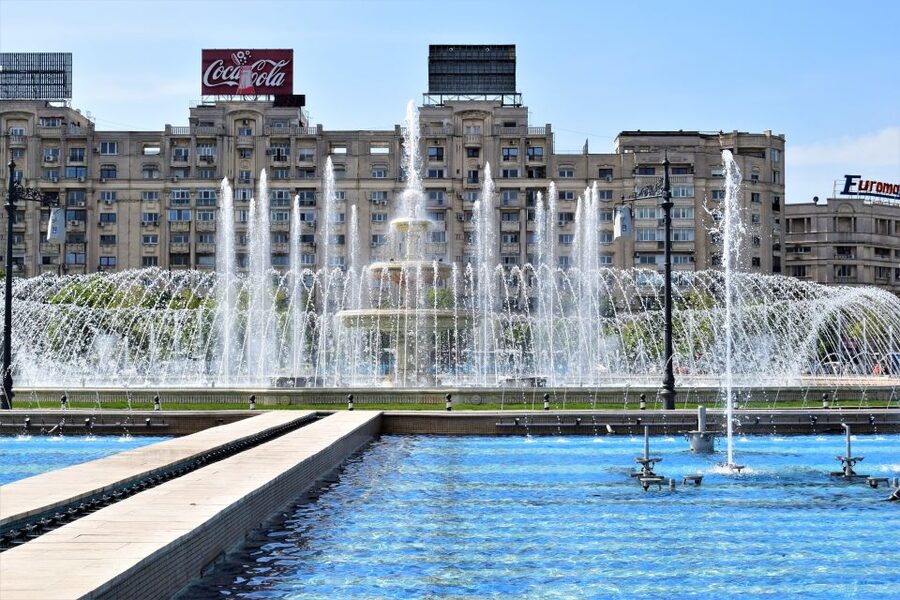
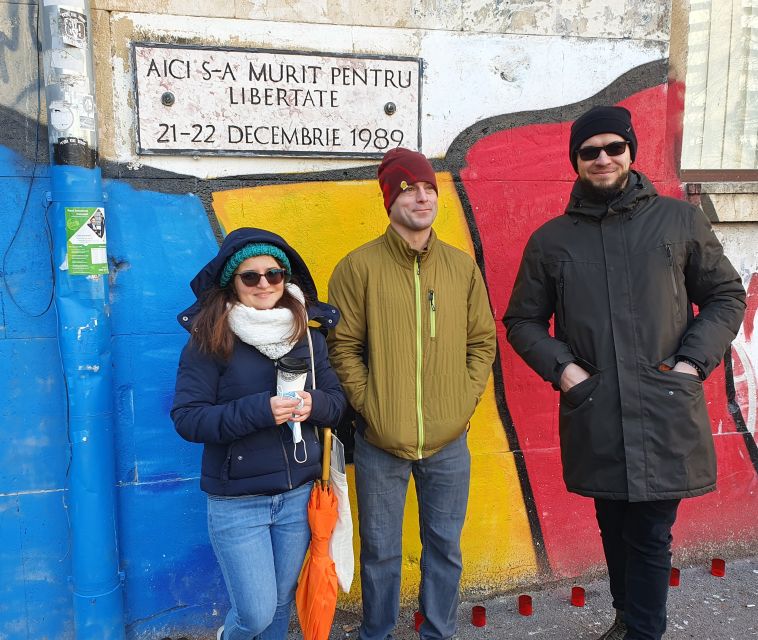
You begin at the Revolution Square area, then you move to Piața 21 Decembrie 1989. Here, the guided time is intentionally short, about 15 to 20 minutes in each key spot, which is perfect for catching the main thread without burning out your attention.
The standout detail is the balcony where Ceausescu held his last speech. Even if you’ve read about the revolution before, seeing how the space frames that moment helps the timeline feel real. The city stops being a backdrop and starts acting like a character in the drama.
This part of the tour also sets expectations for tone. You’re not just learning slogans. You’re learning how public spaces were used to signal power, then how people fought back in the same kind of spaces.
More of communist-era Bucharest:
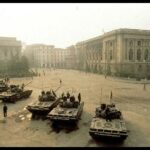
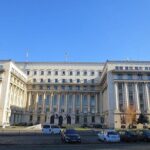
The Big Power Buildings: Socialist Realism and the City Built for Control
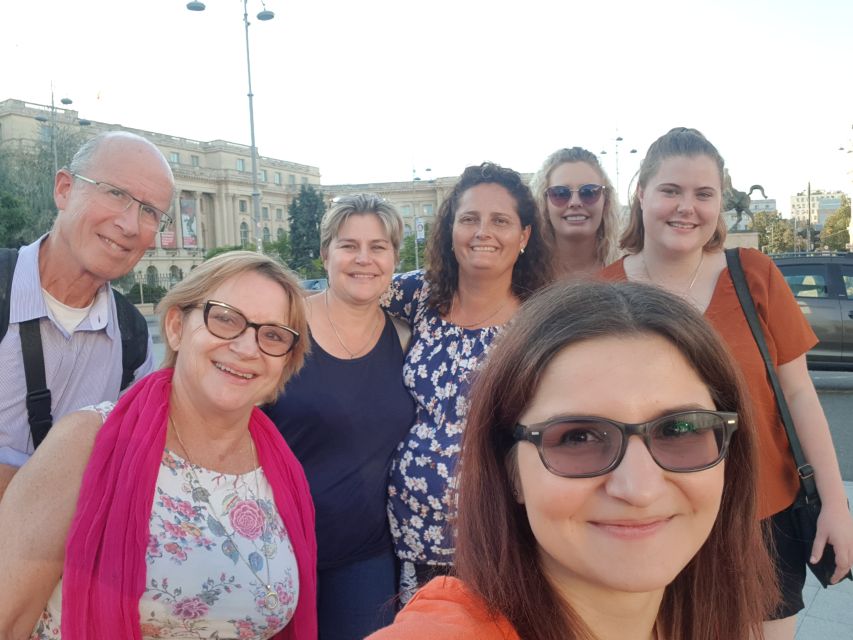
After you get the 1989 context, you shift into the architecture. Bucharest under Ceaușescu leaned hard into Socialist realism, and the result is a city that can feel intentionally severe.
You’ll explore the new districts associated with that style, including the government-focused construction around the Palace area and the broader Civic Centre-type project buildings. The point is not to admire the buildings as art for art’s sake. The point is to understand what they were meant to do: turn political authority into something physical you had to live with.
In this section, your guide connects the look of the buildings to the lived experience of the people. That connection is what makes the walk feel meaningful. You start noticing patterns: the scale, the insistence on order, the way space looks like it belongs to the regime first, and to ordinary people second.
If you want a simple way to judge what you’re seeing, listen for how your guide frames each stop in terms of control and visibility. Who had the advantage in these spaces? Who could shape the narrative? The architecture answers those questions if you know where to look.
Palace of the Parliament Area: Why This Place Became the Center of Gravity
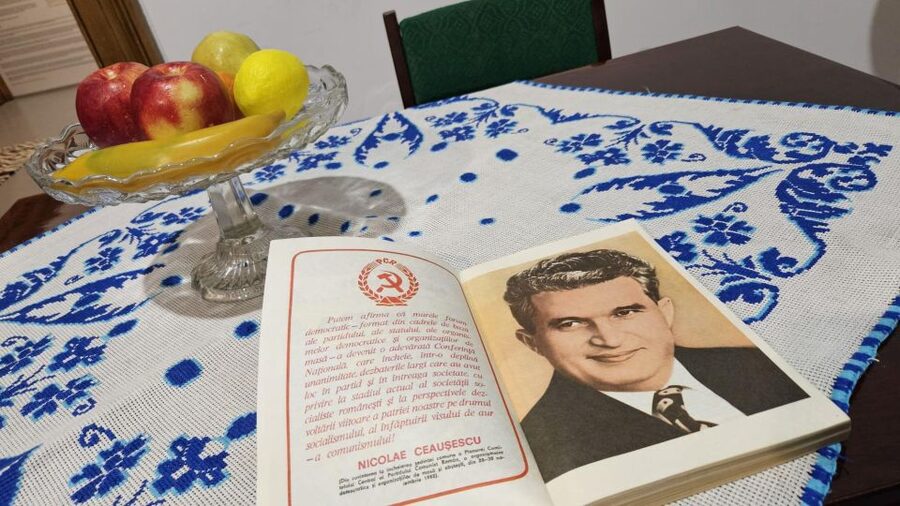
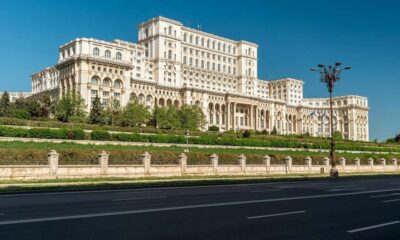
The tour includes a guided visit focused on the Palace of the Parliament area, with about 20 minutes of explanation while you’re there. Even in a short visit, the sheer scale communicates something that words alone can struggle to show.
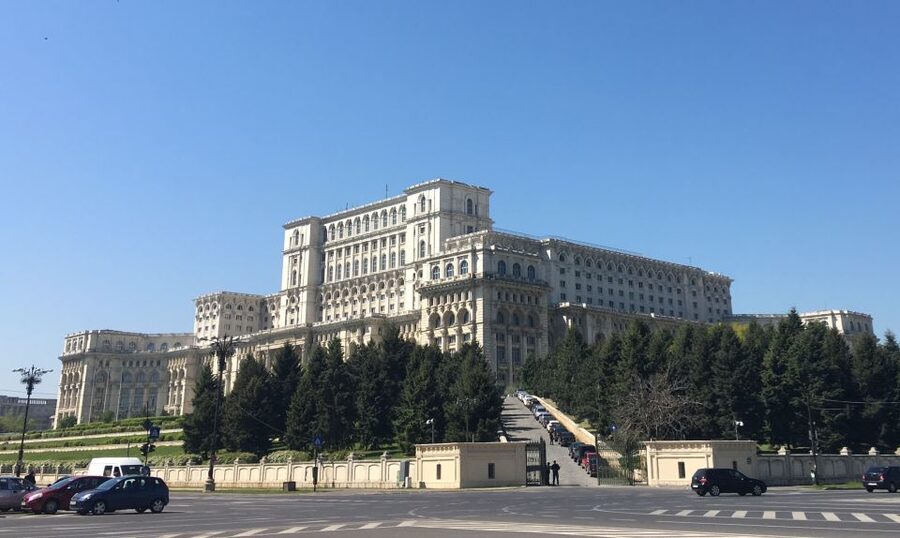
The tour’s focus is direct: this was designed as an absolute center of power. In practice, that means you’re not just looking at a building. You’re looking at a statement about who mattered, where decisions were made, and how the regime wanted to control the story.
One of the reasons this stop gets so much attention on the tour is that it helps you reconcile contradictions. Bucharest can look elegant, then you turn a corner and get these monumental blocks and plazas that feel like a different city. The contrast is not a visual trick. It reflects the political priorities of the time.
Also, you’ll get enough time here to take in your surroundings without feeling rushed. That matters because Parliament-area spaces can be overwhelming if you only have a few minutes.
Piața Unirii and the Walk Between Two Bucharests
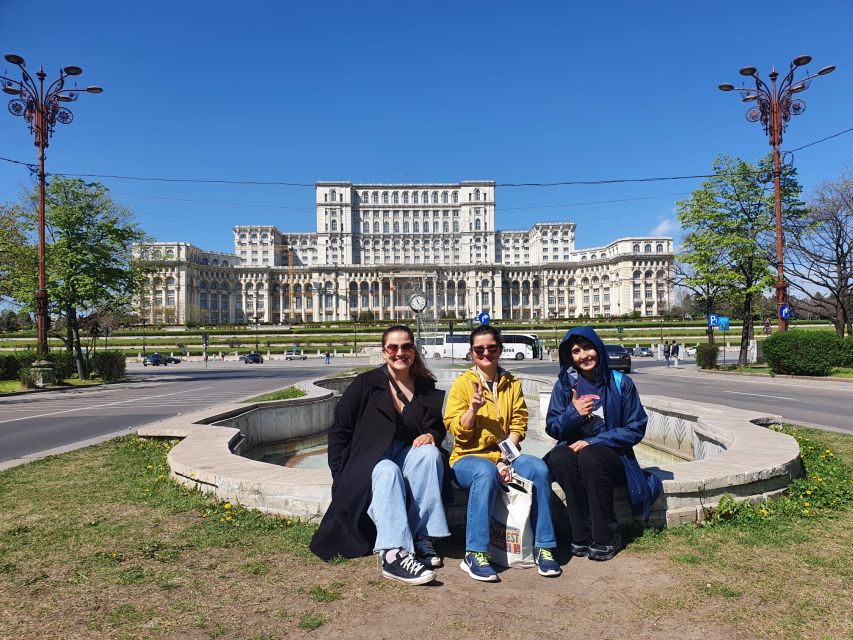
You also spend guided time in Piața Unirii, another useful anchor in the route. This is where the tour starts to feel like more than a one-topic history lesson.
The value of including a stop like Unirii is that it keeps you grounded in the real geography of Bucharest. You see how political landmarks connect with everyday city movement, even when the political systems of the past tried to rewrite daily life.
This section is also a good time to ask questions. Because the group is small, your guide can often answer with detail and context rather than quick generalities.
If you like history that ties into streets and neighborhoods, this is the moment where it starts clicking. The tour becomes less about dates and more about how people navigated power in physical space.
Hidden Churches the Regime Tried to Forget, Starting with Michael the Voivode
Not every stop is about government scale. A highlight is the visit to churches the communists wished to forget, with the route including the Michael the Voivode Church.
This change of pace is important. When a regime pushes one system of belief and identity, places of faith often become quiet targets, or symbols the public keeps alive anyway. Visiting a church during a communist-relics tour helps you see the conflict as cultural, not just political.
The guided time here is around 15 minutes. That’s long enough to learn the context and still short enough that you’re not sitting while your group attention fades.
A tip for this stop: slow down with your eyes. Look at the contrasts your guide points out, and let the space do some of the storytelling. Churches communicate continuity even when governments try to erase it.
What You Learn Beyond Landmarks: Ration Cards, Propaganda, Secret Police
The tour does more than show buildings. It explains the system behind them, including daily-life realities under Ceaușescu.
You’ll cover the everyday mechanics: ration cards and shortages, coping methods like the black market, and the messaging world of propaganda. You’ll also hear about the secret police and how fear shaped normal life.
This is where the tour earns its keep. It helps you understand why the architecture mattered. When people are monitored and stressed, public space becomes part of the control system. That’s why the regime’s urban plans were not just about politics in a vacuum.
It also helps you avoid a common trap. If you only look at monuments, communism can turn into a list of scary buildings. This tour keeps bringing you back to what it felt like to live under that rule.
And there’s a practical learning bonus here: guides sometimes use visual aids and even physical props. People have mentioned examples like old communist school books, the mandatory scarf pupils wore, and photo comparisons of old versus new Bucharest. Those details help you connect concepts to objects, which is often when history becomes stickier.
Guide Power: Elena, Stefan, Tudor, and Why Small Groups Matter
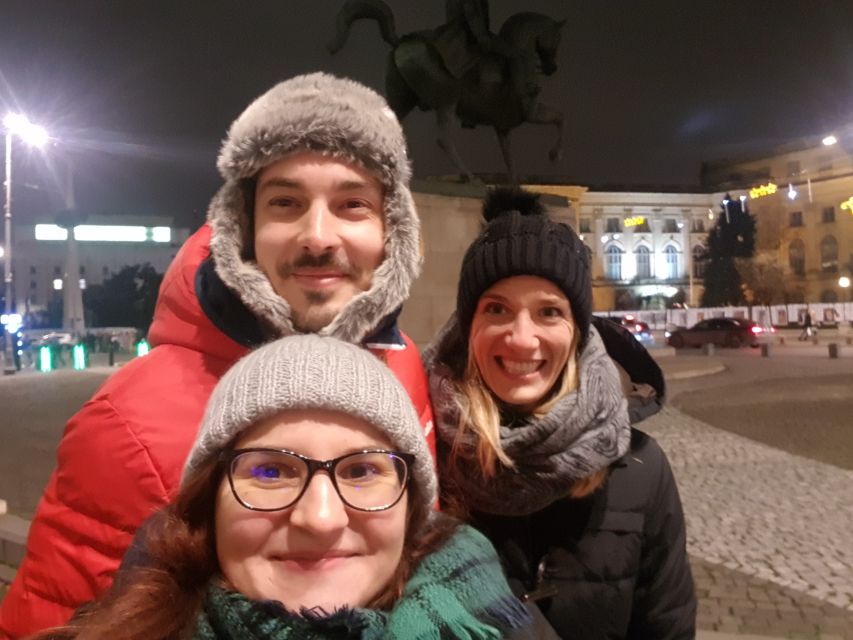
The quality of this tour strongly depends on the guide, and the program has a track record of strong English explanations and personal storytelling.
Names that come up often include Elena, Stefan, and Tudor. People praise them for going into detail, answering questions, and keeping the pace relaxed. Some even mention the guide using pictures and documentary-style visuals to support the story, not just spoken facts.
What I like about a format with a maximum group size of 10 is that you can steer the tour a bit. If you care more about everyday life, you can ask. If you care more about architecture or the Revolution, you can ask that too.
And because the tour is walking-based, your guide can point out things you might miss on your own, including spots that feel off the tourist map.
One more small but real benefit: some guides have been described as flexible with pacing, occasionally running a little longer when the conversation is going well. That can be great if you like depth, but it’s a good idea to keep your schedule lightly buffered afterward.
Finishing at Piața Constituției: A Closing Note That Makes Sense
You end at Piața Constituției, which feels like a natural wrap-up. By the time you reach the finish point, you’ve walked through the Revolution Square anchor, the monumental power spaces, the church context, and the practical city connections.
The result is a tour that makes the past feel spatial. You can look at Bucharest afterward and see the logic in what was built and why it was built.
It also helps your next day planning. Once you understand where the major symbols sit, you’re less likely to wander in circles trying to match what you read with what you see.
Price and Value: Is $44 Fair for a 3-Hour Walk?
At $44 per person for a 3-hour walking tour, the price sits in the midrange for Bucharest guided experiences. What makes it feel like value is that you get an English guide, time in major regime-linked spaces, and a small Romanian snack souvenir included.
You’re also getting something that costs extra in other formats: interpretive time. A quick self-guided route can show you the buildings, but it can’t explain ration cards, propaganda, and the secret police in a way that connects to the spaces you’re standing in.
For me, this is the right price level if you want history that is legible on foot. If you dislike walking or you only want one or two famous-photo stops, you might feel it’s priced for the full arc of the tour.
Who This Tour Fits Best, and Who Might Want to Skip
This tour is a strong fit if you want:
- Political history with street context, not just dates
- Architecture explanations that connect to how people lived
- A small group where you can ask questions in English
- A tour that includes both government power spaces and a church stop
You might want to choose something else if you hate walking in city squares for 3 hours or you know you only want the Palace area and none of the surrounding context.
Also, because the topic is about a repressive regime, expect serious themes. The guide’s job is to balance facts and empathy, so if you prefer purely upbeat sightseeing, this one may feel heavy.
Should You Book This Bucharest Relics of Communism Tour?
Yes, if you want Bucharest to make sense beyond postcards. This is one of the few ways to connect the Revolution story, the regime’s city-building choices, and the everyday mechanics of control into a single route you can actually walk.
I’d book it if:
- You like guided explanations with time to ask questions
- You care about how power shows up in architecture
- You want a small group experience led in English by guides who have strong reputations, including Elena, Stefan, and Tudor
I wouldn’t book it if you only want quick photo stops or you’d rather read about communism on your own and skip guided interpretation. But for most visitors, this is a practical, high-impact way to understand a big part of Bucharest’s identity in just 3 hours.
FAQ
How long is the Bucharest Relics of Communism walking tour?
The tour lasts 3 hours.
How much does the tour cost?
It costs $44 per person.
Where do I meet the guide?
You meet your guide at the Memorial of Rebirth in Revolution Square.
What stops are included on the route?
The tour includes Revolution Square, Piața 21 Decembrie 1989, the Michael the Voivode Church, Piața Unirii, and the Palace of the Parliament, and it finishes at Piața Constituției.
Is the tour guided in English?
Yes. The live guide speaks English.
What is included in the price?
The price includes a walking tour with an English guide and a Romanian snack souvenir.
Does the tour provide hotel pickup?
No. Hotel pickup and drop-off are not included.
Newest Bucharest write-ups
- Half Day Tour in Bucharest
★ 5.0 · 1 review - Private transfer to BRASOV
★ 5.0 · 1 review - Bucharest: Capture the most Photogenic Spots with a Local
★ 5.0 · 1 review - Bucharest Private Custom Walking Tour with Guide (Private Tour)
★ 5.0 · 1 review - Transfer Bucharest to Constanta / Mamaia
★ 5.0 · 1 review - Uncover Transylvania: Private 2-Day Tour Bears & Medieval Wonders
★ 5.0 · 1 review - Private Day Trip to Peles Palace, Dracula’s Castle and Brasov
★ 5.0 · 1 review
Communist-Era Tours, compared.
Parliament, Ceausescu House & Village Museum Tour
Read our review →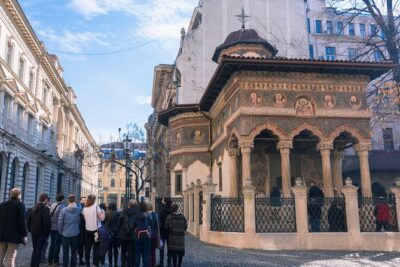
Bucharest Essential Tour: Old Town, Calea Victoriei & Communism
Read our review →
Communism in Bucharest – Landmarks, Museum & Communist Appetizers
Read our review →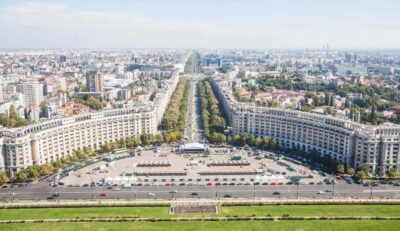
Palace of Parliament, Ceausescu House & Village Museum
Read our review →Browse the lists this tour appears in