
Reviewed · HISTORICAL TOURS
Private Tour – Food, Culture, History & Traditions
Bucharest tastes better when you walk with Bianca. This private 4 to 5 hour food, culture, history, and traditions route connects street scenes to stories that shaped Romania, and it ends with real Romanian lunch. I also like the way Bianca explains what you are seeing, using clear, human details that make architecture feel personal. One watch-out: Bianca can be soft spoken at times, so if you want every word, stay close when the streets get busy.
You should come for a mix of practical sightseeing and cultural context. It is a private tour, so you can keep a relaxed pace, pivot to what interests your group, and ask questions without feeling rushed. The route is about 6 km, so solid walking shoes help, even though it is broken into short stops.
In This Review
- Key highlights to look for
- Bucharest in one walking morning: food, streets, and big turning points
- Meeting Bianca and setting a relaxed pace with audio when needed
- Old Town to Calea Victoriei: the market story behind daily dishes
- Stavropoleos to the bank palaces and the magic of Bucharest passages
- Ateneul Roman and the Royal Palace: architecture you can read
- From Pasajul Victoriei to Piața Revoluției: power, nightlife, and 1989
- Neo-Romanian villas, an Armenian quarter, and Gradina Icoanei’s witchy lore
- Lunch included: what you get, what to expect, and how to plan
- Price and value for a private English tour with covered fees
- Should you book this Bucharest food culture history tour?
- FAQ
- How long is the Private Tour – Food, Culture, History & Traditions in Bucharest?
- About how far do we walk during the tour?
- Is lunch included, and what does it include?
- Are alcoholic drinks included?
- Are soda or pop included?
- Is this tour private?
- What language is the tour offered in?
- Where do we meet, and where does the tour end?
- What happens if the weather is bad?
Key highlights to look for
- A guide who reads buildings like stories: Bianca’s journal-style way of explaining history makes the city easier to understand on the move.
- Old Town plus places with strong social memory: markets, monasteries, passageways, and Revolution-era sites all show up in one morning.
- Bucharest’s passageways get real attention: Macca Villacrosse Passage and nearby passage streets are more than photo stops.
- Lunch is built into the tour as a full meal: you get a platter of Romanian starters plus a two-course main meal.
- Private and flexible timing: it is just your group, with a pace adjusted to your needs.
- Audio support if your group grows: if there are more than 4 people, you get audio devices for clearer listening.
More History Tours in Bucharest
- Bucharest: Communism and History Guided City Walking Tour★ 4.9 · 918 reviews
- Bucharest: 3-Hour Dark History Tour with a Local★ 4.9 · 301 reviews
- Bucharest: Small Group History, Art & Secrets Tour★ 4.7 · 152 reviews
- Guided Walking Tour of Historical Bucharest★ 5.0 · 84 reviews
Bucharest in one walking morning: food, streets, and big turning points
This is the kind of tour that makes Bucharest feel like one connected story instead of a list of monuments. You start in Old Town and work outward into the grand avenues and landmark buildings, with frequent short stops that keep the pace light even when the topics get serious.
What I like most is the range. You go from everyday food origins to the political drama of 1989, then back to social life and neighborhood character. It is not just sightseeing, it is learning how people lived, traded, partied, worshiped, went to school, and reacted to major change.
If you only have a morning (or half day that still feels complete), this format is efficient. It also helps if you prefer walking with a guide rather than trying to stitch together history from brochures while looking for lunch at the same time.
Meeting Bianca and setting a relaxed pace with audio when needed
You meet on Bulevardul Ion C. Brătianu 36, in the central area that is easy to reach by public transportation. The tour ends at University Square, on Bulevardul Regina Elisabeta, so you finish near a major hub instead of backtracking to the start.
This is private, so you are not squeezed into a big group shuffle. If your group is over 4 people, the tour provides audio devices so everyone can hear the guide clearly and keep comfortable distance from each other. Even in smaller groups, do yourself a favor and stay near the guide during the busiest street crossings, since Bianca can be soft spoken.
One detail that matters for real comfort: the pace can be tailored. If you have kids or you just like to move slowly, you get that option. I also like that photo moments are built in, so you are not only rushing past the best angles.
Old Town to Calea Victoriei: the market story behind daily dishes
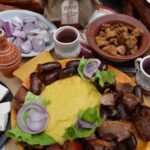
Your walk begins in Old Town, where the streets connect to trading days that once made the area thrive. This is also where you hear the origin story behind mici, the famous Romanian grilled minced meat dish. Whether you are a food-first traveler or a history-first traveler, this start works because it ties flavor to place.
Expect about 30 minutes here, with the focus on understanding why the old blocks mattered. The stop is also helpful if you get to Bucharest and feel a bit lost. You are essentially getting a map of the city’s identity before you move on.
From there, the tour flows toward the main boulevard energy. On Calea Victoriei, you get a longer stretch (about 30 minutes) along Bucharest’s “heart” since the 19th century. This part is where you start seeing the grander side of the city, the style shifts, and the kind of architecture that signals status, ambition, and power.
The practical upside: these stops stay close enough together that you can keep momentum. The trade-off: you will be walking. Even short segments add up, so take water and keep an easy stride.
More Food Tastings in Bucharest:
Stavropoleos to the bank palaces and the magic of Bucharest passages

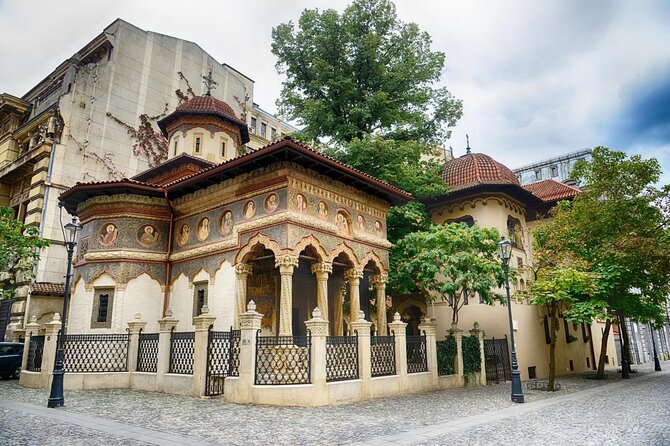
Between the big boulevards, Bucharest hides its charm in narrow stretches. You visit Stavropoleos Monastery, a Romanian Renaissance monastery from the 18th century. It is a quick stop (around 3 minutes), but it sets the tone by anchoring the walk in spiritual and architectural tradition.
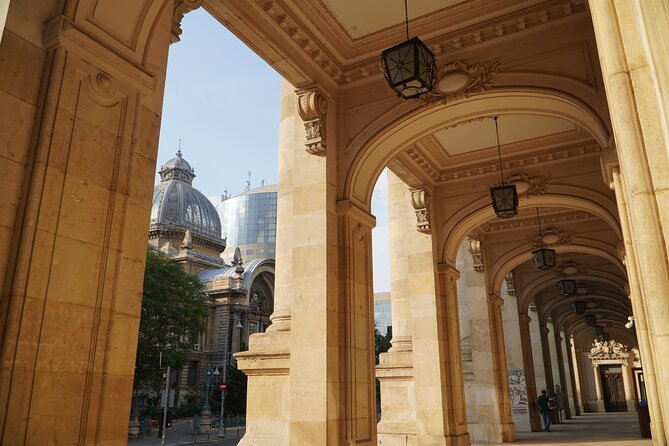
Right after that, you see the CEC Palace, an eclectic building from the late 19th century. Then it is into the passage world, where Bucharest feels more like a puzzle you can walk through. Macca Villacrosse Passage is often described as the most beautiful passage of Bucharest, and on this tour it is not just “look and move.” You get time to slow down, take a few photos, and connect it to the city’s trading culture.
You also pass the BNR Palace, plus the Marmorsch Blank Bank building, now turned into a hotel. That bank-to-hotel transformation is a real example of how Bucharest reuses impressive shells. Even if you do not go inside, the exterior details give you something to look for.
One thing to keep in mind: many of these are exterior and short stops. So your goal is not to complete an interior checklist. Your goal is to build a visual reading of the city, one clue at a time.
Ateneul Roman and the Royal Palace: architecture you can read
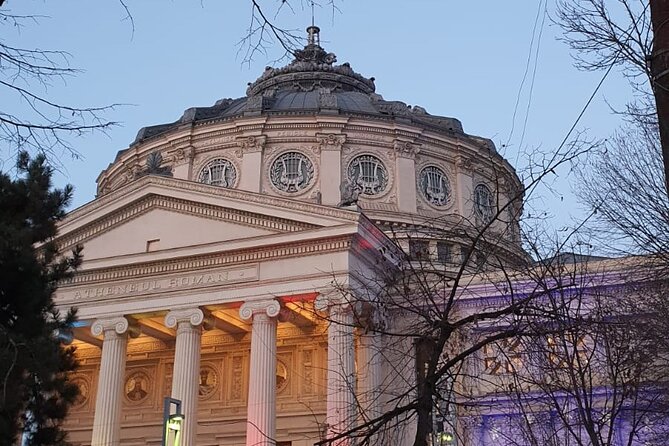
Ateneul Roman is one of the city’s major architectural showcases, and this stop is designed for appreciation rather than rushing. It is quick (about 5 minutes), but you can still take in the scale and form that make this building recognizable from a distance.
Then you get to the Royal Palace area, Palatul Regal, which now houses the national art museum. The stop is brief (around 3 minutes), yet it is meaningful because it shows you how today’s cultural institutions occupy older seats of influence. You are connecting monarchy-era spaces to modern public life.
If you are the type who enjoys spotting style changes, this is a strong section. You start noticing how the city shifts between official prestige and everyday street life. That contrast is one of Bucharest’s best learning tools.
Do not expect long museum time here. If you want museum depth, you can build that later. This tour gives you the framework so you know what to seek next.
From Pasajul Victoriei to Piața Revoluției: power, nightlife, and 1989
Next comes social history with edge. You visit Pasajul Victoriei and also hear about Pasjul Englez, a former brothel on the main avenue with a convenient back entrance. The tour frames this as a place where the king and high-class society used to party. It is historical storytelling, not lurid sightseeing, and it helps you understand that Bucharest’s past included nightlife and power operating on the same streets.
After that, you move into a darker turning point at Piața Revoluției. This is where Nicolae Ceaușescu held his last speech at the beginning of the bloody 1989 revolution. The stop is about 10 minutes, but it lands hard, because you are standing in a location tied to real political rupture.
If you prefer to keep things light, you can still appreciate this stop. Even with the heavy context, it adds backbone to everything else. It explains why certain buildings and street identities matter beyond aesthetics.
The drawback here is not the tour itself, it is your schedule. If you are emotionally worn out from other intense days, consider pairing this tour with a gentler afternoon.
Neo-Romanian villas, an Armenian quarter, and Gradina Icoanei’s witchy lore

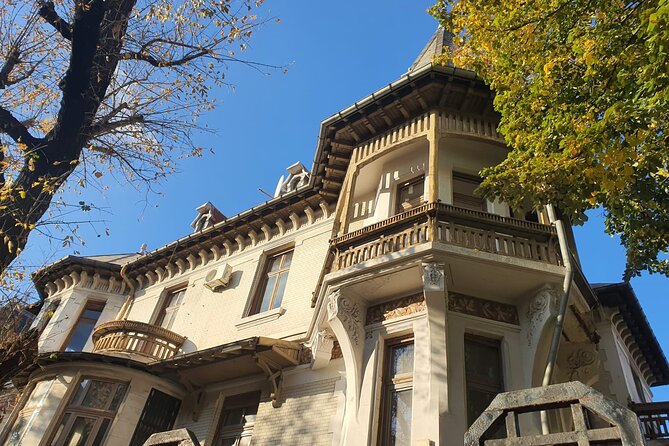
As the walk continues, Bucharest shifts into neighborhood character. On Bulevardul Dacia, you spend about 20 minutes seeing magnificent villas and examples of neo-Romanian architectural style. This is a visual treat because you can spot regional identity in the details.
Then you visit Colegiul Național Școala Centrală, a 19th-century boarding school for girls with eerie stories tied to the building’s past. The stop is short, around 5 minutes, but it adds atmosphere. It is the kind of detail that helps a city feel human, not just historical.
You also explore Cartierul Armenesc, the Armenian neighborhood. This part lasts about 30 minutes, and it is designed to show you history in lived-in form, including lesser-known corners and a sense of mystery. It is a good balance after the heavy Revolution stop.
Finally, there is Gradina Icoanei, where folklore says witches were believed to cast spells. You spend about 10 minutes here, and it works because it shows how the city’s stories go beyond official dates. This is Bucharest’s side-quests energy, for people who like character and charm.
One practical tip: these neighborhood segments are where you will benefit from a small pack, especially if you want to stop for photos without rushing. Keep your phone charged and plan one quick restroom break before the lunch portion.
Lunch included: what you get, what to expect, and how to plan
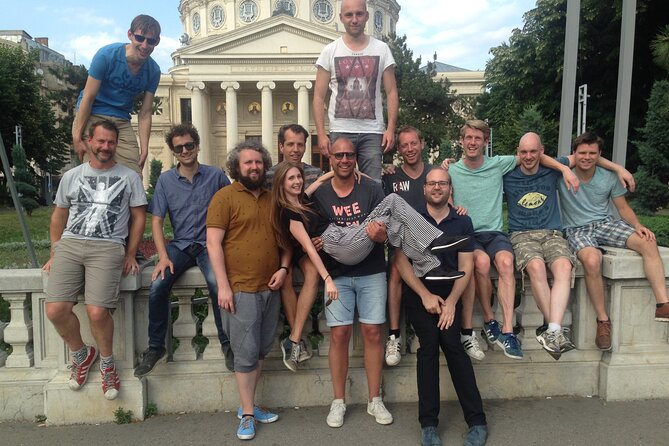
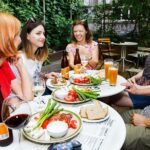
Food is not an afterthought on this tour. The lunch is included as a full meal with 2 courses. You also get a platter with cheeses and charcuterie, plus other Romanian starters, followed by a main course.
In plain terms, this is not a snack meal. It is a sit-down lunch that gives you time to rest your legs and connect the food story you heard in Old Town to actual flavors in front of you. In past runs of this tour, people have described the lunch as delicious and Romanian in character, and I like that the timing usually makes sense: enough walking to earn it, not so much that you are too tired to enjoy it.
Alcoholic beverages and soda or pop are not included. If you want wine with lunch, plan on paying extra. Non-alcoholic options may be available, but the tour only guarantees the meal courses listed.
If you have dietary restrictions, the provided details do not specify accommodations. I suggest you message the operator in advance and ask what is possible.
Price and value for a private English tour with covered fees
At $114.14 per person for a private tour lasting about 4 to 5 hours, this is priced like a proper guided experience, not a quick “see the highlights” walk. The value comes from three things you do not get on bare-bones routes.
First, you get a real included lunch with a platter and two-course meal. Second, all fees and taxes are covered. Even though many stops list free admission, the package is still set up so you do not have surprise extras popping up mid-walk. Third, you are not sharing your guide with strangers. That private format matters when you want questions answered and pacing adjusted.
The tour is often booked about 49 days in advance, so it tends to be in demand. If your dates are fixed, I would reserve early rather than hoping to find space later.
Also, it includes a mobile ticket, which is useful if you hate printed vouchers and last-minute phone hunting. The tour is offered in English, and that is a big deal for history-heavy stops where you want the details, not just the names.
Should you book this Bucharest food culture history tour?
If you want a single morning that mixes street food origins, architecture, neighborhoods, and the emotional impact of 1989, this tour fits well. It is especially good for first-timers who need orientation fast, and for couples or small families who like a relaxed pace with a guide who can adjust to your group.
I would book it if:
- you care about how history connects to everyday city life
- you want lunch included with a proper two-course meal
- you prefer private guiding over crowded group tours
I would think twice if:
- you do not handle walking well (the route is about 6 km)
- you get frustrated when the guide is hard to hear in noisy areas (stay close when streets get busy)
- you need guaranteed dietary accommodations (the details here focus on the standard meal)
FAQ
How long is the Private Tour – Food, Culture, History & Traditions in Bucharest?
It runs about 4 to 5 hours (approx.).
About how far do we walk during the tour?
The route is approximately 6 km, and a minimum physical fitness level is required.
Is lunch included, and what does it include?
Yes. You get a full meal (lunch or dinner) with 2 courses, plus a platter with Romanian starters such as cheeses and charcuterie, followed by a main course.
Are alcoholic drinks included?
No. Alcoholic beverages are not included.
Are soda or pop included?
No. Soda or pop is not included.
Is this tour private?
Yes. It is a private tour/activity, and only your group participates.
What language is the tour offered in?
The tour is offered in English.
Where do we meet, and where does the tour end?
The start is Bulevardul Ion C. Brătianu 36, 030167 București, Romania. The end is University Square, Bulevardul Regina Elisabeta, București 030167, Romania.
What happens if the weather is bad?
The tour requires good weather. If it is canceled due to poor weather, you will be offered a different date or a full refund.
Newest Bucharest write-ups
- Half Day Tour in Bucharest
★ 5.0 · 1 review - Private transfer to BRASOV
★ 5.0 · 1 review - Bucharest Private Custom Walking Tour with Guide (Private Tour)
★ 5.0 · 1 review - Bucharest: Capture the most Photogenic Spots with a Local
★ 5.0 · 1 review - Transfer Bucharest to Constanta / Mamaia
★ 5.0 · 1 review - Uncover Transylvania: Private 2-Day Tour Bears & Medieval Wonders
★ 5.0 · 1 review - 7-Days Grand Romania tour from Bucharest
★ 5.0 · 1 review
Historical Tours, compared.

Roma Culture, Realities and Slavery History, Walking tour
Read our review →
Bucharest Jewish Heritage | Holocaust Memorial | Private Car Tour
Read our review →
Private Bucharest: History & Food with Traditional Meal
Read our review →Historic Gems Sighișoara, Rupea and Viscri Day Tour
Read our review →Browse the lists this tour appears in