
Reviewed · HISTORICAL TOURS
Private Tour of Bucharest’s Historical and Traditional Highlights
Bucharest gets a lot easier with a guide. On this private 3 hour route, you get context for major sights without playing guess-the-street, and I loved the hotel pickup and drop-off that cuts out wandering. The biggest downside is also the simplest, food and drinks are not included, so you’ll want to plan a snack or quick meal around the tour.
You’ll ride in a comfortable, air-conditioned private vehicle, and the group is kept small, with a maximum of 8 people. That means your schedule stays flexible enough for questions, plus you do not lose time coordinating meetups.
This tour is built around strong visual anchors in the center, especially along Calea Victoriei, where churches and grand civic buildings sit close to each other. I like that it mixes “look at this” moments with practical explanations, so you understand what you’re seeing instead of just collecting photos.
In This Review
- Key highlights worth knowing
- Why a private, 3 hour route fits Bucharest
- Village Museum (Dimitrie Gusti): rural life without the time machine
- The Romanian Peasant Museum and the award-winning way it tells stories
- Kretzulescu Church: Brâncovenesc style with real names and exact dates
- National Military Circle and the Marble Hall: culture inside a French neoclassical shell
- Royal Palace to National Museum of Art: one building, multiple political lives
- Central Library and Stavropoleos: bookish and monastic stops on the route
- Price and logistics: why $69.79 feels fair for what you get
- Should you book this private Bucharest highlights tour?
Key highlights worth knowing
- Hotel pickup and drop-off saves you time and keeps the day stress-free
- Entrance fees included means fewer surprise add-ons mid-tour
- Village Museum (Dimitrie Gusti) is an open-air shortcut to everyday Romanian rural life
- Kretzulescu Church comes with specific dates, fresco info, and architectural style context
- National Military Circle and the Marble Hall connect politics, culture, and architecture in one stop
- Royal Palace to National Museum of Art shows how one building changed roles through regimes
More History Tours in Bucharest
- Bucharest: Communism and History Guided City Walking Tour★ 4.9 · 918 reviews
- Bucharest: 3-Hour Dark History Tour with a Local★ 4.9 · 301 reviews
- Bucharest: Small Group History, Art & Secrets Tour★ 4.7 · 152 reviews
- Guided Walking Tour of Historical Bucharest★ 5.0 · 84 reviews
Why a private, 3 hour route fits Bucharest
Bucharest can be a little tricky if you self-navigate, not because the city is confusing, but because the details are spread out and the architecture has layers. A private tour solves that. You get a sequence of stops that makes sense in one morning or afternoon, and your guide does the hard work of turning façades into stories.
The value is practical, not just “someone shows you things.” Hotel pickup and drop-off means you spend less time figuring out transit, meeting points, and cross-town timing. And because entrance fees are included, you can focus on the sites instead of stopping to pay at each door.
The pace is also realistic for 3 hours. You’re not trying to conquer every museum in town, you’re getting an efficient highlight reel with enough time at the big open-air stop to see what makes it meaningful. If you like to linger, just know that this format is designed for overview rather than slow wandering.
Village Museum (Dimitrie Gusti): rural life without the time machine
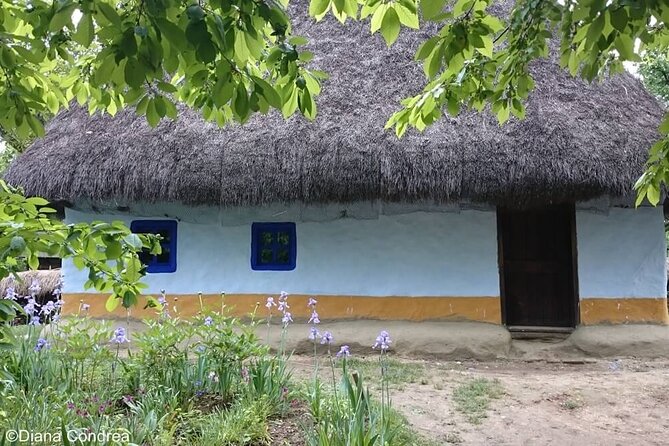
Your first major stop is the Village Museum, officially called Muzeul Național al Satului Dimitrie Gusti, set in King Michael I Park. This is one of those places where scale matters. The museum covers more than 100,000 square meters and includes 272 authentic peasant farms and houses moved in from across Romania.
What makes this stop special is that it is not just a collection of buildings. It is meant to show how people lived, worked, and organized a village community. With a guide, you can spot what you might otherwise miss, like how different structures suggest regional differences, and how the museum presents everyday life rather than royal or military themes.
The tour gives you about 30 minutes here, and that is a fair amount for a first pass. You will not see every structure at that time, so you should use the guide to pick the most representative examples to focus on. Practical tip: wear shoes you do not mind getting dusty, and if the weather is warm, bring water since you are walking through an open-air setting.
You might find the best approach is to treat it like a guided introduction. Let your guide point out what to look for in roofs, courtyards, and building layouts, then choose one or two areas to zoom in on. Done right, you leave feeling like you understand the “village idea” of Romania, even without seeing every single house.
The Romanian Peasant Museum and the award-winning way it tells stories
The tour then includes the Romanian Peasant Museum, housed in a neo-Romanian style historical monument-building. This is the kind of museum that aims to do more than display objects behind glass. It uses an original presentation style that earned the EMYA, European Museum of the Year Award in 1996.
Why that matters for you is simple: how a museum presents information changes what you take home. In this case, the emphasis is on popular traditions and the everyday culture behind them. The museum is described as being part of the European family of Museums of Popular Art and Traditions, which signals its focus and tone.
The museum also links its core exhibits with additional cultural activities, including a village school concept and concerts, conferences, and exhibition openings. Even if you are only seeing the main interior areas during your time slot, it helps you understand that the museum is built as an ongoing cultural space, not just a static room of artifacts.
A quick consideration: if you are hoping for a very long, detailed museum session, the overall tour length limits how much time you can spend inside. Still, for most people this is a strong pairing with the open-air village part, because it rounds out the rural-life picture from outside to inside.
When you connect the outdoor houses to the museum’s presentation approach, the day clicks. One stop shows the physical “how people built and lived,” and the other shows the “how the culture is explained.”
Different day out, same corner of Romania:
Kretzulescu Church: Brâncovenesc style with real names and exact dates
Next up is Kretzulescu Church, a central Orthodox church on Calea Victoriei, nr. 45A, near Revolution Square and close to the former Royal Palace. This is the kind of church you can walk past on your own without noticing the layers. With a guide, you learn the specifics that make the building feel much more grounded in time.
The church was commissioned in 1720 to 1722 by the boyar Iordache Crețulescu and his wife Safta, who was a daughter of Prince Constantin Brâncoveanu. That family link matters, because it ties the building to a known historical period and helps you understand the church as a statement, not just a place of worship.
Architectural style is part of the story too. Kretzulescu is described in the Brâncovenesc style, and you can see the period influence in the design language. After that, restoration reshaped parts of what you see today. Since restoration work done in 1935 to 1936, supervised by architect Ștefan Balș, the facade became brick, while frescoes on the porch date from the original structure.
Inside, the fresco story shifts again. Interior frescoes were painted by Gheorghe Tattarescu in 1859 to 1860. That mix of original elements and later additions is exactly why churches like this feel layered, not frozen.
If you like architecture details, this stop is a win because it gives you dates, artist names, and what changed over time. Consider a simple strategy: let the guide identify what is original versus what reflects later restoration or repainting. You will enjoy the church more once you know which parts represent which era.
National Military Circle and the Marble Hall: culture inside a French neoclassical shell
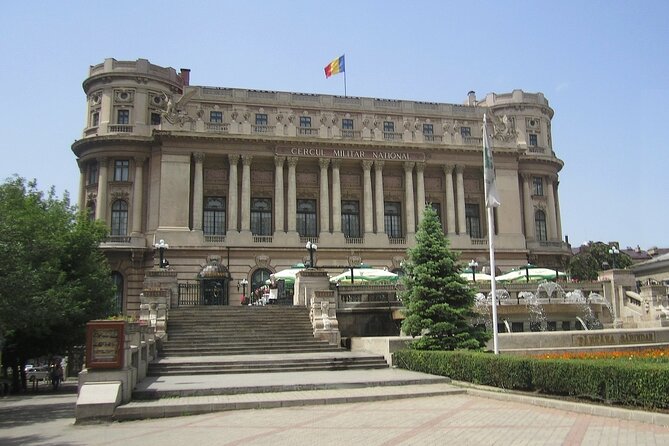
After the religious stop, you step into a very different mood at the National Military Circle building. This structure was built in 1912 in French neoclassical style, designed by Romanian architects D. Maimarolu, V. Ștefănescu, and E. Doneaud.
The name tells you it is tied to the Romanian army, and that is part of the intrigue. The building hosted social, cultural, and educational needs of the Romanian army, so it was not only about uniforms and strategy. It became a place for community and public-facing events.
Today, it is used for cultural programming like art exhibitions and book launching. Inside, it features numerous reception halls and meeting rooms, plus a theater, bookshop, and art galleries. One highlight your guide can point out is the Marble Hall, known as one of the successful achievements of Romanian architecture.
Why I think this stop works on a tight 3 hour tour is because it shows Bucharest’s “civic” side. You see the city beyond monuments and religious buildings. You get a sense of how institutions used impressive architecture to host ideas and gatherings.
A practical note: timing can affect what you can see in terms of rooms and events. The tour description emphasizes that it hosts exhibitions and book launches, so if something is set up, it can influence your view. Still, even from a general overview, the building’s design and purpose are enough to make it more than just a photo stop.
Royal Palace to National Museum of Art: one building, multiple political lives
The day’s central power shift is at the Royal Palace area on Calea Victoriei. The palace is known as the Palace of the Republic between 1948 and 1990, reflecting the regime changes that took over the building’s identity.
Before the communist era, it served as the official residence for the kings of Romania until 1947, when the communist regime was installed after Michael I of Romania was forced to abdicate. After that turning point, the building’s role changed. Since 1950, it has hosted the National Museum of Art of Romania.
That “before and after” is exactly what your guide helps you connect. The palace is not only architecture, it is a timeline you can stand next to. You can look at what remains monumental and ask yourself what kind of power the building was built to project, then how that meaning got rewritten.
There is also a current clue nearby. The former Romanian royal family uses Elisabeta Palace as its official residence in Bucharest, which is mentioned as the present-day royal base. The detail reinforces the idea that Bucharest’s history is not a single story. People and institutions moved, and the city adapted.
If you are the type who likes to understand why a building looks the way it does, this stop delivers. You leave with a better sense of how modern Romania’s political chapters affected how major spaces were used.
Central Library and Stavropoleos: bookish and monastic stops on the route
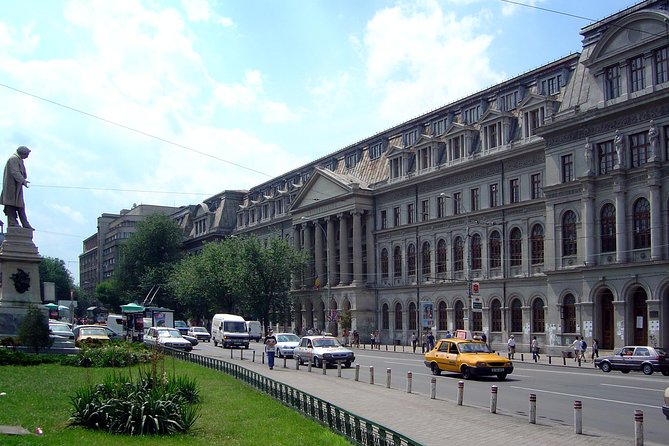
Your tour is framed around historical and traditional highlights, and the route is set up to include sights like the Central Library and the area around Stavropoleos Monastery. Even if you only get a look outside or a brief guided moment, these stops matter because they add a different texture to Bucharest.
A Central Library stop helps balance the day. After rural houses and church frescoes, it brings you back to the theme of culture as public life, not just private faith or countryside tradition. Meanwhile, Stavropoleos Monastery connects you to the spiritual and artistic heritage of central Bucharest.
The best way to enjoy these moments is to treat them as “context points.” Ask your guide what makes each place significant, not just what you see at street level. That turns quick stops into real understanding.
Price and logistics: why $69.79 feels fair for what you get
At $69.79 per person for about 3 hours, this is priced like a mid-range private sightseeing tour. What helps it feel fair is that it includes the items that often cost extra on your own.
You get hotel pickup and drop-off, private-vehicle transport, and a private tour format. You also get entrance fees included, which is a big deal when a day includes multiple paid sites or museums. On top of that, you have a mobile ticket, so you are not juggling printed vouchers.
The trade-off is that food and drinks are not included. That is not a small detail if you are the kind of person who likes to take a meal break rather than keep moving. Build in a plan, even if it is just grabbing something quick before or after the tour.
Also keep in mind the group limit of 8. That keeps the tour from turning into a crowded bus situation. Still, because it is private, you can ask questions and get tailored explanations, which is hard to replicate with self-guided audio.
If you want a structured sampler of Bucharest’s major themes in one sitting, this price fits the purpose.
Should you book this private Bucharest highlights tour?
Book it if you want a time-smart overview with real context. This tour is ideal for first-time visitors, couples, and anyone who prefers not to fuss with routes and ticket lines. The best reason to go is the combination of included entrance fees plus a small-group private format that keeps the experience focused, especially at the Village Museum.
Skip it, or at least rethink your expectations, if you plan to spend long hours in each interior. This is a 3 hour highlights tour, so it gives you a guided path, not a slow museum day.
My bottom line: if you want Bucharest explained in a sensible order, starting with rural tradition and moving into church art, civic architecture, and palace-era politics, this private tour is an excellent use of a half day.
Newest Bucharest write-ups
- Real Roma Community Crafting Workshop
★ 5.0 · 1 review - Discover Bucharest’s most Photogenic Spots with a Local
★ 5.0 · 1 review - Chauffeur Service in Bucharest
★ 5.0 · 1 review - Peles, Bran, Brasov
★ 5.0 · 1 review - From Bucharest: Carpathian Villages and Sinaia Day Trip
★ 5.0 · 1 review - Panoramic Bucharest City Tour
★ 5.0 · 1 review - 3 Days Private Tour in Transylvania from Bucharest
★ 5.0 · 1 review
Historical Tours, compared.


Roma Culture, Realities and Slavery History, Walking tour
Read our review →
Bucharest Jewish Heritage | Holocaust Memorial | Private Car Tour
Read our review →
Private Bucharest: History & Food with Traditional Meal
Read our review →Historic Gems Sighișoara, Rupea and Viscri Day Tour
Read our review →Browse the lists this tour appears in