
Reviewed · COMMUNIST-ERA TOURS
The Grand Tour of Communist Ages at Timisoara
Communism history has teeth in Timisoara. This tour is a guided route through the places tied to the rise of the Communist Party and the street protests that helped trigger the Romanian Revolution, with small group size keeping questions personal. I also like the format: you move between sights in a comfortable vehicle, so you see more than you would on your own in one afternoon.
What I love most is the emphasis on causes, not just dates, so the story connects from daily life to political control to the final break. You should also be prepared for the emotional weight of what you’ll see, including references to deaths and visible damage like bullet holes, which can feel heavy even in a short 3 to 4 hour outing.
In This Review
- Key points to know before you go
- What This Grand Tour Covers: Communist Rule to Revolution, in One Afternoon
- The Route and Timing: From Three Holy Hierarchs to Piața Victoriei
- Șagului Neighborhood: Daily Life Under Communism in Timișoara
- Muzeul Consumatorului Comunist and Biserica Reformata: How Control Took Hold
- Timisoara Orthodox Cathedral and Piata Victoriei: Bullet Holes and the Word Victory
- Guide Style, Vehicle Pacing, and Small Group Q and A (Dan and Ludovic)
- Price and Value: Is $66.08 Worth a Communist-Era Walking Route?
- Should You Book the Grand Tour of Communist Ages in Timisoara?
- FAQ
- How long is the Grand Tour of Communist Ages in Timisoara?
- What is the meeting point for the tour?
- Where does the tour end?
- What time does the tour start?
- What language is the tour offered in?
- How much does the tour cost?
- Are there admission fees at the stops?
- How big is the group?
- Can I cancel for a full refund?
- Is a mobile ticket used?
Key points to know before you go
- Small group, maximum 10 travelers for better Q and A
- At least eight locations focused on why the 1989 events happened
- English guided tour with mobile ticket and a comfortable vehicle between stops
- Landmarks tied to the revolution like Biserica Reformata and Victory Square
- Free entry at the listed stops, so your money goes to the guide and route
More of communist-era Timisoara:
- Timisoara: Grand Communism Tour★ 4.9 · 13 reviews
- Bucharest: Communism and History Guided City Walking Tour★ 4.9 · 918 reviews
- The Real tour of Communism★ 5.0 · 666 reviews
- Life under Communism★ 5.0 · 358 reviews
What This Grand Tour Covers: Communist Rule to Revolution, in One Afternoon
This isn’t a quick photo walk. It’s built to help you understand how Communist power took root in Romania and how the system finally fractured in 1989. If you’ve ever felt that history lessons were simplified, this route is designed to put the missing links back in place, from everyday life to political repression to organized resistance.
I like that the pacing supports understanding. You get guided explanation while you’re standing near the places where key moments happened, and you also get context for why people acted the way they did. The tour’s focus on the “root causes” matters, because it pushes beyond dates on a timeline and toward real motivations and pressures.
The value here is especially good if you’re short on time but want a strong sense of the big picture. In a few hours you can connect multiple parts of Timișoara’s Communist-era story, rather than trying to piece it together from guidebooks afterward.
One consideration: the theme is inherently dark. You’ll hear about people killed during protests and you’ll see the physical traces left behind. That doesn’t mean the tour is depressing, but you should expect a serious tone.
The Route and Timing: From Three Holy Hierarchs to Piața Victoriei
The tour meets at the Three Holy Hierarchs Metropolitan Cathedral on Bulevardul Regele Ferdinand I. Start time is 3:00 pm, and the tour ends at Piața Victoriei, where the name Victory Square reflects what happened in December 1989.
Expect a compact half-day format, about 3 to 4 hours total. Because you’re moving by comfortable vehicle between stops, you’re not burning the clock just getting across town. That matters in Timisoara, where the distance between key locations can add up fast.
Also, this tour is capped at a maximum of 10 travelers. That small group size makes the whole thing feel less like a lecture and more like a guided conversation, especially if you have questions about Romania’s Communist system or what led to the revolution in Timișoara.
Finally, the tour uses a mobile ticket, which is handy for day-of logistics. And the listed sights are free to enter, so you’re not juggling extra costs while you’re trying to follow the story.
Șagului Neighborhood: Daily Life Under Communism in Timișoara
The first stop is Șagului, a neighborhood where you get a grounded look at how life worked during Communist times. This is where you start to understand that Communism was not only politics. It shaped housing, routines, and everyday expectations.
I like starting with the neighborhood angle because it makes later political events easier to grasp. When you hear about protests and regime decisions later, you’ll already have a mental picture of what people were living through. That helps the big-story explanations land, instead of floating above your head like a list of names.
The stop is scheduled for about 2 hours, and it’s one of the most important parts of the route. It gives you time for real observation, not just a quick “look and move on.”
Practical note: even though much of the tour uses a vehicle, you should still expect some walking and standing at outdoor locations. Wear shoes you’d happily use for a normal city afternoon.
Other Timisoara days worth the drive



Muzeul Consumatorului Comunist and Biserica Reformata: How Control Took Hold
After Șagului comes Muzeul Consumatorului Comunist, the Communist Consumer Museum. The emphasis here is on beginnings, how the Communist regime was installed in Romania, and how it developed over time. You’ll also see a unique private collection of objects made in Romania during the Communist era.
I find museum-objects especially useful on this topic. Abstract political talk can feel slippery. Objects, however, can show you what people actually had, used, and carried in their daily lives. Even if you don’t call yourself a “museum person,” these items tend to make the period feel real.
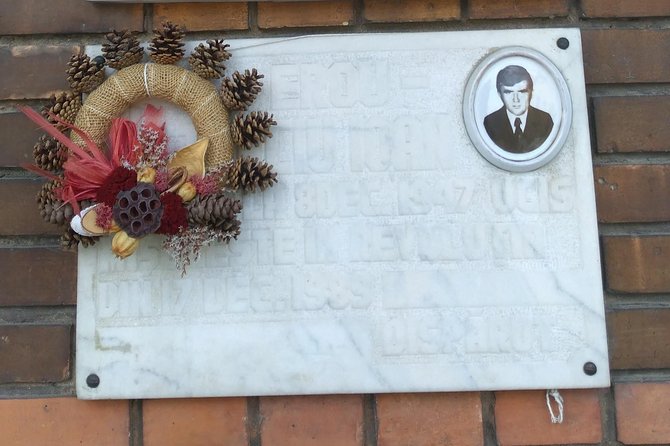
Then you head to Biserica Reformata (the Reformed Church). This is where everything started in the tour’s narrative, tied to the December 15th and 16th, 1989 events in Timișoara. The key moment involves a young man stopping a tram and his friend climbing onto it to call out Down with Ceausescu. It’s a small action described in clear human terms, and that’s what makes it stick.
The stop itself is shorter, about 15 minutes, but it’s packed with meaning. Even in a quick stop, the guide’s explanation helps you understand why this place and this moment mattered, and how fast outrage became visible action.
One drawback to plan for: because the tour is moving briskly between multiple landmarks, each stop is time-limited. If you’re the type who loves lingering on details, you’ll need to accept a guided “highlights” style rather than a slow museum-style pace.
Timisoara Orthodox Cathedral and Piata Victoriei: Bullet Holes and the Word Victory
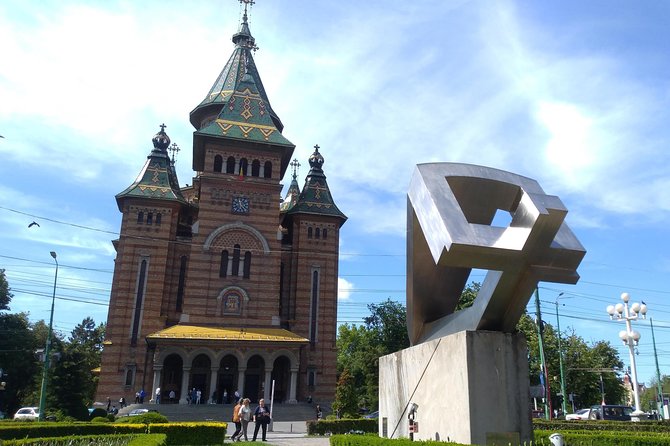
Next up is Timisoara Orthodox Cathedral. The focus here is on the protests on the cathedral stairs in December 1989 and the fact that young people died while the Army opened fire without warning. You’ll see bullet holes, which turns the story from an explanation into something physical you can’t ignore.
This is one of those stops where the guide really matters. The facts are grave, and the context is what keeps it from becoming just a grim site. A good guide ties it back to the larger reasons people took to the streets, and how the regime responded when it felt threatened.
After that, you arrive at Piata Victoriei, also known as Victory Square. In the tour narrative, 150,000 people shouted VICTORY on December 20th, 1989, when Timișoara was proclaimed the first Romanian city free of Communism. The square was renamed Victory Square after the moment that mattered, and it was previously called Opera Square.
You’ll also see bullet holes on nearby buildings. That turns the square into a kind of open-air record. It’s also a useful final note to land on, because you end the route in a place that captures both the pain and the outcome.
If you only do one thing to prepare: mentally switch gears from “why did it happen” to “what changed.” This is where you should expect the mood to shift, because the story moves from suffering to a public demand for freedom.
Guide Style, Vehicle Pacing, and Small Group Q and A (Dan and Ludovic)
A big reason this tour earns top scores is the guide experience. The tour is run by Timisoara City Tours, and the guides have a reputation for being sharp about the timeline and willing to answer questions. Names that come up in feedback include Dan and Ludovic, with comments praising how thorough and question-friendly they are.
I like that the tour doesn’t just throw facts at you. It’s set up so you can ask why something happened, how it connected to other events, and what it meant for ordinary people. When you get a guide who can explain clearly and stay responsive, the whole experience becomes more personal, even if the subject is national-scale history.
The comfortable vehicle between stops also affects how you experience the story. It keeps the route tight, so you spend more time learning and less time calculating how to get from one landmark to the next. In a 3 to 4 hour window, that’s not a small thing, it’s the difference between seeing five points of interest and absorbing a coherent narrative.
Group size helps too. With up to 10 people, it’s easier for the guide to manage questions and adjust explanations. If you’re traveling with family or you’re bringing along someone who wants history but gets bored by lectures, this structure usually lands well.
One more human detail from the conversations: some guides may also touch on present-day local context. For example, one review mentioned discussion about the current mayor and a decision made to clear occupied public land in the area. That kind of link to today can make the history feel less like a closed chapter and more like something that still shapes civic life.
Price and Value: Is $66.08 Worth a Communist-Era Walking Route?
At $66.08 per person for about 3 to 4 hours, the value here comes from how the tour packages several things at once: guided interpretation, multiple key sites, and transport between them.
You’re not paying for a long multi-day program. You’re paying for compression. In one afternoon you hit major landmarks tied to the revolution, plus additional stops intended to cover at least eight locations in total. That matters if you’re visiting for a short stay or you want a high-impact way to understand Timișoara’s role in 1989.
It also helps that the listed stops are marked admission ticket free, so you’re not adding extra costs for entry fees you don’t anticipate. You’re paying primarily for the guide and the route logic, which is exactly where guided tours tend to be worth it.
One logistics detail to consider: the start is 3:00 pm, and it ends at Piața Victoriei. That’s convenient if you want to keep exploring afterward, grab dinner in the city center area, or connect to other sightseeing on your own.
The tour is commonly booked about 11 days in advance, so if you know you want it, I’d treat it as a “book sooner rather than later” kind of activity, especially in busy seasons.
Should You Book the Grand Tour of Communist Ages in Timisoara?
Book this tour if you want an organized way to understand Communist rule and the 1989 break in Timișoara, not just random monuments. I especially recommend it if you enjoy asking questions and you want the story explained in plain terms at the actual sites where key events unfolded.
Skip it or consider an alternative if you strongly prefer light, purely scenic sightseeing. This tour deals with protests, deaths, and visible traces of violence, so it’s emotionally serious even though the time window is short.
If you’re traveling as a student, an adult learner, or even bringing a teenager who wants to understand family and local memory shaped by the regime, this format is a good match. You’ll leave with a clearer sense of why the Romanian Revolution sparked where it did, and how ordinary life under Communism connected to people’s decisions in 1989.
FAQ
How long is the Grand Tour of Communist Ages in Timisoara?
The tour runs about 3 to 4 hours.
What is the meeting point for the tour?
It starts at Three Holy Hierarchs Metropolitan Cathedral, Bulevardul Regele Ferdinand I, Timișoara, Romania.
Where does the tour end?
The tour ends at Piața Victoriei, Timișoara, Romania.
What time does the tour start?
The listed start time is 3:00 pm.
What language is the tour offered in?
The tour is offered in English.
How much does the tour cost?
The price is $66.08 per person.
Are there admission fees at the stops?
The listed stops show admission ticket free.
How big is the group?
The tour has a maximum of 10 travelers.
Can I cancel for a full refund?
Yes. Free cancellation is available, and you must cancel at least 24 hours before the experience start time for a full refund.
Is a mobile ticket used?
Yes, the tour includes a mobile ticket.
Newest Timisoara write-ups
- Capture the most Photogenic Spots of Timișoara with a Local
★ 5.0 · 1 review - Day trip to Timisoara, departure from Szeged
★ 5.0 · 2 reviews - Hiking back in time: The Remote Villages of Banat
★ 5.0 · 2 reviews - Timisoara Dream Tour in Elisabetin Neighborhood
★ 5.0 · 3 reviews - Nera Gorge National Park – Private Day Tour from Timisoara
★ 4.5 · 4 reviews - Timisoara: Jewish Heritage Walking Tour
★ 5.0 · 4 reviews - Timisoara: Private Walking Tour with a Local Guide
★ 4.5 · 5 reviews
Communist-Era Tours, compared.




Parliament, Ceausescu House & Village Museum Tour
Read our review →
Bucharest Essential Tour: Old Town, Calea Victoriei & Communism
Read our review →
Communism in Bucharest – Landmarks, Museum & Communist Appetizers
Read our review →
Palace of Parliament, Ceausescu House & Village Museum
Read our review →Browse the lists this tour appears in